


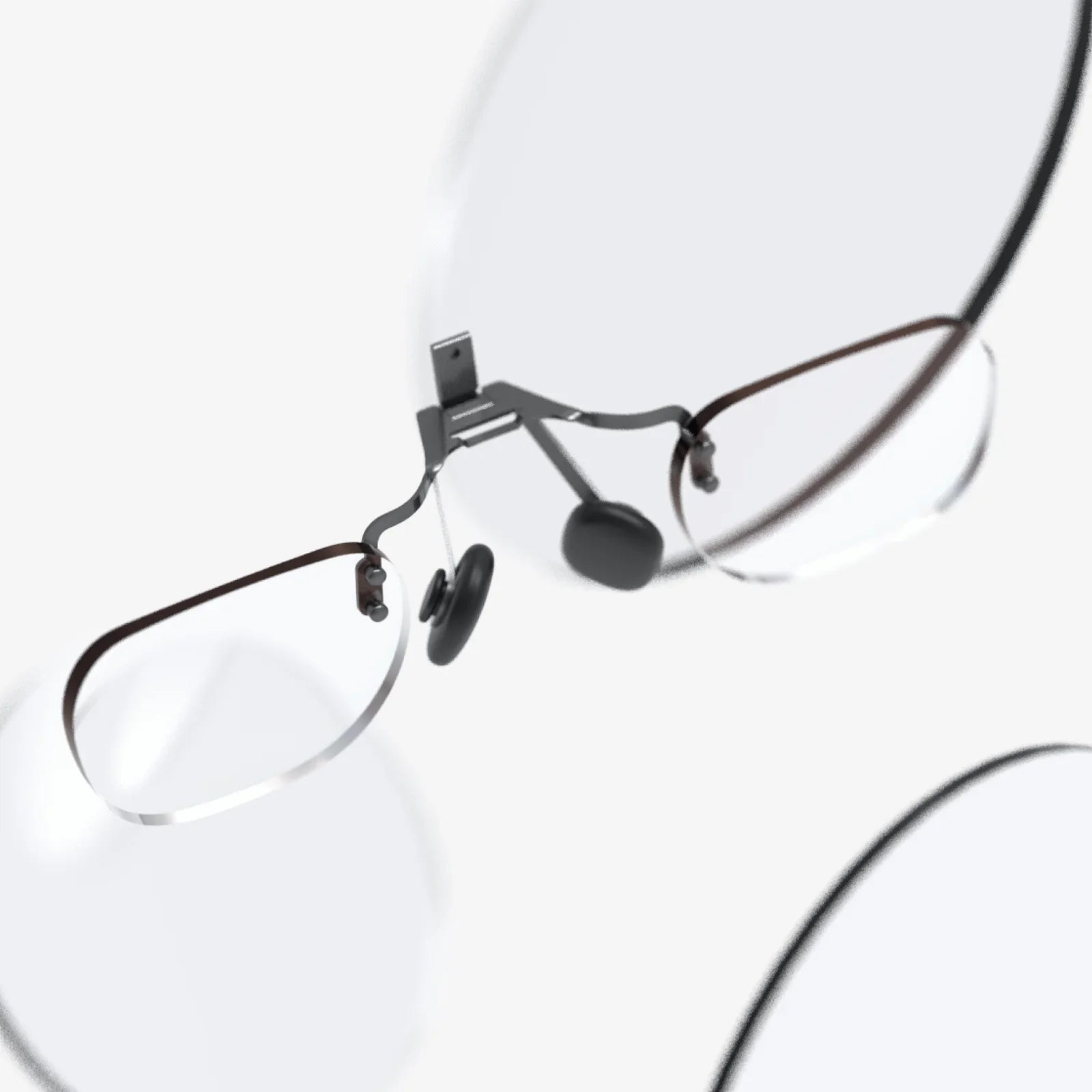
Imagine a world where information flows as effortlessly as sight itself, where the digital and physical realms converge not on a screen you hold, but on the very lens through which you see reality. This is the tantalizing promise of internet glasses technology, a frontier of wearable computing that is rapidly evolving from science fiction into a tangible, world-altering reality. The concept of augmenting our vision with data, communication, and computation is one of the most profound technological aspirations of the 21st century, threatening to redefine everything from social interaction and professional workflows to our fundamental perception of the world around us. The journey to this future is already underway, and it’s a story of staggering innovation, cautionary tales, and limitless potential.
The Historical Lens: From Concept to Prototype
The dream of computerized eyewear is far older than most realize. While the modern iteration feels sudden, its conceptual roots stretch back decades. Early heads-up displays (HUDs) in military fighter jets provided pilots with crucial targeting and navigational data without requiring them to look down at their instruments. This principle—projecting information onto a transparent surface in the user’s field of view—is the foundational bedrock of all internet glasses technology. The goal was always to create a situational awareness enhancer, a tool that made the user more effective by seamlessly integrating data with their environment.
The transition from military hardware to consumer prototype was clumsy and ambitious. The early 2010s witnessed the first major attempt to bring this technology to the masses. The product was met with a mixture of awe and intense criticism. It featured a small prism-like projector that beamed information into the wearer’s eye, enabling tasks like recording video, getting directions, and sending messages hands-free. However, it stumbled on several critical fronts: a design that was widely perceived as awkward and geeky, a significant price tag, and most damningly, a massive public backlash over privacy concerns due to its always-on camera. This period served as a crucial, if painful, learning experience for the entire industry. It proved the technology was possible but highlighted that its success hinged not just on engineering prowess, but on social acceptance, elegant design, and robust privacy safeguards.
The Core Technologies Powering the Vision
Modern internet glasses are a symphony of miniaturized technologies working in concert. Understanding these components is key to appreciating the current state of the art.
Optical Systems: The Window to Augmentation
At the heart of any pair of smart glasses is the method used to project digital images onto the user’s retina. This is one of the most significant engineering challenges. Several approaches have emerged:
- Waveguide Optics: This is the dominant technology in most current high-end devices. Light from a micro-projector is coupled into a thin, transparent glass or plastic substrate (the waveguide). It then travels through this substrate via total internal reflection before being directed out into the user’s eye by sophisticated optical structures like diffraction gratings. The result is a bright, clear image that appears to float in space in front of the wearer, all while allowing them to see the real world clearly.
- Curved Mirror Optics: This system uses a miniature projector that beams light onto a specially curved combiner mirror placed on the lens. This mirror reflects the image into the eye while remaining transparent. It can offer a large field of view but often results in a bulkier form factor.
- Retinal Projection: A more futuristic approach, this technology aims to scan images directly onto the user’s retina using low-power lasers. This method promises incredibly high resolution and a large depth of field, making the digital content appear naturally focused at different distances.
Processing and Connectivity: The Brain Behind the Lens
For glasses to be truly untethered, they require immense processing power packed into an incredibly small and power-efficient form factor. Advanced Systems on a Chip (SoCs) are designed specifically for augmented reality (AR) workloads, handling tasks from sensor data fusion and computer vision to rendering complex 3D graphics. These processors are often paired with dedicated AI accelerators to enable real-time translation, object recognition, and voice assistant interactions without debilitating lag.
Connectivity is the lifeblood of internet glasses. They leverage high-speed Wi-Fi and Bluetooth for local connections, but 5G connectivity is the true game-changer. The high bandwidth and low latency of 5G networks allow these devices to offload intensive computation to the cloud, enabling more complex applications without draining the onboard battery. This fusion of edge and cloud computing is essential for creating a smooth and powerful user experience.
Sensing the World: Cameras, LiDAR, and Inertial Measurement
To understand and augment the world, the glasses must first perceive it. This is achieved through a suite of sensors:
- High-Resolution Cameras: These are used for capturing photos and video, but more importantly, for computer vision tasks. They help the device identify surfaces, track objects, and read text.
- Depth Sensors & LiDAR: Light Detection and Ranging sensors fire out invisible laser dots to measure the exact distance to objects in the environment. This creates a precise 3D depth map of the surroundings, allowing digital objects to occlude realistically behind real-world furniture or interact physically with a tabletop.
- Inertial Measurement Units (IMUs): These accelerometers and gyroscopes track the precise movement and rotation of the user’s head, ensuring the digital content remains locked in place in the real world as the wearer moves.
- Eye-Tracking Cameras: Tiny cameras pointed at the eyes enable foveated rendering (where high resolution is only rendered where the user is looking, saving power) and create a natural interface where looking at an item can select it.
Beyond Novelty: Transformative Applications Across Industries
The true value of internet glasses technology is revealed not in demos, but in its practical, problem-solving applications. It is already proving to be a powerful tool in numerous professional fields.
Revolutionizing the Industrial and Medical Fields
In manufacturing, logistics, and field service, smart glasses are boosting efficiency and accuracy to unprecedented levels. A technician repairing a complex machine can have schematics, animated instructions, and live video feed from a remote expert overlayed directly onto their field of view. Their hands remain free to work, and the information is contextually relevant. In warehouses, workers equipped with glasses can see optimal picking routes and verify items hands-free, dramatically speeding up fulfillment processes.
In healthcare, the implications are even more profound. Surgeons can access vital patient statistics, ultrasound data, or MRI scans without ever turning away from the operating table. Medical students can observe procedures from the surgeon’s point of view. For general practitioners, instantly pulling up a patient’s records during a consultation becomes seamless, fostering better connection and care.
Redefining Social Connection and Remote Collaboration
Internet glasses technology has the potential to be the ultimate tool for breaking down geographical barriers. Imagine a remote collaboration where, instead of looking at a grid of faces on a screen, you see photorealistic avatars of your colleagues sitting around your actual conference table. You can share 3D models that everyone can walk around, inspect, and manipulate as if it were physically present. This creates a sense of shared presence that flat screens cannot replicate, making remote work more natural and effective.
On a personal level, the technology could transform how we share experiences. A grandparent could literally see through their grandchild’s eyes as they take their first steps on a beach, experiencing the joy alongside them in a profoundly intimate way.
The Next Platform for Entertainment and Gaming
While mobile AR games gave a taste of this potential, dedicated AR glasses are the full-course meal. They enable persistent digital worlds mapped onto our physical environment. Your living room could become a dungeon to explore with friends, your local park could host a persistent strategy game, and your walls could transform into interactive art displays. The fusion of entertainment with physical space encourages movement, social interaction, and a new form of storytelling that is uniquely personal and contextual.
The Inevitable Challenges: Privacy, Security, and the Social Contract
For all its promise, the path forward for internet glasses is fraught with ethical and societal challenges that must be addressed head-on. The failure of the first generation taught a stark lesson: technology that is perceived as socially intrusive will be rejected.
The Privacy Paradox
The primary concern is the always-present, always-aware camera and microphone. The potential for surreptitious recording is a legitimate fear. Manufacturers are addressing this through hardware-based solutions: prominent LED indicator lights that cannot be disabled when recording, physical camera shutters, and microphones that can be physically disconnected. Beyond hardware, clear, transparent software controls and data policies are non-negotiable. Users must have absolute control over their data, with clear indications of when data is being collected and for what purpose. The industry must adopt a privacy-by-design approach to earn the public’s trust.
The Digital Divide and Accessibility
As with any transformative technology, there is a risk that internet glasses could exacerbate existing social and economic inequalities. If they become essential tools for education or high-paying jobs, a two-tiered society could emerge: those who can afford and use the technology and those who cannot. Conversely, the technology also holds immense promise for accessibility. For individuals with visual impairments, audio descriptions of surroundings or text-to-speech for reading signs could be life-changing. For those with hearing impairments, real-time captioning of conversations overlayed onto the speakers could revolutionize communication. The development of these assistive applications must be a priority.
The Future of Attention and Reality
Phones already fracture our attention, pulling us out of the present moment. Will a constant stream of notifications directly in our field of view be an even greater distraction? There is a delicate balance to be struck between augmentation and intrusion. Designers must develop intuitive and non-intrusive notification systems that prioritize critical information without creating digital clutter. Furthermore, as digital overlays become more convincing, questions about the nature of shared reality and personal experience will arise. Establishing a new social contract around the use of this technology in public spaces will be a gradual, cultural process.
Glimpsing the Horizon: The Future of Sight
The current generation of internet glasses is impressive, but it is merely a stepping stone. The ultimate destination is a device that is indistinguishable from regular eyewear—lightweight, stylish, with all-day battery life, and a display so crisp and seamlessly integrated that the digital and physical are indivisible. Future iterations will move beyond simple visual and auditory augmentation to include other senses. Haptic feedback could let you feel the texture of a digital object, and advanced bone conduction could deliver spatial audio without headphones.
The long-term trajectory points toward direct brain-computer interfaces (BCIs), where information could be projected directly into the visual cortex, bypassing the eyes altogether. While this remains in the realm of distant future research, it highlights the ultimate goal: to make the interface between human and machine as natural and effortless as thought itself. Internet glasses are the crucial, necessary bridge to that future.
The next time you put on a pair of sunglasses, take a moment to consider that simple frame of plastic and glass. Soon, it may become the most powerful portal you own—a gateway to a universe of information, connection, and experience, all while leaving your hands free to truly engage with the world it helps you see so much more clearly. The age of augmented humanity is dawning, and it will be framed right before our eyes.
Share:
AR VR Development Course: Your Ultimate Guide to Building Immersive Realities
AR VR App Development Company: Your Strategic Partner in Building Immersive Digital Realities