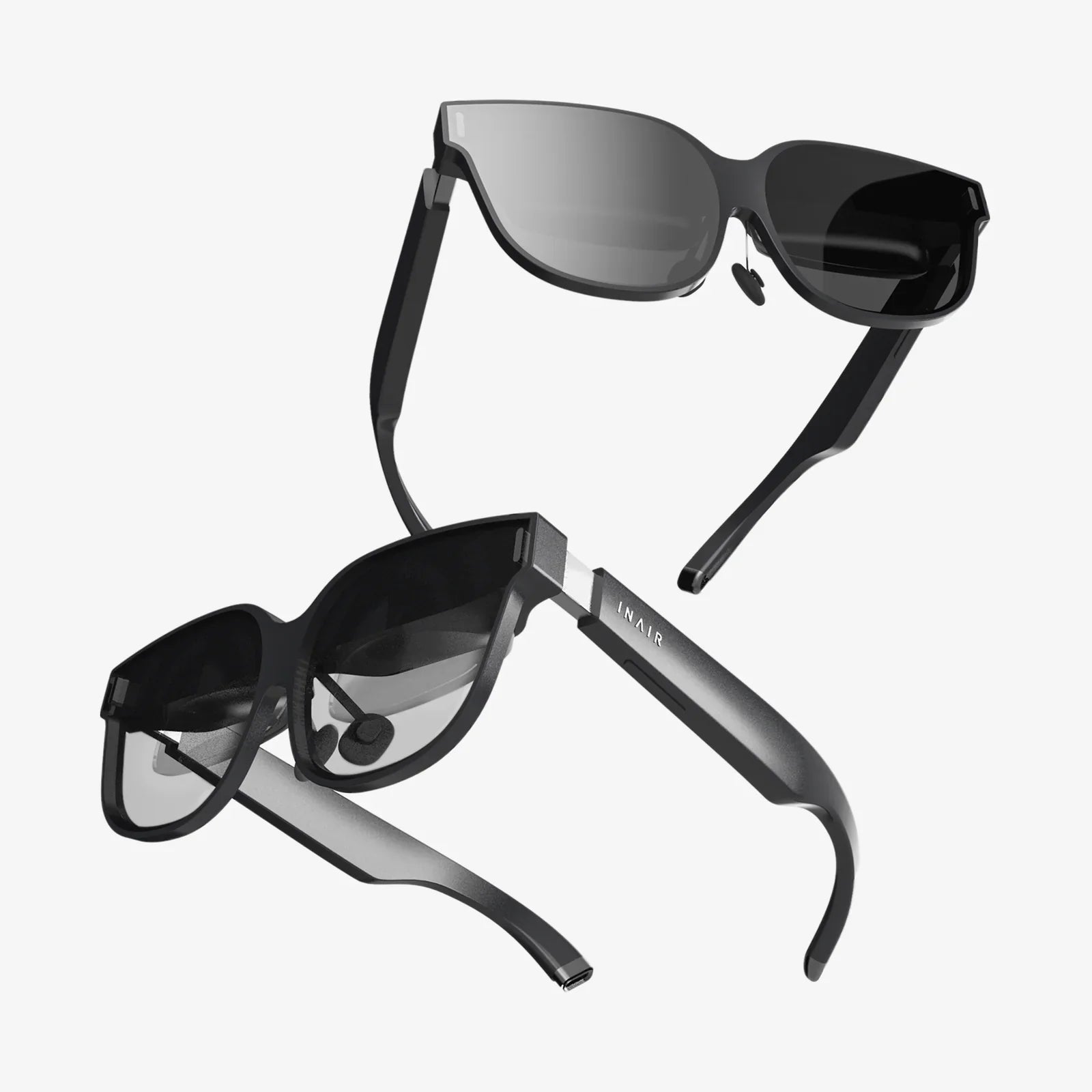
Imagine a world where your surroundings don't just exist; they understand you. A pair of sleek glasses not only overlays digital schematics onto a malfunctioning engine but also guides your hands with visual cues, powered by an intelligence that diagnoses the problem in real-time. This isn't a distant sci-fi fantasy; it is the imminent future being forged at the powerful intersection of two transformative technologies: Augmented Reality (AR) and Artificial Intelligence (AI). The question "Is AR AI?" is not a matter of simple equivalence but an inquiry into a deep and symbiotic relationship. One is the eyes and the other is the brain, and together, they are creating a new layer of intelligent, interactive existence.

The Distinct Realms: Defining AR and AI

To understand their fusion, we must first distinguish the two. Augmented Reality (AR) is a technology that superimposes computer-generated perceptual information—be it visual, auditory, haptic, or olfactory—onto our view of the real world. Its goal is to enhance our natural environment by blending digital elements with physical reality, creating a composite view. Think of navigation arrows painted onto the road through your car's windshield or a virtual dinosaur stomping through your living room via your tablet screen. AR is fundamentally a display and interaction paradigm; it is the canvas and the brush.

Artificial Intelligence (AI), in contrast, is the engine of cognition. It is the broad field of computer science dedicated to creating systems capable of performing tasks that typically require human intelligence. This includes learning from data (machine learning), reasoning to solve problems, understanding natural language, recognizing patterns in images and sounds, and making decisions. AI is the brainpower that can identify a face in a photo, translate languages instantly, or recommend your next movie. Without intelligence, a system is merely a tool; with it, it becomes a partner.

The Convergence: Where AR Becomes the Interface for AI

In isolation, both technologies are powerful. AR provides a revolutionary interface, while AI provides revolutionary computation. However, it is in their convergence that a true paradigm shift occurs. AI doesn't just make AR smarter; it makes it contextually aware, interactive, and truly useful. AR, in turn, provides AI with a rich, multimodal stream of real-world data and a immersive canvas upon which to express its intelligence. This creates a continuous feedback loop: AI analyzes the world perceived through AR, and AR visualizes the insights generated by AI.

This symbiotic relationship can be broken down into several critical functions where AI empowers AR:

1. Scene Understanding and Semantic Recognition

Early AR was primarily based on marker or location tracking. It could place a digital object on a specific image or GPS coordinate, but it had no deeper understanding of the environment. AI, specifically computer vision and deep learning, changes this entirely. An AI-powered AR system can now:

  • Identify Objects: It doesn't just see a flat surface; it recognizes a chair, a table, a television, and understands their properties (e.g., a chair is for sitting, a screen displays video).
  • Parse Scenes: It can distinguish between a kitchen, a living room, and an office, allowing for contextually appropriate digital content.
  • Read Text: Optical Character Recognition (OCR) powered by AI can instantly translate foreign street signs, read product manuals, or pull information from a business card and add it to your contacts.
  • Understand Spatial Geometry: AI can create a dense 3D mesh of a room, understanding not just flat planes but complex geometries, occlusions, and physics, allowing digital objects to interact realistically with the environment—a virtual ball can roll under a real sofa.

2. Robust and Adaptive Tracking

For AR to feel seamless, digital objects must stay locked in place. This requires persistent and accurate tracking. AI algorithms are crucial for improving Simultaneous Localization and Mapping (SLAM) techniques. They can predict motion, correct for drift, and maintain positional accuracy even in dynamic, low-texture, or previously unmapped environments. This makes AR experiences more stable and reliable.

3. Intelligent Interaction and Proactive Assistance

This is where the partnership becomes truly transformative. AI enables AR to move from a passive display to an active assistant.

  • Gesture and Gaze Control: AI models can interpret complex hand gestures, body language, and even eye gaze as input commands. You can manipulate a hologram with a pinch or select a menu item just by looking at it.
  • Predictive Overlays: Imagine an AR system for a mechanic. As they look at an engine, AI recognizes the components, cross-references with a knowledge database, and proactively highlights a worn-out belt and displays the correct torque specifications for its bolt, all before the user even asks.
  • Personalized Content: The AI brain learns from user behavior. An AR shopping app might learn your style preferences and highlight clothing items in a store that match your taste. An AR museum guide might spend more time on exhibits related to your expressed interests.

4. Generative and Adaptive Content Creation

With the advent of generative AI, the content within AR experiences is no longer limited to pre-designed assets. AI can dynamically generate realistic 3D models, textures, and animations on the fly, tailored to the specific context of the environment and the user. An interior design AR app could use a text prompt—"a cozy, modern sofa in light grey fabric"—to generate a photorealistic model that perfectly fits the scale and lighting of your actual living room, something that would be impossible with a static asset library.

Real-World Applications: The Intelligent Augmented World

The theoretical fusion of AR and AI is already materializing in powerful applications across industries.

Revolutionizing Enterprise and Manufacturing

This is perhaps the most mature domain. AI-powered AR is creating the future of the skilled workforce.

  • Assembly and Maintenance: Technicians receive intelligent, hands-free guidance. The system recognizes the machine model, identifies parts using computer vision, and overlays animated assembly instructions, safety warnings, and performance data directly onto the equipment, drastically reducing errors and training time.
  • Remote Expert Assistance: A field worker wearing AR glasses can stream their first-person view to a senior expert miles away. The expert can then draw annotations and instructions directly into the worker's field of view, with AI helping to anchor those annotations to specific components.
  • Logistics and Warehousing: AR smart glasses can guide warehouse pickers along the most efficient route, and upon arrival, AI vision confirms the correct item by recognizing its shape and label, minimizing mis-picks.

Transforming Healthcare and Medicine

The stakes are high, and the potential for good is immense.

  • Enhanced Surgery: Surgeons can see critical patient data, MRI scans, or ultrasound imagery overlaid directly on the patient's body. AI can enhance this by highlighting critical structures (e.g., tumors, blood vessels) in real-time during the procedure, improving precision and safety.
  • Medical Training: Students can practice procedures on AI-driven, virtual patients that respond physiologically in real-time, providing an unparalleled and risk-free learning environment.
  • Patient Care and Diagnosis: AI can analyze a patient's gait or movement through an AR interface to aid in physical therapy or early diagnosis of neurological conditions.

Redefining Retail and E-Commerce

The try-before-you-buy dream is becoming an intelligent reality.

  • Virtual Try-On: AI accurately maps your body dimensions and applies clothing, eyewear, or makeup digitally with realistic fit and drape, personalized to your body shape and size.
  • In-Store Navigation and Discovery: Point your phone in a supermarket, and AI-powered AR can highlight gluten-free products, show recipes for ingredients you're looking at, or guide you to the exact aisle for tomato sauce.
  • Personalized Showrooms: In your home, you can visualize how a new couch would look, with AI suggesting complementary items like rugs or lamps based on your existing décor.

Shaping the Future of Education and Training

Learning becomes experiential and immersive.

  • Interactive Learning Models: Biology students can walk around a beating heart hologram, with AI quizzing them on parts and functions. History students can witness historical events unfold in their classroom.
  • Skill Acquisition: Learn to play the piano by seeing digital keys light up on a real keyboard, with an AI tutor adjusting the difficulty based on your performance.

Ethical Considerations and Future Challenges

The path to an intelligently augmented world is not without significant hurdles and profound ethical questions.

  • Privacy and Surveillance: An always-on, AI-powered AR device is arguably the most intimate surveillance tool ever conceived. It sees what you see, hears what you hear, and understands your context. The potential for data harvesting, facial recognition on a mass scale, and a erosion of public anonymity is staggering. Robust regulation and transparent data policies are non-negotiable.
  • Algorithmic Bias: If the AI brain powering AR is trained on biased data, its augmentations will be biased. This could manifest in retail apps not recognizing certain skin tones for makeup, or instructional AR providing less accurate information for equipment more commonly used in developing regions.
  • Safety and Distraction: Overlaying digital information onto the real world, especially in dynamic environments like driving or walking down a street, creates a potential for distraction and accidents. Ensuring that critical real-world information is never obscured is a paramount design challenge.
  • The Reality Divide: Widespread adoption of powerful AR/AI systems could create a new socio-economic divide between those who are "augmented" and have access to real-time information and assistance, and those who are not.
  • Technological Hurdles: Challenges remain in creating devices that are socially acceptable (e.g., lightweight glasses instead of bulky headsets), with all-day battery life, seamless connectivity (5G/6G), and enough on-device processing power to handle complex AI models without latency.

The Path Forward: An Inseparable Future

The trajectory is clear. The question is no longer if AR will be powered by AI, but how deeply the two will be integrated. We are moving towards a world where our primary computing interface will be the world itself, mediated by an intelligent layer that understands our context and intentions. The smartphone, a device we look down at, will give way to ambient, contextual, and proactive computing that exists all around us.

The next great breakthroughs will come from advancements in areas like neuromorphic computing (chips designed to mimic the human brain for efficient AI processing), faster and more pervasive networks, and the development of more intuitive human-AR interaction models like advanced gesture and brain-computer interfaces. The goal is to make the technology fade into the background, leaving only the utility and the magic of an enhanced reality.

So, is AR AI? Not exactly. AR is the medium, and AI is the muse. One provides the stage, and the other writes the play. They are two halves of a whole, partners in creating a future where our digital and physical lives are not just connected, but seamlessly and intelligently intertwined. This fusion promises to amplify human potential in ways we are only beginning to imagine, transforming every aspect of how we work, learn, heal, and play. The world is about to become your interface, and it will be an intelligent one.

Latest Stories

This section doesn’t currently include any content. Add content to this section using the sidebar.