


- by wangfred
Is AR Better Than VR? The Ultimate Immersive Tech Showdown
- by wangfred
Imagine a world where digital information seamlessly overlays your physical reality, enhancing every task, or one where you can escape entirely to fantastical, impossible realms. This isn't science fiction; it's the core promise of two technologies vying for the future of human-computer interaction. The question of which is superior—Augmented Reality or Virtual Reality—is not just a tech enthusiast's debate but a fundamental discussion about how we will work, learn, and play tomorrow. The answer is far from simple, and the journey to uncover it reveals a fascinating technological landscape.
At their heart, AR and VR are built on fundamentally different premises. Understanding this philosophical divide is crucial to evaluating their respective strengths.
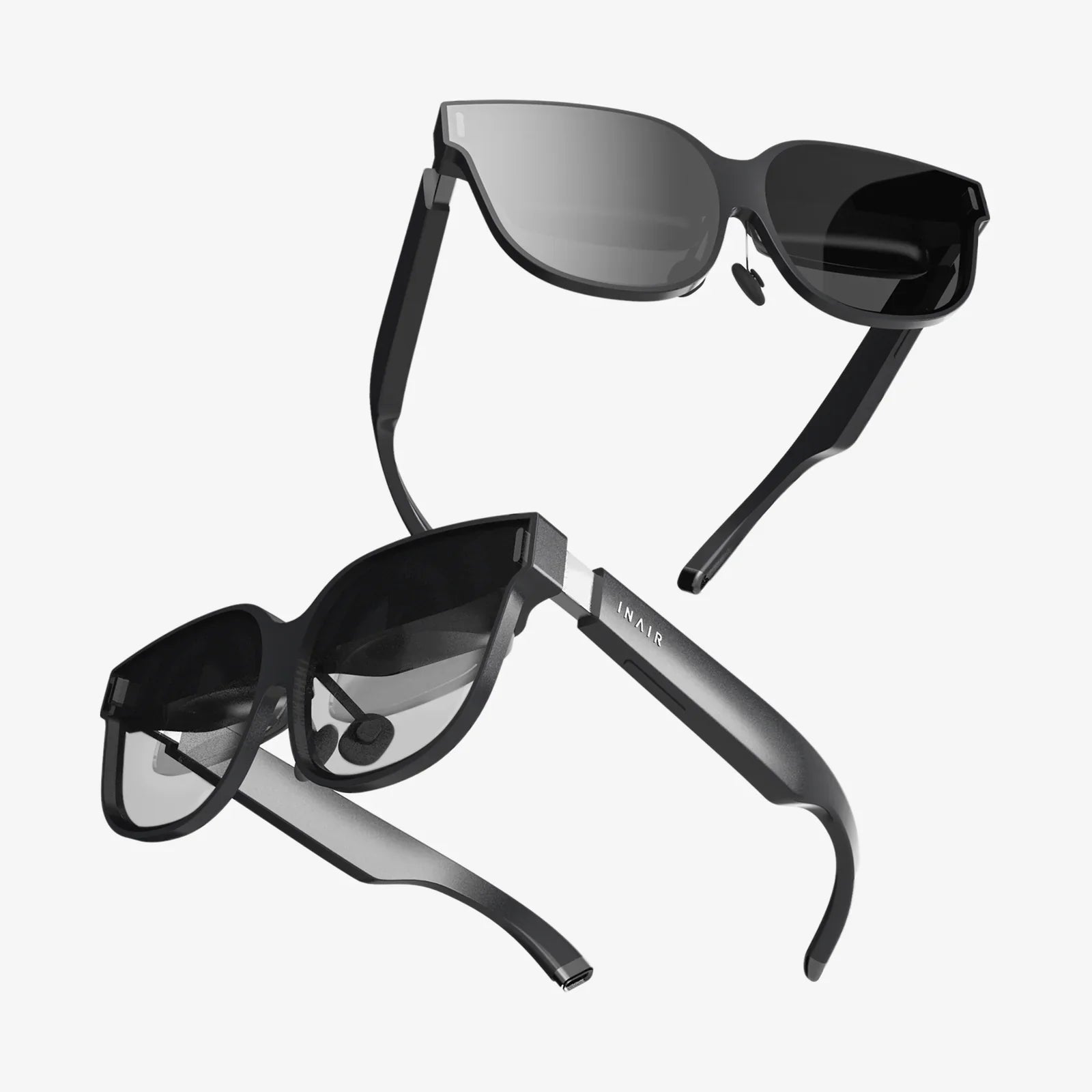
Augmented Reality operates on a principle of digital enhancement. Its goal is to add a layer of useful, interactive data onto the real world you already perceive. It doesn't seek to replace your environment but to augment it, making it richer, more informative, and more efficient. Think of it as a high-tech heads-up display for life itself. The technology uses cameras and sensors to understand the physical space and then projects images, text, and 3D models into your field of view, allowing you to interact with both the real and the virtual simultaneously.
Virtual Reality, in stark contrast, is built on a principle of total immersion. Its primary objective is to transport you, both perceptually and psychologically, to a completely different place. By blocking out the physical world with an opaque headset and replacing it with a computer-generated environment, VR creates a powerful sense of presence—the feeling of actually "being there." This escapism is its greatest strength, whether that escape is to a virtual meeting room, a historical battlefield, or the surface of Mars.
The theoretical differences between AR and VR manifest most clearly in their real-world applications. Each has carved out domains where it is demonstrably superior.
AR's superpower is its ability to remain connected to the user's immediate context. This makes it exceptionally valuable in scenarios where the physical world is central to the task.
VR's strength lies in its ability to control every aspect of the user's sensory input, creating experiences that are impossible in the real world.
Beyond raw capability, how these technologies feel to use is a major factor in their adoption and perceived superiority.
Comfort and Accessibility: AR currently holds a significant edge in user comfort and social accessibility. Many AR experiences can be accessed through a smartphone, a device nearly everyone already owns. Even dedicated AR glasses are designed to be lightweight, transparent, and allow for normal interaction. VR, however, requires a dedicated, often bulky, headset that isolates the user. Issues like simulator sickness, caused by a disconnect between visual movement and physical stillness, also affect a portion of the VR user base, a problem AR largely avoids.
The Social Factor: Wearing an AR device allows you to remain present in a social setting. You can talk to people, maintain eye contact, and be aware of your surroundings. Strapping on a VR headset is an act of social isolation—it signals to everyone around you that you are unavailable and disconnected. This makes AR a technology for all-day use and VR a technology for dedicated sessions.
Both technologies face significant challenges on their path to mainstream adoption, and their evolution will directly impact the "better than" debate.
VR's Challenges: For VR to become a ubiquitous computing platform, it needs to solve the hardware problem. Headsets must become smaller, lighter, wireless, and more comfortable for long-term use. They must also achieve visual fidelity indistinguishable from reality to maximize presence and minimize eye strain. The industry is moving towards these goals with advancements in pancake lenses, micro-OLED displays, and inside-out tracking.
AR's Challenges: AR's hurdles are arguably even greater. The holy grail is a pair of glasses that look no different from regular eyewear but can project bright, high-resolution images onto the real world in a wide field of view. This requires monumental breakthroughs in waveguide optics, display technology, and battery life—all miniaturized to fit into a glasses form factor. Furthermore, AR must solve complex problems like persistent world mapping and occlusion (having digital objects realistically hide behind real ones) to be truly convincing.
The most exciting development is that this isn't necessarily a binary choice. The future likely lies in a hybrid approach often called Mixed Reality (MR) or XR (Extended Reality). We are already seeing the first steps with headsets that offer passthrough video—using high-resolution cameras to feed a live video feed of the real world into the headset, which can then be augmented with digital objects.
This technology effectively turns a VR headset into a capable AR device, blurring the line between the two. You could have a meeting in a fully virtual boardroom (VR) and then, with a click of a button, bring your virtual monitor into your real-world office to work (AR). This fusion suggests that the ultimate device won't be exclusively AR or VR but a flexible platform capable of delivering the best of both worlds on demand.
The answer is a resounding it depends. The question is flawed because it presupposes a single winner. AR is not better than VR, nor is VR better than AR. They are different tools for different jobs.
If the goal is to enhance your reality, provide contextual information, and keep you connected to the world and people around you, then Augmented Reality is the superior technology. Its potential to become the next major computing platform, replacing the smartphone as our primary interface with digital information, is immense.
If the goal is to escape, to be fully immersed in a simulated environment for training, therapy, or unparalleled entertainment, then Virtual Reality is the superior technology. Its power to create presence and transport the user is unmatched.
The true winner in this technological showdown is us, the users. We are gaining access to an expanding spectrum of reality, from subtle augmentation to total immersion. The choice won't be about which technology is objectively better, but about which experience is right for the moment. As the hardware converges into sleek, all-day wearables capable of blending the real and the virtual at will, the very question "is AR better than VR?" will become obsolete, replaced by a far more exciting reality: the power to shape our perception of the world itself.
This isn't just a battle between two types of headsets; it's a fundamental shift in how we perceive and interact with reality itself, and the ultimate victor will be the one that most seamlessly integrates into the fabric of our daily existence, unlocking new levels of productivity, connection, and human experience.
Share:
Augmented Reality Based Support Solutions: Revolutionizing Expertise and Assistance
Augmented Reality in AI-Driven Automation: The Synergy Reshaping Modern Industry