


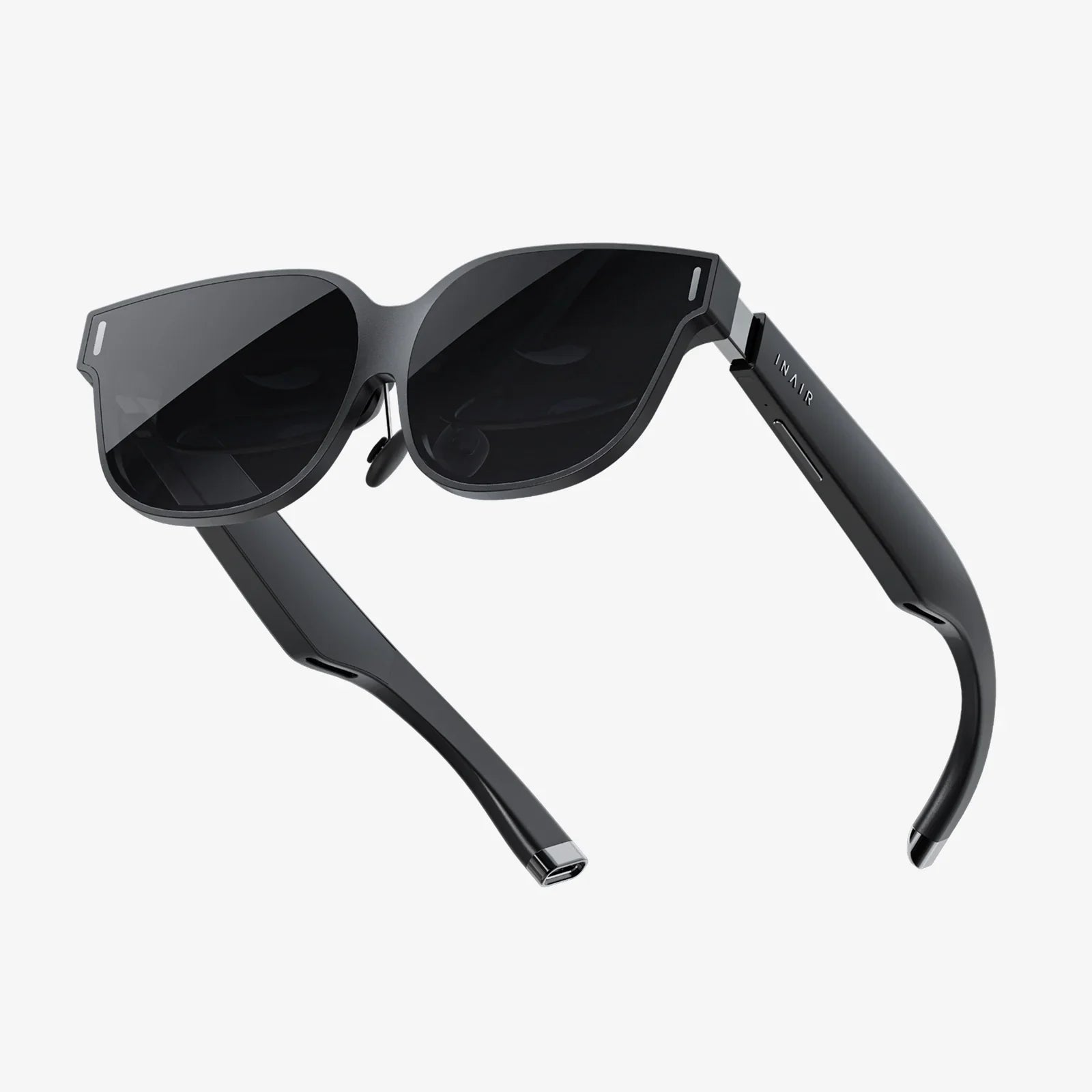
Imagine a world where digital information doesn't trap you inside a screen but instead enhances the very reality you inhabit, where historical figures can give speeches on the street corners they once stood and complex machinery reveals its inner workings through a simple glance. This is the promise of augmented reality, a technology that seamlessly blends the digital and the physical. But does this fusion truly captivate us? Does it pull us into its narrative, or are we merely observers of a clever overlay? The question of whether augmented reality is immersive is not just a technical query; it's a gateway to understanding the future of human-computer interaction and how we will perceive the world around us.
Defining the Terms: Immersion vs. Augmented Reality
To properly address the core question, we must first dismantle and examine its components. Immersion is a state of deep mental involvement, a feeling of being completely absorbed in an experience to the exclusion of other stimuli. It's the sensation of "being there," whether "there" is a fictional world in a novel, the intense focus of a chess match, or the digital realm of a virtual reality simulation.
Augmented Reality (AR), in contrast, is a technology that superimposes computer-generated sensory input—be it visual, auditory, or haptic—onto our perception of the real world. Unlike Virtual Reality (VR), which aims to replace reality entirely, AR seeks to augment it, adding a layer of digital context and interactivity.
The immediate tension is apparent. Traditional notions of immersion, heavily influenced by VR, often involve shutting out the physical world. AR, by its very nature, requires the user to remain engaged with their physical environment. This fundamental difference suggests that AR's path to immersion is not one of escapism but of enhanced engagement with our immediate surroundings.
The Immersive Spectrum: A Nuanced Perspective
The question "Is augmented reality immersive?" is flawed in its simplicity. It implies a binary yes-or-no answer, when the reality is far more complex. Immersion is not a single state but a spectrum. We can think of it as a scale with several distinct levels:
- Non-Immersive: Standard screen-based interactions (e.g., watching TV, using a desktop computer). The user is aware of the medium and their physical surroundings.
- Semi-Immersive: Experiences that provide a greater degree of engagement but maintain a strong tether to reality (e.g., large-screen simulation systems, many current AR applications).
- Fully Immersive: Experiences that completely dominate the user's senses, creating a strong sensation of presence in a non-physical world (e.g., high-end VR headsets).
AR primarily operates in the semi-immersive realm. Its power lies in its ability to create a compelling bridge between the digital and the physical, fostering a different kind of immersion—one of context, utility, and layered meaning.
The Pillars of AR Immersion: How It Captivates the User
While AR may not induce the total sensory deprivation of VR, it builds immersion through several powerful, unique mechanisms.
Spatial Awareness and Anchoring
The most profound immersive quality of AR is its innate understanding of space. Through advanced sensors, cameras, and algorithms, AR devices map the physical environment and anchor digital objects within it. This means a virtual character can sit convincingly on your real couch, and a navigation arrow can appear to be painted on the road ahead of you. This spatial anchoring creates a believable coherence between the real and the virtual, making the digital elements feel like a genuine part of the user's world. This persistence and adherence to real-world physics are crucial for suspending disbelief and fostering a sense of immersion.
Seamless Interactivity and Agency
True immersion is often linked to agency—the user's ability to affect the experience. AR offers a uniquely intuitive form of interaction. Instead of using a mouse or a game controller, users can often manipulate digital objects with their hands, voice commands, or even eye movements. The ability to walk around a hologram, resize it with a pinch, or trigger an animation by tapping a real-world surface creates a powerful feedback loop. This direct manipulation reinforces the illusion that the digital content is physically present, deepening the user's engagement and investment in the experience.
Contextual Relevance and Personalized Information
Immersion in AR is deeply tied to relevance. The technology excels at delivering the right information at the right time and in the right place. For a technician, seeing a schematic overlaid on the machine they are repairing is not just a visual aid; it's a deeply immersive tool that focuses their entire cognitive capacity on the task. For a tourist, seeing a historical building restored to its former glory through their device screen transports them back in time, making history feel immediate and tangible. This layer of context transforms a passive observation into an active, engaging discovery, which is a cornerstone of immersion.
The Psychological Underpinnings: Presence and Embodiment
The feeling of immersion is rooted in psychology. Two key concepts are relevant here: presence and embodiment. Presence is the subjective feeling of "being there" in the environment presented by the technology. AR fosters a specific type called social presence (feeling that digital beings are with you) and personal presence (feeling that you are in the augmented environment).
Embodiment is the sense that your virtual representation or your own body is integrated into the experience. When an AR filter perfectly tracks your facial expressions to apply a digital mask, or when you see your own hands interacting with holograms, it strengthens the connection between your physical self and the digital layer, enhancing the overall immersive quality.
Current Limitations and Barriers to Deeper Immersion
Despite its potential, contemporary AR faces significant hurdles that can break immersion.
- Hardware Constraints: Many AR experiences are delivered through smartphones or tablets, which require holding up a device and looking through a limited "window." This constant physical mediation reminds the user of the technology, acting as a barrier to seamless immersion. Even modern smart glasses often have limited fields of view, creating a "tunnel vision" effect where digital objects are clipped at the edges.
- Visual Fidelity and Tracking: Imperfect tracking, where digital objects jitter or drift away from their anchors, instantly shatters the illusion. Similarly, low-resolution graphics, unrealistic lighting, and a lack of occlusion (where digital objects should be hidden by real ones) remind the user that they are looking at a simulation.
- Social Acceptance and Comfort: Wearing conspicuous technology in public can be socially awkward, creating a psychological barrier to full engagement. Furthermore, user fatigue and concerns about privacy and safety in an augmented world can also detract from the experience.
The Future: Pathways to True Augmented Immersion
The trajectory of AR technology points toward a future where these limitations are overcome, paving the way for profoundly immersive experiences.
The ultimate goal is the development of comfortable, socially acceptable eyewear with a wide field of view, photorealistic graphics, and perfect contextual understanding. Imagine glasses that can seamlessly blend light fields with reality, making it impossible to distinguish between a real object and a digital one. Furthermore, the integration of other senses—spatial audio that changes as you move, and haptic feedback that lets you feel digital textures—will create a multi-sensory immersion that is currently the domain of science fiction.
The future of AR immersion also lies in intelligence. With advances in artificial intelligence and computer vision, AR systems will move from simple object recognition to truly understanding scenes, predicting user intent, and generating context-aware content in real-time. This will create experiences that are not just overlays but intelligent companions that enhance our perception, memory, and abilities in every facet of life.
So, is augmented reality immersive? It is not immersive in the way of a darkened VR room that isolates you from everything. Instead, it offers a more subtle, yet potentially more powerful, form of immersion. It is the immersion of enhanced context, of magical interaction, and of a world where every surface, object, and location can hold a secret story, a piece of data, or a tool waiting to be unlocked. It immerses us not by taking us away from our reality, but by making our reality infinitely more interesting, informative, and engaging. The magic isn't in escaping the world; it's in finally seeing it for all its hidden potential.
Share:
Top VR Headset Companies Shaping Our Digital Future
AR vs MR: The Ultimate Guide to Understanding the Spectrum of Digital Reality