


Imagine a world where the digital and the physical are no longer separate realms but are seamlessly interwoven, where information floats before your eyes as you fix a complex engine, and where virtual colleagues can sit on your real sofa during a meeting. This isn't the distant future; it's the emerging present, powered by two of the most transformative technologies of our time. The conversation around how we will interact with this new layer of reality often centers on a crucial comparison: AR vs MR. While often used interchangeably, these terms represent distinct points on a continuum of experience, each with its own unique capabilities and potential to revolutionize everything from how we work to how we play. Understanding this spectrum is the key to unlocking the next chapter of human-computer interaction.
Demystifying the Terminology: More Than Just Acronyms
Before diving into the intricacies, it's essential to establish clear, foundational definitions. The confusion between AR and MR is understandable, as both technologies share a common goal of blending the virtual with the real. However, the manner and depth of this blending create a significant divide.
What is Augmented Reality (AR)?
Augmented Reality (AR) is a technology that superimposes computer-generated digital elements—such as images, text, or 3D models—onto a user's view of the real world. The key principle here is superimposition. AR adds a layer of information on top of our existing reality without changing the user's environment in a persistent or interactive way. The digital objects are not anchored to or aware of the physical space in a meaningful sense; they are an overlay.
A classic and ubiquitous example is the social media filter that places cartoon ears or sunglasses on a user's face. The filter doesn't understand the depth of your face or the room behind you; it simply places the graphic on the video feed. Similarly, navigation apps that project directional arrows onto a live video feed of the street are using AR. The user sees the real world, enhanced with helpful digital data.
What is Mixed Reality (MR)?
Mixed Reality (MR) is a more advanced evolution of AR. It doesn't just overlay digital content; it anchors it within the user's physical environment, allowing for real-time interaction between the digital and the physical worlds. MR requires a sophisticated understanding of the environment, including spatial mapping, object recognition, and depth perception.
In MR, a digital object can be placed on a real table, and if you walk around that table, you can see the back of the digital object. It obeys the laws of physics and perspective. If you place a virtual robot on your real floor, it can hide behind your real sofa. MR creates the illusion that the digital object is truly present in your space. This requires advanced sensors, cameras, and processing power to constantly scan and understand the geometry and properties of the surrounding world.
The Reality-Virtuality Continuum: A Spectrum of Experience
The best way to understand the relationship between AR and MR is through the concept of the "Reality-Virtuality Continuum," first proposed by researchers Paul Milgram and Fumio Kishino in 1994. This model presents a spectrum of experiences, with the completely real environment at one end and a fully virtual environment (Virtual Reality, or VR) at the other.
Augmented Reality sits closer to the "real environment" end of the spectrum. It enhances reality by adding digital elements to it. Mixed Reality, however, occupies a broader space in the middle of the continuum, blending the real and the virtual to create entirely new environments where physical and digital objects co-exist and interact in real time. In this model, MR is often seen as encompassing and extending beyond the capabilities of basic AR.
Under the Hood: The Core Technologies Powering AR and MR
The divergence in user experience between AR and MR is driven by a significant difference in their underlying technological requirements.
The Technology Behind AR
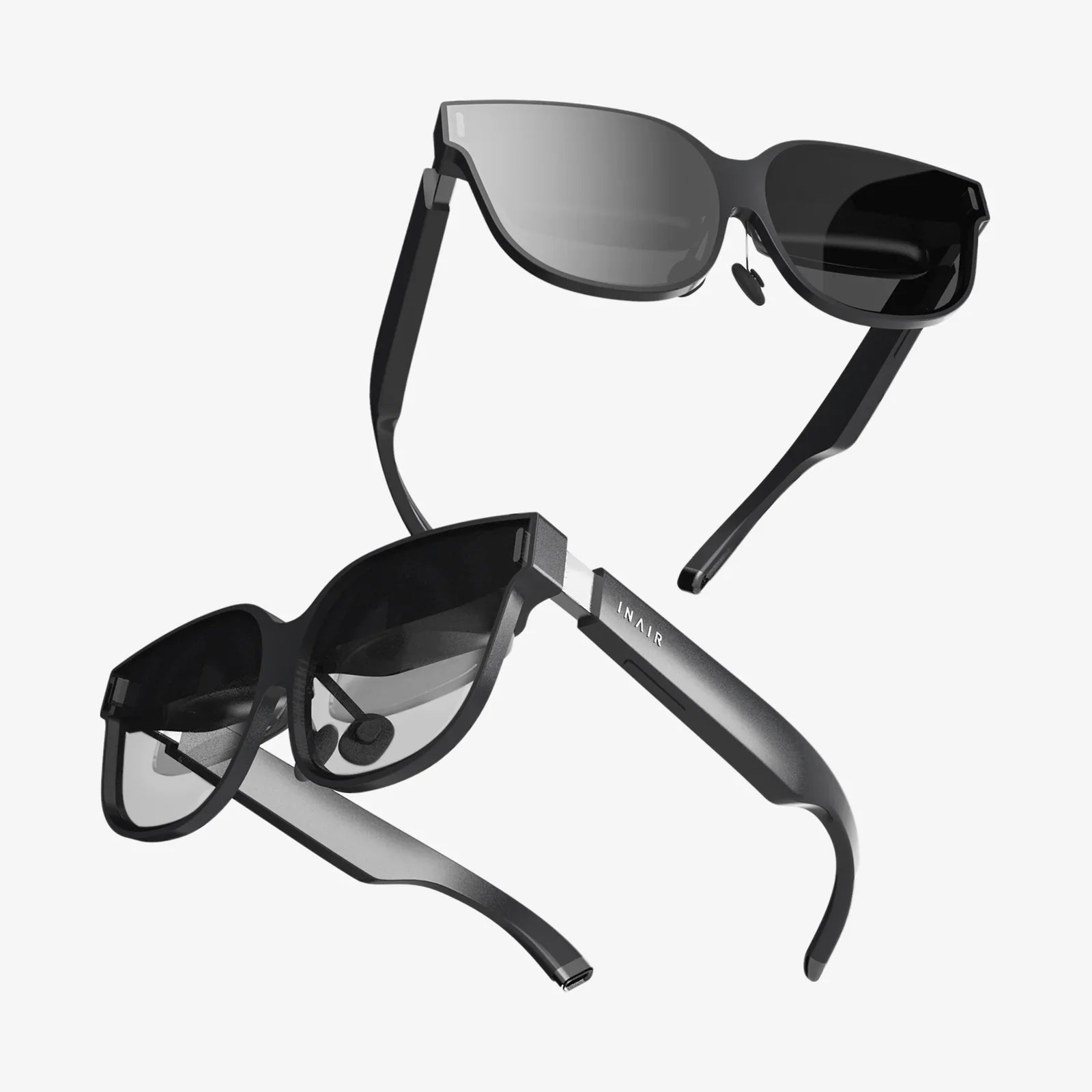
AR experiences can be delivered through a range of devices, from simple smartphones and tablets to more advanced smart glasses. The core tech typically includes:
- Cameras and Sensors: To capture the live view of the real world.
- Processing: Sufficient CPU and GPU power to render the digital graphics.
- Software and Algorithms: For object recognition (e.g., identifying a flat surface or a specific image marker) and tracking the device's movement to keep the overlay stable.
Many AR applications use "marker-based" tracking, relying on a predefined image (a QR code or a special symbol) to trigger and position the digital content. More advanced AR uses "markerless" or SLAM (Simultaneous Localization and Mapping) technology to understand the environment without pre-set markers.
The Advanced Tech Driving MR
MR demands a much higher level of environmental understanding and processing, which is why it is primarily experienced through high-end headsets. Key technologies include:
- Advanced Spatial Mapping: A dense, real-time 3D scan of the environment to create a digital mesh, understanding the contours of every surface.
- Depth Sensing: Using technologies like structured light, time-of-flight cameras, or LiDAR to accurately measure distances to every point in the room.
- Precise Head and Hand Tracking: High-fidelity sensors to track the user's gaze, gestures, and movements with extreme accuracy for natural interaction.
- Powerful Onboard Computing: The need to process immense amounts of spatial data in real-time often requires processing power comparable to a high-end gaming computer.
This complex suite of technologies allows an MR system to do something an AR system cannot: understand the context of the physical world and let digital content interact with it convincingly.
A World of Applications: How AR and MR Are Being Used Today
The practical applications for both AR and MR are vast and growing, impacting nearly every sector of the economy.
Augmented Reality in Action
- Retail and E-commerce: Trying on clothes, sunglasses, or makeup virtually using a smartphone camera. Placing virtual furniture in your living room to see how it fits and looks before you buy.
- Navigation: Overlaying directional arrows and points of interest onto a live street view through a phone or car windshield.
- Maintenance and Repair: Providing technicians with hands-free, overlay instructions and diagrams while they work on complex equipment.
- Education: Bringing textbooks to life with interactive 3D models of the human heart or historical artifacts.
Mixed Reality Transforming Industries
- Design and Manufacturing: Engineers and designers can collaborate on a full-scale, virtual 3D model of a car engine prototype that is anchored to a real table, examining it from every angle and making changes in real-time.
- Healthcare: Surgeons can use MR to visualize a patient's CT scan data, such as a tumor, projected directly onto the patient's body during pre-surgical planning or even in the operating room.
- Remote Collaboration: A field engineer wearing an MR headset can share their live view with an expert thousands of miles away. The expert can then draw arrows and diagrams that appear anchored to the actual machinery in the engineer's field of view, guiding them through a complex repair procedure.
- Training and Simulation: Creating hyper-realistic training scenarios for dangerous jobs. A firefighter could train in a digitally simulated fire that interacts with the real training facility's structure.
The Challenges and Considerations on the Road Ahead
Despite their immense potential, the widespread adoption of AR and MR faces several significant hurdles.
For AR: The main challenges are improving tracking accuracy without markers, creating more compelling and useful content beyond novelties, and developing comfortable, socially acceptable, and affordable smart glasses that consumers will want to wear all day.
For MR: The barriers are even higher. The cost of high-end MR headsets is prohibitive for most consumers. The devices themselves need to become smaller, lighter, and less power-hungry. There are also major questions around data privacy and security, as these devices are constantly scanning and digitizing our most private spaces. Furthermore, creating user interfaces and interaction models that feel intuitive and natural is an ongoing area of intense research.
The Future is Blended: Where Do We Go From Here?
The lines between AR and MR will continue to blur as technology advances. The processing power required for MR will become more compact and affordable, and the sensors will become more sophisticated and miniaturized. We are moving toward a future where a single pair of lightweight glasses could offer a full spectrum of experiences, shifting seamlessly from simple AR notifications to fully immersive MR simulations based on the user's needs.
The ultimate goal is the concept of the "digital twin"—a perfect, real-time digital replica of our physical world. This would enable unimaginably precise MR experiences and transformative applications in city planning, logistics, and global collaboration. Furthermore, the convergence of AI with these spatial computing platforms will be a game-changer, allowing our devices to not just see the world but to understand it contextually and anticipate our needs.
The journey from simple AR overlays to complex MR interactions represents one of the most significant technological shifts of the 21st century. It's a move away from screens that we look at and toward a computing environment that exists all around us. This isn't just about new gadgets; it's about redefining the fundamental relationship between humans, information, and the physical world. The question is no longer if this future will arrive, but how quickly we can adapt to and shape its incredible potential.
We stand at the precipice of a new layer of existence, a seamlessly blended world waiting to be built. The debate between AR and MR is more than technical semantics; it's the roadmap for this construction. Understanding the difference is your first step into a larger universe, one where your reality is limited only by imagination. The tools to reshape your world, to learn, create, and connect in ways previously confined to science fiction, are rapidly emerging. The only question that remains is: what will you build when the digital and physical are finally one?
Share:
Is Augmented Reality Immersive? Exploring the Spectrum of Digital Overlay
Virtual Reality Augmented Reality AR: The Merging of Realities and the Future of Human Experience