


Imagine a world where the digital and the physical are no longer separate realms, but a seamless, interactive tapestry of experience. This is the promise held within the powerful trio of immersive technologies: Virtual Reality, Augmented Reality, and the encompassing field of AR. They are not just gadgets for gamers; they are foundational shifts in computing, poised to redefine reality itself and revolutionize every facet of our lives. The journey from science fiction to tangible reality is happening now, and it's a story of incredible innovation, profound potential, and significant questions about the future we are building.
Demystifying the Digital Spectrum: VR vs. AR
While often mentioned in the same breath, Virtual Reality and Augmented Reality offer fundamentally different experiences. Understanding this distinction is key to appreciating their unique applications and potential.
Virtual Reality: The Complete Digital Escape
Virtual Reality is the art of substitution. It uses a head-mounted display, typically fully enclosing the user's field of vision, to block out the physical world and transport them into a completely computer-generated environment. This is more than just watching a 3D movie; it is about presence—the convincing and powerful sensation of actually being inside the digital space. This immersion is achieved through a combination of sophisticated technologies:
- Head Tracking: Sensors (gyroscopes, accelerometers, and often external cameras or inside-out tracking) meticulously monitor the movement of your head—up, down, left, right, and rotational pitches and yaws. This allows the virtual world to respond in perfect synchrony with your movements, maintaining the illusion.
- Visual Fidelity: High-resolution displays are placed mere centimeters from your eyes, filling your peripheral vision. Low persistence (rapidly turning pixels on and off) and high refresh rates (90Hz and above) are critical to prevent motion blur and simulator sickness, ensuring visual comfort.
- Spatial Audio: 3D audio technology mimics how sound behaves in the real world. Sounds can come from above, behind, or below, changing dynamically as you turn your head, deepening the sense of immersion.
- Controller Tracking: Hand-held controllers are also tracked in 3D space, allowing users to reach out, manipulate virtual objects, and interact with the environment using their hands, a far more intuitive interface than a mouse and keyboard.
The primary goal of VR is total immersion, making it the ultimate tool for simulation, deep training, and experiential storytelling.
Augmented Reality: Enhancing the World Around You
If VR is about substitution, Augmented Reality is about addition. AR overlays digital information—images, text, 3D models, and animations—onto the user's view of their real-world environment. Instead of replacing reality, it enhances it. This can be experienced through various devices:
- Smartphone and Tablet AR: The most accessible form of AR uses a device's camera to display the real world on its screen while superimposing digital content on top. This is powerful for visualization apps, trying furniture in your room before you buy, or interactive gaming.
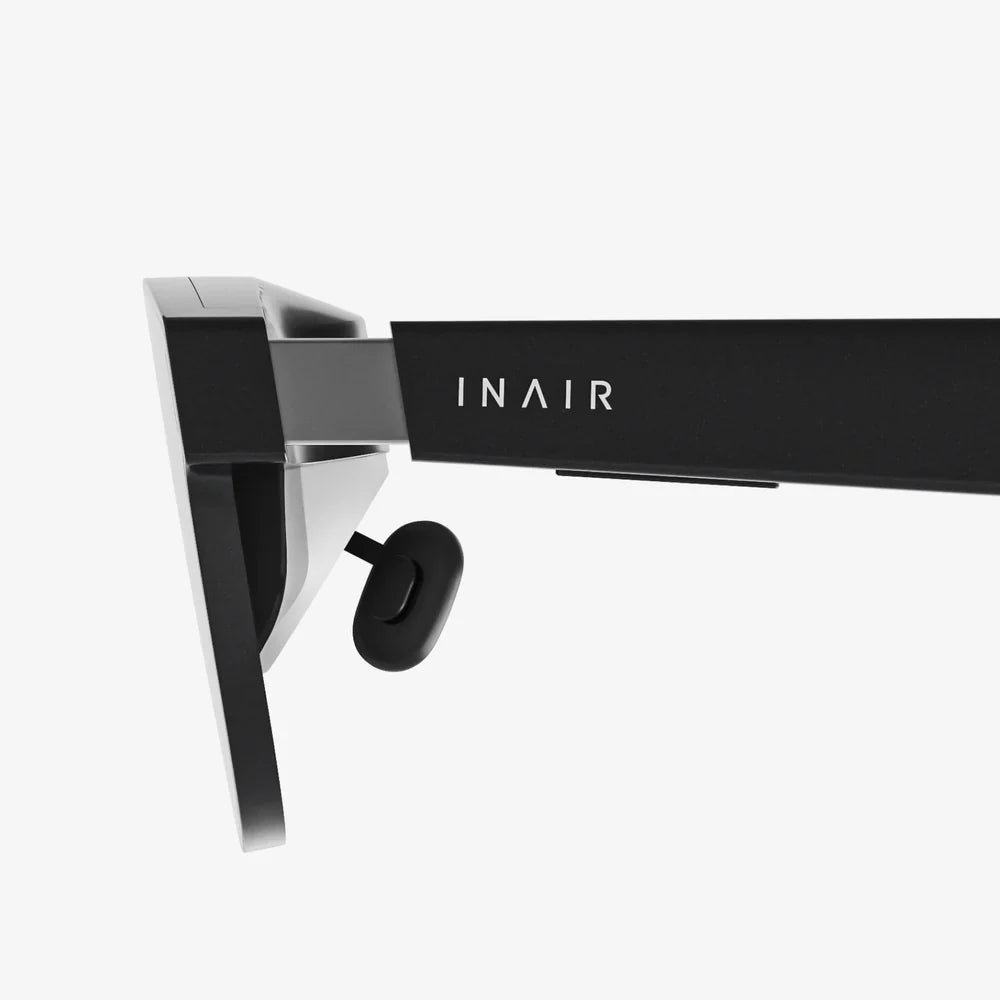
- Smart Glasses: The more advanced and hands-free evolution of AR. These glasses, often transparent, project light onto their lenses to make digital content appear as a natural part of the world. They are designed for all-day use, offering contextual information without requiring the user to look down at a phone.
The magic of AR lies in its ability to contextualize information. It requires a sophisticated understanding of the user's environment, achieved through:
- Computer Vision: The technology that allows the device to see and interpret the world. It identifies flat surfaces (planes), maps the environment (simultaneous localization and mapping, or SLAM), and understands objects and spatial geometry.
- Precise Anchoring: Digital objects must be convincingly locked to a point in the real world. A virtual character must sit convincingly on your real coffee table, and navigation arrows must appear to be painted on the sidewalk, not floating unanchored in space.
AR's power is in its ubiquity and utility, offering just-in-time information that is directly relevant to your immediate context and location.
The Engine Room: Core Technologies Powering the Revolution
Behind the magical experiences of VR and AR lies a complex suite of technologies that have only recently matured enough to make them viable.
Sensing and Understanding the World
For these technologies to interact with our reality, they must first perceive it. This goes far beyond a simple camera feed.
- Inside-Out vs. Outside-In Tracking: Early VR systems used outside-in tracking, relying on external sensors placed around a room to monitor the headset's position. Modern systems use inside-out tracking, where cameras and sensors on the headset itself constantly scan the environment to triangulate its position, offering greater freedom and ease of setup.
- Depth Sensing: Technologies like structured light (projecting a pattern of infrared dots and measuring their deformation) or time-of-flight sensors (measuring the time it takes for light to bounce back) create a detailed 3D depth map of the environment. This is crucial for AR to understand where walls, floors, and objects are, allowing for realistic occlusion (a virtual object hiding behind a real couch).
- Eye Tracking:
Becoming increasingly common in high-end headsets, eye tracking serves multiple purposes. It enables Foveated Rendering, a technique that renders the area of the screen you are directly looking at in high resolution while subtly reducing the detail in your peripheral vision. This dramatically reduces the computational power required without the user noticing. It also enables more natural social interactions in VR, as avatars can make realistic eye contact, and provides invaluable data for user experience research.
The Computational Challenge
Generating convincing, interactive worlds in real-time is one of the most demanding tasks for modern processors and graphics units. The need for miniaturization is even more acute for AR glasses, which must pack immense computing power into a small, lightweight, and thermally efficient form factor. This has driven innovation in edge computing, specialized chipsets, and cloud-based rendering, where heavy processing is offloaded to remote servers.
Transforming Industries: Practical Applications Today
The theoretical potential of VR and AR is vast, but their real-world impact is already being felt across numerous sectors.
Revolutionizing Education and Training
These technologies are moving learning from passive observation to active participation.
- Immersive Learning: Instead of reading about ancient Rome, students can take a VR field trip and walk its streets. Medical students can practice complex surgical procedures on virtual patients, making mistakes without consequence. Mechanics can learn to repair a jet engine by following AR instructions overlaid on the actual machinery, identifying each part and the correct tool to use.
- Soft Skills Training: VR is exceptionally effective for practicing public speaking, difficult conversations, or sales pitches in a simulated environment with virtual humans that respond realistically. This provides a safe space to build confidence and muscle memory.
Redefining Healthcare and Therapy
The therapeutic potential of immersive tech is profound.
- Exposure Therapy: VR is used to treat phobias (fear of heights, flying, public speaking) and PTSD by gradually and safely exposing patients to their triggers within a controlled virtual environment.
- Rehabilitation: AR and VR can turn physical therapy exercises into engaging games, improving patient motivation and adherence to treatment plans. Stroke victims can use VR to re-train neural pathways by interacting with virtual objects.
- Surgical Planning and Assistance: Surgeons can use VR to explore a 3D model of a patient's specific anatomy from every angle before making an incision. During surgery, AR can project vital signs, ultrasound data, or critical guidance directly into their field of view.
Powering the Future of Enterprise and Manufacturing
On factory floors and in corporate offices, AR is becoming an indispensable tool.
- Remote Assistance: A field technician stuck on a complex repair can don AR glasses and share their live view with an expert thousands of miles away. The expert can then draw arrows, highlight components, and pull up manuals directly into the technician's field of view, enabling first-time fixes and reducing downtime.
- Design and Prototyping: Automotive and aerospace engineers use VR to design and collaborate on 3D models at full scale, identifying potential issues long before a physical prototype is built. Architects can walk clients through a virtual rendering of a building, making changes to materials and layouts in real-time.
- Logistics and Warehousing: AR smart glasses can guide warehouse workers to the exact location of an item, display picking lists, and verify that the correct product has been selected, dramatically improving efficiency and accuracy.
Unleashing New Forms of Storytelling and Entertainment
While gaming is the most visible application, the impact on media is broader.
- Cinematic VR: filmmakers are experimenting with 360-degree narratives where the viewer is placed inside the story, free to look around and choose where to focus their attention, creating a deeply personal and empathetic experience.
- Live Events and Social Connection: VR social platforms allow people to meet, attend concerts, watch movies, and play games together as embodied avatars, offering a sense of shared presence that video calls cannot match. This has powerful implications for reducing loneliness and connecting people across vast distances.
The Human Factor: Societal and Ethical Considerations
As with any transformative technology, the rise of immersive computing brings a host of challenges that society must confront.
The Privacy Paradigm Shift
AR glasses, by their very nature, are always-on cameras and sensors continuously scanning the world. This raises unprecedented privacy concerns. Who owns the data collected about your home, your workplace, or public spaces? How is this biometric data (your eye movements, your gait) stored and used? The potential for constant surveillance, both by corporations and governments, is a significant threat that requires robust legal and ethical frameworks developed proactively, not reactively.
The Reality Gap: Accessibility and the Digital Divide
High-quality VR and AR hardware remains expensive. There is a real risk that these transformative tools for education, healthcare, and economic opportunity could become available only to the wealthy, exacerbating existing social and economic inequalities. Ensuring equitable access will be a critical challenge.
Psychological and Physical Health Impacts
Prolonged use of immersive technologies can have side effects, from simulator sickness in VR to eye strain in AR. More profoundly, what are the long-term psychological effects of increasingly blurring the line between the real and the virtual? Could a over-reliance on perfect virtual worlds lead to dissatisfaction with imperfect reality? The potential for addiction and escapism is a concern that must be studied and addressed with clear guidelines and user education.
Redefining Human Interaction
If we begin to conduct more of our social and professional lives through digital avatars in virtual spaces, how does that change our understanding of human connection? While it can connect people across the globe, it could also further reduce face-to-face interaction in local communities. The norms of behavior, identity, and communication in these new spaces are still being written.
The Road Ahead: The Inevitable Merging of Realities
The future of VR and AR is not one of separate paths, but of convergence. The term often used to describe this spectrum is Extended Reality (XR). We are moving towards devices that can seamlessly switch between a fully immersive VR mode and a transparent AR mode, or even blend them together in Mixed Reality (MR), where digital objects convincingly interact with the physical world and vice versa.
The hardware will continue to evolve towards the ultimate goal: comfortable, socially acceptable glasses that offer high-fidelity visual experiences all day long. Breakthroughs in display technology (like holographic waveguides), brain-computer interfaces (for more intuitive control), and 5G/6G connectivity (for streaming high-end experiences wirelessly) will accelerate this trend.
We are standing at the precipice of a new computing paradigm. The transition from command-line to graphical user interfaces (GUIs) brought computing to the masses. The shift to touchscreens and mobile put that power in our pockets. Now, the shift to spatial computing, powered by Virtual Reality and Augmented Reality, is moving the digital world off our screens and into our lived environment. It will become the invisible fabric enhancing our perception, cognition, and interaction with the world. It promises to augment not just our reality, but our very humanity, expanding the limits of what we can learn, create, and experience. The door to this new dimension is now open, and the first steps inside are revealing a future limited only by our imagination.
This isn't just about the next generation of entertainment; it's about fundamentally reshaping the human experience, from how we save lives and build cities to how we tell our stories and connect our souls. The virtual and the real are on a collision course, and the resulting fusion will change everything.
Share:
AR vs MR: The Ultimate Guide to Understanding the Spectrum of Digital Reality
VR Sunglasses The Ultimate Guide to the Next Generation of Wearable Tech