


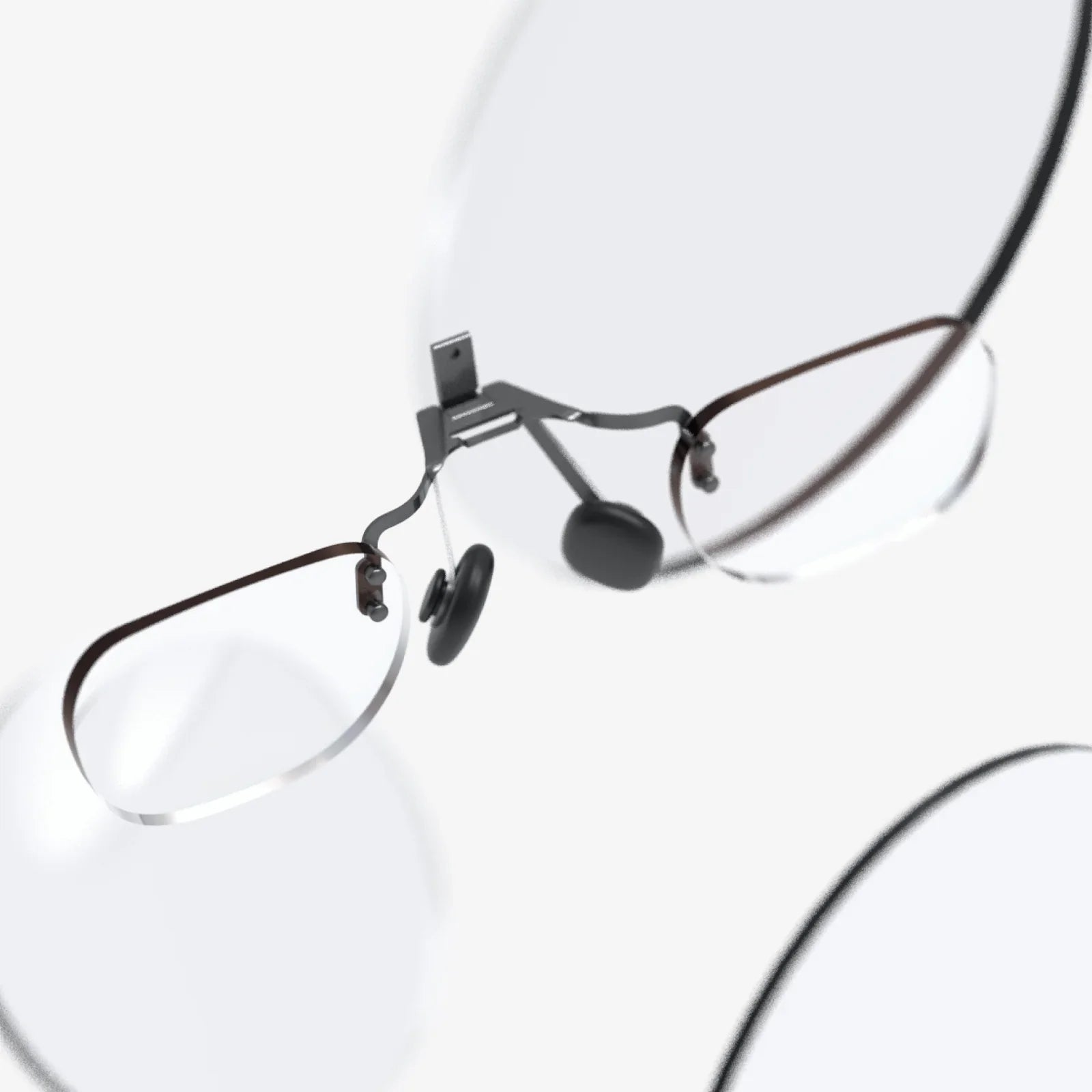
Imagine slipping on a pair of sunglasses so stylish, so lightweight, you’d forget they’re a portal to another dimension. This isn’t a scene from a sci-fi blockbuster; it’s the imminent future promised by VR sunglasses, the most significant leap in immersive technology since the concept of virtual reality was born. Forget the bulky, face-engulfing headsets of yesterday. The next wave is here, and it’s designed not for a dimly lit basement, but for the world. This is the dawn of a new reality, seamlessly integrated into our own, and it’s going to change everything.
From Prototype to Paradigm Shift: The Evolution of Form Factor
The journey to VR sunglasses has been one of relentless miniaturization and engineering ingenuity. Early virtual reality systems were monumental affairs, often requiring users to be tethered to room-sized computers. The first consumer-grade devices, while revolutionary, were often described as "face computers"—heavy, front-heavy, and isolating. They were incredible for dedicated gaming sessions but impractical for anything else.
The fundamental shift with VR sunglasses is the complete re-imagining of the device's physical presence. By leveraging advancements in micro-optics, pancake lenses, and ultra-compact micro-OLED displays, engineers have collapsed the physical depth required for a high-fidelity immersive experience. The result is a form factor that prioritizes the user's comfort and social acceptability, moving the technology from a niche hobby into the mainstream consciousness.
Under the Hood: The Powerful Tech in a Slim Profile
Don’t let their sleek appearance fool you. Packed within the slim arms and elegant frames of VR sunglasses is a staggering amount of cutting-edge technology.
- Micro-OLED Displays: These are the cornerstone of the visual experience. Unlike the larger LCDs of the past, micro-OLEDs are built directly onto a silicon wafer, allowing for incredibly high pixel density (exceeding 5000 PPI in some prototypes) in a minuscule space. This translates to razor-sharp imagery with virtually no "screen door effect," where users can see the gaps between pixels.
- Pancake Lens Optics: Traditional Fresnel lenses are thick and require significant space between the display and the user's eye. Pancake lenses use a complex system of polarization folding and reflection to bounce light multiple times within a thin assembly. This optical innovation is arguably the single most important factor in slimming down the overall device profile.
- Inside-Out Tracking: Early headsets relied on external sensors or "lighthouses" placed around a room to track the user's movement. Modern VR sunglasses use a sophisticated array of tiny, high-speed cameras embedded in the frame to map the environment in real-time. This "inside-out" tracking allows for complete positional freedom and effortless room-scale experiences without any external setup.
- Onboard Processing and Connectivity: The processing paradigm is split. Some models act as a "dumb" display, leveraging a powerful external device via a high-speed wireless connection for rendering. Others are fully standalone, integrating a smartphone-level system-on-a-chip (SoC), memory, and storage directly into the glasses, enabling true untethered mobility.
- Spatial Audio: Audio is often an afterthought, but not here. Advanced bone conduction transducers or tiny, directional speakers built into the arms can project spatialized sound directly into the user's ears without headphones, allowing them to remain aware of their real-world surroundings while being immersed in a virtual soundscape.
A World of Applications: Far Beyond Gaming
While gaming will undoubtedly be a killer application, the potential of VR sunglasses extends into nearly every facet of modern life. Their wearability is the key that unlocks these new use cases.
Revolutionizing the Workplace
Imagine an architect walking a client through a full-scale, photorealistic 3D model of a building before the foundation is even poured. A surgeon could overlay a patient's MRI scan onto their field of view during a procedure for enhanced precision. Remote collaboration will be transformed, with colleagues appearing as life-like avatars around a virtual prototype, all while working from their actual desks. VR sunglasses could become the ultimate multi-monitor setup, projecting limitless virtual screens in a clean, distraction-free environment.
The Future of Entertainment and Social Connection
Watching a movie will cease to be a passive activity. Instead of a 65-inch TV, you could be sitting in a virtual IMAX theater, at the edge of a cliff on a alien planet, or in a private screening room with friends who are physically miles away. Live events—concerts, sports, conferences—will become accessible experiences where you have the best seat in the house, with the ability to choose your camera angle or socialize with other virtual attendees. This technology promises to dissolve geographical barriers, making presence a choice rather than a circumstance.
Enhanced Reality and Contextual Computing
This is where the line between Virtual Reality and Augmented Reality (AR) begins to blur—a spectrum often called Mixed Reality (MR). VR sunglasses can use their cameras to pass through a video feed of the real world, upon which digital objects can be anchored. This enables a form of contextual computing: navigation arrows painted onto the street in front of you, real-time translation of foreign street signs, or digital art installations placed in a public park. The world itself becomes an interactive interface.
Navigating the Challenges: The Road Ahead
For all their promise, VR sunglasses face significant hurdles before they become as ubiquitous as smartphones.
- Battery Life and Thermal Management: Powering high-resolution displays and complex processing generates heat and drains batteries. Fitting a battery capable of all-day use into the slim arms of sunglasses without making them uncomfortably heavy is a monumental challenge. Innovative solutions like swappable battery packs or offloading processing to a companion device in your pocket will be crucial.
- The Input Conundrum: How does one interact with a virtual interface that has no physical form? While hand-tracking via onboard cameras is improving rapidly, it can be imprecise for extended typing or complex tasks. Voice control is another option, but not always socially appropriate or private. The search for the perfect, intuitive input method for this new paradigm is still ongoing.
- Social Acceptance and Digital Etiquette: Wearing sunglasses indoors is often considered rude. Will this social norm adapt to technology, or will users feel self-conscious? Furthermore, if the glasses have outward-facing cameras, they raise concerns about privacy and the ethics of recording in public spaces without clear indication. Establishing new social contracts and technological safeguards will be essential.
- The Content Ecosystem: Hardware is nothing without software. A robust ecosystem of applications, experiences, and content tailored for this new form factor needs to be cultivated. Developers must rethink user experience (UX) design for a world without traditional screens, mice, and keyboards.
The Ethical Dimension: A New Reality Demands New Rules
As with any transformative technology, VR sunglasses bring a host of ethical questions. The potential for hyper-realistic misinformation or "deepfake" environments is alarming. The collection of unprecedented amounts of biometric data—eye-tracking, movement, even pupil dilation—raises serious privacy concerns. Who owns this data? How is it used? There is also the risk of deepening the digital divide, creating a chasm between those who can afford this new layer of reality and those who cannot. Proactive dialogue among technologists, policymakers, and the public is critical to navigate these challenges responsibly.
A Glimpse Into Tomorrow
The development cycle is accelerating at a breathtaking pace. We are moving from the "proof-of-concept" stage to refined consumer products. Within the next few years, we will see iterations that are even lighter, offer higher resolution, longer battery life, and more seamless integration with our digital lives. The goal is a device that feels less like a piece of technology and more like a natural extension of our senses—a true window to the digital universe that resides on our faces.
The promise of VR sunglasses is nothing short of redefining human-computer interaction. They offer a future where the digital and physical worlds coalesce, where the constraints of physical space and hardware are lifted, and where our capacity to learn, create, and connect is limited only by our imagination. The bulky headset had its day, and it was glorious. But the future is sleek, it is stylish, and it fits neatly on the bridge of your nose. The next time you see someone wearing sunglasses indoors, don’t assume they’re a celebrity; they might just be exploring a new reality.
Share:
VR Headset for PC: The Ultimate Guide to High-Fidelity Immersion
VR Headset for PC: The Ultimate Guide to High-Fidelity Immersion