


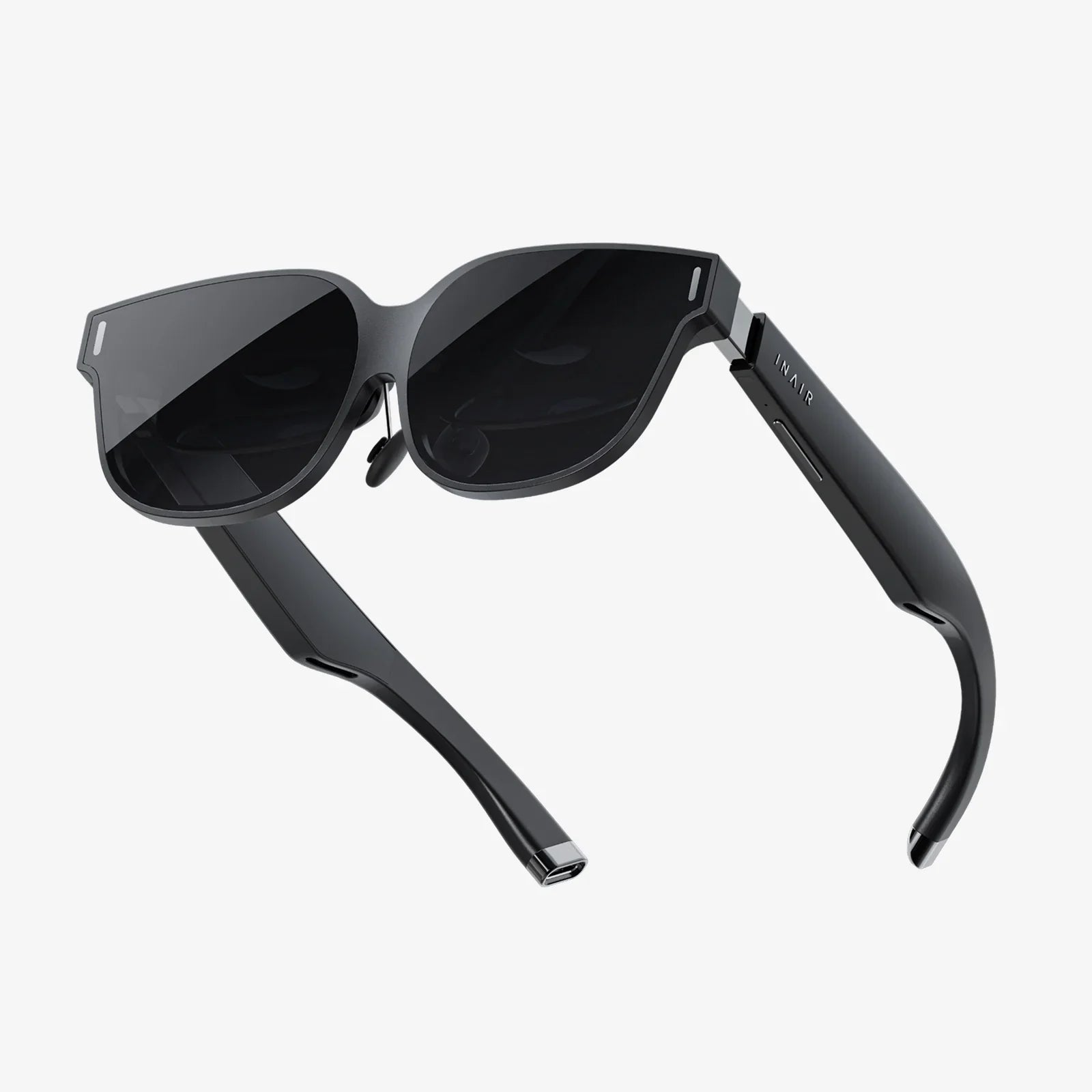
Imagine stepping through a portal into another reality, where the boundaries of your physical room dissolve into vast alien landscapes, intricate fantasy castles, or hyper-realistic training simulations. This isn't science fiction; it's the tangible, pulse-quickening experience offered by a modern VR headset for PC. While standalone devices have made VR more accessible, it is the raw, untethered power of a gaming computer that truly unlocks the medium's staggering potential for depth, detail, and mind-bending immersion. This guide dives deep into the world of PC-driven virtual reality, exploring the technology that makes it possible, the experiences that define it, and the future it is relentlessly building.
The Heart of the Machine: Why PC Power is a Game-Changer
The fundamental difference between a standalone VR system and a PC-connected headset boils down to one word: power. A standalone headset is a marvel of miniaturization, packing a mobile-grade processor, battery, and all its computing components into a single wearable unit. In contrast, a VR headset for PC acts as a high-resolution display and sensory interface, offloading the immense computational heavy lifting to a dedicated desktop computer.
This division of labor is crucial. A powerful desktop GPU and CPU have orders of magnitude more processing capability than any mobile chipset. This surplus power is directly funneled into creating more convincing and comfortable virtual worlds:
- Superior Visual Fidelity: PC VR headsets can drive displays with significantly higher resolutions, faster refresh rates (90Hz, 120Hz, and even 144Hz), and more advanced panel technology. This results in stunningly sharp images with minimal "screen door effect," where the gaps between pixels become visible. The fluid motion afforded by high refresh rates is critical for combating simulation sickness and achieving true presence.
- Advanced Graphical Effects: This is where the magic happens. PC VR can handle complex lighting models like real-time ray tracing, incredibly detailed textures, vast draw distances, and dense particle effects. These are the elements that transform a virtual space from a cartoonish representation into a world that feels tangible and believable.
- Larger and More Complex Worlds: With more RAM and VRAM at its disposal, a PC can generate and manage expansive, seamless environments without the need for frequent loading screens. The scale of adventures, the complexity of puzzles, and the sheer density of interactive objects can be vastly greater.
Navigating the Hardware Landscape: Key Considerations
Choosing the right PC VR setup is a balancing act between performance, comfort, and budget. Understanding the key components will help you make an informed decision.
The Headset Itself: Display and Optics
The core of the experience lies in the headset's ability to display the virtual world. Key specifications to consider include:
- Resolution and Panel Type: Measured in pixels per eye (e.g., 2160x2160). Higher numbers generally mean sharper images. OLED panels offer perfect blacks and vibrant colors, while fast-switch LCDs reduce motion blur and often allow for higher resolutions.
- Refresh Rate: Measured in Hertz (Hz), this dictates how many times the image updates per second. 90Hz is the baseline for comfort, with 120Hz and 144Hz providing exceptionally smooth motion for fast-paced games.
- Field of View (FoV): This is how much of the world you can see, typically measured diagonally. A wider FoV (110 degrees and above) increases immersion by reducing the "binoculars" effect.
- Lens Technology: Fresnel lenses are common but can cause "god rays" (glare effects). Aspherical and pancake lenses are newer technologies that offer better clarity and a larger "sweet spot," though they can present their own optical challenges.
The Tracking Systems: How You Are Seen
For the virtual world to react to you, the system must accurately track the position of your headset and controllers. There are two primary methods:
- Outside-In Tracking: This method uses external sensors or base stations placed around your play area. These devices constantly beam signals (usually infrared lasers or LEDs) to track the precise position of the headset and controllers. The advantage is extremely high accuracy and robustness, especially for competitive play or full-body tracking. The downside is the need to set up and calibrate external hardware.
- Inside-Out Tracking: This more modern approach embeds cameras directly onto the headset. These cameras observe the physical environment, tracking their own movement relative to the room and simultaneously mapping the controllers. The huge benefit is a drastically simplified setup—no external sensors are needed. While accuracy has become excellent for most applications, it can sometimes struggle with very fast, precise movements or when controllers are held outside the cameras' field of view.
Controllers: Your Hands in the Virtual World
VR controllers are your primary tool for interaction. They are ergonomically designed to feel like an extension of your hands, featuring analog grips, triggers, thumbsticks, and buttons. Advanced haptic feedback provides subtle vibrations and sensations, allowing you to "feel" the virtual objects you interact with, from the recoil of a weapon to the gentle pull of a bowstring.
The Software That Breathes Life: A Universe of Experiences
The hardware is merely a vessel; it is the software that fills it with life. The PC VR ecosystem is rich with diverse and deep experiences that leverage its superior power.
Gaming: The Main Attraction
Gaming remains the primary driver of VR adoption, and PC VR is its cutting edge.
- Epic Adventures and AAA Titles: This is the exclusive domain of PC VR. Massive, graphically intensive games built from the ground up for VR offer dozens of hours of gameplay, rich narratives, and production values that rival flat-screen AAA titles. These experiences often feature complex mechanics, deep combat systems, and worlds you can truly get lost in.
- High-Fidelity Simulations: The accuracy and processing power of a PC make it the perfect platform for simulations. Flight simulators render entire planets with real-time weather, while racing sims deliver photorealistic tracks and meticulously modeled car physics. The level of detail is unparalleled, catering to hardcore enthusiasts who demand authenticity.
- Social VR and Persistent Worlds: Platforms exist that are more than games; they are social spaces. Users can create avatars, hang out with friends, attend virtual events, watch movies together, and even build and script their own worlds. The complexity and user-generated content within these platforms are a direct result of PC's computational flexibility.
Beyond Gaming: The Productive and Creative Frontier
VR's potential extends far beyond entertainment. The concept of the "metaverse" or "spatial computing" envisions a future where we work and create in 3D space.
- Virtual Workspaces: Imagine replacing your physical monitors with infinite, virtual screens. Applications allow you to work within a serene, distraction-free environment of your choosing, with multiple browser windows and documents floating around you. 3D designers and architects can step inside their creations to review and modify them at a 1:1 scale, an invaluable tool for prototyping and presentation.
- Education and Training: Medical students can practice complex surgical procedures in a risk-free virtual operating room. Mechanics can train on virtual engines. History students can take guided tours through ancient Rome. The immersive nature of VR drastically improves knowledge retention and provides access to experiences that would be impossible, too dangerous, or too expensive in the real world.
- Art and 3D Sculpting: Applications give users a full suite of virtual tools to paint in 3D space and sculpt digital clay as if it were real. Artists are no longer confined to a 2D screen but can walk around and inside their creations, revolutionizing digital art and design.
Setting Sail: Preparing for Your PC VR Journey
Before you take the plunge, a little preparation will ensure a smooth and enjoyable experience.
- PC Specifications: This is the most critical step. Check the recommended specifications for the headset and the software you want to run. Pay close attention to the GPU (graphics card) requirements, as this is the most important component for VR. A machine that is "VR Ready" is equipped to handle the demanding workload.
- Play Area: You need a clear, safe space to use VR. This is defined as either "Seated/Standing" or "Room-Scale." Room-scale VR requires a cleared area of at least 2m x 1.5m (6.5ft x 5ft) to allow you to physically walk around and interact. Always be mindful of your surroundings—the chaperone boundary system is your best friend.
- Comfort is King: A well-fitting headset is essential for long sessions. Look for features like adjustable head straps, counterweights, and interchangeable facial interfaces. The goal is to distribute the weight evenly across your head and face without excessive pressure.
The Horizon Ahead: The Future of PC-Powered VR
The evolution of PC VR is accelerating, pushing beyond current limitations. Several emerging technologies promise to redefine the experience yet again:
- Varifocal and Eye-Tracking: Future headsets will feature eye-tracking technology not just for social expression, but for "foveated rendering." This technique renders only the spot you're directly looking at in full detail, while intelligently reducing the detail in your peripheral vision. This massively reduces the GPU workload, allowing for even higher fidelity graphics without requiring a more powerful computer. Combined with varifocal lenses that adjust focus based on where you look, this could finally solve the vergence-accommodation conflict, a primary source of eye strain in current VR.
- Haptic Feedback and Full-Body Tracking: The next frontier of immersion is touch. Advanced haptic gloves are in development that can simulate the texture, weight, and resistance of virtual objects. When combined with affordable full-body tracking suits, this will allow your entire digital avatar to mirror your real-world movements with perfect accuracy, completing the sense of physical embodiment.
- The Blurring Line with Augmented Reality (AR): The future likely lies in headsets that can seamlessly blend the real and the virtual. Passthrough cameras on VR headsets are already improving, allowing for high-resolution, full-color views of your real environment. This technology, known as Mixed Reality (MR), will enable virtual screens and objects to be anchored convincingly in your physical living room, merging the power of PC VR with the utility of everyday life.
The journey into virtual reality is one of the most exciting technological adventures of our time, and the PC is its most powerful engine. It’s a gateway to worlds of breathtaking beauty, intense challenge, and profound creativity. It’s a tool for learning, building, and connecting in ways we are only beginning to imagine. While the path forward will be paved with increasingly lighter, wireless, and more intuitive hardware, the immense computational might of the desktop computer will remain the cornerstone for those who demand the deepest, most detailed, and truly transformative experiences that virtual reality has to offer. The door to these other worlds is open, and all it requires is the courage to step through.
Share:
VR Sunglasses The Ultimate Guide to the Next Generation of Wearable Tech
VR Sunglasses The Ultimate Guide to the Next Generation of Wearable Tech