


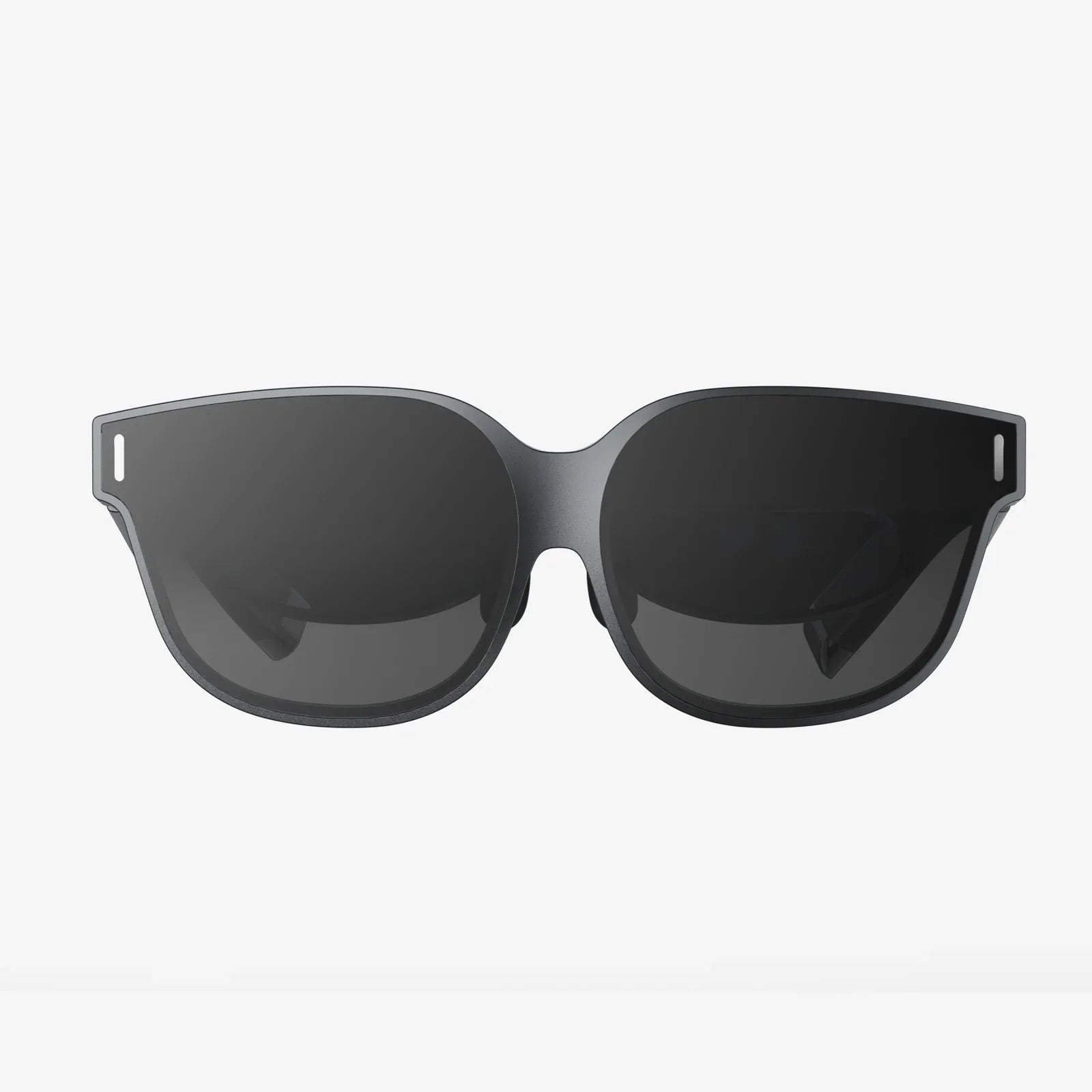
Imagine a world where digital information doesn't just live on a screen but is woven seamlessly into the fabric of your physical environment. Directions float on the pavement before you, historical figures reenact events on the very ground they occurred, and complex repair instructions are projected directly onto the machinery you're fixing. This is the tantalizing promise of augmented reality (AR), a technology that has captured the global imagination. But is this a near-future certainty or merely science fiction? The question is augmented reality possible is not just about its technical existence—we know it is—but about its potential to evolve from a novel gadget into a ubiquitous, reliable, and truly transformative layer of human experience.
The Foundational Pillars: How AR Works Today
To understand the possibility of advanced AR, one must first grasp the core technologies that make even its basic forms function. AR is not a single piece of magic; it's a sophisticated symphony of hardware and software working in concert.
Sensing the World: Cameras and Sensors
The first and most crucial step for any AR system is to perceive and understand the environment. This is achieved through a suite of sensors. Cameras capture the live video feed of the user's surroundings. Beyond simple image capture, advanced systems use:
- Depth Sensors (LiDAR, ToF): These sensors fire out thousands of invisible points of light, measuring the time it takes for them to bounce back to create a precise 3D map of the environment. This allows digital objects to occlude and be occluded by real-world geometry, making them feel solid.
- Inertial Measurement Units (IMUs): Comprising accelerometers and gyroscopes, these track the device's (or user's) movement, orientation, and rotation with extreme speed and precision, ensuring the digital overlay stays locked in place even as you move your head.
- GPS and Compass: For outdoor, large-scale AR, these provide coarse location and directional data to anchor experiences to a specific place in the world.
Understanding the World: Computer Vision and SLAM
Raw sensor data is useless without interpretation. This is where the true genius of AR emerges. Computer vision algorithms analyze the camera feed to identify surfaces (floors, walls, tables), track objects, and even recognize specific images or QR codes. This process allows the system to know where it can plausibly place a digital object.
Working hand-in-hand with computer vision is a technology called Simultaneous Localization and Mapping (SLAM). SLAM is the real-time process where a device both maps an unknown environment and simultaneously tracks its own location within that map. It's what allows you to place a virtual chair in your living room, walk around it, and have it remain perfectly still from every angle. SLAM is the bedrock of convincing, persistent AR.
Displaying the World: Screens, Lenses, and Projectors
Once the environment is understood, the digital content must be presented to the user. This is the most visible and varied aspect of AR technology, existing on a spectrum of immersion.
- Smartphone and Tablet AR: The most accessible form, using the device's screen as a viewport into an augmented world. While effective, it forces users to hold up a device, breaking immersion.
- Smart Glasses and Headsets: These wearable devices use transparent waveguides or micro-displays to project light directly into the user's eyes, superimposing images onto their natural field of view. This allows for hands-free, always-available AR, representing the ideal form factor for mass adoption.
- Spatial Projectors: A less common but intriguing approach that beams light directly onto physical surfaces, turning any wall or table into an interactive display without the need for a headset.
Beyond the Novelty: The Proven Practicality of AR
The question is augmented reality possible is answered resoundingly in the affirmative by its already widespread and impactful applications across numerous industries. It has moved far beyond gaming and social media filters.
Revolutionizing Industry and Enterprise
In fields where precision, efficiency, and safety are paramount, AR is already delivering immense value.
- Manufacturing and Maintenance: Technicians can see step-by-step instructions overlaid on complex machinery, identify parts with highlighted annotations, and remotely collaborate with experts who can draw diagrams directly into their field of view. This reduces errors, training time, and downtime.
- Healthcare and Medicine: Medical students can practice procedures on detailed, interactive 3D holograms of human anatomy. Surgeons can use AR to visualize patient scan data, such as CT or MRI scans, projected directly onto the patient's body during procedures, improving accuracy and outcomes.
- Design and Architecture: Architects and interior designers can place full-scale 3D models of their designs onto empty lots or within existing rooms, allowing clients to walk through and experience a building before a single brick is laid.
- Logistics and Warehousing: Warehouse workers equipped with AR glasses can have the most efficient picking routes displayed before them, with items highlighted on shelves, dramatically speeding up order fulfillment.
Enhancing Daily Life and Consumer Applications
While enterprise leads the charge, consumer AR is steadily advancing.
- Retail and E-commerce: Shoppers can preview how furniture will look in their home, how clothes will fit, or how makeup will appear on their face before making a purchase, reducing return rates and increasing confidence.
- Navigation: Instead of looking down at a phone, arrows and directions can be superimposed onto the real world, guiding users through complex airports, city streets, or inside large buildings like museums and hospitals.
- Education and Cultural Heritage: Museums are bringing exhibits to life, allowing historical artifacts to be reconstructed and explored. Textbooks can become interactive portals, with diagrams animating in 3D space.
The Grand Challenges: Barriers to Ubiquitous AR
Despite these impressive strides, the journey to a seamless, all-day AR experience—the kind depicted in popular media—is fraught with significant technological and social hurdles. The possibility of AR is proven, but its perfection is the challenge.
The Hardware Conundrum: Power, Form, and Function
The ultimate goal is a pair of glasses that are socially acceptable, lightweight, comfortable to wear all day, and powerful enough to run complex AR experiences. We are far from this reality. Current limitations include:
- Battery Life: Processing high-fidelity graphics, running multiple sensors, and powering displays is incredibly energy-intensive. All-day battery life in a small form factor remains a massive challenge.
- Field of View (FOV): Most AR glasses have a limited FOV, meaning the digital images appear in a small, boxy window in front of the user rather than filling their entire vision, which breaks immersion.
- Visual Fidelity and Brightness: Digital objects must be bright enough to be visible in direct sunlight and rendered with enough resolution and realism to convincingly blend with the real world. Current waveguides often suffer from dimness and visual artifacts like rainbow effects.
- Thermal Management: All this processing generates heat, which is difficult to dissipate in a small device worn on the face.
The Software and Connectivity Hurdle
Even with perfect hardware, the software needs to be flawless.
- Persistent World Mapping: For AR to be truly contextual, it needs to remember the environment between sessions. Your virtual monitors should be on your desk every morning. This requires persistent, cloud-based mapping that raises serious questions about privacy and data security.
- Latency and Tracking: Any lag between a user's movement and the adjustment of the AR display causes a mismatch that can lead to nausea and breaks the illusion of reality. Tracking must be rock-solid and instantaneous.
- The "Network Problem": Highly complex AR experiences may rely on cloud computing for rendering (a concept known as cloud streaming). This demands ultra-low-latency, high-bandwidth connectivity (like 5G/6G) everywhere to function smoothly, which is not yet a global reality.
The Social and Ethical Dimension
Technology is only one part of the equation. For AR to become ubiquitous, it must be accepted by society.
- Privacy: AR devices, by their nature, are equipped with always-on cameras and microphones constantly scanning your environment. The potential for surveillance—by companies or governments—is unprecedented and requires robust ethical frameworks and regulations.
- Social Acceptance: Will people be comfortable wearing cameras on their faces in social situations? Will it be considered rude to use AR glasses during a conversation? These social norms need to evolve.
- Digital Addiction and Reality Blurring: If we can curate perfect digital worlds over our own, what does that mean for our connection to un-augmented reality? The psychological effects of long-term AR use are unknown.
- Safety and Security: Malicious AR spam (virtual graffiti) could deface our cities. Worse, hackers could overlay false information onto critical infrastructure or navigation paths, leading to dangerous situations.
The Road Ahead: What the Future Holds
The path forward for AR is not a question of if but how and when. Breakthroughs in several key areas will dictate the pace of adoption.
- Advanced Optics: Technologies like holographic optics and laser beam scanning promise to deliver wider fields of view, higher brightness, and smaller form factors.
- AI Integration: Artificial intelligence will be the brain of AR. It will move beyond simple object recognition to true scene understanding—knowing not just that something is a chair, but what its purpose is, if it's occupied, and how you might interact with it.
- Neuromorphic and Edge Computing: New chip architectures designed to process sensor data with extreme efficiency, akin to how the human brain works, will reduce power consumption and latency, enabling more complex on-device processing.
- The Killer App: Ultimately, a technology achieves mass adoption through a killer application. For the smartphone, it was email and the web, followed by the app ecosystem. AR is still searching for that undeniable, must-have use case for the average consumer.
The journey of augmented reality is a testament to human ingenuity, transforming a concept from speculative fiction into a powerful tool that is already reshaping professions and hobbies. The evidence is clear: augmented reality is not only possible but is already here, operating in our pockets, on our faces, and in our workplaces. The challenges that stand between today's capable but clunky systems and tomorrow's seamless digital layer are immense, spanning physics, computer science, and social science. Yet, the trajectory is undeniable. We are not merely looking at a new screen; we are building a new lens through which to see, understand, and interact with the world itself. The fusion of the digital and physical realms has begun, and its ultimate potential is limited only by our imagination and our wisdom in guiding its development.
Share:
What Is Augmented Reality Simple Definition - A Beginner's Guide
AR VR Topics: Exploring the Virtual Frontier Reshaping Our Reality