


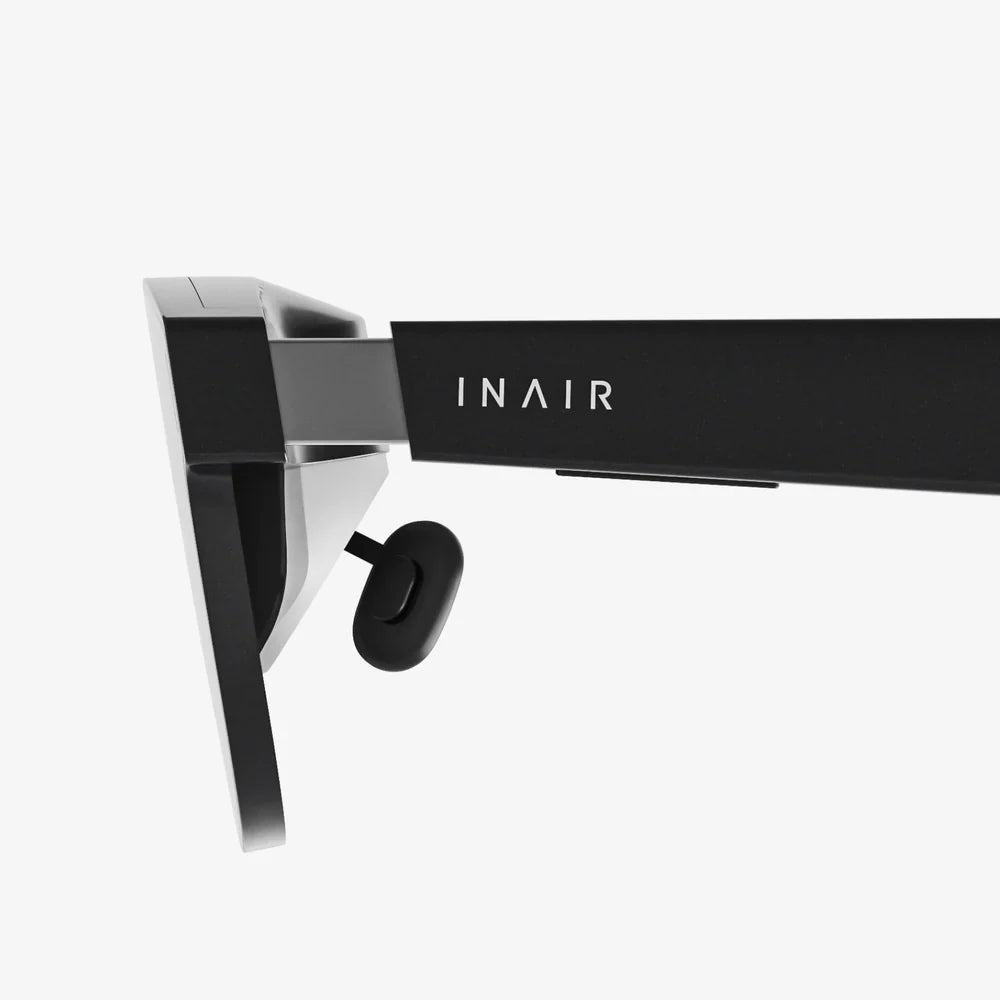
Imagine a world where digital information doesn’t just live on a screen but is seamlessly woven into the fabric of your everyday life. You look through your device and see a navigational arrow painted onto the street in front of you, a historical figure waving from the corner of a building, or the name and rating of a restaurant hovering over its entrance. This isn't science fiction; it's the promise and reality of a technology that is rapidly changing how we interact with information. To truly understand this revolution, we must start with the most fundamental question: what is augmented reality simple definition?
Demystifying the Core Concept
At its absolute simplest, augmented reality (AR) is a technology that superimposes a computer-generated image, video, or 3D model onto a user's view of the real world. The key term here is "augment." Unlike Virtual Reality (VR), which creates a completely artificial digital environment that replaces reality, AR takes your existing, real-world environment and adds a layer of digital information on top of it. It blends the physical and digital worlds, enhancing what you see, hear, and feel.
Think of it like this: if VR transports you to a completely new world, AR brings elements of a new world into yours. A simple, real-world example is the popular mobile game that had millions of people chasing digital creatures in their local parks. Through the camera on their phones, players could see the animated character sitting on their sidewalk or floating in their living room. The real-world backdrop was the foundation, and the digital creature was the augmentation.
The Nuts and Bolts: How AR Actually Works
For AR to function, it requires a combination of hardware and software working in perfect harmony. The process, while complex in its execution, can be broken down into a few fundamental steps that answer the deeper question behind 'what is augmented reality simple definition'—how does it *do* that?
1. Capturing the Real World
It all starts with a camera or a set of sensors. The device—whether a smartphone, a pair of smart glasses, or a headset—uses its camera to capture the live video feed of the user's immediate surroundings. This provides the "canvas" upon which the digital content will be painted.
2. Processing and Understanding
This is where the magic happens. The AR software must process this video feed in real-time to understand the environment. It uses a technology called computer vision to identify objects, surfaces, and points in space. It looks for unique features, tracks how those features move from frame to frame, and begins to construct a spatial map of the world. This allows the software to recognize a flat surface like a tabletop or a wall, understand the lighting conditions, and estimate depth and distance.
3. Anchoring Digital Content
Once the environment is understood, the software can accurately place and "anchor" the digital object into the scene. This anchoring is crucial; a poorly anchored object will appear to float or slide around unrealistically, breaking the user's sense of immersion. Advanced AR systems use a combination of GPS (for large-scale outdoor placement), accelerometers, and gyroscopes to understand the device's precise orientation and location in space, ensuring the digital object stays locked in place, whether it's on a specific corner of your desk or a specific landmark in a city.
4. Rendering and Display
The final step is to display the composite image to the user. The digital content is rendered and composited over the real-world video feed. This can be done in two primary ways:
- Screen-Based AR (Smartphones and Tablets): The combined view is shown on the device's screen. You look at the world through your device's camera.
- Optical Projection Systems (Smart Glasses and Headsets): Digital images are projected directly onto a transparent lens or retina, allowing you to see the digital content overlaid onto the real world without a screen blocking your view. This is often considered the future of truly immersive, hands-free AR.
AR vs. VR vs. MR: Untangling the Acronyms
To fully grasp 'what is augmented reality simple definition,' it's essential to distinguish it from its technological cousins, Virtual Reality and Mixed Reality.
Virtual Reality (VR) is an entirely immersive experience. It shuts out the physical world completely. Users wear a headset that covers their eyes, replacing their entire field of view with a computer-generated simulation. Whether it's exploring a fantasyland, conducting a virtual meeting, or playing a game, in VR, you are transported elsewhere. The real world is absent.
Augmented Reality (AR), as we've defined, keeps the real world as the central experience and layers digital information on top of it. You are still present in your room; you're just seeing more than what was there before.
Mixed Reality (MR) is often used interchangeably with AR, but it represents a more advanced evolution. While AR simply overlays content, MR implies that the digital content can interact with the real world in a believable way. A virtual character in MR wouldn't just be placed on your coffee table; it could jump off and hide behind your real-world sofa, understanding that the sofa is an obstacle. It represents a deeper, more intelligent merging of realities where digital objects are aware of and can respond to their physical environment.
Beyond the Hype: The Practical Applications of AR
Understanding 'what is augmented reality simple definition' is one thing, but seeing its real-world impact is another. AR has moved far beyond gaming and is revolutionizing numerous industries.
Transforming Education and Training
AR brings textbooks and diagrams to life. Instead of staring at a static image of the human heart in a biology book, students can use an AR app to project a beating, interactive 3D model onto their desk, allowing them to explore it from every angle. Medical students can practice complex surgical procedures on virtual patients overlaid onto mannequins, and mechanics can see repair instructions and part diagrams superimposed directly onto the engine they are working on.
Revolutionizing Retail and E-Commerce
Have you ever wondered if a new sofa would fit in your living room or what a new shade of paint would look like on your wall? AR apps now allow you to place virtual furniture in your space or preview paint colors on your walls in real-time. Fashion retailers offer virtual try-on experiences for glasses, makeup, and even clothes, drastically reducing purchase uncertainty and streamlining the customer journey.
Enhancing Industrial Design and Manufacturing
Engineers and designers use AR headsets to visualize and interact with 3D prototypes at full scale before any physical parts are built. Assembly line workers can have digital instructions, wiring diagrams, or safety information overlaid directly onto their workspace, reducing errors and improving efficiency. Technicians performing field repairs can be guided by a remote expert who can draw annotations directly into their field of view.
Reimagining Navigation and Tourism
Instead of looking down at a map on your phone, imagine looking through your device and seeing giant arrows on the road guiding you to your destination. AR navigation is making this a reality. In cities, tourists can point their phones at a historical monument to see it reconstructed to its former glory, with information about its history displayed next to it, creating a deeply engaging and informative experience.
The Future is Augmented: What's Next?
The current state of AR, largely powered by smartphones, is just the beginning. The true potential will be unlocked with the widespread adoption of comfortable, stylish, and powerful smart glasses. This shift will move AR from a technology we hold in our hands to one we wear on our faces, integrating digital information seamlessly into our daily perception without the barrier of a screen.
We are moving towards a world of ambient computing, where information is contextually available whenever and wherever we need it. Your glasses could recognize a colleague at a conference and discreetly display their name and last project. They could translate a foreign street sign in real-time as you look at it. They could provide you with real-time feedback on your golf swing or tennis serve. The digital layer will become a constant, helpful, and invisible companion.
Of course, this future also brings significant challenges regarding privacy, data security, and the potential for digital overload. The line between the digital and physical will blur further, demanding new social norms and ethical frameworks. But the core promise remains: to enhance human capability, not replace it; to provide information that empowers, not overwhelms.
The next time you use a filter to add silly ears to your video call or play a mobile game that brings cartoons into your home, remember that you are interacting with a technology that is so much more. You are peering into a gateway where the digital ceases to be confined to a rectangle in your pocket and instead becomes a dynamic part of your reality, forever answering the question of what is augmented reality simple definition by showing you, not just telling you.
Share:
AR VR Legal: Navigating the Uncharted Jurisdictional Frontier of Immersive Technology
Is Augmented Reality Possible? Exploring the Present and Future of Digital Overlays