


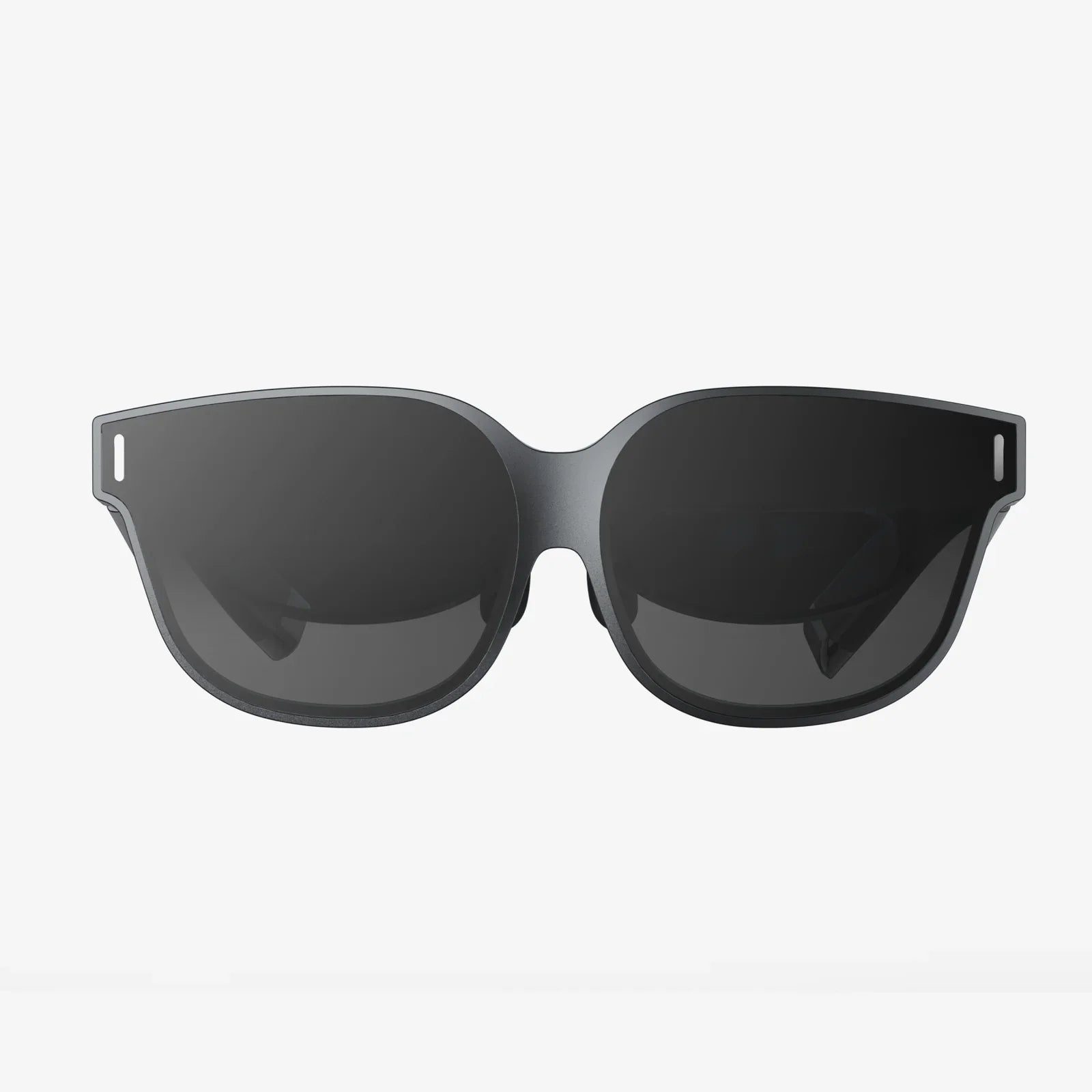
Imagine a world where information doesn’t live on a screen in your hand but is seamlessly woven into the fabric of your reality. Directions appear as floating arrows on the sidewalk, the name of a distant constellation materializes as you gaze at the night sky, and a recipe hovers conveniently next to your mixing bowl without a single smudge on your phone. This isn't a distant science fiction fantasy; it's a future that is being built today. The entire tech industry, from the most colossal giants to nimble startups, is making smart glasses now, and this concerted push represents one of the most significant and quietest revolutions in personal computing. The question is no longer if we will wear computers on our faces, but how this will reshape our lives, our interactions, and our very perception of the world around us.
The Long Road to Now: From Sci-Fi to Viable Reality
The concept of smart glasses has tantalized technologists for decades. For a long time, they were the stuff of comic books and futuristic films—a prop symbolizing an advanced, often dystopian, society. Early attempts to bring them to market were met with a mix of fascination and failure. They were often clunky, socially awkward, technologically limited, and plagued by battery life that could be measured in minutes, not hours. They were solutions in search of a problem, and consumers largely rejected them.
So, what changed? Why is making smart glasses now a primary focus for the world's most powerful companies? The answer lies in a perfect storm of technological convergence. Several critical technologies have finally matured to a point where they can support a compelling, wearable experience.
- The Miniaturization Miracle: Processors have become incredibly powerful and energy-efficient. Sensors—accelerometers, gyroscopes, magnetometers, and depth-sensing LiDAR—are now tiny and cheap enough to be packed into a glasses frame without making them look like diving goggles.
- The Display Dilemma Solved: Early displays were either too dim, too power-hungry, or offered a minuscule field of view. Innovations in micro-LED and waveguide technology now allow for bright, clear digital overlays that can be projected onto specially treated lenses, creating the illusion that content is floating in the real world without blocking the user's natural vision.
- The AI and Machine Learning Engine: This is arguably the most crucial component. Smart glasses are not just about displaying information; they are about understanding the environment. On-device and cloud-based AI can now process real-time video and audio feeds to identify objects, translate text instantly, recognize faces (with privacy constraints), and provide contextually relevant information. The glasses are the eyes and ears, but the AI is the brain.
- Connectivity as a Lifeline: The ubiquity of high-speed 5G and Wi-Fi 6 means these devices can offload heavy computational tasks to the cloud instantly, preserving battery life and accessing vast datasets without lag.
This convergence has transformed the ambition from making a "wearable screen" to creating an "invisible assistant." The goal is no longer to isolate the user in a digital world but to augment their reality with a subtle, helpful digital layer.
Beyond Novelty: The Compelling Use Cases Driving Adoption
For any technology to succeed, it must solve real problems. The current wave of smart glasses is being designed with specific, powerful use cases in mind that extend far beyond checking notifications.
Professional and Industrial Revolution
While consumer adoption often grabs headlines, the most immediate and impactful applications are in enterprise and specialized fields. Here, the value proposition is undeniable and directly impacts efficiency, safety, and accuracy.
- Field Service and Repair: A technician repairing a complex piece of machinery can have schematics, instruction manuals, and live video feed from a remote expert overlaid directly onto their field of view. Their hands remain free, and information is contextually placed on the equipment they are working on.
- Healthcare and Surgery: Surgeons can view patient vitals, MRI scans, or ultrasound images without ever looking away from the operating field. Medical students can observe procedures from the surgeon's point of view, and paramedics can receive guided instructions for emergency care.
- Logistics and Warehousing: Warehouse workers fulfilling orders can have picking routes, item locations, and inventory data displayed instantly, dramatically speeding up fulfillment and reducing errors.
- Design and Architecture: Architects and engineers can walk through 3D digital models of their buildings at scale, making adjustments and identifying issues before a single brick is laid.
In these environments, the productivity gains are so significant that they justify the investment, driving innovation and refinement that will eventually trickle down to consumer models.
The Consumer Experience: Subtlety and Utility
For the average user, the pitch is different. The focus is on convenience, connection, and capturing life's moments.
- Contextual Computing: Imagine walking through a foreign city. Your glasses automatically translate street signs and menu items in real-time. They can provide historical information about a monument as you approach it or remind you that you need to buy milk as you pass a grocery store.
- Seamless Content Capture: The ability to take photos and record short videos hands-free, from a first-person perspective, is incredibly powerful for capturing authentic moments without the barrier of a device. This is a step beyond body cameras, aiming for a more integrated life-logging experience.
- Audio Augmentation: Advanced beam-forming microphones and speakers can enable crystal-clear audio calls in noisy environments, enhance hearing by focusing on specific sounds or people in a crowd, and provide immersive spatial audio for music and podcasts that doesn't require earbuds.
- Accessibility: The potential for assisting those with visual or hearing impairments is profound. Real-time scene description for the visually impaired or enhanced speech-to-text transcription for the hearing impaired could restore a level of independence and connection.
The Invisible Elephant in the Room: Privacy, Security, and Social Acceptance
No discussion about a device that records audio and video from a user's perspective can be complete without addressing the massive societal implications. The industry is making smart glasses now, but it is doing so under the intense scrutiny of a public increasingly wary of surveillance technology.
The primary concern is the potential for constant, surreptitious recording. The fear of being filmed without consent in a private conversation or in a public space is a major barrier to social acceptance. This is not a hypothetical concern; early devices faced backlash and were even banned in some establishments.
To address this, manufacturers are implementing deliberate design choices and ethical frameworks:
- Clear Recording Indicators: Most devices feature a prominent LED light that activates whenever recording is happening, making it clear to others that they are being filmed.
- Privacy-by-Design: A shift towards on-device processing means sensitive data like video feeds never has to leave the glasses. AI can analyze the scene to provide information without storing or transmitting identifiable images of people. The goal is to process sensory input for context, not to create a searchable log of everyone you see.
- Audio Cues and Mannerisms: The natural behavior of looking at someone while talking to them would be interrupted if the user was constantly looking at a screen on their glasses. The most successful designs will be those that demand the least amount of attention, encouraging normal social interaction.
Ultimately, social acceptance will be a slow process. It will require transparent policies, robust legal frameworks, and a demonstrable track record of respecting privacy. The technology must prove it is a tool for empowerment, not surveillance.
The Form Factor Frontier: Balancing Tech with Fashion
A device that sits on your face is not just a piece of technology; it is an article of clothing, a key part of your identity. This is perhaps the greatest challenge: making smart glasses that people actually want to wear. The industry has learned that you cannot sacrifice style for functionality.
The winning formula involves collaboration. Technology companies are increasingly partnering with established and revered names in eyewear fashion. The objective is to hide the technology within frames that are indistinguishable from classic, popular styles. The ideal pair of smart glasses should look no different from a premium pair of regular sunglasses or prescription frames, with all the technology miniaturized and integrated into the arms and bridge.
Battery life remains a thorny issue. The dream of all-day battery life is still just out of reach for most powerful AR glasses, leading to a bifurcation in the market. Some are focusing on less powerful, more discreet glasses that can last a full day for notifications and audio, while others are pushing the boundaries of AR immersion with more obvious designs that may only last a few hours. Breakthroughs in battery chemistry and low-power components are the final frontier for achieving true all-day, invisible computing.
Gazing into the Crystal Ball: The Future is Augmented
The current activity is just the foundation. The true potential of smart glasses lies a few years ahead, as the technology becomes even more seamless and powerful. We are moving towards a future where your entire digital life—your apps, your memories, your connections—will be accessible through a glance, a whisper, or a gesture, without ever requiring you to withdraw from the physical world.
This could fundamentally change our relationship with technology. The constant neck-down posture of looking at a smartphone could be replaced by a more natural, engaged interaction with our surroundings. The digital and physical worlds, which have existed on separate planes for so long, will begin to merge into a single, unified experience known as the metaverse or spatial computing. In this future, your glasses become your passport to a digital layer that exists all around you.
This isn't just about replacing your phone; it's about creating a new platform for human-computer interaction. It’s a shift as significant as the move from the command line to the graphical user interface, or from the desktop to the mobile touchscreen. We are on the cusp of the next great paradigm, and it will be built on a frame perched on our noses.
The race to dominate this next platform is already underway, with every major player quietly investing billions. The stakes are unimaginably high, as the company that successfully defines the augmented reality experience will likely dictate the course of consumer technology for the next half-century. They are not just building a product; they are building the lens through which we will all see the world. The quiet hum of innovation you hear today is the sound of that future being assembled, component by tiny component, and it's arriving faster than anyone thinks.
Share:
Hololens Virtual Meeting: The Dawn of a New Collaboration Paradigm
AR Glasses with AI Features Are Redefining Our Reality and How We Interact With It