


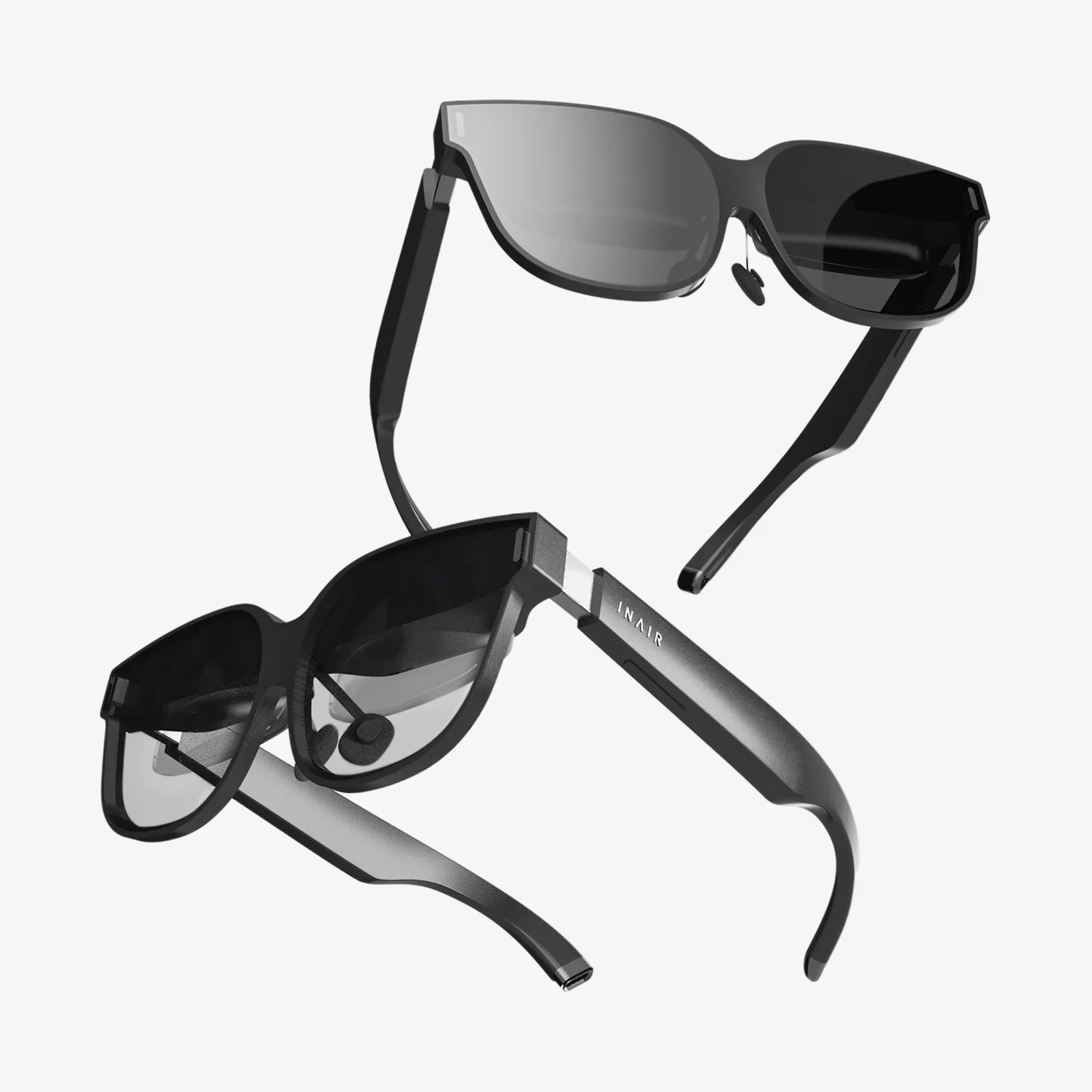
Imagine walking into your morning project briefing not by clicking a link to a grid of faces on a flat screen, but by simply putting on a sleek visor and instantly materializing, alongside your global colleagues, inside a photorealistic 3D model of your newest product design. This isn't science fiction; it's the imminent future of work, powered by the transformative potential of mixed reality and the evolution of the virtual meeting. The sterile video call, a relic of a bygone era, is on the verge of being replaced by an immersive, interactive, and profoundly human experience that promises to finally solve the intrinsic problems of remote collaboration.
Beyond the Flat Screen: The Limitations of Current Technology
For years, the digital revolution in communication has been stuck on a two-dimensional plane. Video conferencing platforms, while invaluable for maintaining connectivity, inherently create a barrier to truly effective collaboration. They suffer from what experts call the "window effect"—participants are perpetually looking into a meeting rather than feeling present within it. This creates a cascade of limitations:
- Loss of Non-Verbal Cues: A significant portion of human communication is non-verbal. On a video call, subtle body language, fleeting eye contact, and spatial awareness are lost or severely diminished. It's nearly impossible to tell if someone is looking at you or your thumbnail on their screen.
- The Cognitive Load of "Screen Fatigue": The mental effort required to parse conversations from a mosaic of disembodied heads is immense. This leads to the well-documented phenomenon of "Zoom fatigue," a state of mental exhaustion that hampers productivity and engagement.
- Ineffective Collaboration on 3D Assets: How do you collaboratively design a new engine, architect a building, or review a medical procedure when you're all staring at a 2D representation on a shared screen? Teams are forced to describe spatial relationships ("Can you rotate it a bit to the left?") rather than intuitively interacting with them together.
- The Formality and Artificiality of the Grid: The structure of video calls often stifles the natural, flowing conversation and sidebar discussions that occur effortlessly in a physical office environment.
These limitations highlight a critical need: a meeting medium that replicates the richness and nuance of in-person interaction while preserving the flexibility of remote work. This is precisely the gap that mixed reality aims to fill.
Enter the Third Place: The Philosophy of Mixed Reality Collaboration
Mixed reality doesn't seek to merely improve video calls; it seeks to replace the paradigm entirely. The core idea is to create a "third place"—a persistent digital environment that is neither your physical office nor your home office, but a shared space that combines the best attributes of both. This space is designed from the ground up for collaboration, unbounded by the laws of physics.
In this new paradigm, participants are no longer video streams. They are represented as photorealistic avatars or, with advanced sensors, even as live volumetric captures of themselves. This means you see a person's full body; you can see them gesture, turn their head, and even make eye contact. This restoration of human presence is the first critical step toward rebuilding genuine connection.
The Hololens Virtual Meeting Experience: A Step-by-Step Journey
So, what does it actually feel like to attend a meeting in this new medium? Let's walk through the experience.
1. Joining the Space
Instead of launching an app, you issue a voice command or use a simple gesture to "enter" your meeting. The physical world around you doesn't disappear; it becomes the foundation upon which the digital meeting space is overlaid. Your real desk might remain, but the walls of your room seem to dissolve, replaced by a virtual conference room, a calm beachside retreat, or a blank, infinite canvas ready to be filled with content.
2. Presence and Interaction
Your colleagues begin to appear around you as avatars. The sense of shared presence is immediate and powerful. Because the technology uses spatial audio, their voices sound like they are coming from their exact location in the room. A colleague to your left sounds like they are on your left. This allows for natural, overlapping conversations and the easy distinction between who is speaking, eliminating the awkward pauses and "you go, no you go" interruptions of video calls.
3. The Magic of Holographic Content
This is where the true revolution begins. A designer "places" a 3D model of a new product prototype in the center of the room. Everyone can walk around it, peer inside it, and examine it from every angle, simultaneously. It is no longer a picture on a screen; it is a tangible object you are all gathered around.
- Architecture and Engineering: An architect can pull a full-scale building model out of thin air. The team can literally walk through the hallways, assessing sightlines and spatial relationships in a way that was previously impossible without physical travel.
- Healthcare: Surgeons can collaborate on a detailed, interactive hologram of a patient's MRI scan, planning an procedure by annotating directly onto the hologram and practicing maneuvers together.
- Education and Training: A mechanic trainee can see a holographic overlay of an engine's components with step-by-step repair instructions projected directly onto the physical machinery in front of them.
Interaction is intuitive. You use your hands—via gesture recognition—to manipulate content. You can resize, rotate, dissemble, and annotate holograms with virtual ink. These digital artifacts can be saved, revisited, and passed on, creating a persistent record of the collaboration that is far more valuable than a screen recording.
Technical Foundations: The Invisible Magic Making It Possible
This seamless experience is underpinned by a suite of sophisticated technologies working in concert.
- Spatial Mapping: The device continuously scans your physical environment, understanding the geometry of the room, the location of walls, tables, and chairs. This allows digital objects to interact realistically with the real world—a virtual coffee cup can sit stably on your real desk.
- Inside-Out Tracking: Unlike early virtual reality systems that required external sensors, advanced mixed reality devices use cameras and sensors on the headset itself (inside-out tracking) to understand its position in the world with incredible precision, granting you untethered freedom of movement.
- Gesture and Voice Recognition: Sophisticated algorithms interpret your hand movements and finger positions, translating them into commands. Coupled with robust voice control, this creates a natural user interface that requires no physical controllers.
- Edge Computing and Cloud Power: Rendering complex, shared holograms in real-time requires immense computational power. This is often handled by a combination of on-device processing (edge computing) and offloading heavier tasks to powerful cloud servers, ensuring a smooth and responsive experience for all users.
Navigating the Challenges: The Path to Widespread Adoption
Despite its immense promise, the road to ubiquitous mixed reality meetings is not without its obstacles.
- Hardware Form Factor and Comfort: For all-day wear, the devices need to become lighter, more comfortable, less obtrusive, and offer longer battery life. The goal is a pair of glasses, not a helmet.
- The Social Acceptance Hurdle: Wearing a headset in a professional setting is still unfamiliar. Companies will need to develop new etiquette and norms for this medium. Is it rude to have a meeting while someone is walking down the street? These social questions need answers.
- Network and Latency Demands: Synchronizing complex holographic data across multiple users in different locations demands ultra-low latency and high-bandwidth networks. Inconsistent internet connections can break the illusion of presence.
- Content Creation and Ecosystem: A killer platform needs killer apps. Widespread adoption hinges on the development of robust software and easy-to-use tools for creating 3D content and immersive meeting environments.
Overcoming these challenges is not a matter of if, but when. The technological trajectory is clear: devices will get smaller, networks faster, and software more powerful and intuitive.
The Future of Work: Redefining Proximity and Presence
The long-term implications of hololens virtual meetings extend far beyond simply better conference calls. They have the potential to fundamentally reshape our concepts of the workplace, talent acquisition, and training.
- The True Death of Distance: Companies will be able to hire the best talent in the world, regardless of geography, and onboard them into a collaborative environment that feels as cohesive as a local team. Proximity will be redefined by digital presence, not physical location.
- Hyper-Realistic Training and Simulation: From practicing complex surgical procedures to conducting dangerous machinery maintenance, trainees can learn in a risk-free, holographic environment that provides hands-on experience without the real-world consequences.
- The Sustainable Alternative to Travel: While not replacing all travel, this technology offers a compelling, carbon-neutral alternative for a significant portion of business trips, site inspections, and client reviews, contributing to corporate sustainability goals.
- The Blended Workspace: The future office may be a hybrid physical-digital space. A physical whiteboard in a headquarters could be instantly digitized and shared with remote team members who can see it as a hologram in their own home office and contribute in real-time.
We are standing at the precipice of the next great leap in human-computer interaction. The virtual meeting, as we know it, is a temporary artifact of a specific moment in technological history. The future is spatial, it is three-dimensional, and it is immersive. It’s a future where the digital and physical worlds are not separate realities, but a blended continuum designed to enhance human connection, creativity, and collaboration. The screen that has defined digital interaction for half a century is finally beginning to fade away, and the world of work will be all the better for it.
The era of staring into a digital window is closing. The next time your calendar reminder pings, you won't just join a meeting—you'll step into it, ready to reach out and touch the future of work itself.
Share:
Define Virtual Office: The Ultimate Guide to the Future of Work
Is Making Smart Glasses Now the Next Frontier in Personal Technology?