


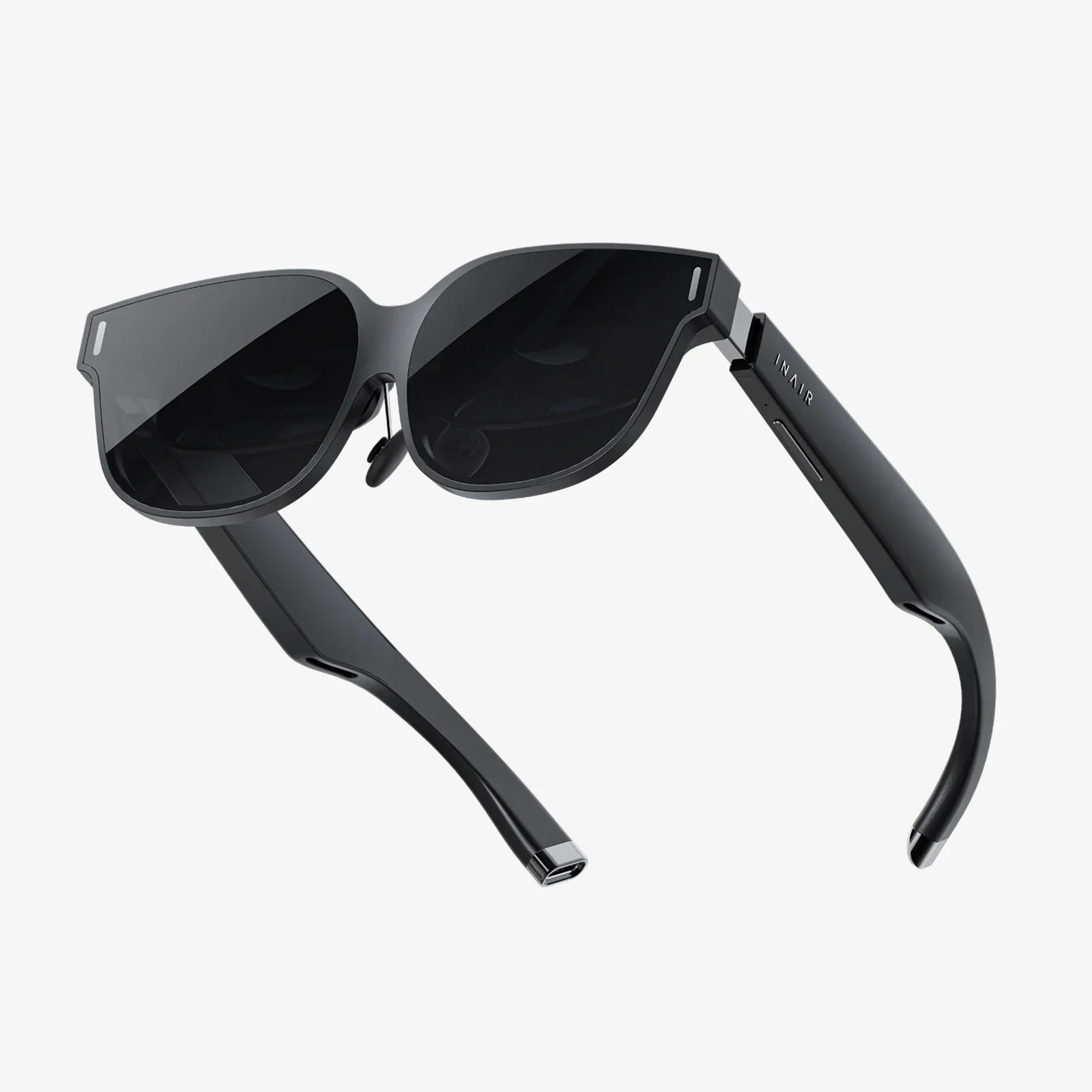
Imagine a world where information doesn't just appear on a screen in your hand, but is seamlessly overlaid onto your reality, where language barriers dissolve in real-time, and your entire digital world is accessible with a glance and a whisper. This is no longer the stuff of science fiction; it is the promise delivered by the latest generation of AI glasses arriving in 2025. We’ve spent weeks immersed in this new reality, testing, analyzing, and living with these remarkable devices to bring you the definitive review of the technology that aims to redefine human-computer interaction forever.
The 2025 Paradigm Shift: From Novelty to Necessity
The journey of smart eyewear has been a turbulent one, marked by ambitious failures and cautious iterations. Previous generations often felt like prototypes—clunky, limited, and socially awkward. The 2025 lineup represents a fundamental leap, a convergence of several mature technologies that finally delivers on the original vision. This isn't an incremental update; it's a complete platform shift.
The core differentiator this year is the move from a cloud-dependent architecture to a hybrid on-device AI processing model. Earlier models suffered from latency, requiring a constant, high-bandwidth connection to offload complex computations to distant servers. The 2025 glasses feature dedicated neural processing units (NPUs) integrated directly into the frame. This allows for instantaneous responses for critical tasks like real-time translation, object recognition, and contextual information retrieval, all while significantly enhancing user privacy and battery life. The feeling is transformative—the AI feels less like a tool you query and more like an intuitive extension of your own cognition.
Unboxing the Future: Design and Hardware Refined
The most immediate and welcome change is in the physical design. The tech industry has finally listened to years of feedback. The 2025 models are, for the first time, indistinguishable from high-end traditional eyewear at a casual glance.
- Form Factor: Gone are the chunky arms and obvious camera bumps. Manufacturers have achieved a remarkable feat of miniaturization, distributing batteries, processors, and sensors elegantly throughout a frame that is only marginally thicker than a standard pair of glasses. Multiple frame styles are available, from classic full-rim to modern semi-rimless designs, allowing for personal expression.
- Display Technology: The dreaded "screen door effect" and dim projection of past models have been eradicated. The latest waveguides and micro-LED projection systems deliver stunning, full-color, high-brightness overlays that are clearly visible even in direct sunlight. The virtual display appears to float several feet away, reducing eye strain and making it comfortable for extended use.
- The Sensory Suite: A sophisticated array of sensors is subtly embedded. High-resolution cameras capable of capturing both photos and video are now standard, alongside depth sensors for precise spatial mapping. Bone conduction audio has been perfected, delivering rich, private sound without earphones, while advanced beamforming microphones ensure your voice commands are picked up crystal clear, even in noisy environments.
The Intelligent Core: A Deep Dive into AI Capabilities
The hardware is merely the vessel; the true magic lies in the artificial intelligence it empowers. The 2025 AI operating systems are sophisticated contextual engines that learn, adapt, and anticipate.
Real-World Computer Vision
This is arguably the most impactful feature. The AI can now perceive and interpret the world with astonishing accuracy. Looking at a restaurant? Instant overlay of reviews and menu highlights. Reading a complex document in a foreign language? It translates paragraphs in real-time, preserving the original formatting. Walking through a supermarket? It can highlight items on your shopping list and even suggest recipes based on what’s on sale. For professionals, the applications are endless: architects can overlay blueprints onto a construction site, and technicians can see diagnostic data superimposed on machinery.
Hyper-Personalized Assistance
The AI assistant has evolved into a true personal companion. It’s no longer just about setting timers and checking the weather. By continuously learning from your routines, preferences, and even your gaze patterns, it offers proactive, context-aware support.
It might remind you of a colleague's name as you walk into a meeting, suggest a quicker route home based on real-time traffic it sees through your eyes, or gently nudge you to stay hydrated after noticing you haven't drunk water in a while. This creates a sense of having a helpful partner always by your side, one that understands the nuances of your life.
Seamless Multimodal Interaction
Interaction has moved beyond simple voice commands. The 2025 models embrace a fluid combination of touch, voice, and gesture control. A subtle tap on the temple can play music, a swipe in the air can dismiss a notification, and a glance at a specific point of interest can trigger more information. Voice interaction is more natural than ever, supporting complex, multi-part requests without needing a wake word every time. This multimodal approach feels intuitive and far less intrusive than constantly talking to your glasses.
Living Day-to-Day: The User Experience
After extensive testing, the user experience can be summarized in one word: liberation. There’s a profound sense of freedom in being able to access information and functionality without constantly pulling out a phone. It keeps you present in conversations, more aware of your surroundings, and infinitely more efficient. Navigation becomes effortless with arrows painted onto the street. Remembering names and details in social situations becomes a non-issue. The learning curve is surprisingly shallow; within a day, the interactions become second nature.
The Inevitable Questions: Privacy, Security, and the Social Contract
This power does not come without significant responsibility and valid concerns. The ability to record video and audio discreetly raises serious privacy questions. Manufacturers have addressed this with clear hardware indicators—a prominent LED light that activates whenever a camera or microphone is engaged—and robust software controls that give users full transparency over what data is being captured and processed. All on-device processing is encrypted, and cloud data is anonymized and used strictly for improving contextual awareness, not for advertising. Nonetheless, the societal norms around this technology are still being written. The etiquette of wearing them in private spaces and the legal implications of constant environmental recording will be a major topic of discussion in the years to come.
The Competitive Landscape: A Market Coming of Age
While we avoid brand names, it's clear that the market has matured. Several major players have entered the arena with compelling offerings, each with slight philosophical differences. Some focus intensely on enterprise and productivity applications, offering developer-friendly platforms for creating custom AR experiences. Others are aimed squarely at consumers, emphasizing lifestyle, social connectivity, and entertainment. This competition is driving rapid innovation and pushing prices down, making the technology more accessible than ever before.
Are They Worth It? The Final Verdict
The 2025 generation of AI glasses is the first that feels truly ready for the mass market. The combination of elegant design, powerful on-device intelligence, and genuinely useful applications makes a compelling case for them as the next essential personal device. They are not without their challenges—battery life, while improved, still requires a nightly charge for heavy users, and the price point remains a significant investment. However, the utility, convenience, and sheer wonder they provide are undeniable.
We are standing at the precipice of a new era of computing, one that moves beyond the rectangle in our pockets and integrates digital intelligence directly into our perception of the world. The 2025 AI glasses are the first confident step into that future. They successfully transition from a cool piece of tech to a genuinely transformative tool that has the potential to enhance productivity, break down barriers, and change how we experience reality itself. The future is not on your desk or in your pocket; it’s right in front of your eyes.
Share:
How Do AR Glasses Work: A Deep Dive Into the Magic in Your Field of View
How to Multi Screen on Computer: The Ultimate Guide to Boosting Your Productivity