


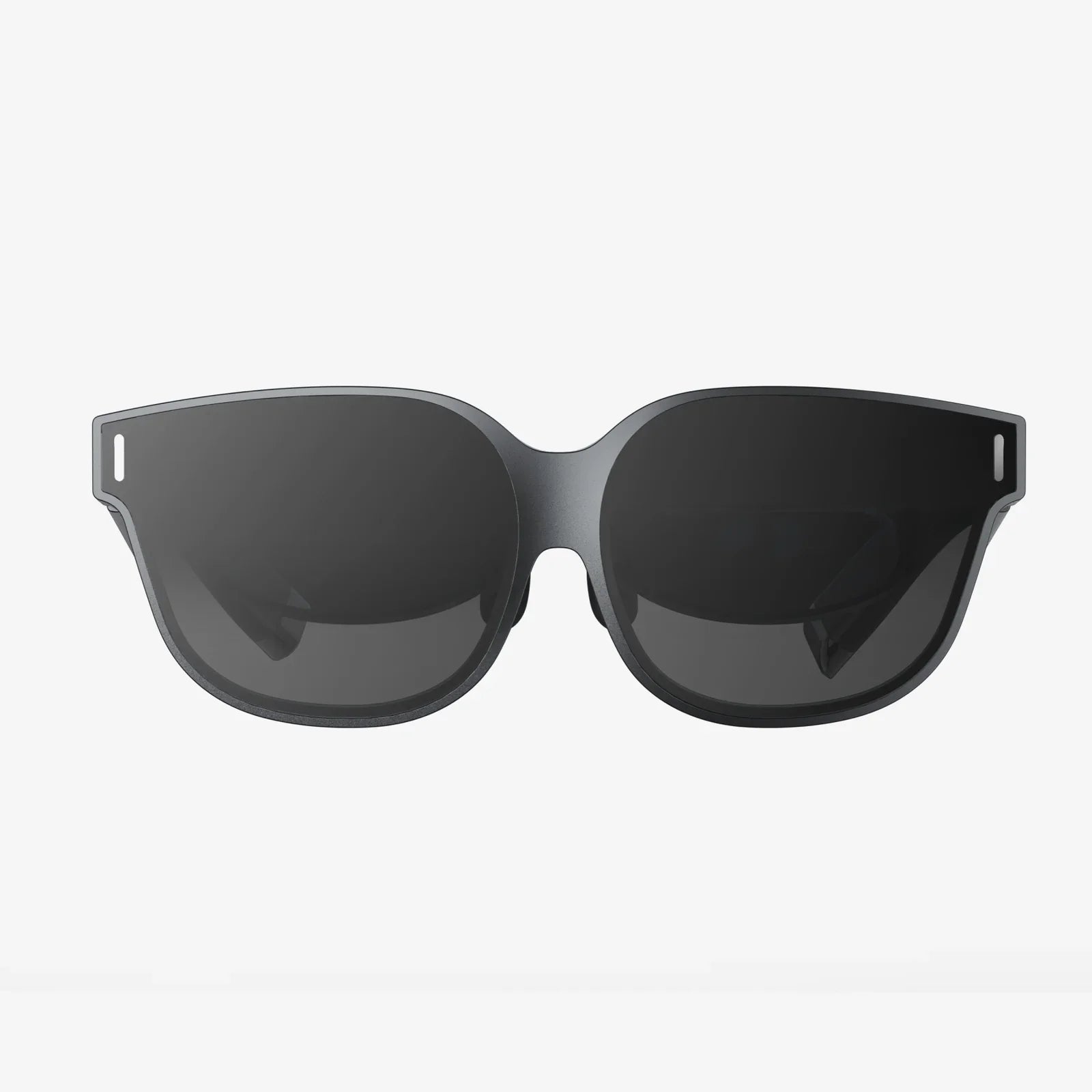
Imagine a world where digital information doesn’t just live on a screen in your hand but is seamlessly woven into the very fabric of your reality. Directions float on the road ahead, a recipe hovers beside your mixing bowl, and a colleague’s 3D model is displayed on the empty conference table. This is the promise of augmented reality (AR) glasses, a technology that feels like magic but is grounded in some of the most advanced engineering of our time. But how do these sleek devices, often resembling standard eyeglasses, actually perform this incredible feat of blending the digital and physical? The journey from a simple concept to a functional device involves a symphony of components working in perfect harmony.
The Core Principle: Superimposing the Synthetic on the Real
At its most fundamental level, AR glasses function by performing three critical tasks simultaneously: they see the world, they understand the world, and they project images into the user’s eyes. Unlike virtual reality (VR), which creates a fully immersive digital environment, AR starts with the real world and adds a layer of digital content. This requires a delicate balance—the technology must be powerful enough to generate convincing graphics and process immense amounts of data in real-time, yet compact and efficient enough to be worn comfortably on one’s face. The magic lies in the seamless integration of these systems.
How AR Glasses See: The Sensor Suite
Before AR glasses can augment your reality, they must first perceive it in intricate detail. This is the job of a sophisticated array of sensors that act as the device’s eyes, creating a rich data stream of the environment.
Cameras: More Than Meets the Eye
Multiple cameras serve various purposes. Standard RGB (color) cameras capture a 2D video feed of what the user is seeing, which is essential for tasks like video recording or object recognition. However, the true depth perception comes from specialized cameras. Depth-sensing cameras, such as time-of-flight (ToF) sensors, work by projecting invisible infrared light patterns into the environment and measuring how long it takes for the light to bounce back to the sensor. This creates a precise depth map, a point cloud of distances that tells the glasses exactly how far away every object is.
Inertial Measurement Units (IMUs)
Comprising accelerometers, gyroscopes, and magnetometers, the IMU is the workhorse of positional tracking. It measures the head’s rotation, orientation, and acceleration with extreme speed and precision. While cameras can provide positional data, they can suffer from motion blur or require complex computational analysis. The IMU provides ultra-responsive, low-latency tracking of head movements, ensuring that digital objects don’t jitter or float unnaturally when you turn your head quickly.
LiDAR and Other Depth Sensors
Some advanced systems use Light Detection and Ranging (LiDAR) scanners. Similar to radar but using light, LiDAR emits laser pulses to measure distances and build a highly accurate 3D model of the surroundings. This is crucial for understanding the geometry of a room, placing virtual objects on real surfaces, and enabling occlusion—where a real-world object can correctly pass in front of a virtual one, enhancing the illusion of reality.
Microphones and Eye-Tracking Cameras
Microphones enable voice control, a natural and hands-free way to interact with the digital overlay. Perhaps more fascinating are inward-facing eye-tracking cameras. These infrared cameras monitor the user’s pupils, determining exactly where they are looking. This serves multiple functions: it enables foveated rendering (where image quality is highest only in the center of your gaze to save processing power), creates intuitive gaze-based controls, and provides invaluable data on user attention and engagement.
How AR Glasses Understand: The Brain - Processing and Spatial Computing
The raw data from the sensors is meaningless without interpretation. This is where the device’s “brain” comes into play—a combination of hardware processors and sophisticated software algorithms known collectively as spatial computing.
Simultaneous Localization and Mapping (SLAM)
This is the cornerstone technology that makes AR possible. SLAM is a complex computational problem where the device, in real-time, both maps an unknown environment and localizes itself within that map. By continuously comparing the incoming data from the cameras and IMU, the glasses build a persistent 3D understanding of the space around you. It identifies feature points—distinct edges, corners, and textures—and tracks their movement frame-by-frame to understand its own position and orientation. This allows a virtual dinosaur to stay pinned to the floor even as you walk around it, because the glasses know its own position relative to the room’s digital map.
Object Recognition and Semantic Understanding
Beyond just mapping geometry, AR systems strive to understand what objects are. Using machine learning models trained on vast datasets, the glasses can recognize a chair, a table, a wall, or a specific product. This semantic understanding allows for context-aware interactions. For instance, the glasses could project a virtual television onto a blank wall, knowing it’s a flat, vertical surface, rather than trying to place it mid-air or on the floor.
Onboard Processors vs. Cloud Computing
The computational demand of SLAM and object recognition is immense. High-end AR glasses contain powerful, miniaturized processors and GPUs dedicated to these tasks to ensure low latency—the delay between your movement and the update of the display must be minimal to prevent user discomfort. For even more complex tasks, some processing can be offloaded to a connected device, like a smartphone or a powerful computer, or even to the cloud, though this introduces a dependency on connectivity and potential latency issues.
How AR Glasses Project: The Display Systems
This is the final and most visible step—getting the synthesized image into the user’s eye. The challenge is to project bright, vibrant, and seemingly solid images that can be viewed in conjunction with the real world. Several competing technologies achieve this.
Waveguide Technology
This is the most common method for sleek, consumer-oriented AR glasses. Waveguides are transparent pieces of glass or plastic that sit directly in front of the eye. They work by piping light from a micro-display (a tiny screen) located typically on the temple of the glasses. This light is “coupled” into the waveguide, bounced through internal reflections using microscopic gratings, and then “decoupled” out towards the eye. The result is that the user sees the digital image superimposed on the real world. The primary advantage of waveguides is their potential for a compact, glasses-like form factor.
Birdbath Optics
Another common design, often found in earlier or more budget-conscious designs. In a Birdbath system, light from a micro-display is projected onto a concave combiner, which reflects the image into the user’s eye while also allowing real-world light to pass through. The name comes from the resemblance to a bird looking down into a birdbath. This design can offer brighter colors and a wider field of view than some waveguides but often results in a bulkier form factor.
MicroLED Displays and Laser Beam Scanning
The quest for the perfect AR display is driving innovation in micro-displays. MicroLEDs are incredibly small, bright, and efficient light-emitting diodes that are ideal for projection. Another emerging technology is Laser Beam Scanning (LBS), where tiny lasers raster-scan an image directly onto the retina. This technology can create very high-resolution images with low power consumption, though it is still being refined for mass production.
Challenges and The Path Forward
Despite the incredible progress, significant hurdles remain on the path to ubiquitous AR glasses. The infamous “vergence-accommodation conflict” is a physiological issue where the eyes struggle to focus on a virtual image that is projected at a fixed focal distance (e.g., several feet away) while the real world is at varying distances. This can cause eye strain and discomfort. Solutions being explored include varifocal and light field displays that can dynamically adjust focal depth.
Other challenges include achieving all-day battery life without excessive weight, designing for social acceptance so people feel comfortable wearing them in public, and developing a killer app—the compelling use case that will drive mass adoption beyond niche industrial or gaming applications. The future likely lies in a combination of breakthroughs in battery technology, even more efficient processors, and display innovations that solve the fundamental optical challenges.
The seamless blend of our digital and physical realities is no longer a fantasy confined to science fiction. It’s being built today, piece by intricate piece, inside a pair of glasses. The next time you see someone wearing them, you’ll understand the hidden symphony of light, data, and computation happening just before their eyes, quietly transforming the world as they see it.
Share:
Bluetooth Headset AI Glasses The Ultimate Fusion of Audio and Augmented Intelligence
Latest AI Glasses 2025 Review: A New Dawn of Wearable Intelligence