


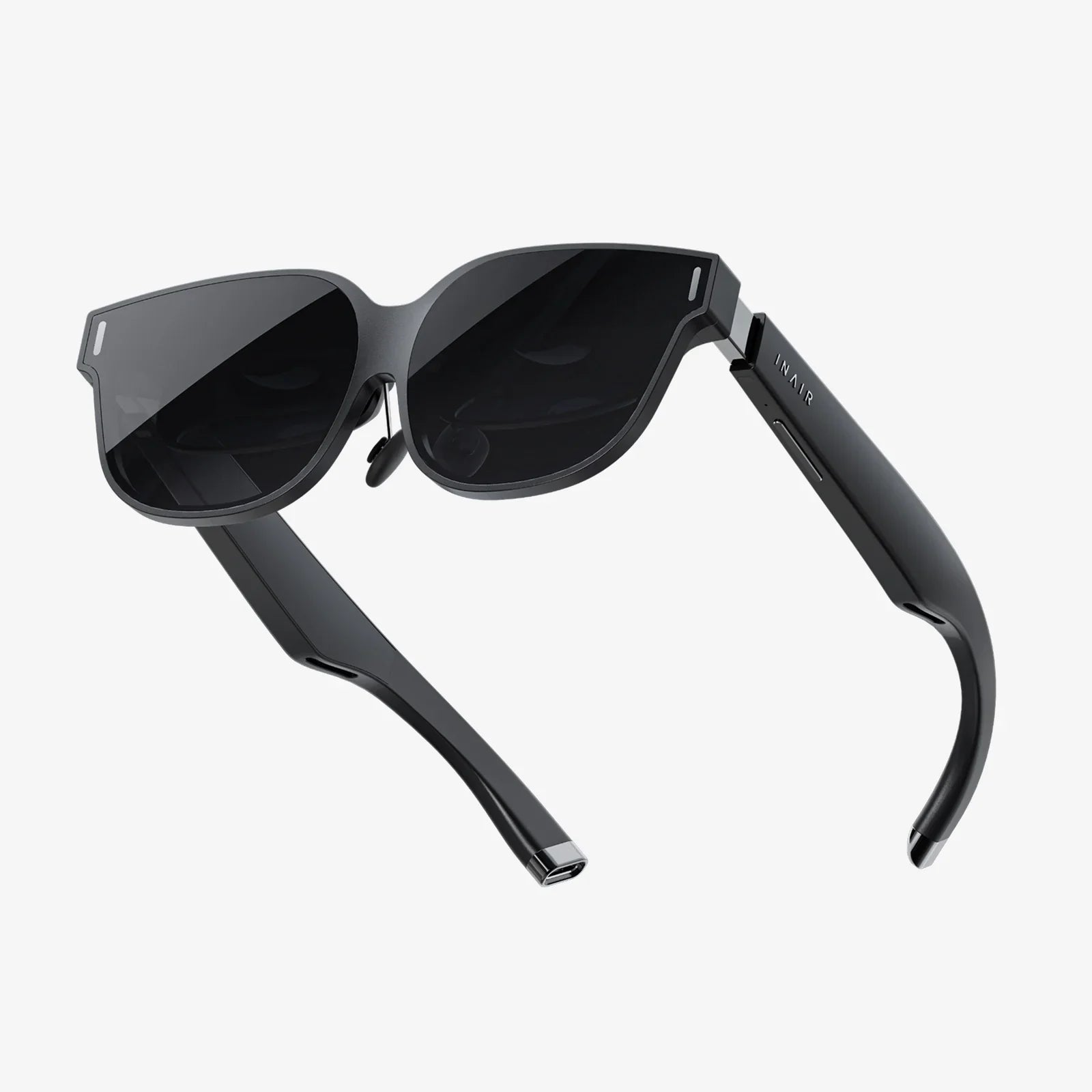
Imagine a world where information floats before your eyes, where language barriers dissolve with a glance, and where the digital and physical realms are seamlessly stitched together by a pair of sleek, unassuming glasses on your face. This is no longer the distant future; it is the promise of the latest AI glasses technology, a convergence of cutting-edge hardware and sophisticated software that is poised to revolutionize how we interact with information, our environment, and each other. The era of clunky, socially awkward prototypes is fading, giving way to a new generation of intelligent eyewear designed not just to be worn, but to be lived in.
The Core Technologies Powering the Revolution
The magic of modern AI glasses is not in any single component but in the harmonious integration of several advanced technologies. At their heart lies a powerful, miniaturized processing unit, often a specialized neural processing unit (NPU) or system-on-a-chip (SoC) designed to handle complex artificial intelligence algorithms with extreme power efficiency. This is the brain that makes real-time intelligence possible.
Acting as the eyes of the system are an array of sophisticated sensors. These typically include:
- High-Resolution Cameras: Used for capturing the user's field of view, enabling visual search, object recognition, and document translation.
- Depth Sensors and Time-of-Flight (ToF) Cameras: These sensors measure the distance to objects, creating a 3D map of the environment. This is crucial for accurately placing digital objects into the real world and for spatial awareness.
- Inertial Measurement Units (IMUs): Including accelerometers and gyroscopes, these track head movement and orientation with precision, ensuring the digital overlay remains stable and locked in place.
- Microphones: An array of microphones allows for advanced voice control, filtering out background noise and enabling clear communication with the built-in AI assistant.
The final piece of the puzzle is the display technology. This is where engineering meets artistry. Unlike the bulky optics of past AR devices, the latest systems use innovations like waveguide displays and holographic optical elements. These technologies pipe light from tiny projectors at the temples directly onto the lenses, which then reflect it into the user's eyes. The result is bright, crisp digital imagery that appears to hover in the real world without obstructing the user's natural vision. Advanced bone conduction speakers or miniature directional speakers provide a private audio experience without blocking ambient sound.
From Information to Augmentation: Key Functionalities
Harnessing this hardware, the software and AI capabilities transform the glasses from a simple device into a intelligent companion. The functionalities are where the true value of this technology is realized.
Real-Time Translation and Transcription
One of the most immediate and powerful applications is the breaking down of language barriers. Imagine walking through a foreign airport and seeing signs, menus, and documents instantly translated into your native language, overlaid directly onto the text. Or conversing with someone in another language, seeing their words transcribed and translated in real-time as subtitles in your field of view. This is not a hypothetical; it's a functioning feature powered by on-device and cloud-based AI models that handle both text and speech with astonishing speed and growing accuracy.
Contextual Awareness and Visual Search
The AI in these glasses is constantly analyzing the world you see. It can identify objects, plants, animals, and landmarks. Point your gaze at a restaurant, and you might see its reviews and rating pop up. Look at a complex piece of machinery, and a schematic or instruction manual could materialize next to it. This contextual overlay of information turns the entire world into an interactive, searchable database, empowering users with immediate, relevant knowledge without ever pulling out a phone.
Advanced Navigation and Spatial Computing
Forget looking down at a phone map. With AI glasses, navigation arrows and directions can be painted onto the street in front of you, guiding you turn-by-turn through an unfamiliar city. This spatial computing extends beyond navigation. Architects could walk through 3D models of their designs overlaid onto a physical space. Engineers could see diagnostic data and wiring diagrams superimposed on the equipment they are repairing. The potential for professional training and complex task guidance is immense.
Seamless Productivity and Connectivity
Integrated AI assistants, activated by voice or even subtle gestures, allow users to manage their digital lives hands-free. You can read messages, check calendars, set reminders, and make calls without interrupting your flow. For content creators, the always-available first-person perspective camera offers a new paradigm for capturing life and creating immersive content. The device becomes a ubiquitous computing interface that respects the moment, providing information only when you need it.
Beyond Novelty: Transformative Applications Across Industries
While consumer applications are thrilling, the most profound impact of AI glasses technology is likely to be felt in enterprise and specialized fields.
Healthcare and Surgery
Surgeons can access patient vitals, MRI scans, and surgical plans in their visual field without breaking sterility or looking away from the operating table. This can lead to greater precision and efficiency. For medical training, students can observe procedures with additional anatomical information layered on top, accelerating the learning process dramatically.
Manufacturing, Logistics, and Field Service
Technicians working on assembly lines or repairing complex systems can have step-by-step instructions, safety warnings, and technical diagrams projected directly onto the machinery. Warehouse workers can see picking and packing information, optimizing their routes and reducing errors. This hands-free access to critical data boosts productivity, enhances safety, and drastically reduces training time for new employees.
Accessibility and Assistive Technology
This is perhaps the most socially significant application. For individuals with visual impairments, AI glasses can describe scenes, read text aloud, identify currency, and recognize faces, providing a new level of independence. For those who are hard of hearing, real-time transcription of conversations can make social interactions significantly easier. The technology has the potential to serve as a powerful assistive tool, bridging gaps and creating more inclusive experiences.
Navigating the Inevitable Challenges
Despite the exciting potential, the path forward for AI glasses is not without significant hurdles that must be thoughtfully addressed.
The Privacy Paradox
The very feature that makes these glasses powerful—their always-on, first-person perspective camera—also makes them a privacy nightmare. The idea of people recording audio and video in public spaces without clear indication raises serious ethical and legal questions. Manufacturers will need to implement clear, unambiguous recording indicators (like lights) and develop robust ethical frameworks and privacy controls. Society will need to establish new social norms and potentially new laws to govern the use of such pervasive technology.
The Social Acceptance Hurdle
Google's early attempt demonstrated that social awkwardness can be a killer for wearable technology. The latest designs are significantly more fashionable, resembling premium eyewear, but the stigma of being recorded or the rudeness of someone seemingly distracted by a digital overlay during a conversation remains a barrier. Widespread adoption will depend on designs that are not only functional but also socially discreet and acceptable.
Battery Life and Form Factor
Packing immense computing power into a lightweight frame is an engineering marvel, but it consumes energy. All-day battery life remains a challenge, often requiring a separate battery pack. The quest for the perfect balance between performance, size, weight, and battery longevity is ongoing. True all-day, untethered usability is the holy grail for mainstream adoption.
The Future Vision: Where Do We Go From Here?
The technology we see today is merely the foundation. The future trajectory points toward even deeper integration and intelligence. We can anticipate advancements in brain-computer interfaces (BCI) that would allow control through thought alone. Haptic feedback could add a sense of touch to digital objects. AI models will become more personalized, understanding user habits and preferences to proactively offer assistance. The line between our biological senses and digital augmentation will continue to blur, fundamentally changing the human experience.
The ultimate goal is not to distract us from the real world, but to enhance our perception of it—to make us more knowledgeable, more capable, and more connected. It's about augmenting human intelligence, not replacing it.
The next time you put on a pair of glasses, consider that their primary function may soon shift from correcting your vision to expanding your reality. The latest AI glasses technology is quietly building the infrastructure for a new layer of human experience, one where the digital universe doesn't live in your pocket, but flows effortlessly into your view of the world, waiting for you to simply look up and engage.
Share:
Other AI Glasses: The Unseen Revolution Reshaping Our World
Futuristic AI Glasses: The Dawn of the Invisible Computer and the End of the Smartphone Era