


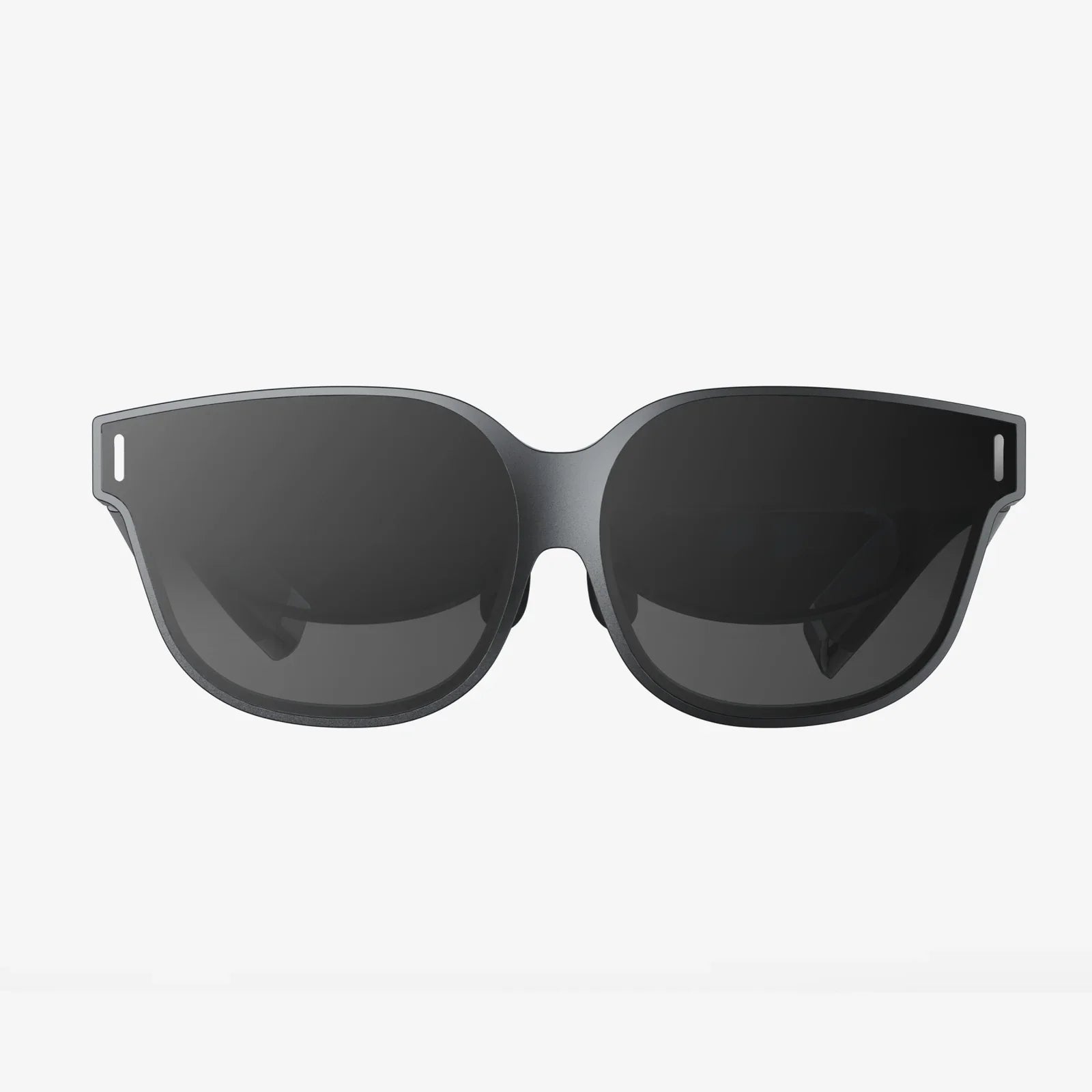
Imagine a world where information doesn't live on a screen in your hand but is seamlessly woven into the fabric of your reality. Where a mechanic can see a highlighted faulty component simply by looking at an engine, where a medical student can observe a virtual anatomy lesson overlaid on a practice dummy, and where a traveler can navigate a foreign city with translated signs and historical facts floating gently before their eyes. This isn't a distant sci-fi fantasy; it is the imminent future being built today, not just by a few household names, but by a vibrant and diverse ecosystem of other AI glasses. While the media spotlight often focuses on a narrow segment of the market, the real revolution is happening in the shadows, where innovators are creating specialized smart eyewear that is poised to change everything from how we work to how we connect with the world around us.
Beyond the Hype: Defining the Spectrum of AI Eyewear
The term "AI glasses" often conjures a single, monolithic image, but the reality is far more nuanced. This category is not one product but a spectrum of devices, each with distinct capabilities, form factors, and intended uses. To understand the impact of other AI glasses, we must first move beyond the hype and categorize this exciting new field.
On one end of the spectrum, we find Audio-First Smart Glasses. These devices prioritize discrete, high-fidelity audio experiences through open-ear speakers or bone conduction technology. Their primary intelligence lies in advanced audio processing—using AI for superior noise cancellation during calls, real-time language translation directly into the wearer's ear, and immersive spatial audio for music and podcasts. They often feature a minimalist design, looking almost indistinguishable from standard eyeglasses, and their interaction is primarily voice-based, managed through a sophisticated digital assistant. They are less about overlaying visual information and more about augmenting your auditory world, making you more present in your environment while staying connected.
On the opposite end reside Immersive Augmented Reality (AR) Glasses. These are the powerhouses of visual augmentation. Equipped with micro-displays—either waveguide, Laser Beam Scanning (LBS), or MicroLED—they project high-resolution, interactive holograms onto the user's field of view. Their AI is a visual intelligence engine, capable of real-time object recognition, spatial mapping, and gesture tracking. This allows for complex digital overlays: a virtual blueprint pinned to a construction site, a chef seeing recipe steps and timers hovering over their ingredients, or a network engineer visualizing data traffic flows across a server rack. These devices are bulkier due to their advanced compute packs and battery requirements, but they offer the most transformative potential for enterprise and specialized applications.
Bridging the gap between these two extremes is a new class of Hybrid AI Glasses. These devices aim to blend the subtle, all-day wearability of audio glasses with moments of simple, contextual visual feedback. Imagine a small, monochrome LED in the corner of your lens that displays a navigation arrow, an incoming call indicator, or a heart rate notification. This "glanceable" information is powered by an AI that decides what is crucial enough to warrant a visual alert, keeping the user informed without overwhelming them with data. This approach represents a pragmatic middle ground, offering utility without the social and technical challenges of full AR.
The Engine of Intelligence: How Other AI Glasses Actually Work
The magic of these devices isn't just in the lenses; it's in the sophisticated symphony of hardware and software working in concert. The foundation is a suite of sensors. A typical pair of advanced AI glasses will include:
- Cameras: High-resolution cameras capture the user's point of view, providing the visual data that the AI needs to understand the world.
- Inertial Measurement Units (IMUs): These accelerometers and gyroscopes track head movement and orientation with extreme precision, ensuring digital overlays stay locked in place in the real world.
- Microphones: An array of microphones enables beamforming to pick up the user's voice clearly in noisy environments and facilitates voice assistant interactions.
- Depth Sensors: Some advanced models use LiDAR or time-of-flight sensors to create a detailed 3D map of the environment, crucial for placing virtual objects accurately.
This constant stream of sensor data is processed by a combination of on-device and cloud-based artificial intelligence. On-board Neural Processing Units (NPUs) handle time-sensitive tasks with low latency, such as initial object detection or tracking. More complex computations, like querying a massive database for information on a recognized landmark, are sent to the cloud via a connected smartphone or built-in cellular connectivity. The AI models themselves are marvels of modern machine learning, trained on vast datasets to recognize millions of objects, understand scenes, transcribe speech, and translate languages in real-time. This distributed intelligence ensures a responsive and powerful user experience without requiring a supercomputer on your face.
The Silent Disruption: Enterprise and Industrial Applications
While consumer applications generate buzz, the most profound and immediate impact of other AI glasses is occurring in the enterprise sector. Businesses are adopting this technology to solve real-world problems, boost efficiency, reduce errors, and enhance safety.
In manufacturing and field service, technicians use AI glasses for remote expert assistance. A junior mechanic on-site can stream their live view to a senior expert thousands of miles away. The expert can then annotate the mechanic's real-world view with arrows, circles, and text instructions, guiding them through a complex repair procedure hands-free. This slashes resolution times, reduces travel costs, and empowers less experienced workers to perform at an expert level.
The healthcare and medical fields are witnessing a quiet revolution. Surgeons can access patient vitals, MRI scans, or ultrasound images in their visual field without turning away from the operating table. Medical students can practice procedures on augmented reality patients, and nurses can use glasses for hands-free documentation and to instantly verify patient identity and medication details, drastically reducing administrative burden and potential for error.
Logistics and warehousing have been transformed. Warehouse workers equipped with AI glasses receive order-picking instructions directly in their line of sight, with digital arrows guiding them to the exact bin location and confirming the item and quantity. This "vision picking" technology has been shown to increase picking accuracy to nearly 100% and improve efficiency by over 15%, representing a massive return on investment for large-scale operations.
Navigating the Minefield: Challenges and Considerations
Despite the incredible potential, the path forward for other AI glasses is fraught with significant challenges that innovators must navigate.
The Privacy Paradox: A device that records audio and video from a first-person perspective is inherently privacy-sensitive. The concept of the "glasshole"—a socially oblivious wearer invading the privacy of others—remains a potent cultural barrier. Manufacturers are addressing this with clear physical indicators like recording lights, strict data governance policies, and on-device processing that minimizes the need to stream sensitive data to the cloud. Building trust through transparency is paramount.
Battery Life and the Thermal Dilemma: High-performance computing and bright displays are power-hungry. Packing a long-lasting battery into a sleek, glasses-like form factor is a monumental engineering challenge. Furthermore, that energy consumption generates heat, which is uncomfortable and potentially dangerous so close to the user's head and eyes. Breakthroughs in low-power displays, efficient AI chips, and thermal management are critical to achieving all-day usability.
The Social Hurdle: For widespread consumer adoption, the technology must become socially acceptable. This means designs must be fashionable, customizable, and indistinguishable from regular eyewear at a conversational distance. Early bulkier prototypes drew stares; the next generation aims to be invisible. Normalization will be a gradual process, likely starting in specific professional contexts before trickling down to general consumer use.
Glimpsing the Future: What's Next for AI Eyewear?
The evolution of other AI glasses is accelerating, driven by advancements in several key technologies. The holy grail is photonic chipsets and advanced waveguides that can project full-color, high-resolution images onto transparent lenses without any perceivable bulk. Developments in brain-computer interfaces (BCI) suggest a future where we might control our glasses simply by thinking, using subtle neural signals detected by sensors on the frame.
Perhaps the most exciting frontier is contextual and predictive AI. Future devices will move beyond simply responding to commands to proactively offering information. Your glasses, understanding your schedule, location, and habits, might silently highlight the correct turn on your drive, remind you of a colleague's name as you walk into a meeting, or suggest a recipe based on the ingredients it sees in your refrigerator. They will become a true cognitive partner, amplifying your memory and perception in subtle, powerful ways.
The true potential of this technology lies not in isolating us with more screens, but in deepening our engagement with the physical world. By offloading mundane tasks like navigation, translation, and information retrieval to a seamless digital layer, other AI glasses promise to make us more present, more capable, and more connected to the people and environments around us. They are not about escaping reality, but about enriching it, one intelligent glance at a time.
This isn't just about checking notifications without pulling out your phone. It's about a fundamental shift in the human-machine interface, a move away from devices we look at and towards technology that looks with us. The next time you hear about smart glasses, look past the headline act. The real story, the one that will quietly reshape our factories, our hospitals, and eventually our daily lives, is being written by the vast and ingenious world of other AI glasses. The future is putting on a pair of glasses, and it's a view you won't want to miss.
Share:
AI Smart Glasses Product Examples: The Future on Your Face
Latest AI Glasses Technology: Seeing the World Through a Digital Lens