


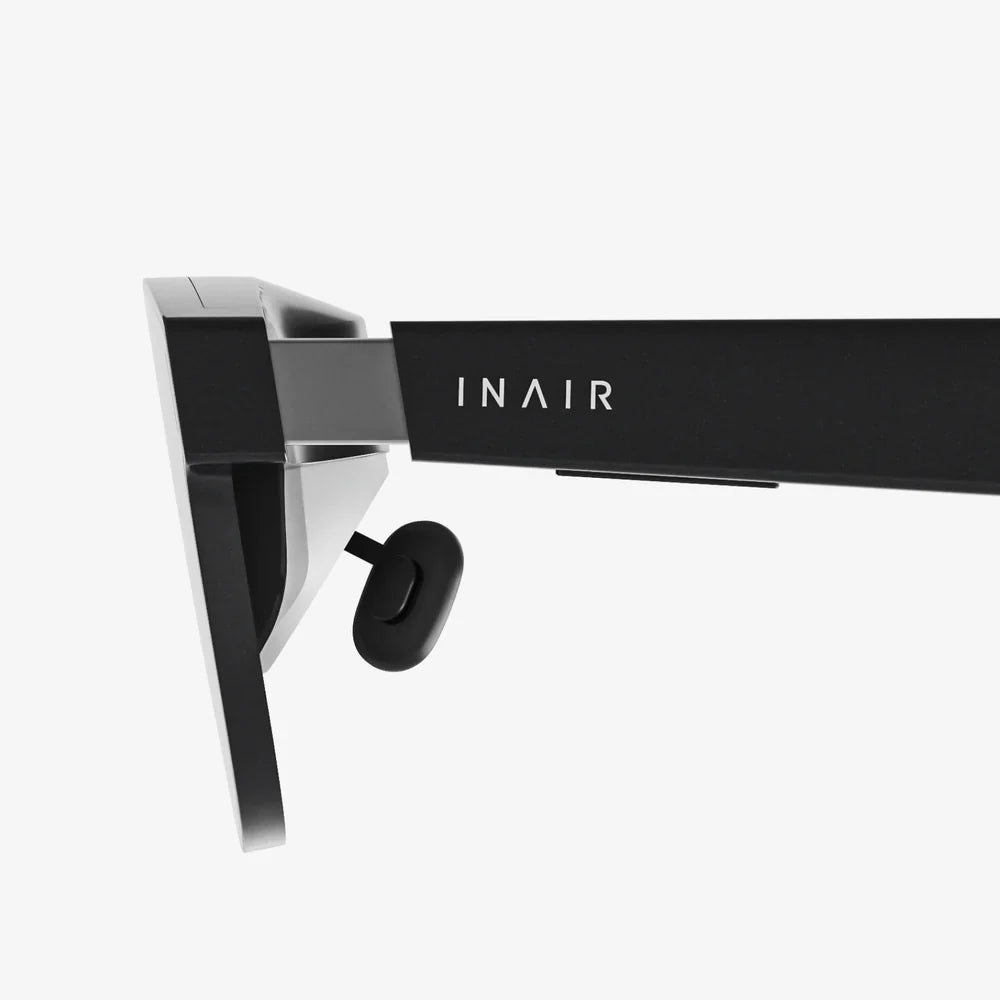
Imagine a world where digital information doesn’t live on a screen in your hand, but is seamlessly woven into the very fabric of your perception. A world where your morning run is guided by floating metrics, your workspace is an infinite canvas limited only by your imagination, and a forgotten name materializes in your vision the moment you greet an old acquaintance. This is no longer the realm of science fiction; it is the tangible promise of the latest AR glasses of 2025, a new generation of wearable computers that are finally poised to transition from niche prototypes to transformative, mainstream tools. The convergence of several breakthrough technologies has created a perfect storm, pushing these devices beyond mere novelty and into the forefront of the next computing revolution.
The Architectural Leap: From Clunky to Compelling
The single greatest barrier to widespread adoption of augmented reality has historically been the form factor. Early iterations were often bulky, heavy, and socially awkward, earning them the unflattering nickname "face computers" and confining them to enterprise or developer use cases. The latest AR glasses of 2025 have shattered this paradigm through a series of fundamental architectural innovations.
At the core of this miniaturization revolution are nanoscale waveguide displays. These are not simply smaller versions of old projectors; they are entirely new optical systems. By etching incredibly fine patterns onto glass or polymer substrates, these waveguides can pipe light from micro-LED projectors hidden in the temples directly onto the retina. The result is a stunningly bright and crisp image that appears to float in the user’s field of view, all while the lenses themselves can be as clear and stylish as a pair of high-end sunglasses. This allows the technology to recede into the background, both physically and socially, making prolonged wear not just possible, but desirable.
Complementing this visual leap is a new generation of spatial audio systems. Rather than simple headphones, these glasses employ bone conduction and precise directional audio emitters to create a rich, immersive soundscape that feels like it emanates from the environment itself. A notification can sound as if it came from your left, while a navigational cue feels like it's placed directly on the street ahead, all without blocking out ambient noise—a critical feature for safety and situational awareness.
The Brain Behind the Lenses: The Rise of the Co-Processor
A sleek design is meaningless without the computational power to drive compelling experiences. The 2025 models have moved beyond relying on a tethered smartphone for processing. Instead, they feature a sophisticated distributed computing architecture.
On-board, a dedicated neural processing unit (NPU) handles the immense, constant workload of computer vision and environmental understanding. This specialized chip is optimized for a single task: interpreting the world in real-time. It processes the data from a suite of advanced sensors—including high-resolution RGB cameras, depth sensors, LiDAR, and inertial measurement units—to construct a detailed 3D map of the user’s surroundings. This happens instantaneously and continuously, allowing the digital overlay to lock onto physical surfaces with rock-solid stability.
This on-device processing is paramount for two reasons: latency and privacy. By understanding the environment locally, the glasses can react without the lag of a round-trip to the cloud, which is essential for creating a believable illusion and preventing user discomfort. Furthermore, sensitive visual and positional data can be processed without ever leaving the device, a crucial step toward building user trust.
This local intelligence is then augmented by cloud-connected AI. The onboard NPU handles the "what" and "where," while powerful cloud models provide the "why." This symbiotic relationship allows for incredibly complex tasks, from real-time language translation of a street sign to identifying the breed of a dog running toward you and overlaying its name if its owner has chosen to share that data in a pet profile.
The Interface Evolved: Beyond Touch and Voice
Interacting with a floating interface presents a unique challenge. The latest AR glasses of 2025 have largely abandoned the failed paradigms of trying to mimic a smartphone. Instead, they offer a multimodal interface that feels truly native to the technology.
- Micro-Gestures: Tiny, discreet motions of the fingers, detected by cameras in the temple, allow for scrolling, selecting, and manipulating virtual objects without the social awkwardness of large, " Minority Report"-style arm waving. A pinch of the thumb and forefinger becomes a click, a subtle swipe navigates menus.
- Contextual Voice: Voice assistants have evolved from simple command-takers to anticipatory partners. Instead of saying "Hey Assistant, what's the weather?" the glasses, aware of your location and the fact you just looked out the window, might simply offer a subtle, "Heads up, a 70% chance of rain starts in 20 minutes."
- Eye Tracking and Dwell-Based Selection: Sophisticated eye-tracking cameras understand where you are looking. Merely gazing at a virtual button for a moment can activate it, creating a profoundly intuitive hands-free experience. This also enables foveated rendering, where the highest graphical detail is reserved only for the center of your gaze, drastically conserving battery life.
- Implicit Commands: The most powerful interface is often no interface at all. The glasses automatically bring up your boarding pass as you approach the airport gate, highlight your dinner companion’s name and shared interests as you walk into the restaurant, or display the recipe for the dish you’re cooking at just the right moment, all based on context, location, and intent inferred from your behavior.
A World of Use Cases: From Productivity to Play
The power of this new platform is revealed in its application. The latest AR glasses of 2025 are not a one-trick pony; they are a blank canvas for human ingenuity.
In the enterprise, they are revolutionizing fields. A field engineer can see schematics overlaid on a malfunctioning machine, with animated arrows guiding each repair step. A surgeon can have vital signs and 3D imaging data visible without ever looking away from the operating field. Architects and designers can walk clients through full-scale holographic models of unbuilt structures.
For creators and consumers, the implications are staggering. The concept of a screen is dissolving. Your entertainment is no longer confined to a rectangle on the wall; a virtual cinema can be projected onto your blank living room wall, or a favorite artist can perform a holographic concert on your coffee table. Social media transforms from a feed you check into a layer of shared experiences and contextual information placed onto the world by your friends and community.
On a personal and practical level, the technology becomes an indispensable aid. Navigation arrows are painted directly onto the road. Real-time translation subtitles appear under a foreign-language conversation. You can finally remember the name of everyone you meet at a conference. The device becomes a true cognitive extension, offloading memory and processing tasks and allowing you to be more present and effective in the physical world.
The Inevitable Challenges: The Privacy Paradox
This always-on, always-sensing technology does not arrive without profound questions. The very cameras and sensors that enable its magic also make it the most intimate and pervasive data-collection device ever conceived. The industry is grappling with a new Privacy Paradox: how to deliver hyper-contextual, personalized experiences without creating a dystopian surveillance nightmare.
The solution emerging in 2025 is a framework built on three pillars: On-Device Processing, Transparent Control, and Data Minimization. As discussed, sensitive data like live camera feeds is processed locally whenever possible. Users are given clear, granular controls over what data is collected and for what purpose—perhaps allowing navigation data but never recording video, or permitting object recognition but never storing facial recognition data. The principle is to collect only the data necessary for a specific, user-requested function and then discard it immediately afterward. The success of this technology hinges entirely on building and maintaining a bond of trust with the user, making ethical design not a feature, but the foundation.
The Road Ahead: The Invisible Revolution
Looking forward, the trajectory is clear: continued miniaturization towards a goal of complete normalcy. Research is already underway on dynamic lenses that can alter their tint or prescription on command, embedding the technology into lenses people already need to see. Haptic feedback systems that can simulate the feel of virtual objects are in development. The ultimate goal is for the technology to become so lightweight, so power-efficient, and so indistinguishable from regular eyewear that it fades from the user's conscious thought altogether, becoming an invisible conduit to a digitally augmented life.
The latest AR glasses of 2025 represent far more than a new gadget; they are the harbinger of a fundamental shift in our relationship with technology. They promise to end our slavery to the smartphone screen, not by taking away our digital lives, but by seamlessly merging them with our physical reality. The boundary between the digital and the physical is dissolving, and these glasses are our window into this new, blended world. The revolution won't be televised; it will be projected directly onto your retina, and it’s starting now.
Share:
Micro-LED Tech in AR Glasses The Invisible Engine Powering a Visual Revolution
Reading Glasses With AR Coating: The Ultimate Guide to Unmatched Visual Clarity and Eye Comfort