


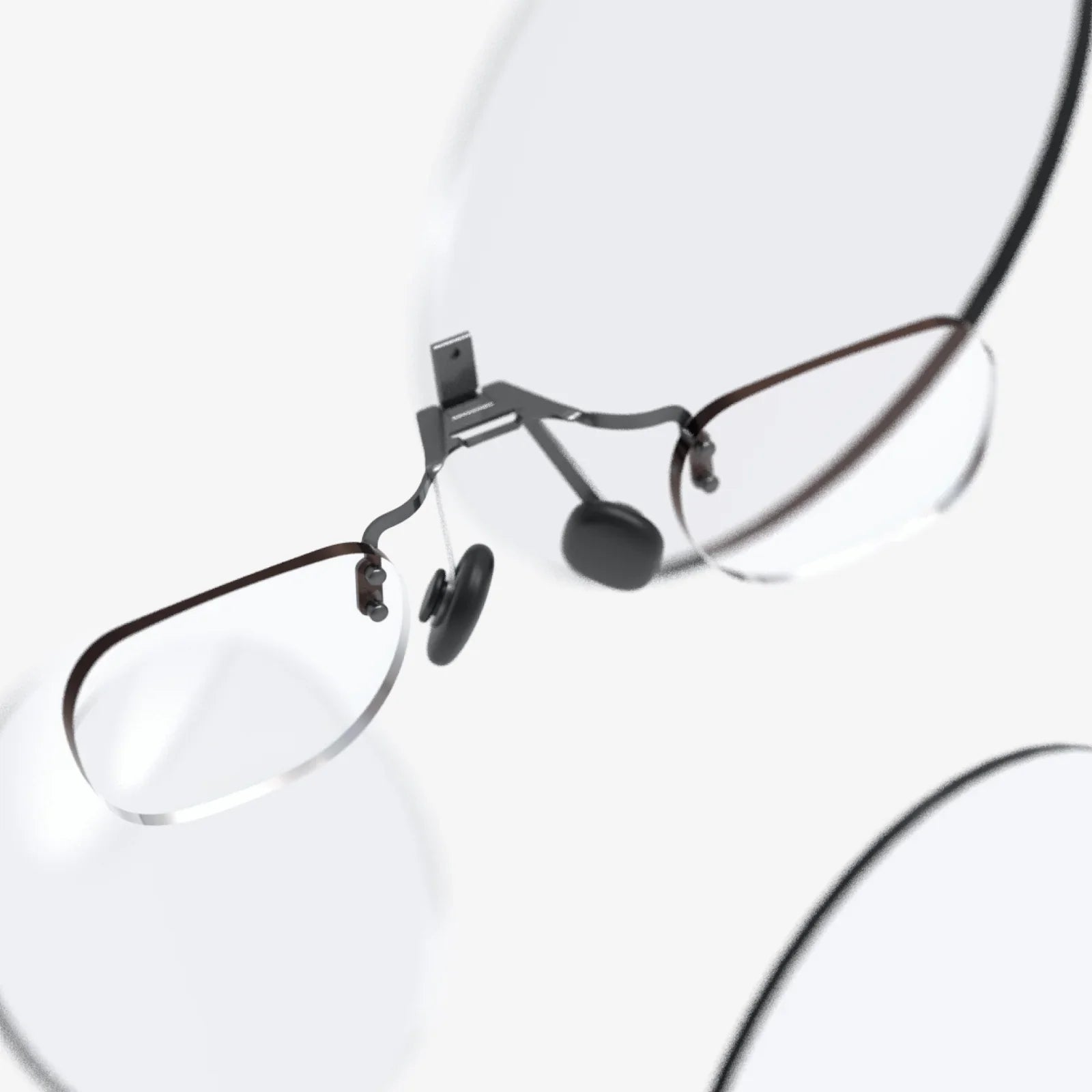
- by wangfred
Latest Technology in Eyeglasses: The Future of Vision is Here
- by wangfred
Imagine a world where your eyeglasses do more than just help you see clearly—they track your health, translate languages in real-time, shield your eyes from harmful light automatically, and seamlessly integrate with your digital life. This isn't a scene from a science fiction movie; it's the reality ushered in by the latest technology in eyeglasses. The humble pair of spectacles, a tool centuries in the making, is undergoing a radical transformation, evolving into one of the most personal and powerful wearable devices you can own. The convergence of material science, nanotechnology, and digital connectivity is creating a new generation of eyewear that is smarter, more adaptive, and more personalized than ever before, fundamentally changing our relationship with this essential accessory.
At the forefront of this revolution are smart lenses and integrated display technology. Unlike bulky headsets, the latest advancements aim to miniaturize augmented reality (AR) components directly into lenses that look and feel like ordinary glasses. These sophisticated systems use waveguides—microscopic structures etched into the lens—to project digital information directly into the user's field of view. This can include everything from navigation arrows overlaid onto the street ahead to text messages, meeting reminders, or real-time performance metrics for athletes.
The true genius of this technology lies in its subtlety. Early prototypes were clunky and obvious, but current iterations are sleek and socially acceptable. Tiny projectors, often embedded within the frame's temples, beam light towards the lens, which then directs it precisely into the eye. This creates a crisp, translucent image that appears to float in the user's environment, allowing for interaction with digital content without ever needing to look down at a phone screen. This hands-free access to information has profound implications for productivity, accessibility, and safety, enabling users to stay connected to the digital world while remaining fully present in the physical one.
Photochromic lenses that darken in sunlight have been available for decades, but the latest technology has supercharged this concept. Next-generation photochromic materials react significantly faster, transitioning from clear to dark and back again in a matter of seconds rather than minutes. Furthermore, they are more sensitive to a broader range of light conditions, ensuring optimal tinting even on overcast days or in the shade.
An even more advanced development is the advent of active electrochromic lenses. Instead of relying on passive ultraviolet (UV) light exposure, these lenses are controlled electronically. With a simple tap on a touch-sensitive frame or a button on a smartphone app, the user can instantly adjust the tint level from completely clear to deeply sunglass-dark. This offers unparalleled control, allowing someone to walk from a bright outdoor environment into a dim building and clear their lenses instantly. Some advanced models even feature automatic adjustment based on ambient light sensors, providing a seamless and continuous comfort experience without any user intervention required.
The conversation around screen time and blue light has pushed lens technology to new heights. While basic blue light filtering is now common, the latest solutions are far more nuanced. Research has led to more selective filtering technologies that target the specific wavelengths of high-energy visible (HEV) light emitted by digital screens and LED lighting, which are linked to digital eye strain and sleep cycle disruption, while allowing beneficial light to pass through.
These advanced coatings are engineered to be more effective and durable, often integrated into the lens material itself rather than just applied as a surface coating. This ensures the filtering effect doesn't diminish over time. Some innovations even incorporate dynamic light control, where the level of blue light filtration automatically adjusts based on the time of day, reducing the most disruptive wavelengths in the evening to support the body's natural production of melatonin and promote healthier sleep patterns.
The manufacturing process of lenses has been utterly transformed by digital surfacing and freeform technology. Traditional lenses were ground based on a limited set of prescriptions, leading to compromises in clarity, especially in the periphery of the lens. Digital freeform fabrication, however, allows for the creation of lenses that are digitally mapped and precision-cut, voxel by voxel, to exactly match the unique visual needs of each individual.
This process often incorporates wavefront technology, similar to that used in astronomy to correct for distortions in telescopes. By analyzing the eye's entire optical system—measuring not just common refractive errors like nearsightedness and astigmatism but also higher-order aberrations that cause glare, halos, and poor night vision—technicians can design a truly custom lens. The result is vision that is not just "corrected" but optimized, offering a level of sharpness, contrast, and wide-field clarity that was previously unimaginable. This is a shift from mass production to mass customization, where every pair of glasses is as unique as the individual's fingerprint.
The quest for the perfect combination of durability, weight, and thinness has led to a new era of lens materials. New high-index polymers and trivex materials offer incredible impact resistance while being remarkably thin and lightweight, even for very strong prescriptions. This makes glasses more comfortable for all-day wear and safer, particularly for children and those with active lifestyles.
Beyond the lenses, the frames themselves are benefiting from cutting-edge materials. Memory metals that can be bent and twisted only to return to their original shape provide incredible durability. Bio-acetate, derived from renewable sources like cotton and wood pulp, offers an eco-friendly alternative to traditional plastics. 3D printing is also revolutionizing frame design and production, enabling hyper-personalized fits, intricate designs that are impossible to achieve with traditional manufacturing, and on-demand production that reduces waste. Some companies are even experimenting with frames embedded with flexible batteries and electronics that are indistinguishable from standard materials, paving the way for the seamless integration of smart technology.
Perhaps the most profound application of the latest technology in eyeglasses is in the domain of personal health. As a device that sits on the face, glasses are in an ideal position to become a continuous health monitoring platform. Miniaturized sensors embedded in the nose pads or temples can track a wealth of biometric data without any active effort from the wearer.
These sensors can monitor subtle changes in pupil size and reaction, which can be indicators of cognitive load, fatigue, or even neurological conditions. Accelerometers and gyroscopes can detect head movements associated with falls, potentially alerting emergency services for elderly wearers. Some prototypes are exploring the potential of using directed beams of light to measure blood glucose levels non-invasively through the skin near the eye or to track pulse and oxygen saturation by analyzing the blood vessels in the retina. This transforms eyeglasses from a vision tool into a proactive health guardian, offering insights that could lead to earlier diagnoses and better overall well-being.
With technological advancement comes a responsibility to the environment. The eyewear industry is responding with innovations aimed at sustainability. This includes developing new lens materials derived from castor oil and other bio-based sources, creating frames from recycled ocean plastics, and implementing programs to refurbish and recycle old glasses.
The very nature of digital lenses contributes to sustainability through precision. By creating lenses that are perfectly tailored to the wearer's needs and facial measurements, digital freeform technology minimizes material waste during production. Furthermore, the increased durability of modern materials means frames and lenses last longer, reducing the frequency of replacement and the associated environmental footprint. This focus on a circular economy ensures that the pursuit of better vision does not come at the expense of the planet.
The gap between simple vision correction and a holistic wearable technology platform has finally been bridged. Today's most advanced eyeglasses are no longer passive windows to the world but active partners in navigating it, offering a seamless blend of enhanced sight, digital convenience, and personalized health insights. This is just the beginning of a journey where the lines between biology, technology, and fashion will continue to blur, creating possibilities we are only starting to envision. The future looks clear, intelligent, and incredibly exciting—and it’s all through a new pair of lenses.
Share:
Simple Augmented Reality: The Invisible Technology Reshaping Our Daily Lives
AR vs VR Technology: A Comprehensive Guide to Our Digital Future