


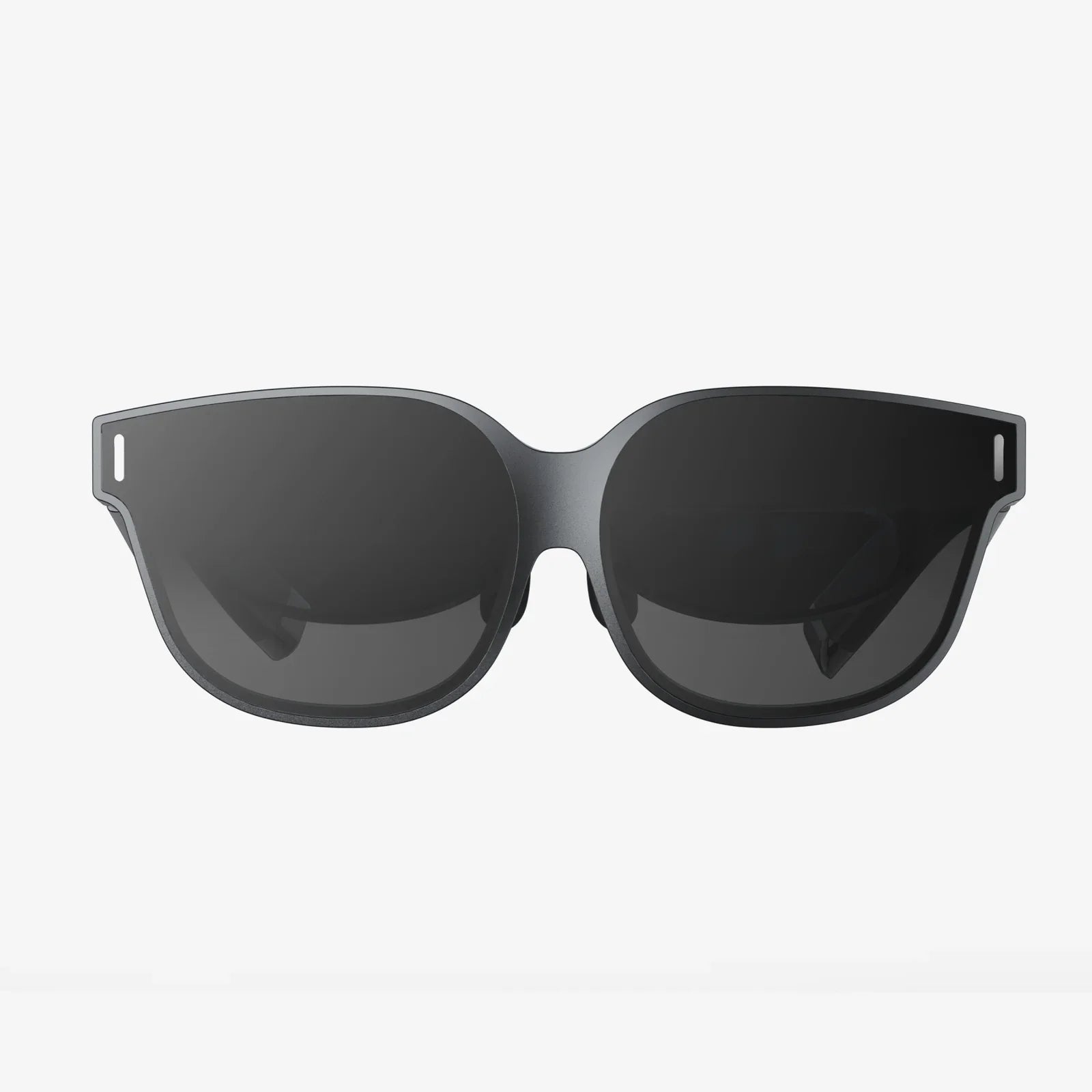
Imagine a world where information dances before your eyes, where digital guides lead you through complex tasks, and where the line between the physical and virtual blurs into insignificance. This is the tantalizing promise of augmented reality (AR), a technology that has captured the imagination of futurists and tech giants alike. But before we don our digital spectacles and step into this enhanced existence, it is crucial to pull back the curtain and confront the formidable, and often overlooked, limitations that stand between this vision and its widespread, practical reality. The journey to a truly augmented world is fraught with more hurdles than many care to admit.
The Technological Ceiling: Hardware and Processing Power
At its core, AR is a profoundly demanding technological feat. It requires a symphony of sensors, processors, and displays to work in perfect harmony, and this symphony is currently playing with several instruments out of tune. The most immediate limitation for any AR experience is the hardware itself. For AR to be effective, it must be untethered, mobile, and comfortable enough for prolonged use. However, the quest for the perfect form factor—something that is powerful, socially acceptable, and affordable—remains the industry's holy grail.
Smart glasses, the ideal vessel for AR, often face a brutal trade-off between performance and practicality. To deliver high-fidelity, complex graphics, a device needs significant processing power, which in turn generates heat and drains battery life at an alarming rate. This forces a choice: either create bulky, powerful headsets with limited battery life or sleek, lightweight glasses that can only handle rudimentary digital overlays. This limitation of processing power directly caps the complexity and realism of the AR experiences that can be delivered in a mobile form factor, preventing the technology from moving beyond simple annotations and into truly immersive, interactive environments.
The Perception Problem: Accuracy and Environmental Understanding
For AR to feel magical, the digital content must not only be visible but must also behave as if it is a real part of the world. This requires a level of environmental understanding and spatial accuracy that current technology struggles to consistently achieve. A primary limitation here is computer vision and simultaneous localization and mapping (SLAM). While impressive, these systems can be easily fooled.
Challenges in environmental mapping include poor lighting conditions, which can confuse depth-sensing cameras; highly reflective or transparent surfaces, like windows and mirrors, which disrupt spatial tracking; and dynamic environments where people and objects are constantly moving. An AR dinosaur might look impressive in a demo, but if it fails to occlude correctly behind a real-world couch or glitches through a wall when you move your head, the illusion is instantly shattered. This lack of persistent and precise registration breaks immersion and undermines the core utility of AR, especially for professional applications like surgery or engineering where millimeter accuracy is non-negotiable.
The Human Factor: Physiological and Psychological Effects
Perhaps the most significant limitations of augmented reality are not technical but biological. The human brain is not wired to process a conflicting stream of visual information from the real world and a digital display. This dissonance can lead to a range of adverse effects, most notably vergence-accommodation conflict.
Our eyes naturally converge (point inward) and accommodate (focus) on the same point in space. In AR, your eyes might be converging on a virtual object that appears to be ten feet away, but they must still focus on the physical screen of the headset, which is only two inches from your face. This sensory mismatch can cause significant eye strain, headaches, and general visual fatigue, limiting the amount of time users can comfortably engage with AR technology. Prolonged use raises concerns about potential long-term impacts on eyesight, especially in younger users. Furthermore, the constant bombardment of digital stimuli can lead to cognitive overload, reducing a user's ability to focus on the physical world and potentially creating dangerous situations, such as when using AR while walking or driving.
The Social and Ethical Quagmire
Beyond the individual, AR presents a host of social limitations that could hinder its adoption. The concept of the "digital divide" will be exacerbated, creating a chasm between those who can afford advanced AR systems and those who cannot. More insidiously, AR wearables, particularly always-on cameras and microphones, pose an unprecedented threat to privacy. The ability to surreptitiously record conversations, scan environments, and even identify strangers through facial recognition raises dystopian concerns about surveillance and data ownership.
Social acceptance is another major hurdle. Walking down the street wearing conspicuous glasses that record everything will be viewed with justifiable suspicion. The technology also threatens to create new forms of social isolation, with users retreating into their personalized digital bubbles rather than engaging with their immediate surroundings. The ethical implications of filtering reality are profound—who gets to decide what information is overlaid on a person, a building, or a public space? The potential for advertising spam, biased information, and even reality-altering propaganda is a serious limitation that strikes at the very heart of our shared human experience.
The Content Conundrum: Development and Standardization
A technology is only as good as its ecosystem, and for AR, that ecosystem is fragmented and complex. A critical limitation is the lack of universal development standards and platforms. Creating an AR application often means developing for a specific device or operating system, a costly and time-consuming process that stifles innovation and limits the availability of high-quality content. This fragmentation means that a compelling experience on one set of hardware may be completely unavailable on another, preventing the kind of universal adoption seen with technologies like the web or mobile phones.
Furthermore, designing intuitive and valuable user interfaces for a three-dimensional, spatially-aware medium is an entirely new discipline. How does a user interact with a floating menu? How do you avoid interface clutter in a real-world environment? There are no established best practices, leading to a Wild West of design choices that can confuse and frustrate users. This immaturity in design language and development tools is a significant brake on the creation of the "killer apps" that AR desperately needs to move beyond a niche novelty.
Connectivity and the Latency Lag
For many complex AR applications, the processing burden is too great for a mobile device to handle alone. The proposed solution is to offload heavy computation to the cloud using high-speed 5G or future 6G networks. This, however, introduces a new set of limitations centered on connectivity and latency.
Latency—the delay between a user's action and the system's response—is the nemesis of immersion. Even a delay of a few milliseconds between turning your head and the digital overlay adjusting accordingly can cause disorientation and nausea. Widespread, reliable, high-bandwidth, low-latency connectivity is a prerequisite for cloud-rendered AR, and such infrastructure is simply not available in most parts of the world. This limitation effectively confines high-end AR experiences to specific, connectivity-rich locations, negating the technology's promise of being a ubiquitous, everywhere-you-are tool.
The dream of a seamlessly augmented world is intoxicating, offering a future of enhanced productivity, boundless creativity, and new forms of connection. Yet, this vision remains just out of reach, held back not by a single failing but by a complex web of technological impediments, human biological constraints, and profound ethical dilemmas. These limitations of augmented reality are not mere roadblocks to be easily overcome with the next product cycle; they are fundamental challenges that will require years, if not decades, of interdisciplinary innovation and careful societal negotiation. The true future of AR depends not on how quickly we can push pixels into our field of view, but on how wisely we navigate these very real constraints to build a technology that truly enhances humanity, rather than complicating it.
Share:
How Much Is Smart Glass Cost? A Comprehensive Price Breakdown
Keeping AI Glasses Current: The Unseen Challenge of Wearable Intelligence