


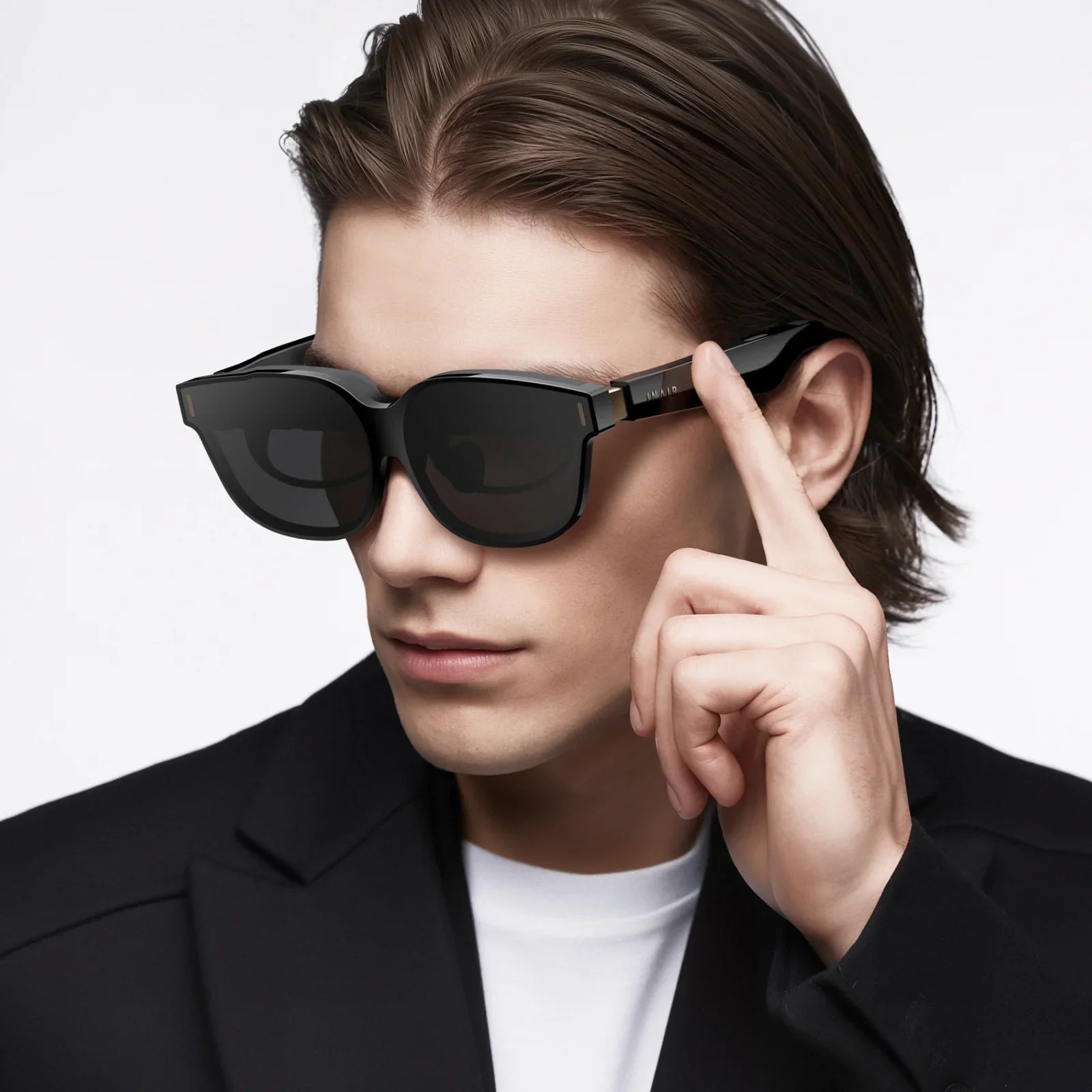
You lift the device to your face, a sleek amalgamation of plastic, glass, and silicon. For a moment, there’s only darkness, a silent anticipation. Then, the world ignites. You’re no longer in your living room; you’re standing on the surface of Mars, gazing at a rust-colored horizon. You’re dissecting a human heart, its ventricles pulsing in your hands. You’re sitting across from a loved one, their smile rendered in perfect detail, though they are thousands of miles away. This is the promise and the power of looking into virtual reality goggles—an act that is rapidly evolving from a niche hobby into a fundamental shift in how we compute, connect, and comprehend reality itself.
The Engine Behind the Illusion: How VR Goggles Trick the Brain
The magic of VR is not magic at all; it is a meticulously engineered symphony of hardware and software designed to hijack the human sensory system. At its core, the goal is simple yet profound: to convince your brain that the digital world it is perceiving is real. This feat, known as achieving "presence," relies on several critical technologies working in perfect harmony.
The most crucial element is the display. Unlike a television or monitor, which you observe from a distance, VR displays are mere inches from your eyes. They are typically high-resolution, fast-refresh-rate panels, one for each eye, which creates the stereoscopic 3D effect that provides depth perception. Early devices suffered from the "screen door effect," where users could see the fine lines between pixels, shattering immersion. Modern advancements have all but eliminated this, with pixel densities so high that the image appears seamless and crisp.
But a crystal-clear image is not enough. To feel truly present, your movements must be tracked and reflected in the virtual world with imperceptible latency. This is accomplished through a combination of internal and external sensors. Inside-out tracking uses cameras and sensors mounted on the headset itself to map the physical environment and track its own position within it. Outside-in tracking, historically using external base stations placed around the room, precisely monitors the position of the headset and controllers. This six degrees of freedom (6DoF) tracking—the ability to move not just rotationally (pitch, yaw, roll) but also translationally (forward/back, up/down, left/right)—is what allows you to lean around a virtual corner or duck under a low-hanging beam, making the experience visceral and intuitive.
Finally, sophisticated software and powerful processors tie everything together. They render two distinct high-fidelity images at frame rates often exceeding 90Hz, minimizing motion blur and the nausea it can induce. Advanced techniques like foveated rendering, which leverages eye-tracking technology to render only the area you are directly looking at in full detail, optimize performance and allow for even more complex and beautiful virtual worlds.
Beyond the Game: The Expansive Universe of VR Applications
While gaming remains the most visible and commercially successful application for VR, the act of looking into these goggles is transforming a vast array of other fields, often in ways more significant than entertainment.
Revolutionizing Education and Training
Imagine medical students performing intricate virtual surgeries without risk to a patient. Apprentice mechanics disassembling and reassembling a complex jet engine before ever touching a physical tool. History students walking through a meticulously reconstructed ancient Rome. VR makes this possible. It provides a safe, scalable, and incredibly effective platform for experiential learning. The ability to practice high-stakes procedures in a consequence-free environment builds muscle memory and confidence, while immersive historical or scientific simulations foster a deeper understanding than any textbook could provide.
Transforming Healthcare and Therapy
The therapeutic potential of VR is staggering. It is being used to treat phobias through controlled, gradual exposure therapy—helping someone afraid of heights by virtually standing on a skyscraper ledge, for instance. It manages chronic pain by diverting the brain's attention with calming or engaging virtual environments. For patients undergoing painful procedures or lengthy rehabilitation, VR serves as a powerful distraction, reducing perceived pain and anxiety. Furthermore, social VR platforms are being explored to help individuals with autism spectrum disorder practice social interactions in a safe and controllable setting.
Redefining Remote Work and Collaboration
The concept of the "metaverse" is often tied to socializing, but its most immediate impact may be on the professional world. VR collaboration platforms allow architects and engineers to inhabit 3D models of their designs at full scale, identifying issues long before construction begins. Remote teams can meet in a shared virtual boardroom, interacting with 3D data visualizations and prototypes as if they were physically present. This moves beyond video calls to create a sense of shared space and presence, potentially revolutionizing the future of distributed work.
Unlocking New Avenues for Storytelling and Art
Filmmakers and artists are using VR to create entirely new forms of narrative. Instead of watching a story unfold on a screen, you inhabit it. You can look anywhere, follow any character, and become an active participant in the narrative. Artists create boundless 3D sculptures and paintings in virtual space, crafting worlds that would be impossible in the physical realm. This medium is still in its infancy, but it represents a fundamental shift from passive observation to active experience.
The Human Factor: Navigating the Psychological and Social Implications
As with any transformative technology, looking into virtual reality goggles is not without its complexities and potential pitfalls. The very power that makes VR so compelling also demands careful consideration of its effects on individuals and society.
A primary concern is the phenomenon known as "virtual reality sickness," a form of motion sickness caused by a disconnect between what the eyes see (movement) and what the vestibular system in the inner ear feels ( stillness). While advancements in technology have reduced its prevalence, it remains a barrier for some users. Prolonged use can also lead to eye strain, headaches, and disorientation upon returning to the real world, though these effects are typically short-lived.
More profound are the psychological questions. If a virtual experience can feel as real as a physical one, what impact does that have on our memories, our relationships, and our sense of self? The concept of "proteus effect" suggests that users may begin to embody the behaviors and attitudes of their digital avatars. This can be empowering but also raises questions about identity fragmentation. Furthermore, the potential for addiction to highly curated and rewarding virtual worlds is a real concern, echoing debates surrounding social media and video games but amplified by total immersion.
Socially, VR presents a dual-edged sword. It can connect people across vast distances with a feeling of genuine togetherness, combating loneliness and isolation. Yet, it could also further encourage physical social withdrawal, as individuals might prefer idealized virtual interactions to the messy complexities of real-life relationships. Ensuring that this technology serves to augment our reality rather than replace it is one of the great challenges of its development.
The Horizon Beckons: The Future of Immersive Technology
The VR headsets of today are impressive, but they are merely the primitive ancestors of what is to come. The future trajectory of this technology points towards devices that are smaller, lighter, more powerful, and ultimately, more integrated into our daily lives.
The holy grail is a move towards sleek, socially acceptable glasses, moving away from the bulky, face-encompassing visors of the present. Advancements in pancake lenses and micro-OLED displays are already driving this miniaturization. Furthermore, the line between VR and its cousin, augmented reality (AR), will continue to blur. Mixed Reality (MR) headsets aim to seamlessly blend the digital and physical worlds, allowing holographic elements to interact convincingly with your real environment. This could make the act of "looking into" goggles obsolete, as you would simply be looking through them at an enhanced version of your own world.
Input is also evolving. Today's handheld controllers are giving way to more natural interfaces. Advanced hand-tracking technology allows users to manipulate virtual objects with their bare hands. Haptic feedback suits and gloves are in development to simulate touch, from the gentle brush of a butterfly's wing to the jarring impact of a virtual punch. Eventually, neural interfaces could allow us to control digital experiences with our thoughts alone, making the interaction as fluid and intuitive as intention itself.
This technological evolution will unlock applications we can scarcely imagine today, from telepresence that feels indistinguishable from being there to creative and professional tools that feel like extensions of our own minds. The potential to solve complex problems, experience profound empathy, and explore the farthest reaches of human imagination is boundless.
The simple act of placing a headset over your eyes is becoming a rite of passage into a new dimension of human experience. It is a tool for unparalleled creativity, a window to unseen knowledge, and a bridge to deeper connection. The virtual worlds we are building will inevitably reflect our best and worst qualities, our highest aspirations and our deepest fears. The responsibility, therefore, lies not just with the engineers crafting the hardware, but with all of us, to shape these new realities with intention, ethics, and a unwavering commitment to enhancing our humanity, not escaping it. The next time you consider looking into a pair of virtual reality goggles, remember—you're not just putting on a device; you are stepping into the future, and what you see there just might change everything.
Share:
Weakness of Virtual Reality: The Unseen Barriers to a Digital Revolution
Virtual Reality Based Relaxation: The Ultimate Escape for Modern Stress