


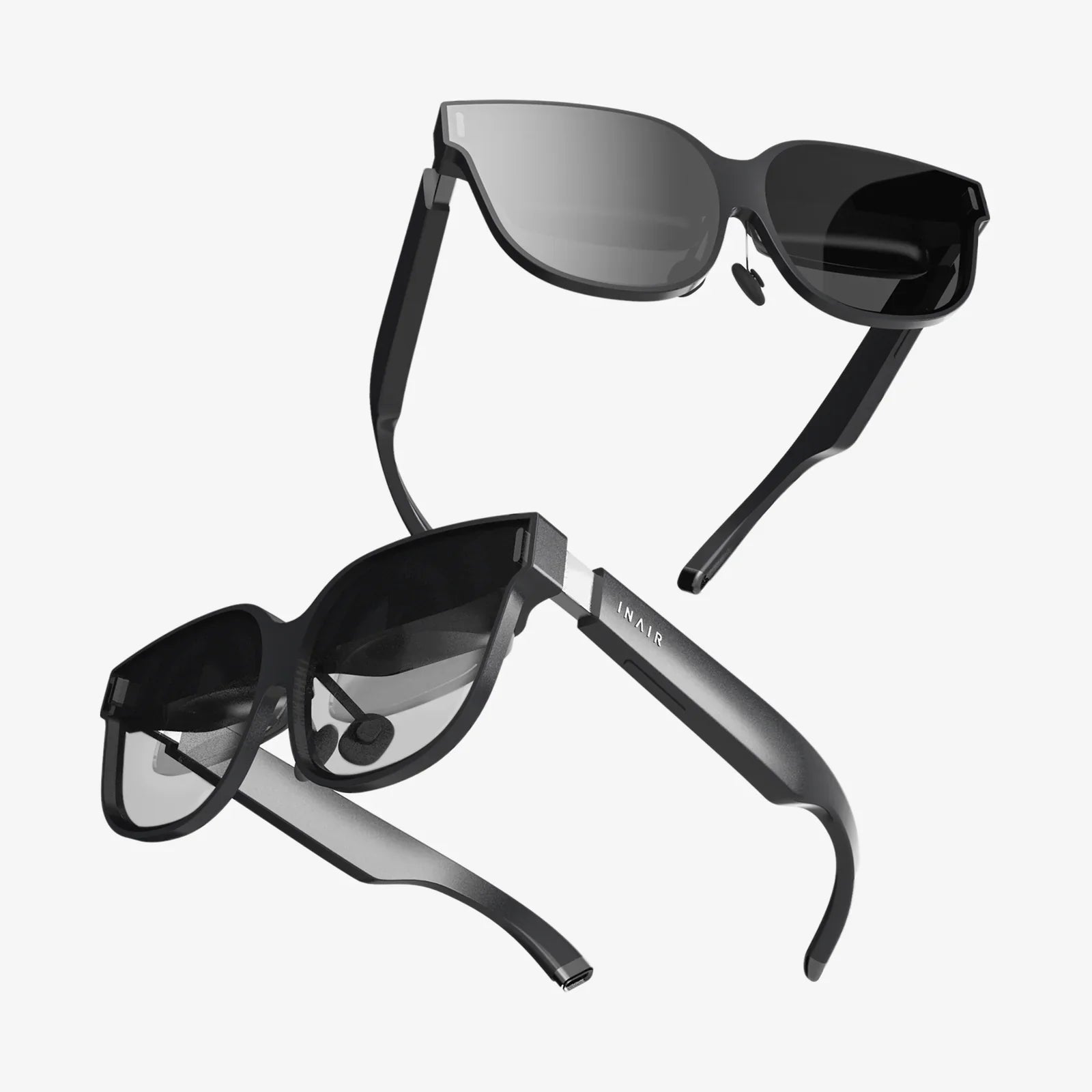
Imagine a world where information floats before your eyes, where digital assistants materialize in your living room, and where the line between what's real and what's digital becomes beautifully blurred. This isn't a distant dream from a sci-fi novel; it's the reality ushered in by the arrival of a new category of wearable technology: magic AR glasses now available to the public. This marks a pivotal moment, a paradigm shift in how we interact with technology, each other, and the world itself. For decades, we've been tethered to screens—first desktops, then laptops, and now smartphones that command our constant attention. These devices, while powerful, create a barrier, pulling our focus away from our immediate surroundings. The promise of augmented reality (AR) has always been to break down that barrier, to overlay useful digital information onto our physical environment, enhancing our perception without replacing it. After years of prototypes, false starts, and niche enterprise applications, the technology has finally matured. The hardware is sleek enough, the software intelligent enough, and the ecosystem rich enough to deliver a truly magical experience. This isn't just another gadget; it's a new lens through which to see and shape your reality.
The Technology Behind the Magic
The seamless experience these glasses provide is a marvel of modern engineering, a symphony of advanced components working in perfect harmony. At the heart of the system are micro-displays, incredibly small yet high-resolution screens that project images directly onto the lenses. These are not the bulky, low-fidelity displays of yesteryear; they are bright, vibrant, and capable of rendering complex 3D graphics that appear to coexist with the real world. This visual magic is paired with a suite of sophisticated sensors. World-facing cameras continuously scan the environment, while depth sensors map the geometry of the space around you, understanding the distance to walls, tables, and other objects. Inertial measurement units (IMUs) track the precise movement and rotation of your head, ensuring the digital content remains locked in place, whether it's a virtual monitor on your desk or a navigation arrow on the street ahead.
All this raw data is processed by a powerful onboard chipset, a specialized processor designed for spatial computing. It performs simultaneous localization and mapping (SLAM), building a real-time 3D model of your environment. This spatial understanding is the foundation upon which everything else is built; it allows digital objects to have a sense of place, to occlude behind real-world objects, and to interact with the physical world in a believable way. Furthermore, advanced eye-tracking technology monitors where you are looking, enabling intuitive control through gaze and providing a more realistic depth of field for virtual objects. All of this is powered by a power-efficient battery system designed for all-day use, often with a small, discreet external battery pack that can be swapped out. The culmination of these technologies is a pair of glasses that feel less like a computer and more like a natural extension of your own senses.
Transforming Everyday Life
The true magic of these devices lies not in their technical specifications, but in their profound ability to enhance daily human experiences. The applications are as vast as the imagination.
Productivity Reimagined
For the professional, the traditional workspace is obliterated. Instead of being confined to a physical monitor, you can summon multiple high-definition virtual screens anywhere you choose—in your home office, a coffee shop, or even a park. You can resize them, arrange them in a semi-circle around you, and interact with them using simple hand gestures or a voice assistant. Complex 3D models, from architectural blueprints to molecular structures, can be pulled out of a flat screen and manipulated in the air before you, enabling a deeper understanding and collaboration. Remote assistance becomes incredibly immersive; a expert can see what you see and draw annotations directly into your field of view, guiding you through a complex repair or procedure step-by-step.
A New Dimension of Entertainment
Entertainment is catapulted into a new dimension. Imagine watching a movie where the characters and environments spill out of the frame and into your room. Gaming transforms from a sedentary activity into a dynamic experience where game elements interact with your furniture and you physically move around your space to play. Sports fans can watch a game with real-time stats and player information hovering over the action, all while still sharing the couch with friends and family, blending the communal experience with personalized data.
Navigation and Exploration
Getting around becomes intuitive and context-aware. Walking through a new city, directional arrows can be painted onto the sidewalk, and historical information about a building can pop up as you look at it. Restaurant reviews and ratings can overlay the storefronts as you pass by. For the DIY enthusiast, step-by-step instructions can be superimposed directly onto the engine they are fixing or the wall they are painting, reducing errors and increasing confidence.
Enhanced Social Connection
Perhaps most importantly, these glasses have the potential to redefine human connection. Video calls can evolve into holographic conversations where it feels like the other person is sitting in the room with you, complete with natural eye contact and body language. You can share and co-create 3D artwork or designs with someone on the other side of the world as if you were both standing in the same studio. This technology can bridge physical distances in a way that flat screens simply cannot, preserving the nuance and presence of in-person interaction.
Implications for Industry and Society
The widespread adoption of this technology will send ripples across every sector of the economy and challenge long-held social norms. In medicine, surgeons could overlay CT scans directly onto a patient during surgery, visualizing tumors or blood vessels beneath the skin. Medical students could practice procedures on realistic holographic patients. In manufacturing and logistics, warehouse workers could have picking instructions and inventory data displayed in their vision, streamlining complex tasks and reducing errors. Architects and interior designers could walk clients through full-scale holographic models of unbuilt structures, making changes in real-time.
However, this new frontier also brings significant challenges that society must confront. The concept of attention will be redefined. Will we be more present in our surroundings, or will we be perpetually distracted by a layer of digital noise? The issue of data privacy becomes paramount; these devices, with their always-on cameras and microphones, collect an unprecedented amount of intimate data about our lives, our homes, and our behaviors. Robust ethical frameworks and clear regulations will be essential to prevent misuse and protect individual privacy. There is also a risk of a new digital divide emerging between those who can afford this advanced technology and those who cannot, potentially exacerbating existing inequalities. Furthermore, the long-term psychological and social effects of blending reality are still unknown. Navigating these challenges will be as important as developing the technology itself, requiring a collaborative effort between developers, policymakers, and the public to ensure this powerful tool is used for the benefit of all.
The Road Ahead
What we see today is merely the first step on a long and exciting journey. The current generation of devices, while impressive, is a glimpse into a future that will become even more seamless and powerful. We can expect future iterations to become even lighter, with longer battery life, wider fields of view, and higher resolution displays that make digital objects indistinguishable from reality. The killer app for this platform has likely not even been invented yet, waiting for a new generation of creators to explore its possibilities. As the technology becomes more affordable and accessible, it will cease to be a novelty and become an integrated part of our daily infrastructure, much like the smartphone did. It will change how we learn, how we work, how we play, and how we connect, ultimately becoming an invisible yet indispensable part of the human experience.
The door to a mixed-reality future is now open, and the view is nothing short of spectacular. This is more than a product launch; it's an invitation to participate in the next chapter of human-computer interaction, to become an active citizen in a world where the digital and physical are forever intertwined. The potential to augment human capability, to solve complex problems, and to create breathtaking new forms of art and entertainment is literally right before our eyes. The question is no longer if this future will arrive, but how quickly we will adapt to its possibilities and shape its responsible evolution. The magic is here, and it’s waiting for you to put it on.
Share:
Simple 3D Tool: The Ultimate Guide to Effortless Digital Creation
Planned AR Glasses The Next Evolution in Human-Computer Interaction