


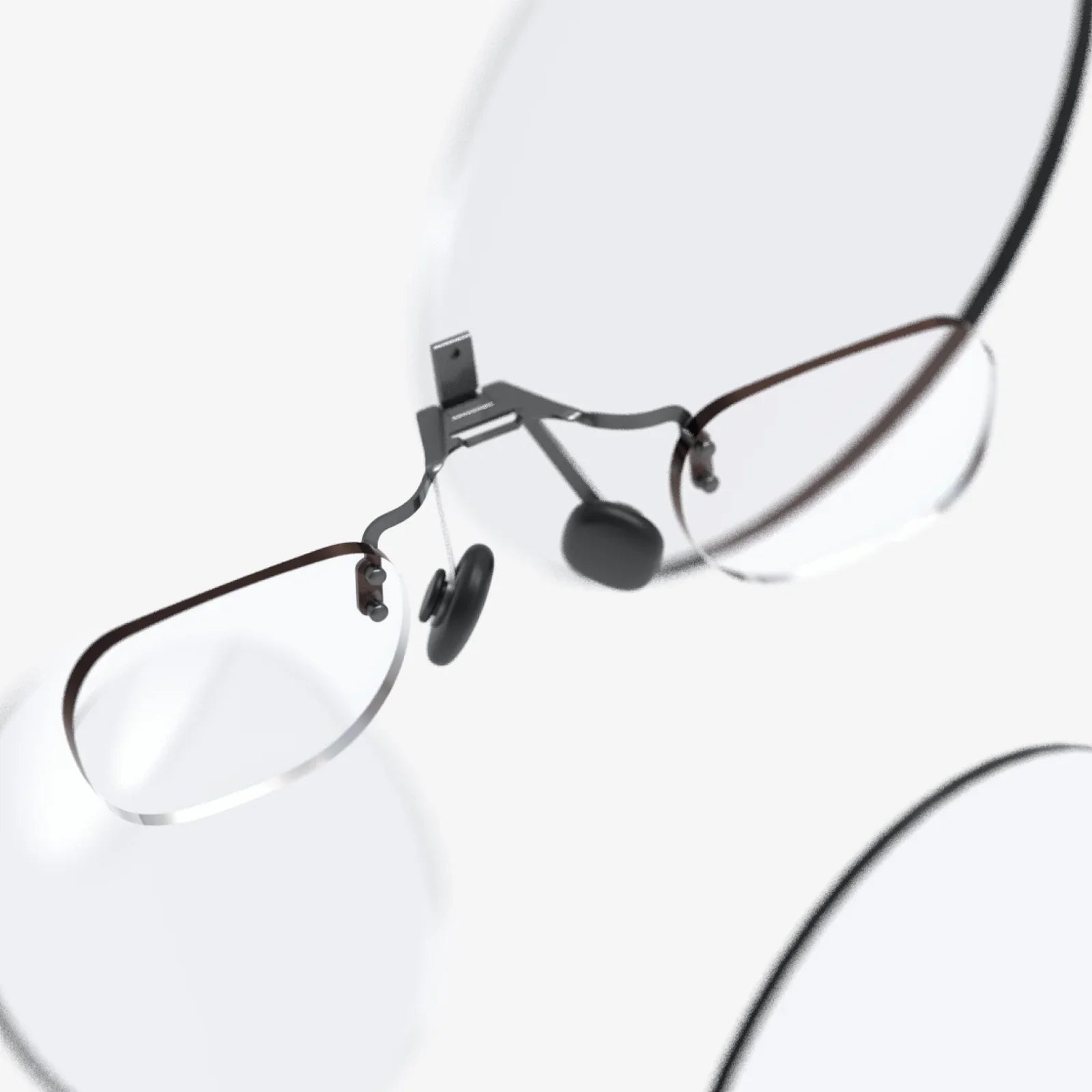
Imagine a world where information doesn't live on a screen in your hand, but is woven seamlessly into the fabric of your reality. The digital and the physical, no longer separate realms, converge into a single, enhanced experience. This is the ultimate promise of planned AR glasses, a technological leap that has captivated the imaginations of futurists, developers, and everyday consumers alike. This isn't just about a new gadget; it's about redefining the very interface between humanity and the vast digital universe we've built.
The Architectural Blueprint of Augmented Reality
At their core, planned AR glasses are sophisticated computers designed to be worn on your face. Their primary function is to overlay digital information—images, text, 3D models, and interfaces—onto your view of the real world. Unlike virtual reality, which replaces your surroundings, augmented reality aims to supplement and enrich them. The technological architecture required to achieve this magic is complex and multifaceted, representing a symphony of advanced hardware and software.
The Hardware Trinity: Seeing, Sensing, and Processing
The first critical component is the display system. This is the lens through which the digital world is projected. Early attempts often used small screens and complex optics, but the goal for next-generation devices is to project images directly onto the retina or use waveguides—thin, transparent lenses that bend light to form images—creating a seamless overlay that appears to exist in the world. The challenge is achieving high resolution, vibrant color, and a wide field of view without creating bulky, uncomfortable hardware.
Second is the sensor suite. For digital objects to interact convincingly with the physical environment, the glasses must understand that environment in real-time. This involves a sophisticated array of technologies:
- Cameras: Multiple high-resolution cameras map the surrounding space, identifying surfaces, objects, and depth.
- LiDAR (Light Detection and Ranging): This sensor fires out invisible laser dots to measure the exact distance to objects, creating a precise 3D depth map of the room. This allows virtual objects to occlude correctly behind real furniture or sit stably on a physical table.
- Inertial Measurement Units (IMUs): These accelerometers and gyroscopes track the precise movement and orientation of your head, ensuring the digital overlay stays locked in place as you move.
- Microphones and Speakers: For immersive audio and voice interaction, allowing sounds to seem like they emanate from specific points in space.
The third pillar is the onboard processing power. The immense amount of data from the sensors must be processed with near-zero latency. A delay of even milliseconds between your head moving and the image adjusting can cause disorientation or nausea. This requires specialized processors dedicated to simultaneous localization and mapping (SLAM), computer vision, and rendering complex graphics on the fly, all while sipping battery power to ensure all-day usability.
Beyond Novelty: The Transformative Applications
The true value of planned AR glasses lies not in the technology itself, but in its applications. This platform has the potential to revolutionize nearly every aspect of professional and personal life.
Revolutionizing the Workplace
In industrial and technical fields, AR glasses are poised to become an indispensable tool. Imagine a surgeon having a patient's vital signs and 3D scan data floating in their periphery during an operation, or a mechanic seeing the wiring diagram and repair instructions overlaid directly on the engine they are fixing. Architects could walk clients through a full-scale, virtual model of a building before the foundation is even poured. This hands-free, context-aware information delivery can dramatically increase efficiency, reduce errors, and provide expert guidance to workers anywhere in the world.
Redefining Social Connection and Entertainment
On a social level, planned AR glasses could evolve how we connect. Instead of flat video calls, we might see realistic, volumetric avatars of friends and family sitting on our couch as if they were physically present. Shared experiences could be reimagined: watching a movie could transform your living room into a spaceship cockpit, or a board game could come to life with animated characters battling on your table.
Gaming will undoubtedly be a killer app. Instead of exploring digital worlds on a screen, game worlds could be mapped onto your local park, your home, or your city, turning the entire environment into a playground. This blend of physical activity and digital fantasy, often referred to as "pervasive gaming," could create entirely new genres of entertainment.
Enhancing Daily Navigation and Learning
Everyday tasks will become more intuitive. Walking through a new city, directional arrows could be painted onto the sidewalk, and historical information about landmarks could pop up as you glance at them. Shopping could be transformed, allowing you to see how a piece of furniture would look in your home or instantly access product reviews by simply looking at an item on a shelf. For education, students could dissect a virtual frog, explore the solar system in their classroom, or watch historical events unfold around them, making learning an immersive, interactive adventure.
The Inevitable Challenges and Ethical Imperatives
Despite the exciting potential, the path to widespread adoption of planned AR glasses is fraught with significant challenges that extend far beyond technical hurdles.
The Privacy Paradox
This is arguably the most pressing concern. A device that is always-on, equipped with multiple cameras and microphones, and constantly scanning its environment represents a unprecedented data collection apparatus. The potential for surveillance—by corporations or governments—is immense. The glasses would have access to a continuous stream of biometric data (where you look, how you react), your location, and even the people and objects around you. Establishing clear, transparent, and robust data governance frameworks is not optional; it is a prerequisite for public trust. Users must have absolute control over their data, with clear opt-in policies and an understanding of how their information is used.
The Social Contract and the "Digital Divide"
How will the constant use of such devices affect social norms? Will it be considered rude to wear them during a conversation? How do we know if someone is recording us? The concept of attention itself will be challenged. Furthermore, a high cost for this advanced technology risks creating a new "digital divide," where only a privileged few have access to this enhanced layer of reality, potentially exacerbating existing social and economic inequalities.
Safety and Security in an Augmented World
Safety is another critical issue. Distraction is a real danger; navigating a busy street while interacting with digital content requires careful design to keep users aware of their surroundings. Digital vandalism is also a possibility—what if someone places offensive virtual graffiti in a public space? Ensuring the security of the platform from malicious actors who might seek to hijack the experience or deliver false information is paramount.
The Long Road to Ubiquity
The development of planned AR glasses is not a sprint; it's a marathon. Current technology, while impressive, is still in its relative infancy. The dream device—something as socially acceptable and comfortable as a pair of everyday glasses, with all-day battery life, powerful performance, and a compelling ecosystem of apps—is still on the horizon. It will require breakthroughs in battery technology, miniaturization of components, and display innovation.
Furthermore, success will depend on the creation of a robust developer ecosystem. Just as the smartphone needed app stores to reach its potential, AR glasses will need a wave of creative developers to build the experiences that will captivate consumers and prove the device's indispensable value. This will take time, iteration, and a clear value proposition that goes beyond gimmicks.
The journey will likely be iterative. Early devices may find their foothold in specific enterprise and niche applications, where the value proposition is clear and the cost is justified. This will provide the necessary real-world testing, funding for further research, and gradual cultural acclimatization that will pave the way for a future consumer product.
The whispers are growing louder, the prototypes more refined. We stand on the precipice of a new era, one where the boundary between our minds and the machine becomes beautifully, terrifyingly blurred. Planned AR glasses are not merely a product launch to anticipate; they are a cultural and technological shift waiting to happen. The question is no longer if they will arrive, but how we will choose to shape this powerful technology, and in turn, how it will irrevocably shape us.
Share:
Magic AR Glasses Now Available: The Future You Can Wear
Advantages of AI Technology: A Deep Dive into the Intelligent Revolution Reshaping Our World