


You’ve heard the terms, seen the futuristic commercials, and maybe even tried on a headset yourself. Augmented Reality and Virtual Reality are no longer science fiction; they are powerful, disruptive technologies reshaping how we work, play, and connect. But in a world buzzing with tech jargon, the fundamental question remains: what is the real, tangible difference between AR and VR? This isn't just about choosing a gadget; it's about understanding two distinct pathways into our digital future. One enhances your world, while the other replaces it entirely. Unpacking this core distinction is the key to unlocking their immense potential.
The Core Philosophical Divide: Enhancement vs. Immersion
At its heart, the main difference between AR and VR is a philosophical one, concerning the user's relationship with their environment.
Augmented Reality (AR) is best understood as a digital overlay on the real world. AR technology takes your existing, physical environment and superimposes computer-generated information—images, text, data, 3D models—onto it. Your reality remains the foundation; the digital elements are additive. You are still present in your room, on your street, or in a meeting. The goal of AR is to enhance, inform, and augment your perception of reality by blending the digital and physical realms seamlessly. Think of it as a high-tech, interactive heads-up display for life.
Virtual Reality (VR), in stark contrast, is about total immersion. It severs your connection to the physical world and transports you to a completely simulated, computer-generated environment. By blocking out your surroundings and replacing them with a digital reality, VR tricks your senses into believing you are somewhere you are not—whether that's the surface of Mars, the depths of the ocean, or inside a human cell. The goal of VR is to create a sense of presence, the undeniable feeling of "being there" in a virtual space.
Bridging the Real and the Virtual: The Spectrum of Reality
It's helpful to view AR and VR not as binary opposites, but as two points on a broader spectrum often called the "Virtuality Continuum." On one end, you have the completely real environment, and on the other, a fully virtual one. AR sits closer to the real world, adding digital layers to it. VR is anchored at the fully virtual end.
Between them exists Mixed Reality (MR), a more advanced blend where digital objects are not just overlaid but can interact with the real world in real-time. A virtual character that jumps off your real table and hides behind your real sofa is an example of MR. It requires a sophisticated understanding of the physical space's geometry and lighting. For the sake of clarity, this article focuses on the primary dichotomy between AR and VR, but MR represents the exciting fusion of both technologies.
The Technological Chasm: How They Achieve Their Goals
The philosophical difference between enhancement and immersion dictates a vast technological divergence. The hardware and software required for each are fundamentally different.
Virtual Reality Technology: The Immersion Engine
VR's primary tool is the head-mounted display (HMD), commonly known as a VR headset. These devices are complex pieces of engineering designed for one purpose: sensory isolation.
- Display: High-resolution screens are placed mere centimeters from your eyes, filling your entire field of view.
- Tracking: Advanced systems using external sensors (outside-in tracking) or built-in cameras (inside-out tracking) meticulously monitor the position of your head and, often, your hands. This allows the virtual world to respond precisely to your movements, which is critical for maintaining immersion and preventing motion sickness.
- Audio: Spatial or 3D audio is essential. Sounds come from specific directions in the virtual space, making the experience incredibly convincing.
- Input: Handheld controllers are standard, often equipped with haptic feedback (vibrations) to simulate touch. More advanced systems use gloves or full-body suits for even deeper immersion.
Because VR creates everything from scratch, it demands immense processing power, typically supplied by a powerful external computer or a high-end integrated system within the headset itself.
Augmented Reality Technology: The Enhancement Layer
AR technology is more varied and accessible. Its goal is not to block out the world but to understand it.
-
Displays: AR can be experienced through:
- Smartphone and Tablet Screens: The most common gateway. The device's camera captures the real world, and the software adds digital elements to the video feed displayed on the screen.
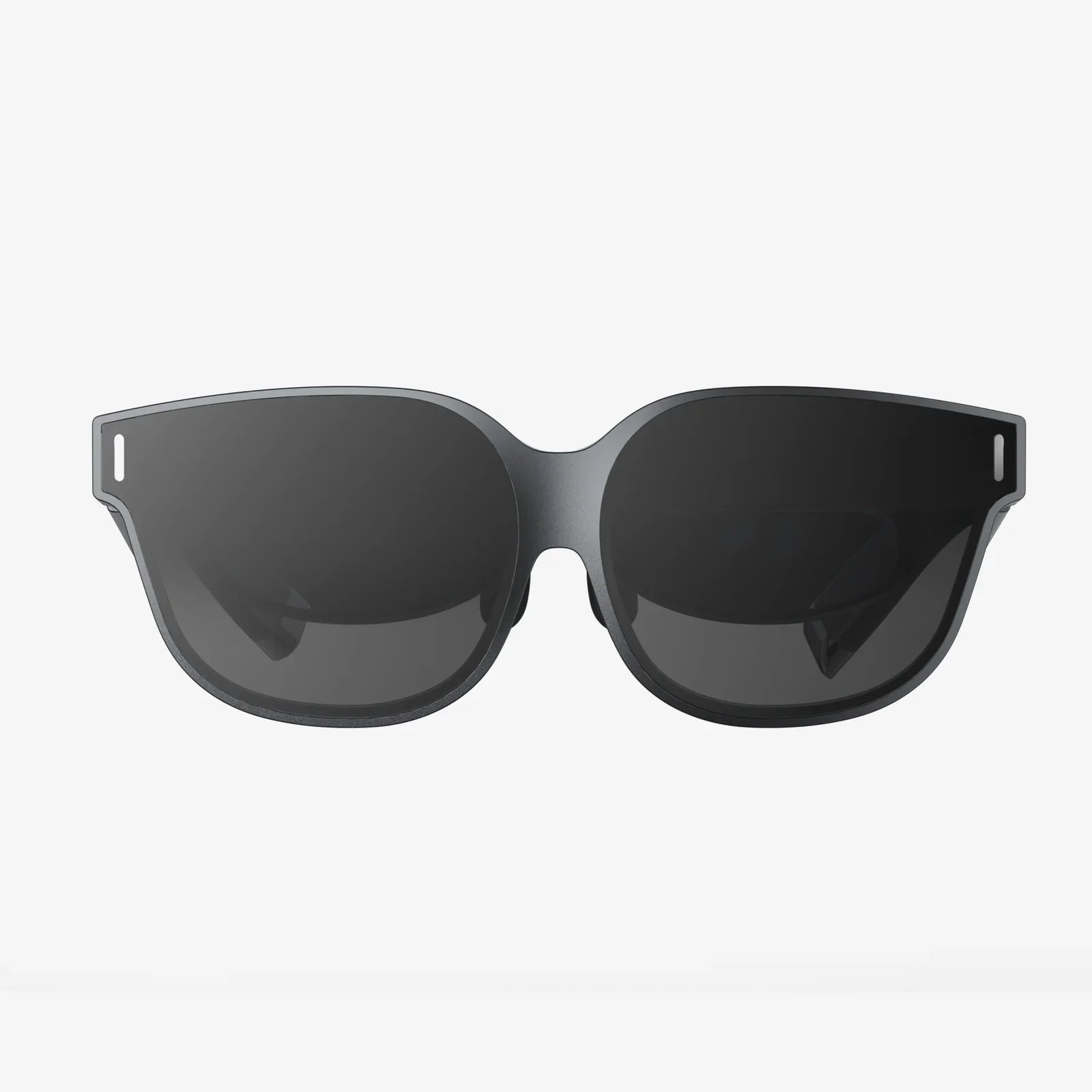
- Smart Glasses: These transparent lenses project images directly onto the retina or use a small prism to reflect digital content into your line of sight, allowing you to see the real world clearly behind the data.
- Heads-Up Displays (HUDs): Long used in fighter jets and now in some automobiles, these project information like speed or navigation onto the windshield.
-
Tracking and Sensing: The magic of AR lies in its ability to anchor digital content to the real world. This is achieved through:
- Computer Vision: The device's camera identifies objects, surfaces, and planes (like a tabletop or floor).
- Simultaneous Localization and Mapping (SLAM): This advanced technology allows the device to understand its position in an unknown environment while simultaneously mapping the geometry of that space. This is how a virtual dinosaur can know to walk around your real coffee table.
- Input: Interaction is often through touchscreens, voice commands, or gesture controls, as the user needs to remain engaged with their physical environment.
A World of Applications: How AR and VR Are Used Today
The different purposes of AR and VR naturally lead them to revolutionize different sectors.
Transforming Industries with Virtual Reality
VR's strength is safe, cost-effective immersion.
- Gaming and Entertainment: This is VR's most famous application. It places you inside the game, offering unparalleled levels of engagement and excitement.
- Training and Simulation: From training surgeons for complex procedures to preparing soldiers for combat missions or helping astronauts practice spacewalks, VR provides a risk-free environment to learn muscle memory and procedural tasks. It's also revolutionizing safety training for hazardous jobs like working on oil rigs or electrical lines.
- Architecture and Design: Architects and clients can don a headset and take a full-scale, immersive walkthrough of a building before a single brick is laid. This allows for unparalleled design validation and client presentations.
- Therapy and Rehabilitation: VR is used for exposure therapy to treat phobias (fear of heights, flying, public speaking) and PTSD in a controlled setting. It's also used for physical rehab, turning exercises into engaging virtual games.
Enhancing Reality with Augmented Reality
AR's strength is contextual information and hands-free assistance.
- Retail and E-commerce: Try before you buy. AR apps allow you to see how a piece of furniture would look in your living room, how a new shade of paint would change your wall, or how a pair of glasses fits your face—all from your phone.
- Industrial Maintenance and Repair: A field technician wearing smart glasses can see schematics overlaid on a malfunctioning machine, receive remote expert guidance with annotations drawn directly into their field of view, and access hands-free manuals.
- Healthcare: Surgeons can use AR overlays to see vital signs, ultrasound data, or 3D reconstructions of tumors directly over the patient during an operation. Medical students can explore detailed, interactive 3D models of human anatomy.
- Navigation: AR navigation apps project arrows and directions onto the real world through your phone, making it intuitive to find your way in a complex airport or a new city.
- Education: Textbooks come alive. Students can point their device at a page to see a 3D model of the solar system, a beating heart, or a historical monument rise from the paper.
The User Experience: A Matter of Presence and Practicality
Choosing between AR and VR often comes down to the desired experience and practical constraints.
VR Experience: Using VR is an event. It requires dedicating time and space. You are cut off from your surroundings, which can be a safety concern if not in a clear area. The experience can be so intense that it causes motion sickness in some users (cybersickness), a significant challenge the industry continues to address. However, when it works, the feeling of presence and awe is unmatched.
AR Experience: AR is designed for all-day, on-the-go use. It's about utility and convenience within your existing life. There's little to no risk of motion sickness because your vestibular system (which controls balance) still agrees with the visual input from the real world. The primary challenge is creating digital content that is convincing and seamlessly integrated, avoiding the "janky" or misaligned overlays that can break the illusion.
Gazing into the Crystal Ball: The Converging Future
While distinct today, the lines between AR and VR are beginning to blur. The ultimate dream device for many is a single pair of glasses that can function as both—transparent for AR and able to become opaque for full VR immersion. This technological convergence, often called XR (Extended Reality), is the holy grail.
Advancements in micro-displays, computer vision, bandwidth (with 5G and beyond), and artificial intelligence are pushing both fields forward at a breakneck pace. We are moving towards a future where the digital and physical will be intertwined in ways we are only beginning to imagine, from the metaverse to ubiquitous computing.
Understanding the main difference between AR and VR is your compass for navigating this exciting new landscape. It’s the difference between taking a rocket to a new galaxy and having a super-powered lens to see the hidden wonders of your own. One isn't better than the other; they are different tools for different jobs, both poised to redefine the very fabric of our reality. The next time you see a digital overlay on a sports broadcast or hear about a virtual meeting, you'll see not just a cool trick, but a fundamental choice about how we choose to interface with the universe of information we've created. The revolution will be both augmented and virtual, and it’s already at your doorstep.
Share:
What Is AR and VR in Simple Words: A Beginner's Guide to Immersive Tech
What Can Augmented Reality Do: Reshaping Reality and Revolutionizing Our World