


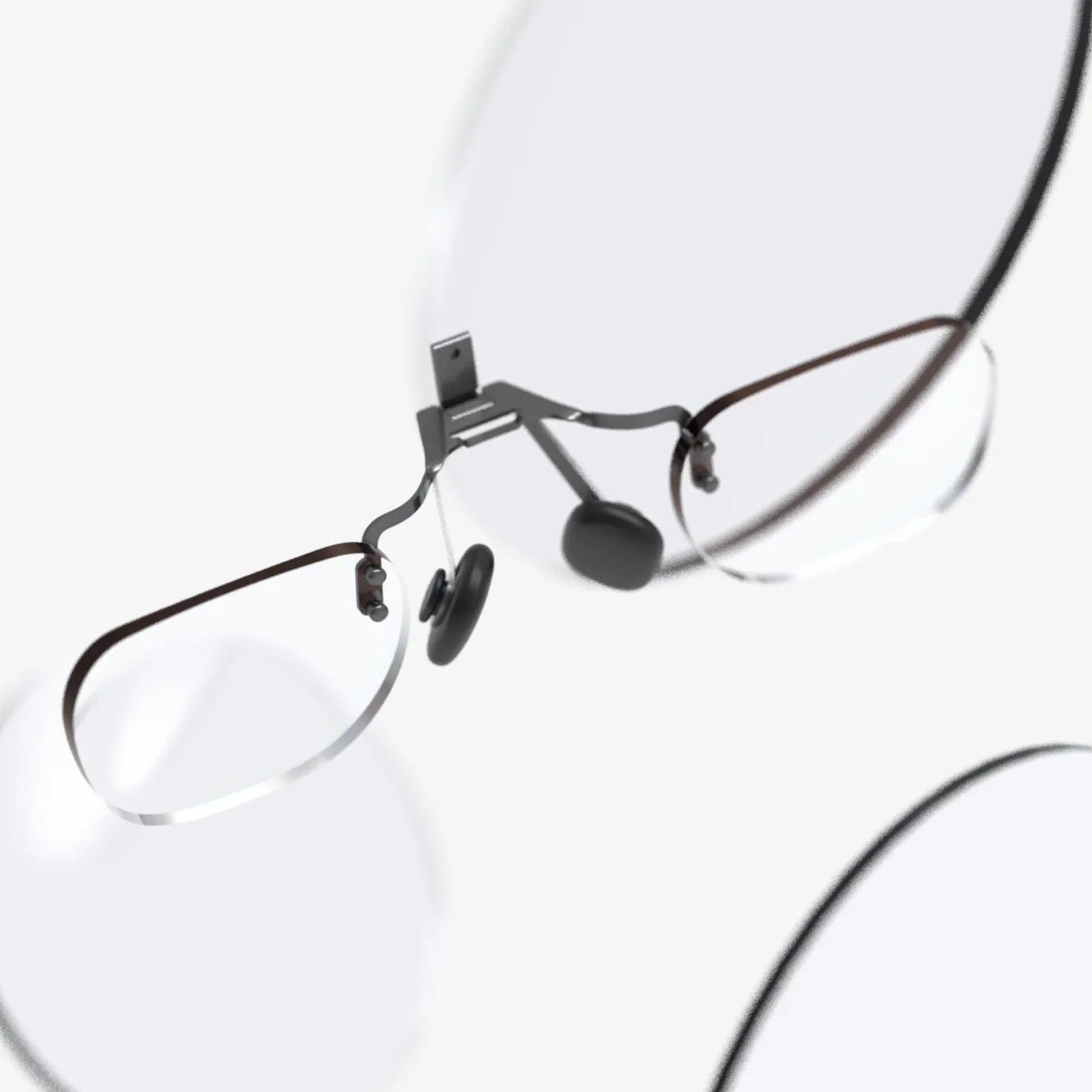
Imagine a world where your entire office, entertainment system, and social network are projected onto a pair of lightweight glasses, where digital information seamlessly blends with your physical reality. This is not a distant sci-fi fantasy; it is the imminent future being built today on the back of microscopic marvels known as microdisplays. The pace of innovation in this sector is nothing short of breathtaking, with new announcements and technological leaps emerging at a dizzying rate. For anyone tracking the next major shift in human-computer interaction, understanding the latest microdisplay news today is not just informative—it's essential to seeing the future, literally and figuratively.
The Engine of the Metaverse: Why Microdisplays Matter
At their core, microdisplays are tiny, high-resolution screens, often measuring less than an inch diagonally. Their power, however, is inversely proportional to their size. These are the components that make immersive augmented reality (AR) and virtual reality (VR) possible, acting as the visual gateway between the user and a digitally rendered world. Unlike traditional displays, their value is not in being looked at directly, but in being the source of imagery that is then magnified and presented to the eye through sophisticated optical systems. The quality of this experience—its realism, comfort, and clarity—is almost entirely dependent on the capabilities of the microdisplay at its heart.
The significance of recent microdisplay news today stems from their role as a fundamental enabling technology. Breakthroughs here have a cascading effect, unlocking new possibilities in fields as diverse as medicine, manufacturing, defense, and consumer entertainment. A slight increase in resolution or a reduction in power consumption doesn't just mean a slightly better picture; it can mean the difference between a device that causes eye strain and one that can be worn all day, or between a concept prototype and a commercially viable product.
Breaking Down the Technologies: LCD, OLEDoS, and LCoS
The landscape of microdisplay manufacturing is a battleground of competing technologies, each with its own strengths, weaknesses, and fervent backers. The latest microdisplay news today often revolves around advancements in one of these core approaches.
Liquid Crystal on Silicon (LCoS)
LCoS technology has long been a workhorse for high-resolution applications. It operates by reflecting light off a liquid crystal layer deposited on a silicon mirror substrate. Recent developments have focused on improving light efficiency, minimizing the "screen door" effect (where the gaps between pixels become visible), and enabling faster response times to reduce motion blur in dynamic VR environments. Its high fill factor (the percentage of a pixel that is light-emitting) remains a key advantage.
Organic Light-Emitting Diode on Silicon (OLEDoS)
OLEDoS is often hailed for its perfect blacks and exceptional contrast ratios, as each pixel emits its own light and can be turned off completely. This leads to incredibly vibrant and realistic imagery. The biggest headlines in microdisplay news today concerning OLEDoS are about achieving higher pixel densities—pushing into the realm of beyond 4K resolution per eye—and solving longevity issues, particularly blue pixel degradation. Its potential for creating incredibly thin and efficient form factors makes it a favorite for next-generation AR glasses.
Micro-LED on Silicon (LEDoS)
Widely considered the holy grail, Micro-LED technology promises the best of all worlds: the high brightness and efficiency of inorganic LEDs with the deep blacks and fast response times of OLED. The technical hurdle, and the subject of intense research and development, is the mass transfer of millions of microscopic LED chips onto a silicon backplane. Major progress in this complex manufacturing process is a recurring theme in cutting-edge microdisplay news today. Success here could revolutionize the industry, offering unparalleled brightness for outdoor AR use and incredible durability.
The Frontlines of Innovation: Recent Breakthroughs
So, what does the current microdisplay news today actually report? The developments are happening on multiple fronts simultaneously.
Resolution Race: The push for ever-higher pixel-per-degree (PPD) density continues unabated. While 4K per eye was once a dream, it is now a reality in high-end prototypes, with research labs and companies showcasing displays that drastically reduce the screen-door effect and approach the fabled "retinal" resolution, where the human eye can no longer distinguish individual pixels.
Brightness and Efficiency: For AR, especially, brightness is non-negotiable. A display must be luminous enough to overlay graphics onto a bright sunny day. Recent announcements have highlighted microdisplays achieving unprecedented levels of nits (a measure of luminance) while simultaneously slashing power consumption through novel pixel architectures and driver electronics. This directly translates to devices that are both usable anywhere and have longer battery life.
Miniaturization and Integration: The drive is towards thinner, lighter, and more compact modules. This involves not just shrinking the display itself, but integrating more functionality onto the silicon backplane, such as driver circuitry and even basic processing. This level of integration reduces the overall size and complexity of the optical engine, a critical step towards fashionable AR eyewear.
Novel Materials and Processes: Beyond the core technologies, innovation is happening at the chemical and material level. New phosphors for different color gamuts, quantum dot enhancements for color purity, and advanced lithography techniques for creating smaller features are all making their way from academic papers into industry press releases and microdisplay news today.
Beyond Gaming: The Expanding Universe of Applications
While consumer AR/VR headsets grab the most headlines, the impact of microdisplay advancements is far broader.
- Healthcare: Surgeons use AR headsets with microdisplays to overlay patient vital signs, 3D surgical guides, and real-time ultrasound imagery directly onto their field of view, keeping their hands free and their focus on the patient.
- Enterprise and Field Service: Technicians repairing complex machinery can see schematics and receive remote expert guidance overlaid on the equipment in front of them. Logistics workers in warehouses have their picking routes and item information displayed instantly, dramatically improving efficiency.
- Military and Defense: Heads-up displays (HUDs) in fighter jet helmets and for ground troops provide crucial situational awareness, navigation data, and targeting information, all powered by rugged, high-brightness microdisplays.
- Consumer Electronics: The potential for a revolutionary replacement for the smartphone—a device that projects a large, virtual screen into space—is entirely contingent on the development of ultra-efficient, bright microdisplays.
Challenges on the Horizon
For all the exciting microdisplay news today, significant challenges remain. Manufacturing yield, particularly for Micro-LEDs, is a massive hurdle that directly impacts cost. Bringing these technologies from the lab to high-volume, affordable production is the industry's primary mission. Furthermore, as resolutions increase, so does the data bandwidth required to drive these displays, creating a need for new interface standards and more powerful processing units. Finally, the human factor—creating displays that are comfortable for long-term use, don't cause vergence-accommodation conflict (a major source of VR fatigue), and are accessible to those with vision corrections—remains a rich area of research and development.
The Future is Microscopic
The trajectory is clear. The devices we use to interact with digital information will become increasingly intimate, moving from our hands to our faces. They will shift from being something we look at to something we look through. This paradigm shift is being engineered today in clean rooms and R&D labs around the world, one pixel at a time. The next wave of microdisplay news today will likely herald the first consumer devices with Micro-LED technology, the first truly all-day AR glasses, and resolutions that finally trick our brains into accepting digital content as physically real. This relentless progress ensures that the tiny world of microdisplays will continue to generate massive headlines, shaping not just what we see, but how we experience reality itself.
You may not see them, but these miniature powerhouses are poised to redefine your visual reality within the next few years. The next time you read a headline about a breakthrough in AR glasses or a new VR headset, look beyond the sleek design and powerful software—remember that it all starts with a display smaller than your thumbnail. The race to put a high-definition screen in front of your eye is the most critical technological battleground of the decade, and the latest updates suggest the finish line is closer than we think.
Share:
Practical Wearable Tech: The Seamless Integration of Smart Devices into Daily Life
Augmented Interactive Reality Glasses: The Next Evolution in Human-Computer Interaction