


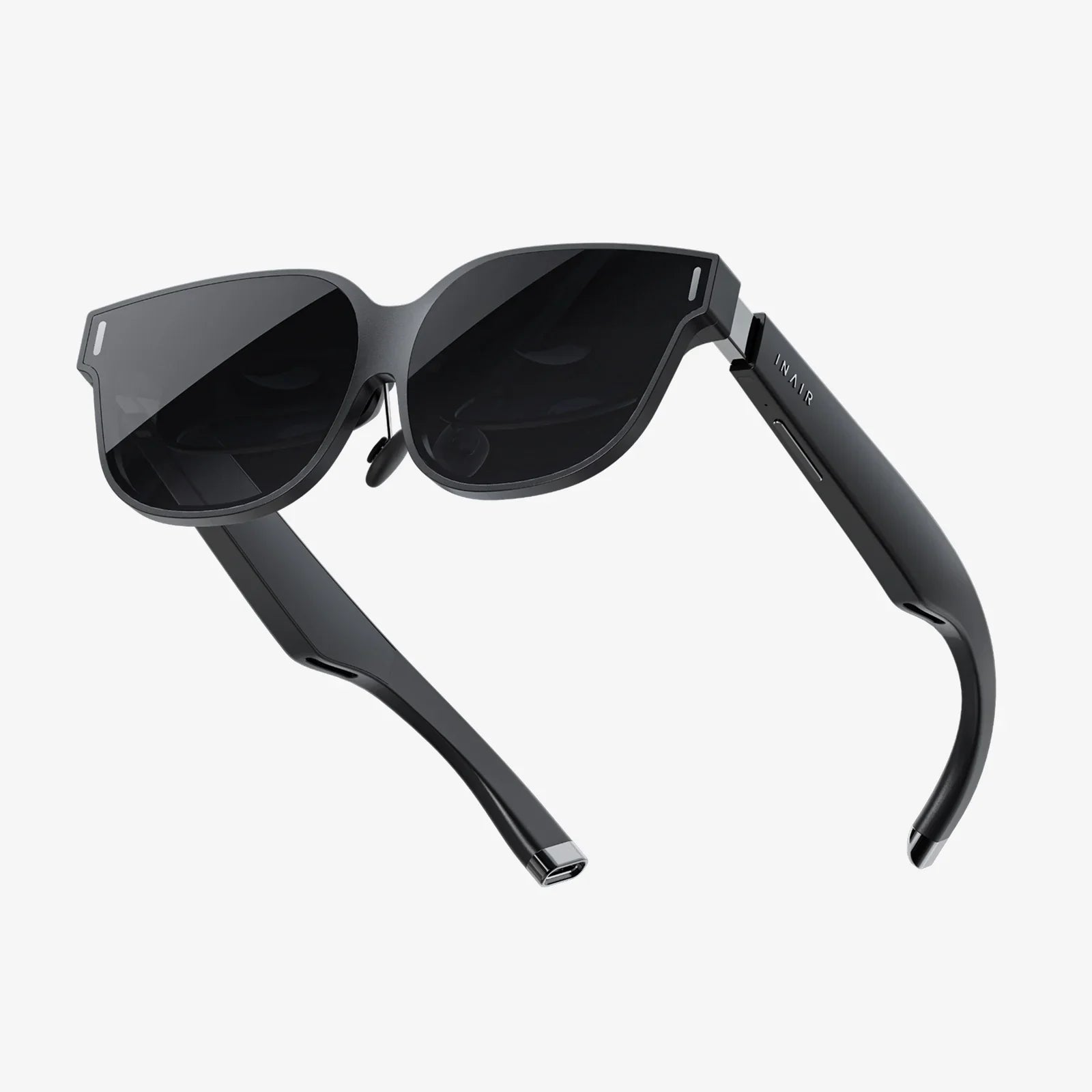
Imagine a world where information doesn't live on a screen in your hand but is woven directly into the fabric of your reality. Where directions appear as a glowing path on the sidewalk, the history of a monument unfolds before your eyes as you gaze upon it, and a colleague from across the globe can stand beside you, pointing to a holographic engine design. This is the promise of augmented interactive reality glasses, a technological leap that is not merely an iteration of the smartphone but a fundamental shift in how we perceive and interact with the digital universe. This isn't science fiction; it's the imminent next chapter of human-computer symbiosis, and it will change everything.
The Architectural Pillars of Augmented Interactive Reality
To understand the profound potential of these devices, one must first deconstruct the sophisticated technology that powers them. Augmented interactive reality glasses are a symphony of advanced hardware and software, each component playing a critical role in creating a seamless and believable experience.
Advanced Display Systems: Painting Light onto the World
The core function of any augmented reality system is to convincingly overlay digital information onto the user's view of the real world. This is achieved through a category of displays known as optical see-through systems. Unlike virtual reality, which blocks out the physical environment, these specialized waveguides or holographic optical elements allow light from the real world to pass through to the user's eyes while simultaneously projecting light from micro-displays to form images. The goal is a bright, high-resolution, and wide field-of-view image that can coexist with a clear view of reality, eliminating the bulky form factors of the past and moving towards a design that resembles conventional eyewear.
Spatial Mapping and Understanding: The Digital Nervous System
For digital content to interact convincingly with the physical world, the device must possess a deep understanding of its environment. This is facilitated by a suite of sensors, including cameras, depth sensors (like LiDAR or time-of-flight sensors), and inertial measurement units (IMUs). These sensors work in concert to perform a process called simultaneous localization and mapping (SLAM). In essence, the glasses continuously scan the environment, building a detailed, three-dimensional mesh map while precisely tracking their own position and orientation within that space. This allows a virtual cat to jump onto your real coffee table and hide behind your real sofa, because the glasses know exactly where both the table and the sofa are in relation to you.
Intuitive Interaction Modalities: Beyond the Touchscreen
The "interactive" in augmented interactive reality glasses signifies a move beyond traditional input methods. While voice commands via integrated assistants will play a key role, the most transformative interactions will be gestural and gaze-based. Sophisticated inward and outward-facing cameras can track the user's eye movements and the precise position of their fingers. This enables interfaces that feel magical: selecting a virtual object with a glance and pinching to manipulate it, or pulling up a menu with a subtle swipe of a finger in mid-air. This creates a sense of direct manipulation, as if the digital objects are truly present in the user's space, fostering a level of immersion and intuition that a touchscreen cannot match.
Computational Power and Connectivity: The Brain Behind the Lenses
Processing the immense amount of visual and spatial data in real-time requires significant computational power. Early iterations may leverage a companion computing device, such as a smartphone or a dedicated processing unit, to handle the heavy lifting. However, the industry trajectory is toward standalone devices with increasingly powerful, miniaturized chipsets designed specifically for these complex augmented reality workloads. Seamless connectivity, via 5G and future networks, will also be crucial for streaming rich, cloud-rendered content and enabling persistent, multi-user experiences that are synchronized across different devices and locations.
Transforming Industries and Redefining Professions
The applications for this technology extend far beyond consumer entertainment. They promise to revolutionize workflows, enhance safety, and unlock new levels of efficiency across numerous sectors.
The Future of Work and Remote Collaboration
The concept of remote work will be utterly transformed. Instead of staring at a grid of faces on a flat screen, colleagues wearing augmented interactive reality glasses could join a shared virtual workspace. Here, 3D models, schematics, and data visualizations can be manipulated by all participants as if they were physical objects in the room. A expert engineer in one country could guide a technician on a factory floor through a complex repair, with digital arrows and annotations appearing directly on the machinery. This "telepresence" will dissolve geographical barriers, making collaboration more natural, effective, and human-centric.
Revolutionizing Education and Training
Education will shift from passive learning to active, experiential discovery. History students could walk through a digitally reconstructed ancient Rome, watching daily life unfold around them. Medical students could practice complex surgical procedures on hyper-realistic holographic patients, gaining invaluable muscle memory and experience without risk. Mechanics-in-training could see interactive repair instructions overlaid on the very engine they are learning to fix. This learning-by-doing paradigm, facilitated by immersive visual guidance, will dramatically accelerate skill acquisition and retention.
Enhancing Healthcare and Surgical Precision
In healthcare, the implications are profound. Surgeons could use augmented interactive reality glasses to see critical patient information, such as heart rate or MRI scans, directly in their field of view without looking away from the operating table. More advanced systems could project guidance for incisions or the location of a tumor directly onto the patient's body, increasing surgical precision and improving outcomes. For diagnostics, a physician could visualize 3D scans of a patient's anatomy from every angle, enabling a deeper understanding of complex conditions.
The Societal and Ethical Landscape: A Double-Edged Sword
With such transformative power comes a host of serious questions and potential pitfalls that society must proactively address.
The Privacy Paradox: A World of Constant Sensing
These devices, by their very nature, are equipped with always-on cameras and microphones that continuously scan the environment. This raises monumental privacy concerns. Who has access to this data? How is it stored and used? The potential for unauthorized surveillance, both by corporations and governments, is significant. New social norms and robust legal frameworks will need to be established to prevent a world where people feel they are constantly being recorded in public and private spaces. Features like clear recording indicators and ethical design principles that prioritize user consent will be non-negotiable.
The Digital Divide and Accessibility
As with any transformative technology, there is a risk that augmented interactive reality glasses could exacerbate social and economic inequalities. If they become essential tools for work, education, and social connection, a divide could emerge between those who can afford them and those who cannot. Furthermore, designing for accessibility from the outset is critical. The technology must be adaptable for users with different physical abilities, ensuring that the augmented world is an inclusive one, not a new barrier.
Reality Blur and Psychological Impact
When the digital and physical are seamlessly merged, where do we draw the line between what is real and what is not? Prolonged use could potentially lead to new forms of digital addiction or dissociation. The constant stream of notifications and information could create cognitive overload, reducing our ability to focus on the immediate physical world and the people in it. The ethical responsibility on developers to design experiences that enhance human connection rather than replace it will be immense.
The Path Forward: From Prototype to Ubiquity
The journey to mainstream adoption of augmented interactive reality glasses is not without its hurdles. Current challenges include achieving all-day battery life in a lightweight, socially acceptable form factor, and refining interaction models to the point of effortless simplicity. The true tipping point will arrive when the technology becomes so intuitive and valuable that it fades into the background, becoming an invisible tool that amplifies our human capabilities rather than a distracting gadget we must consciously manage.
We are standing at the precipice of a new era of computing. Augmented interactive reality glasses represent more than just a new product category; they are a gateway to a world where our digital and physical lives are no longer separate. They hold the potential to amplify our intelligence, reshape our economies, and deepen our understanding of the world around us. The future is not something we will watch on a screen—it is something we will step into and help create, one layer of reality at a time. The lens through which we see the world is about to get a lot more interesting.
Share:
Microdisplay News Today: The Next Wave of Visual Innovation
The Future of Augmented Reality Glasses Depends on These 5 Critical Factors