


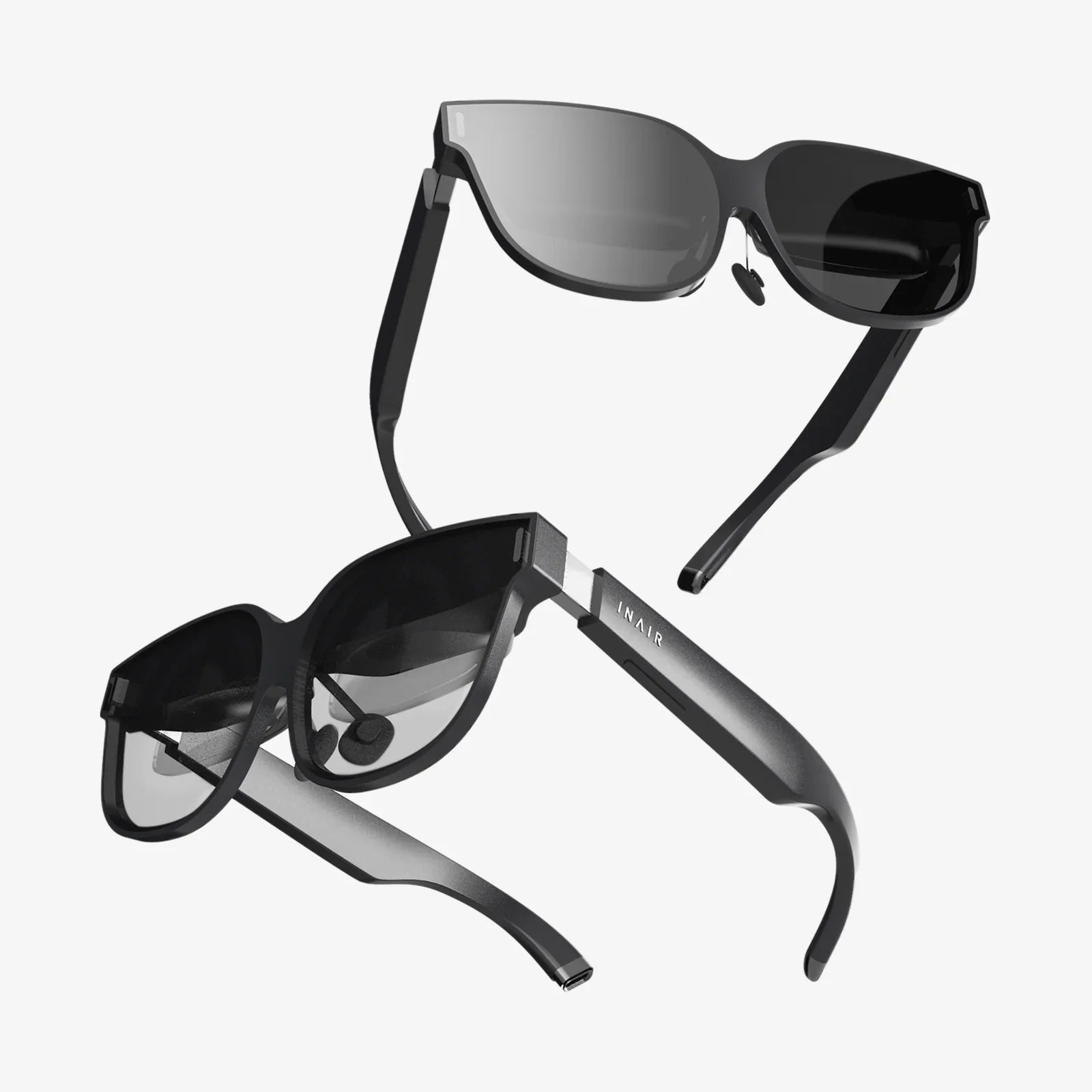
Imagine a world where digital information doesn't live on a screen in your hand but is seamlessly woven into the fabric of your reality. Directions float on the sidewalk before you, the history of a landmark unfolds before your eyes, and a colleague from across the globe appears in your living room to help fix a leaky faucet. This is the promise of augmented reality (AR) glasses, a technology poised to revolutionize how we work, learn, play, and connect. But the journey from futuristic promise to mainstream staple is fraught with challenges. The success of this next computing platform is not guaranteed; rather, the future of augmented reality glasses depends on overcoming a series of monumental hurdles spanning technology, design, and human psychology.
The Unforgiving Physics of Light and Form
At its core, the primary function of AR glasses is to project digital imagery onto the user's retina, making it appear as part of the real world. This seemingly simple task is a nightmare of optical engineering. The first and most fundamental challenge is creating bright, high-resolution, and wide field-of-view displays that are small enough to fit into a form factor resembling conventional eyewear. Current waveguides and holographic optical elements are marvels of miniaturization, but they often struggle with efficiency, clarity, and a limited "digital canvas" that feels more like looking through a mail slot than a window. The race is on to develop new materials and optical architectures that can throw a vast, vivid image into the eye without requiring bulky, power-hungry components. The commercial triumph of augmented reality glasses depends on this optical breakthrough; consumers will never adopt a device that offers a dim, narrow, or blurry view of the augmented world.
The Marathon of Battery Life and Thermal Management
Even if the optical challenge is solved, the device is useless without power. Processing complex AR environments, tracking the user's head and eyes in real-time, and communicating wirelessly are computationally intensive tasks that drain batteries at an alarming rate. Many current prototypes offer mere hours of use, a far cry from the all-day endurance required for true ambient computing. This creates a vicious cycle: a larger battery adds weight and size, making the glasses uncomfortable, while a smaller battery severely limits functionality. Furthermore, all that processing generates heat. Dissipating warmth from a device sitting on a user's face is a critical and often overlooked hurdle. The adoption of augmented reality glasses depends on a holistic approach to power efficiency, combining low-power processors, intelligent software that manages resources contextually, and perhaps even new battery chemistries. Without a solution, users will be constantly anxious about their next charge, tethered to a power bank, defeating the purpose of a free-moving, wearable computer.
The Imperative of Intuitive and Frictionless Interaction
How do you interact with a interface that has no physical buttons or touchscreen? This is one of the most fascinating design problems of our time. A successful AR interface cannot rely on clunky handheld controllers or complex voice commands that are awkward to use in public. The interaction paradigm must be as natural as gesturing or glancing. The success of augmented reality glasses depends on perfecting multimodal input systems that feel like magic. This includes:
- Precise Hand Tracking: Using inward-facing cameras to understand finger movements, pinches, and gestures, allowing users to manipulate digital objects as if they were real.
- Robust Voice Control: Implementing conversational AI that works flawlessly in noisy environments, understands context, and respects user privacy.
- Advanced Gaze and Eye-Tracking: Understanding where a user is looking to enable dwell-based selection, dynamic focus, and even insights into user intent and attention.
The goal is frictionless interaction. The moment a user has to think about how to perform an action, the illusion of augmented reality is broken.
Building the Invisible Infrastructure of the AR Cloud
For AR glasses to be truly useful, they cannot exist as isolated devices. They need to understand the world around them in a persistent and shared way. This requires a digital twin of the physical world, often called the "AR Cloud" or "spatial web." This is a colossal, ongoing project of mapping the world in 3D, anchoring digital information to specific locations, and allowing that data to persist and be shared across users and devices. The ecosystem for augmented reality glasses depends on this infrastructure. Without it, your digital notes won't stay on your real-world fridge, and the immersive game you're playing in the park will be reset for the next user. Building this requires advancements in computer vision, scalable cloud computing, and standardized protocols to ensure interoperability between different platforms and devices. It's the difference between a device that shows cool overlays and a device that enables a new layer of shared reality.
Navigating the Minefield of Privacy and Social Acceptance
Perhaps the most significant non-technical barrier is the societal one. AR glasses, by their very nature, involve cameras and sensors continuously observing the environment. This raises profound questions about privacy, surveillance, and etiquette. Will people feel comfortable conversing with someone who may be recording them? How do we prevent malicious uses like facial recognition in unauthorized contexts? The widespread acceptance of augmented reality glasses depends on manufacturers and software developers building privacy into the core of the product from day one. This means features like physical LED indicators that clearly show when recording is active, on-device processing of sensitive data (like facial recognition) instead of sending it to the cloud, and clear, user-controlled permissions. Furthermore, the design of the glasses themselves plays a role in social acceptance. Early Google Glass pioneers were labeled "Glassholes" in part because the device's design was conspicuous and alienating. Future designs must be more subtle, fashionable, and perhaps even offer ways to signal when the user is engaged with the digital world versus the physical one, facilitating more natural human interaction.
The path to our augmented future is not a straight line. It's a steep climb, requiring simultaneous innovation across multiple disciplines. The devices that eventually succeed will not be the first to market, but the ones that master the delicate balance of powerful technology, elegant design, and respectful social integration. They will become an invisible extension of our minds, enhancing our capabilities without isolating us from each other. When these pieces finally click into place, the age of staring down at a slab of glass in our hands will fade into history, replaced by a world where our reality is limitless, interactive, and infinitely more connected. The next era of human-computer interaction is waiting to be unlocked, and it all starts on our faces.
Share:
Augmented Interactive Reality Glasses: The Next Evolution in Human-Computer Interaction
How Is AR Used in Entertainment: Blurring the Lines Between Reality and Fantasy