Imagine a world where the static painting on your wall suddenly breathes to life, where the sculpture on the plaza begins to tell its own story directly to you, and where the boundary between the object you can touch and the digital data you can interact with dissolves into pure, magical experience. This is no longer the realm of science fiction; it is the burgeoning reality being forged at the dynamic intersection of mixed media and augmented reality. This powerful confluence is not merely a new tool for artists and technologists; it is a fundamental shift in the very language of human expression and perception, promising to redefine our relationship with the world around us.
The Foundational Layers: Understanding the Components
To fully appreciate the seismic impact of their fusion, we must first understand the distinct DNA of mixed media and augmented reality. Mixed media, as an artistic practice, has a long and rich history. It is defined by the deliberate combination of various traditional and non-traditional art materials within a single artwork. An artist might layer paint with found objects, textiles, newspaper clippings, sand, or metal onto a canvas, creating a textured, tactile, and deeply physical piece. The power of mixed media has always lain in its dimensionality, its ability to break the two-dimensional plane and engage multiple senses through varied textures, depths, and material histories. Each incorporated element carries its own narrative weight—the roughness of burlap, the fragility of dried flowers, the glossy sheen of resin—which the artist orchestrates into a cohesive whole.
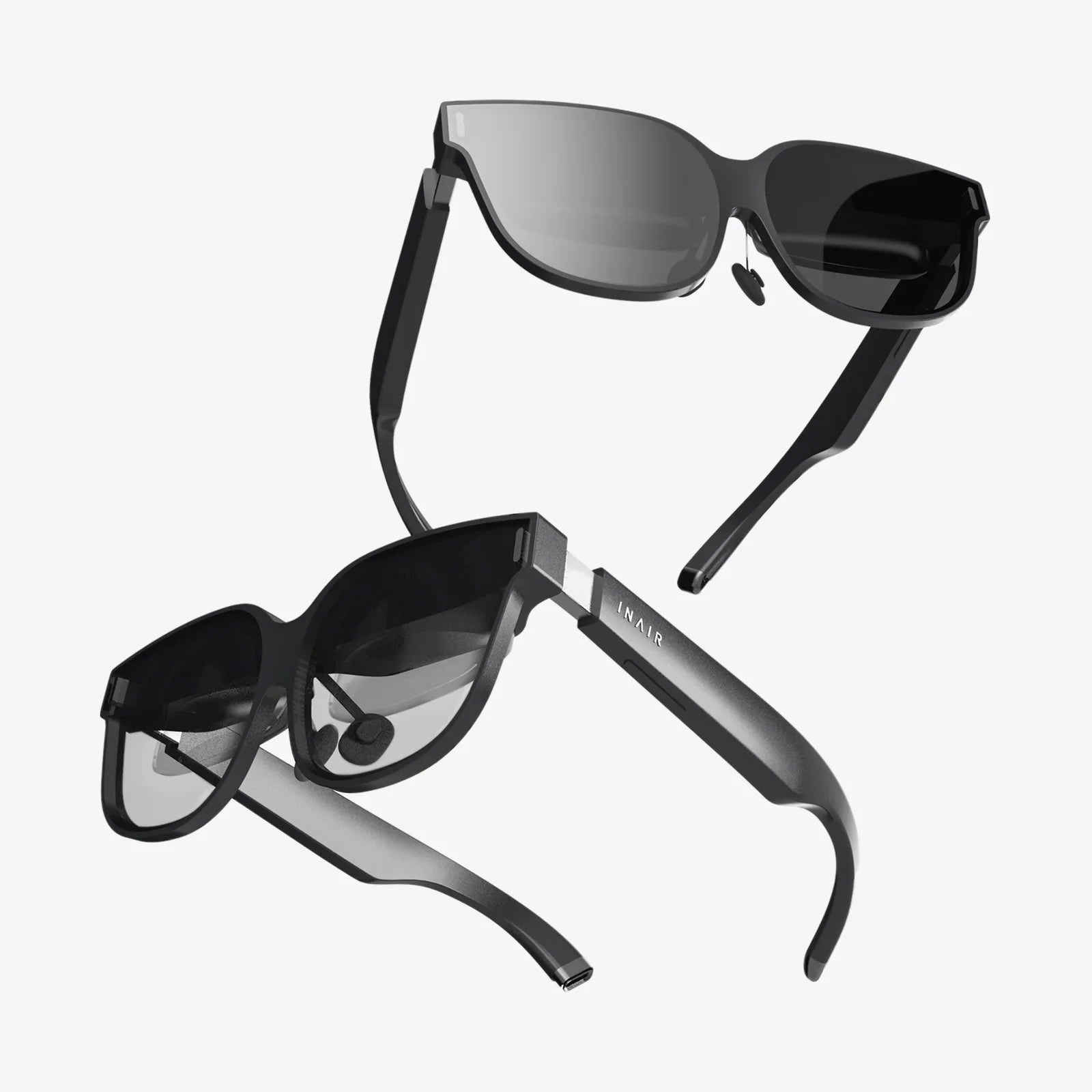
Augmented reality (AR), by contrast, is a child of the digital age. It is a technology that superimposes a computer-generated layer of information—be it images, sound, video, or data—onto a user's real-world view. Unlike Virtual Reality (VR), which seeks to replace reality with a simulated one, AR aims to augment and enhance it. This is typically experienced through the lens of a smartphone, tablet, or a pair of smart glasses. The digital layer is anchored to the physical world, often triggered by a specific image, object, or GPS location, creating a hybrid experience that exists simultaneously in both the tangible and the virtual realms. Its power is in its contextual and interactive nature, adding a dynamic, changeable, and often personalized dimension to static environments.
The Alchemical Fusion: Where Physical and Digital Converge
The marriage of these two disciplines is not a simple addition; it is a true alchemical reaction. Mixed media provides the rich, tangible, and enduring physical anchor—the "canvas" upon which the digital augmentation is projected. AR, in turn, injects the fourth dimension of time into the static artwork. It introduces motion, sound, narrative progression, and interactivity. This fusion creates a new artistic medium that is both object and performance, both permanent and ephemeral, both personal and infinitely scalable.
This synergy operates on several levels. The physical mixed media piece often acts as the unique marker or trigger for the AR experience. The textures, shapes, and compositions painstakingly created by the artist become the signposts that tell the AR software where and how to place the digital content. A specific brushstroke can hide a secret animation; a sculpted element can become the button that launches a video narrative. The digital augmentation can then respond to the physicality of the piece. It can appear to emerge from within the layers of paint, flow around a sculpted form, or change based on the viewer's physical perspective, creating a deeply coherent and immersive dialogue between the two worlds.
Revolutionizing the Artistic Narrative and Experience
The implications for storytelling and audience engagement are profound. An artist is no longer constrained by the static nature of their physical creation. They can embed hidden layers of meaning accessible only through a device. A portrait can reveal the subject's inner thoughts or memories. A landscape painting can show the change of seasons or the historical evolution of the site. A complex abstract piece can include a guided audio tour from the artist themselves, explaining their process and intent. This allows for multi-linear narratives, where the viewer can choose which digital layers to uncover, becoming an active participant in the construction of the artwork's full meaning rather than a passive observer.
This technology democratizes context and access. A historical artifact in a museum, itself a mixed media object, can be augmented to show how it was originally used, its component parts broken down, or its journey through time visualized around it. Viewers no longer need to rely solely on a wall plaque; they can experience a richer, more engaging form of education. Furthermore, the physical artwork retains its aesthetic integrity—it remains a complete piece without the digital layer—while offering a boundless depth for those who wish to dive deeper. This solves a perennial problem in modern art: making complex or abstract concepts more accessible and emotionally resonant without diluting the artist's vision.
Technical Considerations and Creative Challenges
Creating compelling mixed media AR art requires a unique synthesis of traditional artistic skills and digital literacy. The artist must think like a sculptor, a painter, a director, a programmer, and a user experience designer simultaneously. The physical creation must be engineered with the digital trigger in mind. Will the tracking be robust enough? How will lighting in the exhibition space affect the AR overlay? The digital creation must be crafted with an understanding of the physical anchor. Does the animation complement the texture of the paint? Does the sound design enhance the materiality of the found objects?
Technical challenges persist. Ensuring consistent and accurate tracking across different devices and lighting conditions is crucial for maintaining the magic of the illusion. The creation of high-quality, real-time 3D models and animations requires significant computational skill and resources. There is also the challenge of preservation; how does one archive an artwork that is dependent on specific software and hardware that may become obsolete? Artists and institutions must consider strategies for maintaining these works for future generations, perhaps through emulation or meticulous documentation.
Beyond the Gallery: Transformative Applications Across Industries
While the art world is a natural home for this fusion, its applications are exploding far beyond the white walls of the gallery. The principles of embedding digital information into physical objects are revolutionizing numerous fields.
In education, textbooks and learning aids are being transformed. A diagram of the human heart in a biology book can become a beating, interactive 3D model. A historical map can spring to life with videos and narratives about each location. This creates a kinesthetic learning experience that dramatically improves retention and engagement for students of all ages.
In retail and product design, mixed media AR allows consumers to interact with products in unprecedented ways. Furniture catalogs can let users place true-to-scale 3D models of items in their own living room. A product's packaging can tell the story of its sustainable sourcing or provide interactive assembly instructions. This deepens brand engagement and provides practical utility, bridging the gap between online shopping and the physical experience.
In cultural heritage and public art, the potential is staggering. Imagine pointing your device at the ruins of an ancient temple and seeing it reconstructed to its full glory around you. A city's monuments and statues could share their histories with any passerby, turning the entire urban landscape into a living, interactive museum. This technology empowers communities to reclaim and share their stories in a dynamic and accessible format.
The Future Canvas: Endless Possibilities and Ethical Horizons
As technology continues to advance, the line between the physical and digital will blur even further. The future likely holds lightweight AR glasses that will make the viewing experience seamless and socially integrated, freeing us from the small screen of a phone. Haptic feedback technology could evolve to allow us to not only see but also "feel" the digital textures we see overlaying physical objects. The integration of artificial intelligence could lead to artworks that are truly responsive, changing their digital layer in real-time based on the viewer's biometric data, emotional state, or collective crowd behavior.
However, this exciting future also brings forth important ethical and philosophical questions. As our reality becomes increasingly mediated and augmented, who controls the digital layers that are superimposed on our world? Issues of data privacy, digital advertising, and informational bias become critical. Will public spaces become cluttered with competing commercial AR experiences? How do we prevent the creation of a new digital divide between those who can afford access to these technologies and those who cannot? The artistic community, alongside technologists and policymakers, must engage in these conversations to ensure that this powerful new canvas is used to enhance human connection and understanding, not to obscure or commodify our reality.
The fusion of mixed media and augmented reality is more than a technical novelty; it is a new paradigm for seeing, creating, and connecting. It honors the timeless human urge to make marks and build with our hands while embracing the infinite possibilities of the digital ether. It challenges creators to think in layers—both physical and virtual—and invites audiences to step into the artwork itself. This is not the end of traditional art forms, but a magnificent and expansive evolution, opening a portal to experiences that are limited only by the imagination of the creator and the curiosity of the viewer. The world itself is becoming our mixed media canvas, waiting for its hidden stories to be unlocked.


Share:
What Is A Mixed Reality Device: The Ultimate Guide To The Future Of Digital Interaction
AR Based Navigation: Transforming How We Navigate the Physical World