


- by wangfred
What Is A Mixed Reality Device: The Ultimate Guide To The Future Of Digital Interaction
- by wangfred
Imagine a world where your digital life doesn’t end at the edge of a screen. Where instructions for repairing a complex engine float seamlessly in your field of vision, a historical battle rages on your living room floor, and a colleague from across the globe sits virtually at your kitchen table, able to interact with you and your environment as if they were truly there. This is the promise of mixed reality, a transformative technology that is poised to redefine how we work, learn, play, and connect. The device that makes this possible is not just another gadget; it is a portal to a new layer of existence, blending the real and the virtual into a single, coherent experience. This isn't science fiction—it's the dawn of a new computing paradigm.
To understand what a mixed reality device is, we must first place it on the broader spectrum of immersive technologies. Often, terms like Virtual Reality (VR) and Augmented Reality (AR) are used interchangeably, but they represent distinct points on a continuum.
Virtual Reality (VR) is an entirely digital, immersive experience. By wearing a headset, users are transported to a computer-generated environment, completely occluded from the physical world. It's a fantastic tool for gaming, simulation, and training, but it exists in isolation from the user's immediate surroundings.
Augmented Reality (AR) overlays digital information onto the real world. Think of smartphone filters that place cartoon ears on your head or navigation apps that project arrows onto a live video feed of the street ahead. The digital elements are superimposed on reality but don't intelligently interact with it; they are essentially flat images or videos placed on top of the real-world view.
This is where Mixed Reality (MR) fundamentally differs. A mixed reality device goes beyond simple overlay. It understands and interacts with the physical environment in real-time. It is a hybrid technology that enables natural and intuitive 3D interactions between the digital and physical worlds. In a true MR experience, a virtual character can hide behind your real sofa, a digital tennis ball can bounce off your actual walls, and a holographic model of a building’s HVAC system can be placed on a real conference room table for engineers to walk around and inspect. The device doesn’t just show you a blend; it makes that blend persistent and interactive.
A mixed reality device is a feat of engineering, combining a suite of sophisticated sensors, cameras, and processors to create its magic. The process can be broken down into a few critical steps:
Before any digital content can interact with the real world, the device must understand that world. Using a combination of cameras, depth sensors (like time-of-flight sensors), and LiDAR (Light Detection and Ranging), the device continuously scans the environment. It creates a precise, real-time 3D map of the room, identifying floors, walls, ceilings, furniture, and other objects. This process, often called meshing, allows the device to know not just where surfaces are, but also their dimensions, contours, and properties.
Once the environment is mapped, the device can place digital objects—known as holograms—within it. Crucially, these holograms are world-locked. This means that if you place a virtual lamp on your real end table and then leave the room, when you return, the lamp will still be there, exactly where you left it. The device uses a concept called inside-out tracking, using its onboard sensors to track its own position in space relative to the mapped environment, ensuring the holograms remain stable and persistent. This creates a powerful sense of realism and presence that is absent in simpler AR applications.
Interacting with these holograms is designed to feel natural. Instead of using a traditional game controller, most mixed reality devices employ a combination of:
The journey of mixed reality devices has been one of rapid miniaturization and refinement. Early prototypes were bulky, tethered to powerful external computers, and limited to research labs. Today, we see two primary form factors emerging, each with its own strengths.
These devices use opaque displays to completely replace your field of view with a digital environment. However, unlike VR headsets, they use high-resolution, passthrough video cameras to feed a live video feed of your physical surroundings to the displays. Advanced software then blends digital content into this video feed in real-time. This approach allows for incredibly rich and immersive experiences because the device has full control over the visual field. The trade-off is that the world you see is a digital reconstruction, which can sometimes introduce latency or visual artifacts, though this technology is improving dramatically.
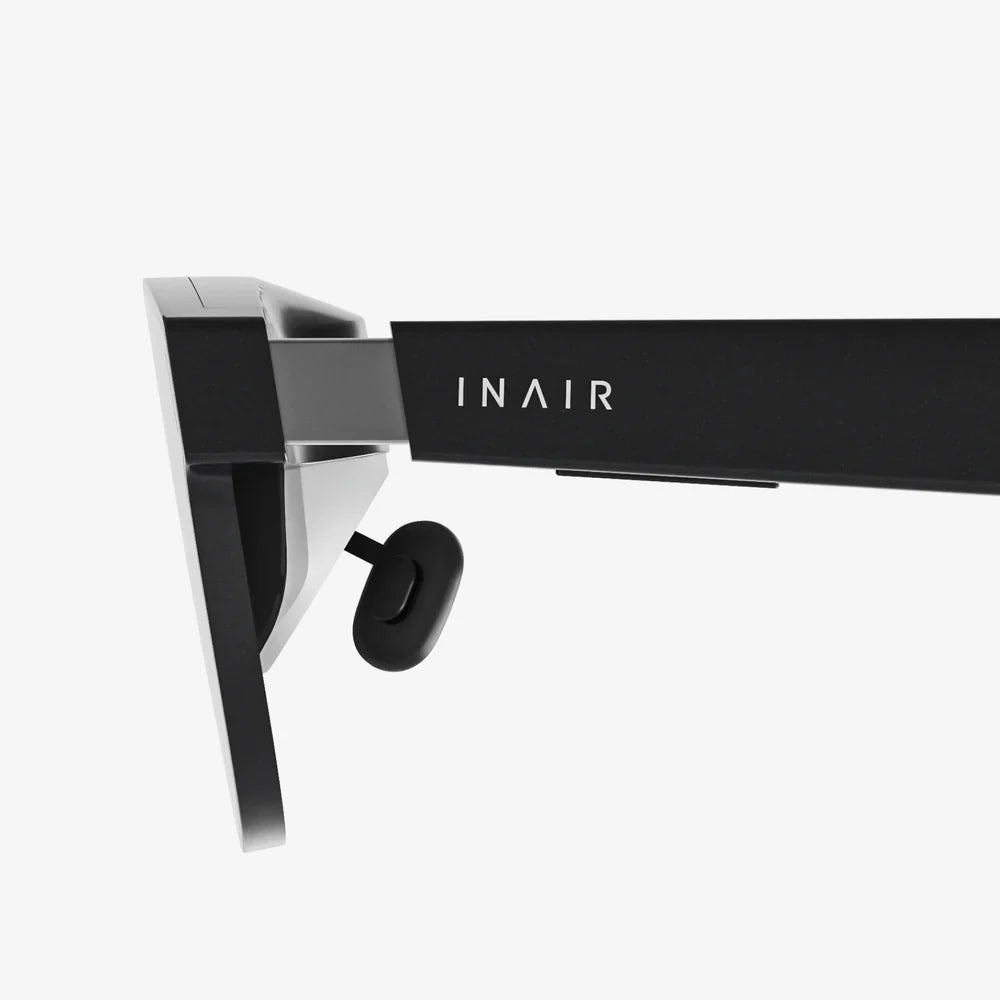
This form factor uses transparent waveguides or holographic lenses (similar to sophisticated smart glasses). You look directly through the lenses at the real world, and projectors within the device beam light onto the lenses to form digital images that appear superimposed on reality. The major advantage is a direct, lag-free view of the real world. The challenge has been achieving a wide field of view and bright, vibrant colors that can compete with ambient light. This technology is often seen as the ultimate goal for all-day wearable devices.
The true power of a mixed reality device is revealed not in tech demos, but in its practical, world-changing applications.
This is where MR is having the most immediate impact. Technicians can access interactive 3D schematics and remote expert guidance overlaid directly on the machinery they are repairing, drastically reducing errors and downtime. Architects and engineers can walk clients through full-scale holographic models of buildings before a single brick is laid. Factory floor managers can visualize production data and logistics streams floating above assembly lines, enabling data-driven decisions on the fly.
Imagine medical students practicing complex surgical procedures on holographic patients, or history students walking through a re-creation of ancient Rome. Mixed reality enables experiential learning, allowing students to interact with subject matter in ways that were previously impossible. From mechanics to molecular biology, MR turns abstract concepts into tangible, interactive experiences.
MR shatters the limitations of the video call. Instead of looking at a grid of faces on a screen, teams can meet in a shared virtual space around a 3D model. Participants, represented as photorealistic avatars, can gesture, point, and manipulate the model as if they were all in the same room. This "spatial computing" approach to collaboration preserves the nuance and context of in-person interaction, making remote work far more effective and human.
Artists and designers are using MR as a new medium. Sculptors can work with virtual clay in the center of their studio, industrial designers can place life-size prototypes of new products in real-world contexts to assess ergonomics and aesthetics, and interior designers can let clients rearrange virtual furniture in their actual homes before making a purchase.
Despite its immense potential, the mixed reality industry still faces hurdles. The technology can be expensive, creating a barrier to widespread consumer adoption. Battery life remains a constraint for untethered, all-day use. There are also critical questions around privacy and data security, as these devices constantly capture detailed data about our personal spaces and behaviors. Establishing clear ethical guidelines and robust security frameworks is paramount. Furthermore, developers and users are still exploring the "killer app"—the compelling use case that will drive mass-market demand beyond niche professional applications.
The trajectory of mixed reality is one of convergence. We are moving toward lighter, more comfortable, and more socially acceptable glasses that we can wear all day. Display technology will continue to improve, offering wider fields of view and more realistic holograms. The integration of artificial intelligence will make these devices more contextually aware, anticipating our needs and providing information before we even ask. Eventually, the line between the device and our perception may blur entirely, leading to always-available, ambient computing that enhances our reality without isolating us from it.
We stand at the threshold of a new era of human-computer interaction. The mixed reality device is the key that unlocks this door, offering a glimpse into a future where our digital and physical realities are not competing spaces, but a unified, enhanced whole. The potential to augment human capability, bridge geographical divides, and unlock new forms of creativity is staggering. This is more than a new screen; it is a new lens through which to see, and shape, our world.
Share:
Mixed Reality Headset: The Ultimate Portal to Blending Our Digital and Physical Worlds
Mixed Media and Augmented Reality: The Confluence Reshaping Human Expression and Perception