


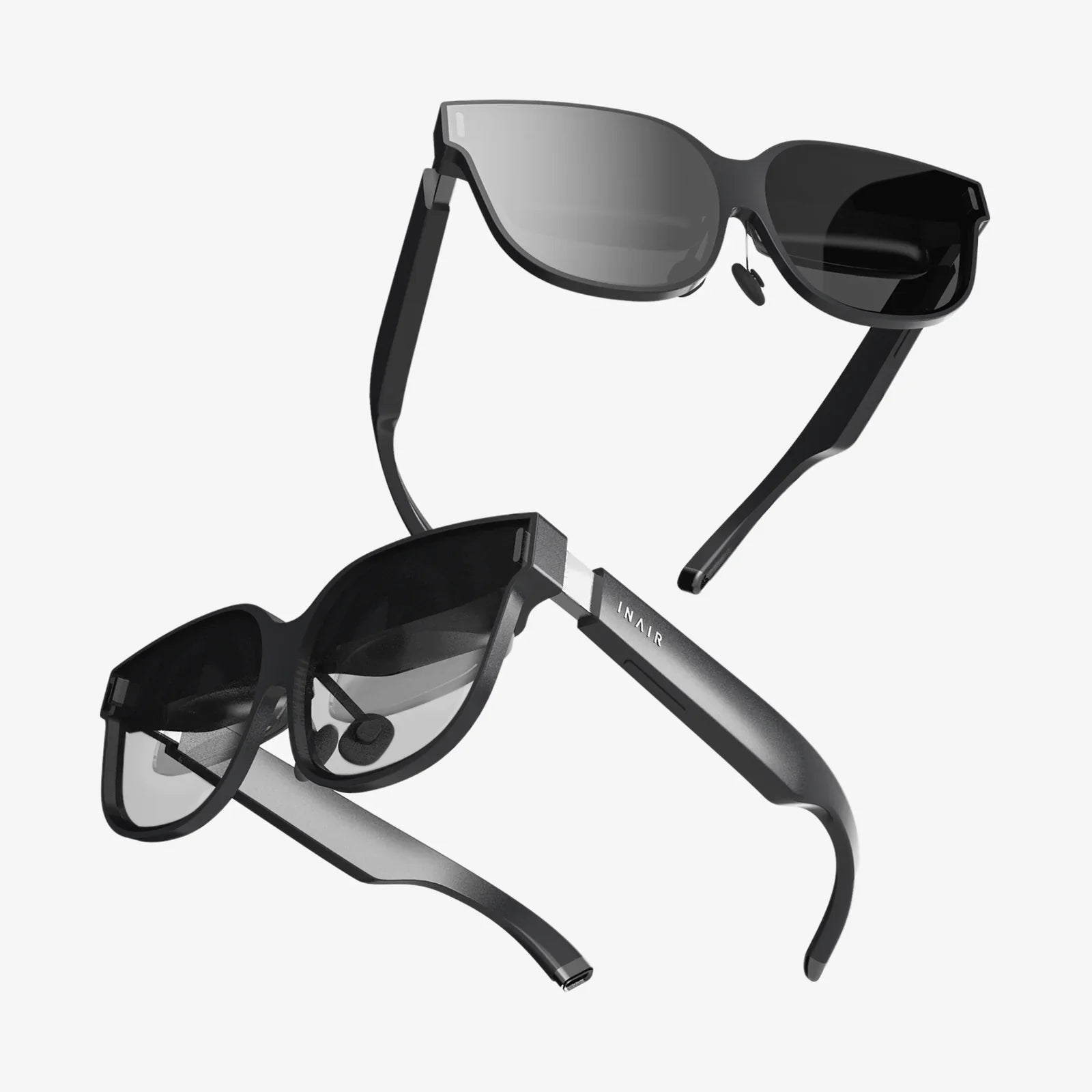
Imagine a device that doesn't just sit on your face but seamlessly integrates with your life, overlaying a world of information, connection, and wonder onto the reality you already know. This is the promise of the mixed reality headset 2025 release, a technological leap that is poised to redefine our very perception of computing, communication, and human experience. The whispers from R&D labs and manufacturing partners point to a convergence of technologies reaching a critical mass, suggesting that the coming year will not merely be another product cycle, but the true beginning of a new era.
The Architectural Leap: Beyond Current Limitations
The fundamental promise of the 2025 generation lies in solving the core challenges that have, until now, confined high-fidelity mixed reality to prototypes and niche enterprise applications. This isn't about incremental upgrades; it's about a foundational architectural shift.
Visual Fidelity and The Quest for the "Perfect Display"
Current devices often suffer from a compromise between resolution, field of view, and form factor. The 2025 releases are expected to finally break this compromise. We are looking at the adoption of microLED display technology, which offers unparalleled brightness, exceptional color gamut, and true black levels. This is critical for blending digital objects convincingly with a sunlit room. Furthermore, resolutions are anticipated to push beyond 4K per eye, effectively eliminating the "screen door effect" and creating a visual experience where digital content is indistinguishable from physical objects. The field of view, a persistent bottleneck, is predicted to expand significantly, enveloping the user's peripheral vision for truly immersive experiences without a constricted binocular feel.
The Intelligence Core: On-Device AI and Spatial Processing
The real magic of these devices won't be just in the displays, but in the silicon that powers them. A new class of dedicated spatial co-processors and neural processing units (NPUs) will handle the immense computational load of mixed reality locally. This means real-time, high-fidelity environment mapping, persistent spatial anchors, and object recognition will happen instantaneously on the device, without the latency of cloud processing. This on-device intelligence will enable the headset to understand the context of a room—knowing the difference between a wall, a table, and a couch, and allowing digital content to interact with these surfaces physically and convincingly. It will power intuitive gesture controls that are robust and precise, moving beyond the novelty of waving hands to reliable, nuanced input.
Form Factor and Comfort: The Invisible Computer
No technological marvel is useful if it's uncomfortable to wear. The 2025 generation is targeting a radical redesign in ergonomics and size. Through advanced materials science and a distributed computing approach—potentially using a small, powerful companion compute unit that fits in a pocket—the weight and bulk of the headset itself will be dramatically reduced. The goal is to approach the form factor and wearability of a pair of premium sunglasses, making extended use throughout the day a practical reality rather than a chore. Advanced biometric sensors will also be integrated seamlessly, monitoring user focus, comfort, and even physiological responses to adapt the experience in real time.
A Universe of Use Cases: From Productivity to Pure Play
The technological leaps described above are not ends in themselves; they are enablers for a staggering array of applications that will move mixed reality from a curiosity to a central pillar of modern life.
Revolutionizing the Professional Landscape
The enterprise and professional sectors will be among the first and most profoundly transformed. Architects and engineers will walk clients through full-scale, photorealistic holographic models of unbuilt structures, making changes in real-time. Surgeons will have patient vitals, 3D scans, and guidance systems overlayed directly onto their field of view during procedures, improving precision and outcomes. Remote collaboration will evolve from flat video calls into shared virtual workspaces where teams from across the globe can interact with 3D models, data visualizations, and each other's avatars as if they were in the same room, drastically reducing the friction of distance and fostering a new level of creative synergy.
Redefining Social Connection and Entertainment
Social media will evolve into "spatial media." Instead of scrolling through a feed, you might step into a shared memory of a friend's vacation, experiencing a 360-degree recreation of their hike. Live events, from concerts to sports, will offer immersive front-row experiences from the comfort of your home. Gaming will become a physical activity played out across your living room, with characters and environments that coexist with your furniture. The line between consuming content and living inside it will blur entirely, creating forms of storytelling and play that we can only begin to imagine.
The Personalized Digital Assistant
Perhaps the most profound change will be in daily personal computing. Your mixed reality headset will become your ultimate contextual assistant. Walking through a city, historical facts about buildings could appear next to them, navigation arrows would be painted onto the street, and restaurant reviews would hover by their doors. In your home, your virtual monitors, dashboards, and browser windows will be arranged around you, persistent and personal, replacing physical screens. A recipe could be pinned to your kitchen cabinet, a video call could appear to be sitting on your sofa, and your schedule for the day could be displayed on your mirror as you get ready. The device will cease to be an app you open and instead become an ambient intelligence that enhances every moment.
The Looming Challenges: The Path to Mass Adoption
For all its promise, the road to a mixed reality-dominated future is not without significant hurdles that the 2025 releases must begin to address in earnest.
The Battery Life Conundrum
Powering such high-resolution displays, multiple cameras, and powerful processors is an immense challenge. Achieving all-day battery life in a sleek form factor is arguably the single greatest engineering obstacle. Solutions may involve a combination of ultra-high-density batteries, aggressive power management through dedicated low-power cores for basic tasks, and the aforementioned companion device that bears the brunt of the computational load. Wireless powering or easily swappable batteries could also emerge as pragmatic solutions.
Navigating the Digital Privacy Minefield
A device that maps and understands your personal spaces constantly is a privacy advocate's nightmare. The 2025 generation must be built on a foundation of "privacy by design." This means all sensitive spatial data must be processed on-device, never leaving the user's control. Clear, intuitive user interfaces are needed to show what data is being collected and when. Manufacturers will need to establish unassailable trust regarding data handling, or risk a consumer and regulatory backlash that could stifle the entire industry before it even begins.
Creating the Ecosystem: The Content Dilemma
The most powerful hardware is useless without compelling software and content. The success of the 2025 headsets hinges on the simultaneous emergence of a rich ecosystem of applications. This requires robust and accessible development tools for creators. The industry must avoid the pitfalls of walled gardens and proprietary standards that fragment the market. An open, or at least interoperable, approach to the spatial web will be necessary to attract the vast developer talent needed to build this new reality.
The Ripple Effects: Implications for Society and Industry
The advent of performant, comfortable, and socially acceptable mixed reality will send shockwaves far beyond the tech industry.
It will challenge our concepts of presence and authenticity. How will our sense of self change when we can customize our appearance and environment at will? Urban planning and architecture might evolve as digital overlays become a primary interface for navigating cities, potentially reducing the need for physical signage and changing how public spaces are designed. The very definition of a computer will shift from a rectangular slab in our pockets to an environment-aware intelligence we wear, potentially heralding the end of the smartphone era and the beginning of the spatial computing age. Industries from retail to real estate, education to healthcare, will be forced to adapt or be left behind as the digital and physical realms become one.
The buzz surrounding the mixed reality headset 2025 release is more than just hype for a new gadget; it is the palpable anticipation for a fundamental platform shift. We are standing on the precipice of a change as significant as the move from command lines to graphical interfaces, or from desktop to mobile. The devices arriving will be the first true glimpse into a future where our digital and physical lives are not separate realms to be toggled between, but a single, integrated, and infinitely enhanced existence. The world is about to gain a new layer, and everything is about to change.
Share:
Smart Glasses News Today: AI Glasses Are Redefining Reality
Smart Glasses News Today: AI Glasses Are Redefining Reality