


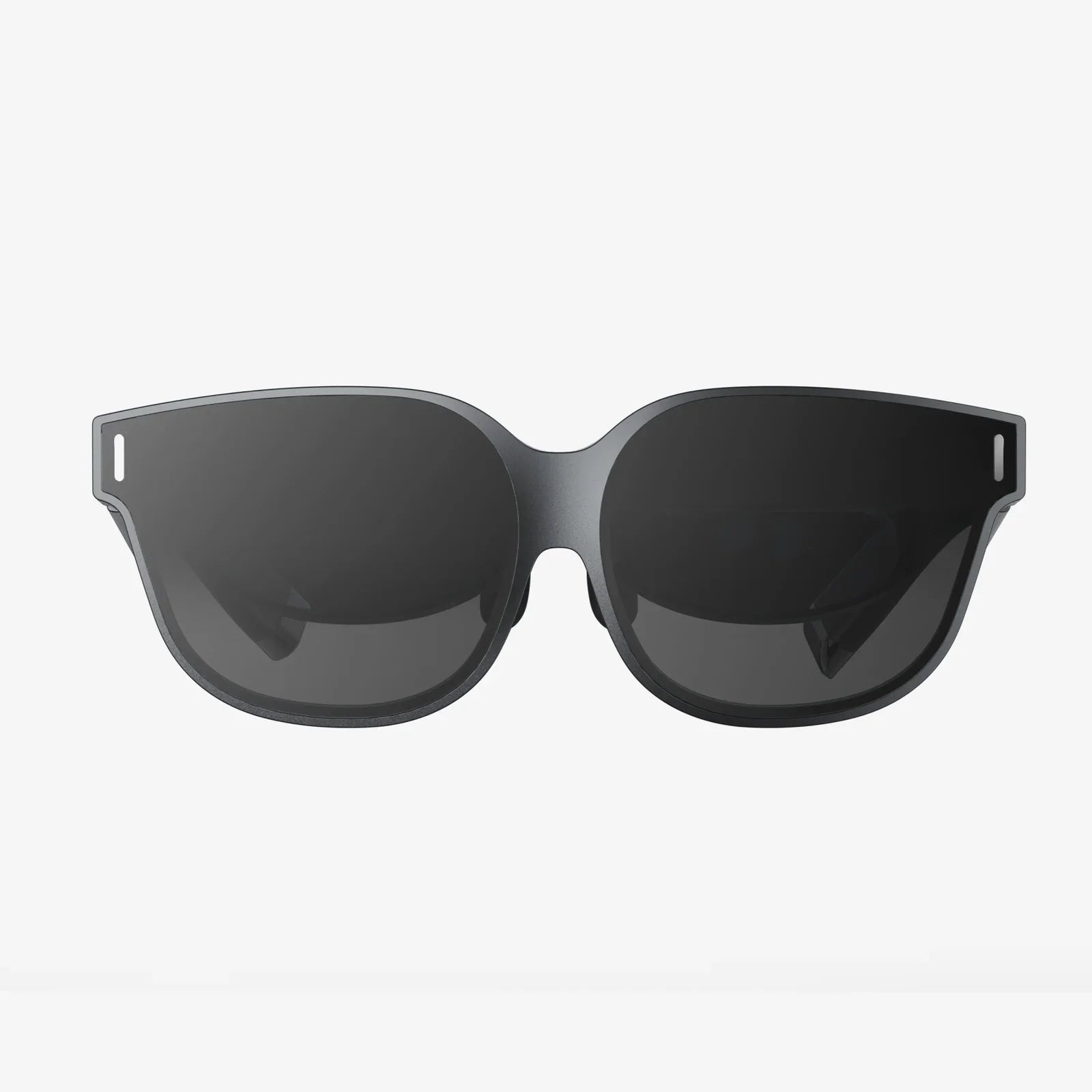
Imagine a world where information doesn't live on a screen in your hand but is seamlessly painted onto the canvas of your reality, where a digital assistant doesn't just hear you but sees what you see, offering guidance before you even have to ask. This is no longer the stuff of science fiction; it's the rapidly converging present, and the catalyst is the latest generation of AI-powered smart glasses. The headlines are buzzing, prototypes are dazzling, and the very definition of a wearable computer is being rewritten before our eyes. Today's smart glasses news is dominated by one powerful convergence: the fusion of sophisticated hardware with generative and contextual artificial intelligence, creating a new category of device poised to change everything.
The Evolution from Novelty to Necessity
The journey of smart glasses has been a rollercoaster of immense hype and sobering reality checks. Early iterations, while groundbreaking in concept, often struggled with clunky designs, limited battery life, and functionality that felt more like a party trick than a productivity powerhouse. They were devices in search of a problem to solve, often criticized for their social awkwardness and perceived as a threat to personal privacy. The market cooled as initial excitement waned, and the technology retreated into the labs and developer communities.
However, beneath the surface, a quiet revolution was brewing. The failure of early consumer-facing devices provided invaluable lessons. The focus shifted from creating a standalone marvel to developing a complementary device that enhances rather than interrupts our lives. The key ingredients for a resurgence began to fall into place: advancements in micro-optics, making displays brighter and less obtrusive; improvements in miniaturized sensors for tracking movement and understanding the environment; and crucially, the exponential leap in artificial intelligence, particularly in machine learning and computer vision.
This evolution signifies a move away from the glasses being merely a see-through display and towards becoming an intelligent visual assistant. The hardware provides the eyes and ears, but the AI is the brain, and it is this brain that has grown exponentially more powerful and sophisticated.
The AI Brain: Beyond Simple Commands
At the heart of today's smart glasses revolution is a new breed of artificial intelligence. This isn't the simple, voice-command AI of yesterday. We are now dealing with on-device and cloud-powered AI models capable of multi-modal understanding—processing auditory, visual, and contextual data simultaneously to provide truly insightful assistance.
The most transformative advancements come from two AI domains:
- Computer Vision: This allows the glasses to not just capture images but to understand them. The AI can identify objects, read text (from a recipe, a sign, or a document), recognize faces (with permission), and map the geometry of a room in real-time. It can overlay instructions on a complex piece of machinery a technician is trying to repair or translate a foreign menu directly onto its surface.
- Generative AI and Large Language Models (LLMs): This is the conversational, creative engine. It takes the context provided by computer vision and other sensors and generates helpful, natural-language responses. Imagine looking at a monument while traveling. The computer vision identifies it, and the LLM instantly generates a summary of its history, whispered into your ear or displayed in a subtle text overlay. You could look at your fridge contents, and the AI could suggest a recipe based on what it sees, then guide you through the steps hands-free.
This combination creates a context-aware companion. Instead of saying, "Okay, glasses, search for how to fix a leaking faucet," you simply look at the faucet. The glasses recognize the model, identify the issue through visual cues, and immediately begin overlaying animated repair instructions or a relevant video tutorial onto your field of view. The interaction becomes intuitive, immediate, and profoundly powerful.
Breaking Down the Latest Headlines and Trends
Current smart glasses news is dominated by several key trends that highlight this AI-first approach. The narrative has moved from "if" to "how" and "when."
1. The Rise of the Inconspicuous Form Factor: The lesson of social acceptance has been learned. Major tech players and ambitious startups are now prioritizing designs that look like ordinary eyewear. The goal is to hide the technology, making the powerful computer inside virtually invisible to the outside world. We're seeing frames that are stylish, lightweight, and available with prescription lenses, signaling a intent to become a all-day, every-day device rather than a occasional gadget.
2. The Platform Play: Companies are no longer just building a single device; they are building an ecosystem. They are releasing software development kits (SDKs) and platform capabilities, inviting developers to build applications for this new "spatial computing" environment. This is a critical step, echoing the early days of smartphones. The killer app for smart glasses may not have been invented yet, and by opening the platform, companies are betting on the creativity of developers to unlock the true potential of augmented reality.
3. Enterprise Leads the Way: While consumer applications generate buzz, the most immediate and impactful adoption is happening in enterprise and industrial settings. Factories, warehouses, and field service operations are deploying AI glasses to dramatically improve efficiency and safety. Technicians can access schematics and receive remote expert guidance hands-free. Warehouse workers are directed to inventory locations with digital arrows overlaid on the aisle, with the AI verifying picks and reducing errors. The return on investment in these scenarios is clear and measurable, providing the capital and real-world testing needed to refine the technology for a broader audience.
4. Multimodal Input as Standard: Interaction is becoming beautifully complex. The best interfaces combine touch (a simple tap on the temple), voice (natural language commands), gesture (subtle finger movements), and even gaze—knowing where you are looking to select an option. This multimodal approach allows users to choose the most appropriate and discreet method for any given situation, making the technology adapt to the human, not the other way around.
The Looming Questions: Privacy, Security, and the Social Contract
With great power comes great responsibility, and a device that sees what you see and hears what you hear inherently raises profound questions. The news cycle isn't all positive; it's also filled with necessary debates about ethics and societal norms.
The Privacy Paradox: For AI glasses to be truly useful, they need data—a lot of it. This includes visual and auditory data from your surroundings, which invariably captures information about unsuspecting bystanders. How do we balance the utility of these devices with the right to privacy? This is perhaps the single biggest hurdle to mass adoption. Solutions are being proposed, from clear physical indicators like LED lights that signal when recording is active to sophisticated technical safeguards like on-device processing that anonymizes data before it is ever sent to the cloud.
Data Security: The amount of personal and environmental data these devices will collect is staggering. Securing this data against breaches is paramount. Manufacturers must implement end-to-end encryption and robust security protocols from the ground up. A breach of a smart glasses database wouldn't just be a leak of passwords; it could be a leak of a person's entire lived experience.
Rewriting the Social Contract: The norms around using these devices in public are yet to be established. Is it rude to wear them during a conversation? Will restaurants and bars ban them? Will we develop new social cues, like a "digital eye contact" mode that dims the display to show you are fully engaged with the person in front of you? Navigating this new etiquette will be a societal challenge that runs parallel to the technological one.
A Glimpse into the Near Future
Based on the trajectory of today's news and development, the next few years will see AI glasses evolve from prosumer gadgets to mainstream tools. We can expect several key developments:
Battery technology will improve, either through higher density cells or innovative solutions like solar charging or kinetic energy harvesting from movement. Display technology will become even more crisp and energy-efficient, with resolutions high enough to make digital objects indistinguishable from real ones. The AI models will become faster, more efficient, and more personal, learning individual user preferences and patterns to offer predictive assistance.
Most excitingly, we will see the emergence of true "killer apps"—applications so compelling they justify the device's existence. This could be in healthcare, providing real-time vital sign monitoring and patient data for surgeons; in education, bringing historical events to life for students; or in navigation, creating a world where no one is ever truly lost again. The potential to assist those with visual or hearing impairments is particularly profound, offering a new layer of environmental awareness and independence.
The path forward is not about replacing smartphones but about creating a more natural and immersive way to interact with the digital layer of our world. It's about making technology fade into the background, enhancing our human capabilities without demanding our constant attention. The convergence of AI and smart glasses represents a fundamental shift in our relationship with technology, from something we hold to something we wear, from something we look at to something that looks with us. The future is not on your screen; it's right in front of your eyes, being built one breakthrough at a time.
The race to dominate this new frontier is already underway, with tech giants and agile startups alike vying to define the next epoch of personal computing. The headlines you read tomorrow will likely detail a new partnership, a groundbreaking prototype, or an AI capability that seemed impossible just months ago. This isn't just incremental change; it's the foundation of a new reality. Staying informed is no longer just about following technology news—it's about catching an early glimpse of a world where the line between the physical and digital realms will forever be blurred, and the possibilities are as limitless as our own vision.
Share:
Mixed Reality Headset 2025 Release: The Dawn of a New Computing Era
Mixed Reality Headset 2025 Release: The Dawn of a New Computing Era