


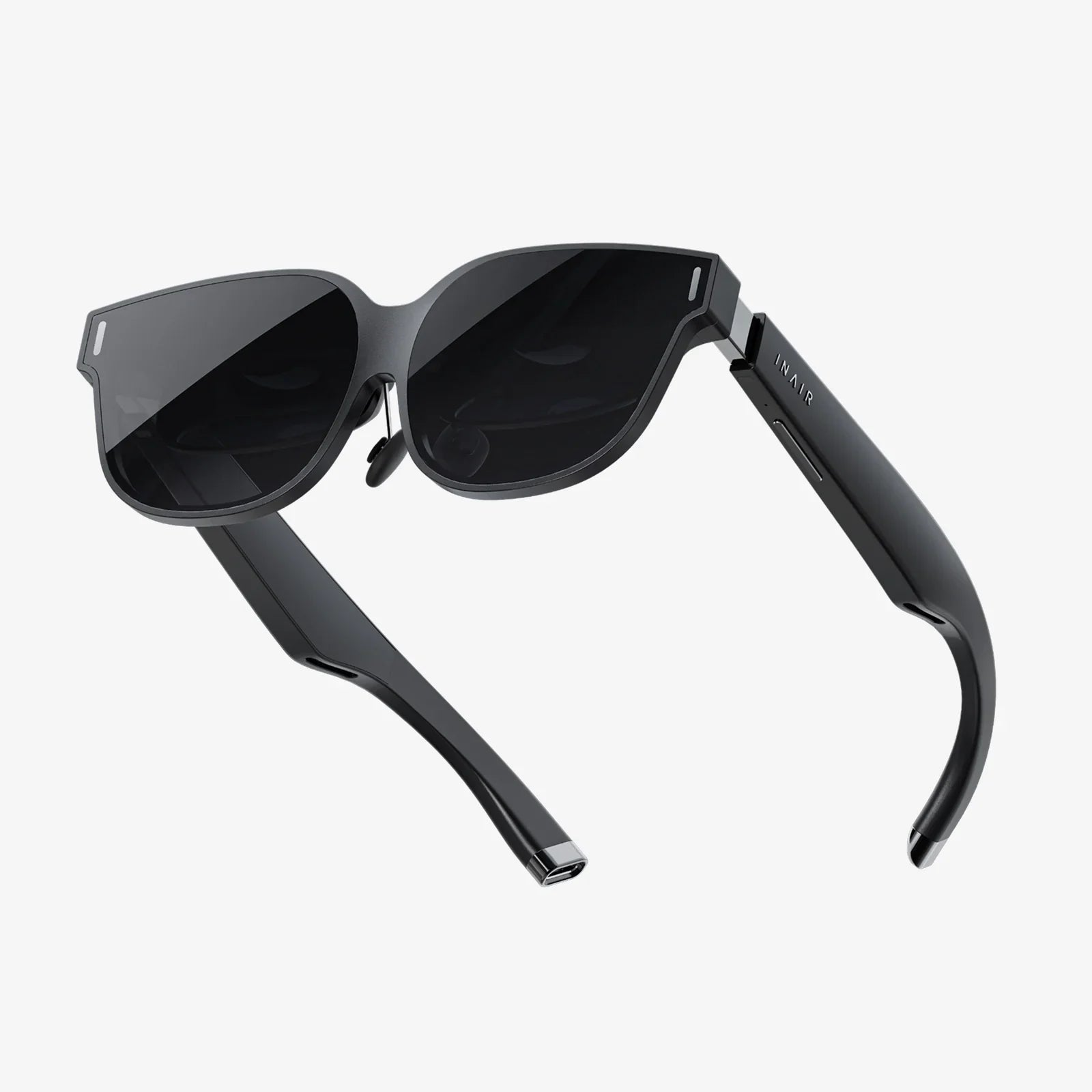
Imagine slipping a sleek, compact viewer from your pocket, slotting in the powerful computer you call a phone, and instantly being transported to the peak of Mount Everest, the front row of a concert happening across the globe, or the surface of Mars. This is the promise, the magic, and the profound accessibility of mobile phone virtual reality—a technological revolution that has placed the power of immersion directly into the palms of our hands, making the extraordinary an on-demand experience.
The Genesis of a Pocket-Sized Dream
The concept of virtual reality is far from new, with its roots stretching back to the mid-20th century. For decades, it was the stuff of science fiction and multi-million-dollar laboratory experiments, confined to research institutions and high-budget military simulations. The hardware was colossal, prohibitively expensive, and utterly inaccessible to the average consumer. The dawn of the 21st century saw the first tremors of change with more consumer-focused, albeit still niche and costly, head-mounted displays. However, the true catalyst for a VR revolution arrived from an unexpected quarter: the smartphone. The rapid, relentless innovation in mobile technology—the miniaturization of high-resolution displays, the development of precise motion sensors (gyroscopes, accelerometers, magnetometers), and the exponential growth in processing power—effectually built the core components of a VR system into a device billions already owned. The stage was set for a paradigm shift, moving VR from a dedicated, expensive luxury to a ubiquitous, affordable experience.
How It Works: The Magic Behind the Viewer
At its simplest, mobile phone VR is an elegant feat of technological repurposing. The system relies on a symbiotic relationship between three key elements: the headset, the smartphone, and the software.
The Headset: More Than Just a Holder
Often dismissed as a simple plastic or cardboard shell, the headset is a crucial piece of optical engineering. Its primary function is to house the smartphone inches from the user's eyes. It uses specially designed lenses that sit between the screen and the eyes. These lenses warp the dual images displayed on the phone's screen (one for each eye), correcting the focal length and creating a stereoscopic 3D effect that gives the illusion of depth and scale. High-quality viewers also include adjustable straps for comfort, adjustable lenses to match different interpupillary distances, and often a capacitive trigger or Bluetooth controller to facilitate user interaction within the virtual space.
The Smartphone: The Brains and the Brawn
This is the engine of the entire operation. The smartphone's high-density display is responsible for rendering the vivid virtual worlds. Its internal Inertial Measurement Unit (IMU)—a combination of the gyroscope, accelerometer, and magnetometer—is the key to tracking. By measuring the rate of rotation, orientation, and acceleration, the phone can track the user's head movements with remarkable precision and low latency, updating the viewpoint in the virtual environment in real-time to match every turn, nod, and tilt. This creates the essential feeling of presence, the sensation of actually being inside the digital world. The phone's processor (CPU/GPU) handles the heavy lifting of rendering the complex graphics, while its speakers or audio jack provide spatial audio cues that are vital for immersion.
The Software: Crafting the Experience
None of this hardware is useful without the software that brings it to life. This ecosystem includes mobile operating systems with built-in VR modes, dedicated app stores for VR content, and the applications themselves. Developers create experiences specifically optimized for the mobile VR environment, often using game engines designed for cross-platform development. These apps range from simple 360-degree video players to complex interactive games and educational simulations, all designed to leverage the unique capabilities and respect the performance limitations of mobile hardware.
The Democratization of Experience
The single greatest impact of mobile phone VR has been its role as a democratizing force. By leveraging a pre-existing device, the barrier to entry for experiencing VR plummeted from hundreds or thousands of dollars to a mere fraction of that, often just the cost of an inexpensive viewer. This accessibility created a viral moment for VR, introducing the technology to a global audience on an unprecedented scale. It became the gateway drug for immersive tech, allowing people to sample VR without a significant financial commitment. This mass adoption spurred content creators, educators, and marketers to explore the medium, leading to an explosion of diverse applications beyond gaming. For the first time, students could take virtual field trips to ancient ruins, prospective travelers could tour hotel rooms and destinations, and individuals could experience a live event from a vantage point previously reserved for camera crews—all from their living room.
A Universe of Applications Beyond Gaming
While gaming remains a popular and powerful use case, the true potential of mobile VR lies in its vast utility across numerous sectors.
Education and Training
Mobile VR transforms learning from a passive to an active experience. Imagine history students not just reading about the Roman Empire but walking through a digitally reconstructed Forum. Medical students can practice complex surgical procedures in a risk-free virtual environment. This experiential learning enhances retention and understanding in a way textbooks never could.
Virtual Tourism and Real Estate
The travel and hospitality industries have embraced mobile VR as a powerful marketing and planning tool. Users can take immersive previews of vacation destinations, hotel suites, cruise ships, or property listings, enabling them to make more informed decisions and sparking wanderlust with unparalleled effectiveness.
Therapeutic and Healthcare Applications
Therapists are using mobile VR for exposure therapy, helping patients safely confront phobias like fear of heights or flying in a controlled, gradual manner. It is also used for pain distraction, immersing burn victims in calming snowy landscapes during wound care to significantly reduce their perceived pain.
Storytelling and Film
Journalism and documentary filmmaking have adopted 360-degree video to create profoundly empathetic experiences. Instead of watching a news report about a refugee camp, viewers can be placed inside it, fostering a deeper connection to the story and a greater understanding of the context.
Navigating the Limitations and Challenges
Despite its promise, mobile phone VR is not without its constraints. The technology is inherently tethered to the limitations of the smartphone itself.
Performance and Thermal Constraints
Rendering two high-frame-rate, high-resolution views simultaneously is incredibly taxing on a mobile GPU. This can lead to performance issues, lower graphical fidelity compared to PC-based VR, and significant heat generation, which can throttle performance or drain the battery rapidly.
The Latency Imperative
For a comfortable experience, the delay between a user's head movement and the corresponding update on the screen (motion-to-photon latency) must be extremely low, ideally under 20 milliseconds. Any higher can lead to disorientation, simulation sickness, and a broken sense of immersion. Achieving this consistently is a significant software and hardware optimization challenge.
Interaction and Input
While headsets can track rotation (where you are looking) effectively, most lack the ability to track position in space (translational tracking). Furthermore, input methods are often limited to gaze-based controls or simple Bluetooth controllers, lacking the nuanced hand-tracking and room-scale capabilities of high-end systems.
The Future is Convergent and Standalone
The evolutionary path of mobile phone VR is fascinating. It served as a critical stepping stone, but its legacy is now fueling the next generation of VR: the standalone headset. These all-in-one devices, which have become increasingly affordable and powerful, incorporate the lessons learned from mobile VR. They contain the same core components—display, sensors, processor—but are engineered from the ground up for virtual reality, eliminating the need for a separate phone and overcoming many of its limitations with better cooling, dedicated VR optics, and inside-out positional tracking. The spirit of mobile VR—accessibility, convenience, and mass-market appeal—lives on directly in these standalone devices. Furthermore, the future points toward a convergence of technologies, with Augmented Reality (AR) and Mixed Reality (MR) gaining prominence. The next frontier may well be devices that can seamlessly switch between VR and AR, powered by the same mobile-inspired chipset technology, blurring the lines between our physical and digital realities even further.
The humble smartphone, a device we casually use for calls and messages, has secretly been a Trojan horse for a new reality. It has proven that profound, world-shifting experiences don't require massive hardware and dedicated spaces; they can be conjured from the device in your pocket, waiting for you to look a little closer and dive a little deeper. The portal to infinite worlds is already in your hand; the only question left is which one you'll choose to explore first.
Share:
Virtual Reality Work Meeting: The Dawn of a New Collaboration Era
Impact of Virtual Reality on Daily Life: A Revolution in Our Homes, Work, and Play