


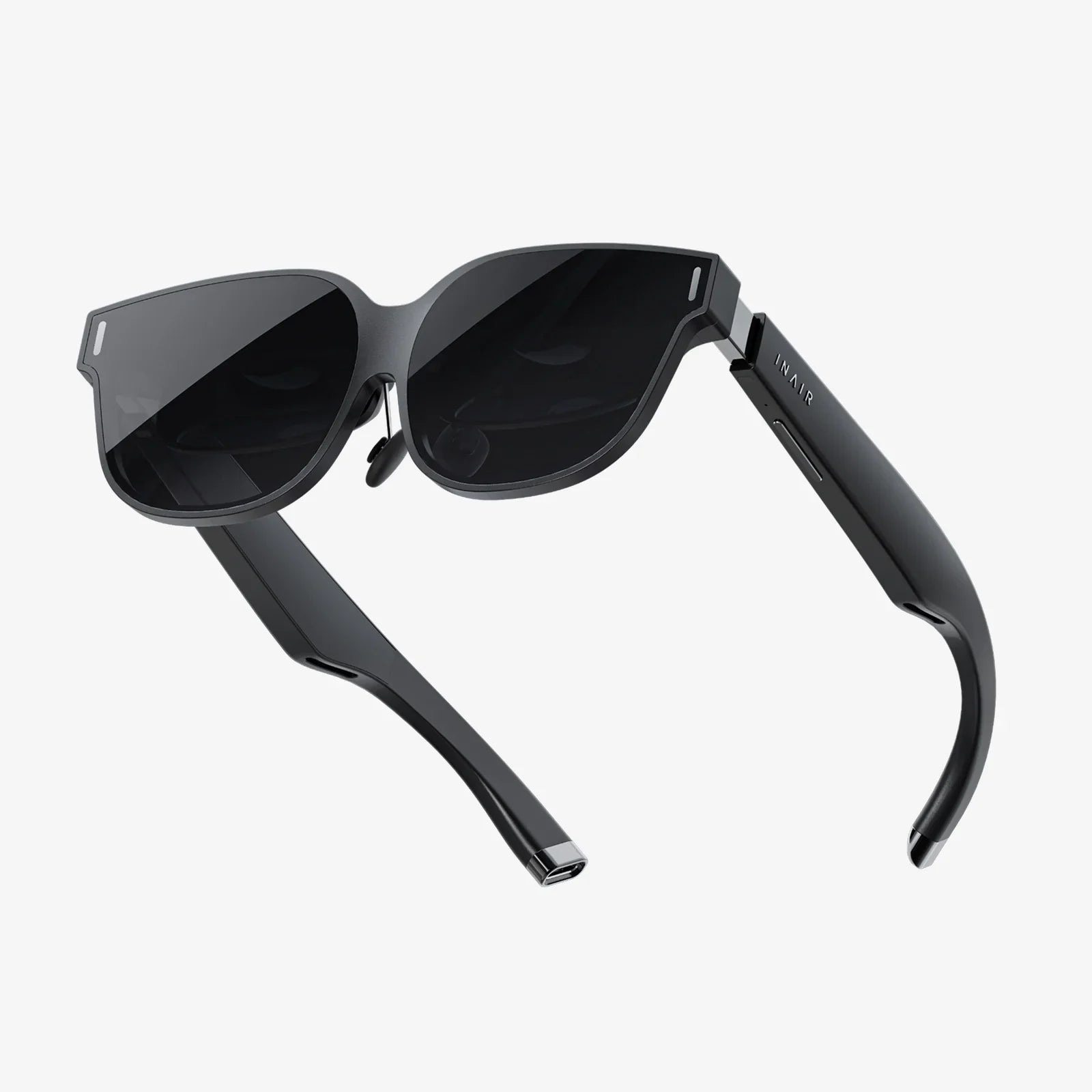
- by wangfred
Mobile VR Glasses Market: Navigating the Next Wave of Immersive Consumer Technology
- by wangfred
The world is tilting on its axis, and through a pair of sleek, accessible lenses, we are seeing a new dimension unfold in the palms of our hands. The promise of virtual reality, once a distant sci-fi fantasy tethered to monstrously expensive and complex machinery, has been distilled into a form factor that is as ubiquitous as the smartphone itself. This is the new frontier of the mobile VR glasses market, a dynamic and rapidly evolving ecosystem that is democratizing immersion and redefining our relationship with digital content. It’s a market born from convergence, fueled by innovation, and poised to become the next indispensable window into our connected lives. Click to explore how this pocket-sized portal is reshaping reality.
The journey of mobile VR glasses is a testament to the power of simplification. Early iterations, while revolutionary for their time, were often cumbersome, required significant external processing power, and carried a price tag that placed them firmly in the enthusiast category. The market's true ignition came with a pivotal shift in strategy: leveraging the smartphone. By utilizing the high-resolution display, powerful processors, and sophisticated sensors already in everyone's pocket, manufacturers could create headsets that were dramatically cheaper, more portable, and infinitely more accessible. This pivot didn't just lower the barrier to entry; it demolished it, opening the floodgates to a global audience of curious consumers.
This democratization triggered a virtuous cycle. A growing user base attracted content creators, from indie game developers to major film studios and social media platforms. The influx of diverse content—ranging from immersive games and 360-degree videos to virtual travel experiences and educational apps—further justified the purchase for new users. The market evolved from a novel tech demo into a viable platform for entertainment, storytelling, and social connection. This content explosion, coupled with continuous hardware refinements in comfort, optics, and intuitive controls, solidified mobile VR's position not as a passing fad, but as a foundational pillar of the broader consumer technology landscape.
The appeal of mobile VR glasses is remarkably broad, cutting across age groups and interests. While early adopters were predominantly gamers seeking deeper immersion, the user base has since diversified significantly.
The mobile VR glasses market is not static; it is being propelled forward by a series of interconnected technological advancements. Each breakthrough addresses a previous limitation and unlocks new possibilities.
5G Connectivity: The rollout of high-speed, low-latency 5G networks is a game-changer. It enables cloud-based VR experiences, where the heavy processing is done on remote servers, reducing the hardware demands on the smartphone itself. This paves the way for more graphically intense and complex applications without requiring users to own the latest flagship phone. It also makes streaming high-fidelity VR content as seamless as streaming a 4K movie is today.
Advanced Optics and Display Technology: Screen door effect, low field-of-view, and god rays are becoming relics of the past. Manufacturers are integrating sophisticated pancake lenses that allow for a much slimmer headset design while improving optical clarity. Paired with ever-increasing smartphone display resolutions (4K and beyond) and faster refresh rates (90Hz, 120Hz), the visual experience is becoming sharper, smoother, and more convincingly real, which is critical for user comfort and prolonged engagement.
Inside-Out Tracking and Improved Controllers:
Early mobile VR often relied on simplistic head tracking or required external sensors for controller input. Modern systems utilize advanced computer vision algorithms and the smartphone's cameras for "inside-out" tracking. This means the headset can map its environment and track the position of your hands and controllers within it without any external hardware. This enhances immersion, simplifies setup, and expands the range of possible interactions, from precise gameplay to intuitive virtual UI manipulation. Despite its promising trajectory, the mobile VR glasses market faces significant challenges that must be overcome to achieve universal adoption. The "Quality Gap" and Performance Dependency: The very strength of mobile VR—its reliance on smartphones—is also a weakness. The user experience is inherently tied to the capabilities of the user's specific phone. An older or lower-tier device may struggle with performance, leading to lag, low resolution, and overheating, which can quickly break immersion and cause discomfort. This creates a fragmented market where consistent, high-quality experiences are not guaranteed across all users. Content Monetization and Discovery: For developers, finding a sustainable business model can be difficult. The market, while large, is still dwarfed by traditional console or mobile gaming markets. Discovering high-quality content can also be a challenge for users, buried within standard app stores not optimized for VR curation. A more robust and dedicated ecosystem for content distribution and monetization is needed to incentivize top-tier development. Comfort and Form Factor: While vastly improved, comfort during extended sessions remains a point of contention. Issues like device weight, heat generation, and battery drain (on both the headset and the phone) can limit usage time. The industry continues to experiment with materials, weight distribution, and external battery packs to create headsets that feel lightweight and comfortable for hours on end. The market is characterized by intense competition, not just between hardware manufacturers, but between entire platforms and ecosystems. The dominant players are typically large technology companies that can leverage their existing strengths in mobile operating systems, app stores, and content creation. This creates a "walled garden" effect, where compatibility and content are often exclusive to a particular brand's ecosystem. This competition drives rapid innovation but can also lead to fragmentation, where users must choose a camp and developers must decide which platforms to support. Beyond the giants, there is a vibrant space for independent manufacturers creating innovative headsets with unique features, often focusing on specific niches like media consumption or compatibility across a wider range of smartphones. The future of the mobile VR glasses market is inextricably linked to the broader concept of the metaverse—a persistent network of shared virtual spaces. Mobile VR is poised to be the primary on-ramp for billions of users into these digital worlds, precisely because of its accessibility. We can expect to see several key trends converge. Headsets will become even more lightweight, socially acceptable, and may eventually evolve towards a standard pair of glasses, shedding the "goggles" aesthetic entirely. The line between AR (Augmented Reality) and VR will blur, with mixed reality (MR) experiences becoming common, allowing digital objects to interact seamlessly with your physical environment. Most importantly, the technology will fade into the background. The focus will shift entirely from the hardware to the experiences and connections it enables, becoming an invisible portal to work, play, and socialize in ways we are only beginning to imagine. Imagine a world where your next meeting, your favorite game, or a catch-up with friends isn't on a flat screen but in a shared space that feels as real as the room you're in. The device to access it won't be a specialized console but an elegant pair of glasses you slip on as easily as your sunglasses. This isn't a distant future; it's the inevitable destination the mobile VR glasses market is racing toward, turning every pocket into a gateway and every user into a pioneer of a new digital reality. The journey is just beginning.Challenges and Hurdles: Navigating the Roadblocks
The Competitive Landscape: A Battle of Ecosystems
Future Gaze: The Horizon of Mobile VR
Share:
Mobile Augmented Reality Market Size: A Deep Dive into the Next Digital Frontier
How Has Augmented Reality Impacted Society: A Digital Revolution