


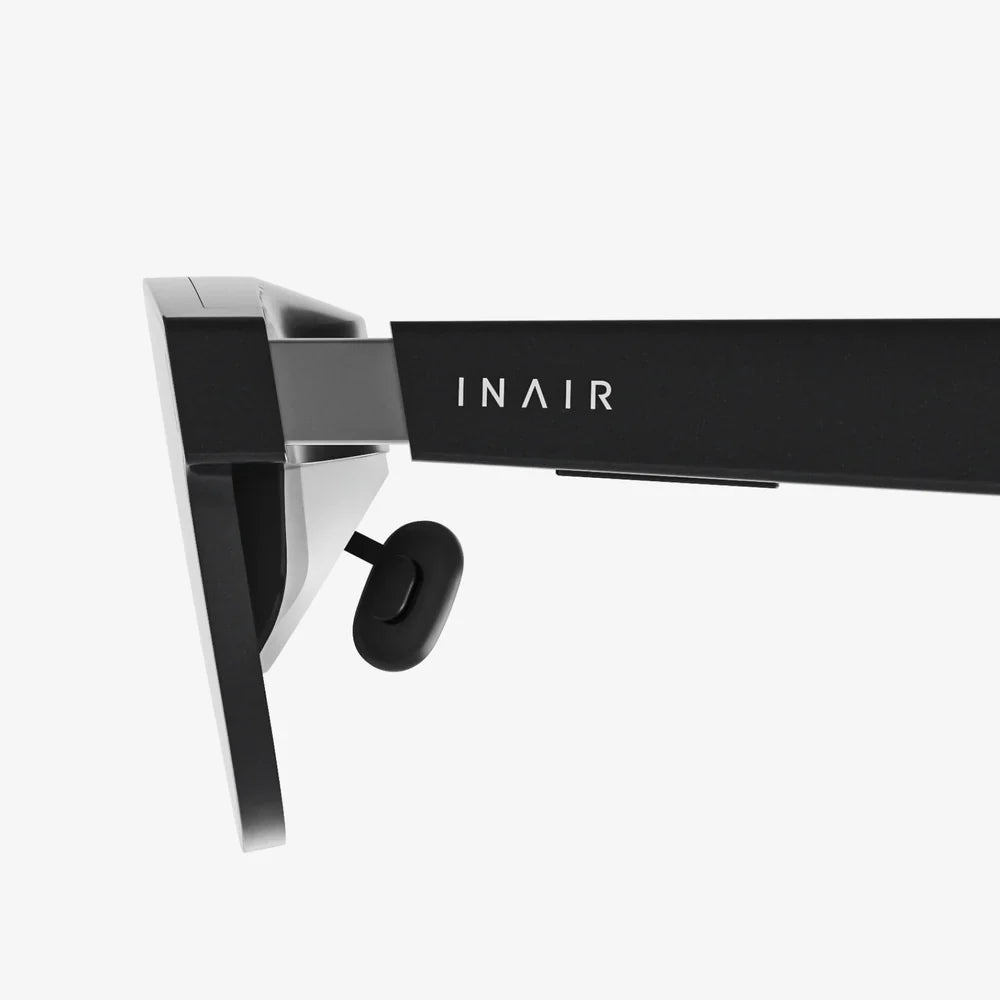
Imagine slipping on a device so intuitive, so visually stunning, that the very concept of a 'screen' evaporates, replaced by a world of limitless possibility that feels as tangible and real as your own living room. This is no longer the stuff of science fiction; this is the promise of the most advanced VR headset of 2025, a technological marvel poised to redefine our relationship with digital information, social connection, and entertainment itself. The journey from clunky prototypes to this sleek portal to other realities represents one of the most accelerated and exciting evolutions in modern consumer technology.
The Visual Revolution: Beyond Resolution to Reality
At the heart of any immersive experience is the quality of the visual display. The 2025 flagship headset has made a quantum leap, moving beyond the mere pursuit of pixel density. While boasting an astounding 40+ PPD (Pixels Per Degree)—a figure that finally surpasses the human eye's ability to discern individual pixels on a smartphone-quality screen—the real magic lies in the integration of several groundbreaking technologies.
Micro-OLED panels, now with local dimming zones numbering in the thousands, deliver perfect blacks and a contrast ratio that mirrors the real world. This eliminates the hazy grayness that once plagued dark virtual environments, making deep space feel truly infinite and a candlelit room genuinely atmospheric. Furthermore, the adoption of mini-LED backlighting with ultra-high refresh rates, dynamically scaling from 90Hz to an eye-watering 180Hz based on content, ensures that even the most frantic action is rendered with buttery smoothness, completely eliminating any perception of flicker or judder.
Perhaps the most significant visual advancement is the implementation of varifocal displays coupled with advanced eye-tracking. Early VR systems suffered from the Vergence-Accommodation Conflict (VAC), where your eyes would converge on a virtual object but your lenses would remain fixed at a single focal distance, causing fatigue and a subtle sense of unreality. The 2025 headset solves this. High-speed, sub-millimeter eye-tracking monitors your pupils' precise focus dozens of times per second. In tandem, the headset's lenses—or in some designs, the displays themselves—minutely shift their focal plane, dynamically adjusting to match where you are looking. The result is a profound and subconscious depth of field; you can naturally focus on a character's eyes inches from your face and then shift your gaze to the mountains miles behind them, with each plane snapping into perfect clarity. This biological fidelity is the final barrier to true visual immersion, and it has now fallen.
Unshackled and Untethered: The Wireless Promise Fulfilled
The dream of a high-fidelity, completely wireless experience has been a long-standing goal. In 2025, it is the standard. These headsets are no longer merely cordless; they are intelligent hubs of processing power. The combination of a cutting-edge, purpose-built XR chipset and next-generation Wi-Fi 7 connectivity has created a paradigm where latency is measured in single-digit milliseconds, a figure imperceptible to even the most sensitive user.
This powerful onboard processor handles the immense workload of tracking, rendering, and AI tasks, freeing the headset from being a mere display for a external computer. For those seeking the absolute pinnacle of graphical performance, a seamless, lossless wireless connection to a nearby gaming rig or workstation is available, but for the vast majority of applications—from social hubs to creative suites and cinematic experiences—the onboard power is more than sufficient. The cumbersome battery pack has also been reimagined, with new solid-state cell technology providing a sleek, balanced, and lightweight form factor that offers over six hours of active use on a single charge. True all-day productivity and entertainment are finally within reach.
The Haptic Horizon: Feeling the Digital World
Visuals are only one part of the sensory puzzle. The 2025 headset introduces a holistic haptic feedback system that extends beyond the controllers. The latest motion controllers are themselves feats of engineering, featuring an array of ultra-precise, voice-coil actuators that can simulate the subtle texture of rough stone, the recoil of a tool, or the gentle pulse of a virtual heartbeat.
However, the true innovation is the integration of haptics into the headset itself. Using patented Lofelt-based transducer technology embedded in the headstrap and facial interface, the device can deliver nuanced vibrations directly to the user's cranium and cheeks. This isn't just for explosions; imagine feeling the gentle patter of virtual rain on your head, the rumble of a distant earthquake through your feet, or the directional whoosh of an object passing close to your ear. This direct cranial audio-haptic integration adds a shocking and deeply persuasive layer of physicality to the virtual world, grounding you within the experience in a way previously unimaginable.
The Invisible Interface: AI, Avatars, and Intuitive Control
Gone are the days of clunky menus and abstract pointers. The operating environment of the 2025 headset is powered by a sophisticated on-device neural processing unit (NPU). This dedicated AI accelerator enables a host of features that make the technology feel less like a tool and more like an extension of the self.
Inside-out tracking has evolved into a comprehensive body and environment understanding system. A ring of high-resolution cameras, paired with LiDAR and time-of-flight sensors, continuously maps your physical room in real-time, not just as a static mesh but as a dynamic space. It understands the softness of your sofa, the transparency of your glass table, and can seamlessly integrate these real-world objects into your virtual experience. Most impressively, it tracks your entire body, hands, and fingers with sub-millimeter accuracy without a single external sensor. You are your controller. The nuanced expression of your hands in a conversation, a shrug of your shoulders, or even the tilt of your head is captured and translated to your hyper-realistic avatar in real-time.
This leads to the frontier of social interaction. Avatars are no longer cartoonish approximations. Driven by the headset's eye-tracking and facial-expression cameras, they are photorealistic digital twins that mirror your every blink, smile, and furrow of your brow. The emotional bandwidth of virtual communication has expanded exponentially, fostering a sense of presence and connection that rivals being in the same physical room. The AI further augments this by providing real-time context, language translation overlays in social spaces, and an intelligent assistant that can be summoned and interacted with naturally, through voice and gesture, to manage your digital life.
Beyond Entertainment: The Enterprise and Creative Ecosystems
The impact of this technology extends far beyond the gaming world, which served as its initial catalyst. In 2025, the headset is a powerhouse for productivity and creativity. Architects and engineers walk clients through full-scale, 1:1 digital models of unbuilt structures, making changes in real-time with a wave of their hand. Surgeons practice complex procedures on accurate holographic anatomies, and medical students learn from within a human heart. Remote collaboration has been utterly transformed; teams distributed across the globe meet in persistent virtual workspaces, interacting with 3D data models as naturally as if they were physical objects on a shared table.
For creators, this is the ultimate canvas. Digital sculpting, painting, and filmmaking have become truly spatial endeavors. An artist can literally walk around their sculpture, applying virtual clay from any angle. A director can block out a scene by physically moving digital actors and cameras within a virtual set. The barrier between imagination and manifestation has never been thinner, empowering a new generation of creators to work in ways that were previously constrained by the limits of 2D screens.
The Ethical Dimension and the Path Forward
With such profound power to simulate reality comes significant responsibility. The industry is grappling with critical questions of data privacy, given the headset's ability to capture intimate biometric data—from eye gaze and facial expressions to vocal inflections and even emotional states. The potential for persuasive advertising and psychological manipulation is unprecedented. Furthermore, the concept of digital identity is becoming increasingly complex. As our avatars become more realistic and our time spent in these immersive spaces increases, establishing robust protocols for security, identity verification, and user safety is paramount to building a healthy and equitable metaverse.
The technology itself is also looking ahead. Early R&D is already focused on the next frontier: direct neural interfaces. While still in its infancy, non-invasive technologies like high-resolution EEG are being explored to read rudimentary brain signals, potentially allowing for control through thought alone. Light-field displays, which project light rays identical to those in the real world, promise the next leap in visual comfort and realism, potentially doing away with headsets altogether in favor of lightweight glasses.
The most advanced VR headset of 2025 is not merely an incremental upgrade; it is a convergence of technologies that have each reached a critical point of maturity. It represents the moment VR shed its last vestiges of novelty and compromise to become a truly mainstream, professional, and profoundly personal platform. It is a window, a tool, a playground, and a meeting place, all shaped by the most powerful force in the universe: human imagination. The door to these new worlds is now open, and the only question that remains is where you will go first.
Share:
Where to Buy VR Headset - The Ultimate Purchasing Guide for Virtual Reality
What Is A MR Headset: Blending Realities For A New Digital Future