


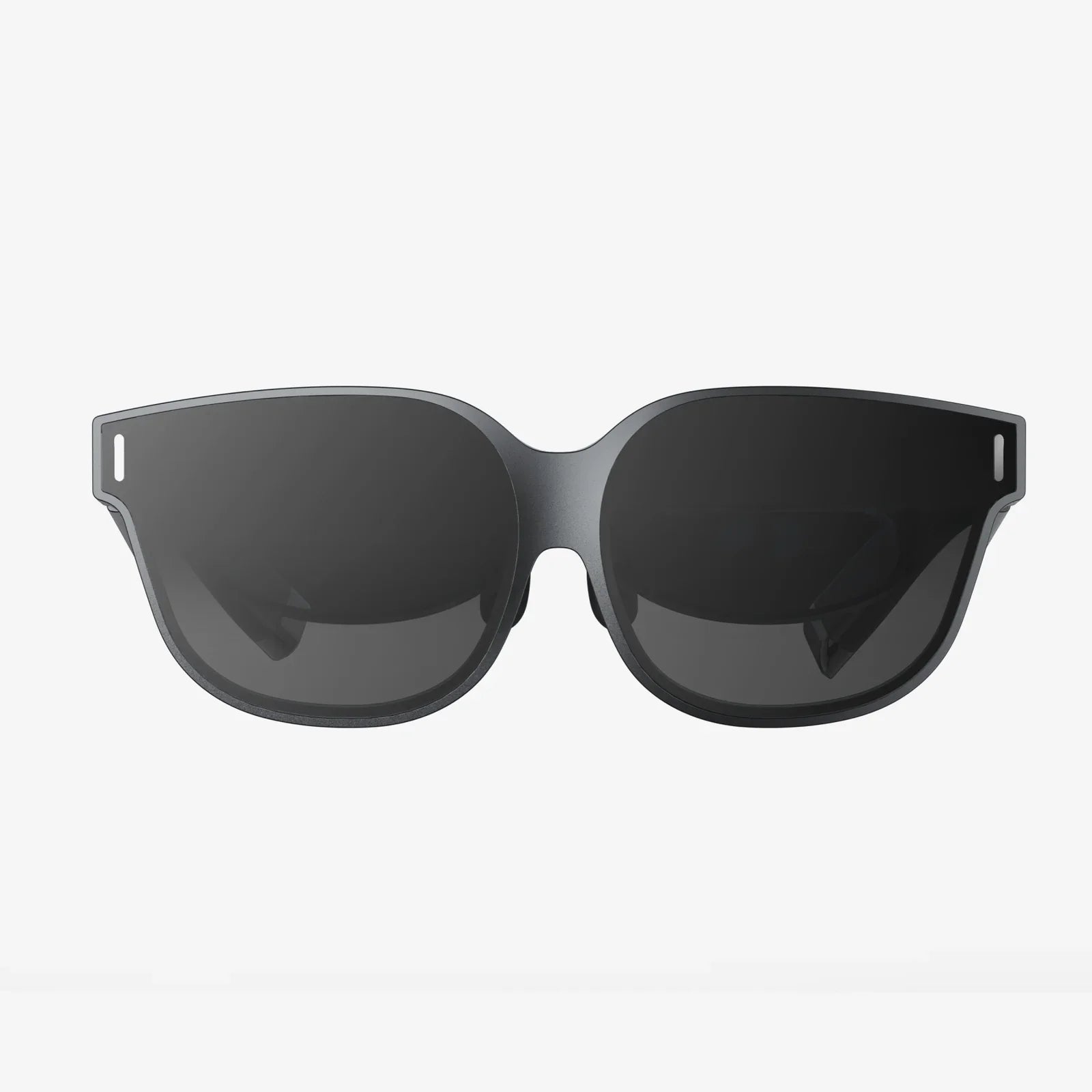
Imagine a world where digital information isn't confined to a screen but is woven into the very fabric of your surroundings, where holographic instructions float over a machinery you're repairing, and virtual colleagues can manipulate 3D models on your real desk. This isn't science fiction; it's the promise of Mixed Reality, and it all begins with a single, transformative device: the MR headset. This technology is not just another gadget; it's a portal to a new way of working, creating, and interacting, and understanding it is the first step into the next computing revolution.
The Core Concept: Beyond Augmented and Virtual
To truly grasp "what is a MR headset," we must first distinguish it from its technological cousins: Virtual Reality (VR) and Augmented Reality (AR).
Virtual Reality (VR) headsets are immersion machines. They completely occlude your vision, replacing your physical environment with a entirely computer-generated simulation. When you wear a VR headset, you are transported to a digital world, whether it's a game, a virtual meeting space, or a 360-degree video. Your physical surroundings cease to exist for your eyes, creating a powerful, but isolating, experience.
Augmented Reality (AR), often experienced through smartphone screens or simpler glasses, overlays digital information onto the real world. Think of popular filters that place cartoon ears on your head or navigation arrows superimposed on a live street view from your phone's camera. The digital elements are layered on top of reality but don't intelligently interact with it; they don't understand the depth, physics, or composition of your environment.
Mixed Reality (MR) is the sophisticated synthesis of these two concepts. An MR headset doesn't just block out the world or overlay it; it understands it. It digitally maps your physical space and then anchors holographic content within it in a believable way. This is the key differentiator: interaction. In MR, a virtual ball can bounce off your real table. A digital character can hide behind your actual sofa. Your real hand can push a virtual button. The headset acts as a central hub that processes the real and the digital as one unified experience.
How Does An MR Headset Work? The Magic Behind The Lenses
The ability to blend realities is a feat of engineering that relies on a complex array of sensors and processors. An MR headset is essentially a powerful, wearable computer with a unique set of eyes and a sophisticated brain.
1. Seeing The World: Sensors and Cameras
The exterior of an MR headset is studded with a suite of optical sensors. These typically include:
- Depth Sensors: Often using technologies like time-of-flight cameras or structured light, these sensors fire out invisible infrared light patterns and measure how long they take to return. This creates a precise depth map of the room, understanding the distance and shape of every surface, object, and person.
- Tracking Cameras: High-resolution cameras continuously capture the environment. This visual data is used for simultaneous localization and mapping (SLAM), a process where the headset constructs a 3D model of the space while simultaneously tracking its own position within that model. This is how it knows where it is and where to place digital objects.
- Eye-Tracking Cameras: Positioned inside, these cameras monitor the user's pupils. This serves two critical functions: it enables foveated rendering (dynamically rendering high resolution only where the user is looking to save processing power) and allows for intuitive interaction—you can look at a hologram to select it.
2. Processing The Data: The Onboard Computer
The raw data from the sensors is a flood of information. The headset's internal processor—a specialized System-on-a-Chip (SoC) or sometimes a connected computer—acts as the central nervous system. It fuses the sensor inputs in real-time to create a coherent understanding of the environment. It identifies floors, walls, ceilings, and objects, calculating physics and occlusion (ensuring a virtual coffee cup is properly hidden by a real book). This immense computational workload is what makes MR headsets such advanced pieces of hardware.
3. Displaying The Blend: Optics and Displays
This is where the magic becomes visible. MR headsets use advanced display systems to paint light into your eyes:
- See-Through Lenses: Unlike VR's closed displays, MR headsets have transparent lenses or use camera passthrough. High-end devices often use holographic waveguides—thin, glass-like plates that use diffraction gratings to bend light from micro-displays at the temples into your eyes, all while allowing real light to pass through. This seamlessly integrates the digital light with the natural light from your environment.
- Spatial Anchoring: The processed environmental map allows the system to "pin" holograms to specific real-world coordinates. Once you place a virtual TV on your wall, it will stay there even if you walk away and come back, because the headset remembers its spatial anchor.
4. Interacting With The Blend: Input Methods
Interaction is what makes MR feel real. Headsets employ a multi-modal approach:
- Hand Tracking: Using the external cameras, the headset can model all 26 degrees of freedom of your hands—seeing your fingers, joints, and gestures. This allows you to reach out and grab, push, or resize holograms with natural movements.
- Voice Commands: Integrated microphones let you control the experience hands-free, asking the system to open apps, search, or execute commands.
- Controllers: Some systems offer optional motion-tracked controllers for more precise input, similar to VR controllers but designed for mixed environments.
The Transformative Applications: More Than Just Games
While gaming and entertainment are obvious entry points, the true power of MR headsets lies in their potential to revolutionize enterprise, education, and collaboration.
Design and Manufacturing
Engineers and designers can prototype in MR. Instead of 3D printing multiple expensive iterations, they can create a full-scale holographic model of a new engine and walk around it, inspecting it from every angle, disassembling it virtually, and even simulating stress tests within their actual physical workspace. This drastically reduces development time and cost.
Remote Assistance and Training
An expert engineer in one country can see exactly what a field technician thousands of miles away is seeing through their headset. The expert can then draw holographic arrows, circle components, and pull up 3D manuals directly into the technician's field of view, guiding them through a complex repair procedure step-by-step. This "see-what-I-see" collaboration eliminates errors and reduces travel costs.
Healthcare and Medicine
Surgeons can use MR to overlay CT or MRI scans directly onto a patient's body before making an incision, providing an X-ray vision-like view to guide their procedure. Medical students can practice complex surgeries on hyper-realistic holographic patients, and therapists can use calming MR environments for patient rehabilitation and treatment of phobias.
Architecture and Construction
Architects and clients can walk through a full-scale holographic rendering of a building design before a single brick is laid, making changes to the virtual structure in real-time. On construction sites, workers can see holographic blueprints overlaid onto the unfinished framework, ensuring perfect alignment of systems like electrical and plumbing.
Challenges and The Road Ahead
Despite its immense potential, MR technology is still maturing. Key challenges remain:
- Form Factor and Comfort: Current headsets, while advanced, can still be bulky and heavy for all-day wear. The industry is racing toward lighter, sleeker designs that resemble everyday eyeglasses.
- Battery Life: The immense processing power required drains batteries quickly, often limiting untethered use to a few hours. Advances in chip efficiency are crucial.
- Cost: High-end MR headsets represent a significant investment, primarily placing them in the enterprise market for now. Consumer adoption awaits more affordable hardware.
- The "Killer App": While many compelling enterprise applications exist, the consumer market is still waiting for the definitive application that will make MR a must-have device for everyone.
The future of MR headsets is inextricably linked to advancements in artificial intelligence, 5G/6G connectivity for cloud processing, and even more miniaturized components. We are moving toward a world where these devices will become our primary computing interface, replacing monitors, keyboards, and smartphones with a persistent, spatial computing environment that is always available, context-aware, and infinitely scalable.
The line between our digital and physical lives is not just blurring; it's being systematically erased by the capabilities of a Mixed Reality headset. This isn't merely about watching content or playing games; it's about enhancing human capability, breaking down geographical barriers, and fundamentally changing how we solve problems, learn, and connect. The device on your face becomes a lens for a new layer of reality, one where your imagination is the only limit to what you can create and experience right in the world around you.
Share:
Most Advanced VR Headset 2025: A Glimpse into the Future of Immersive Reality
Web Extended Reality: The Immersive Future of the Internet is Here