


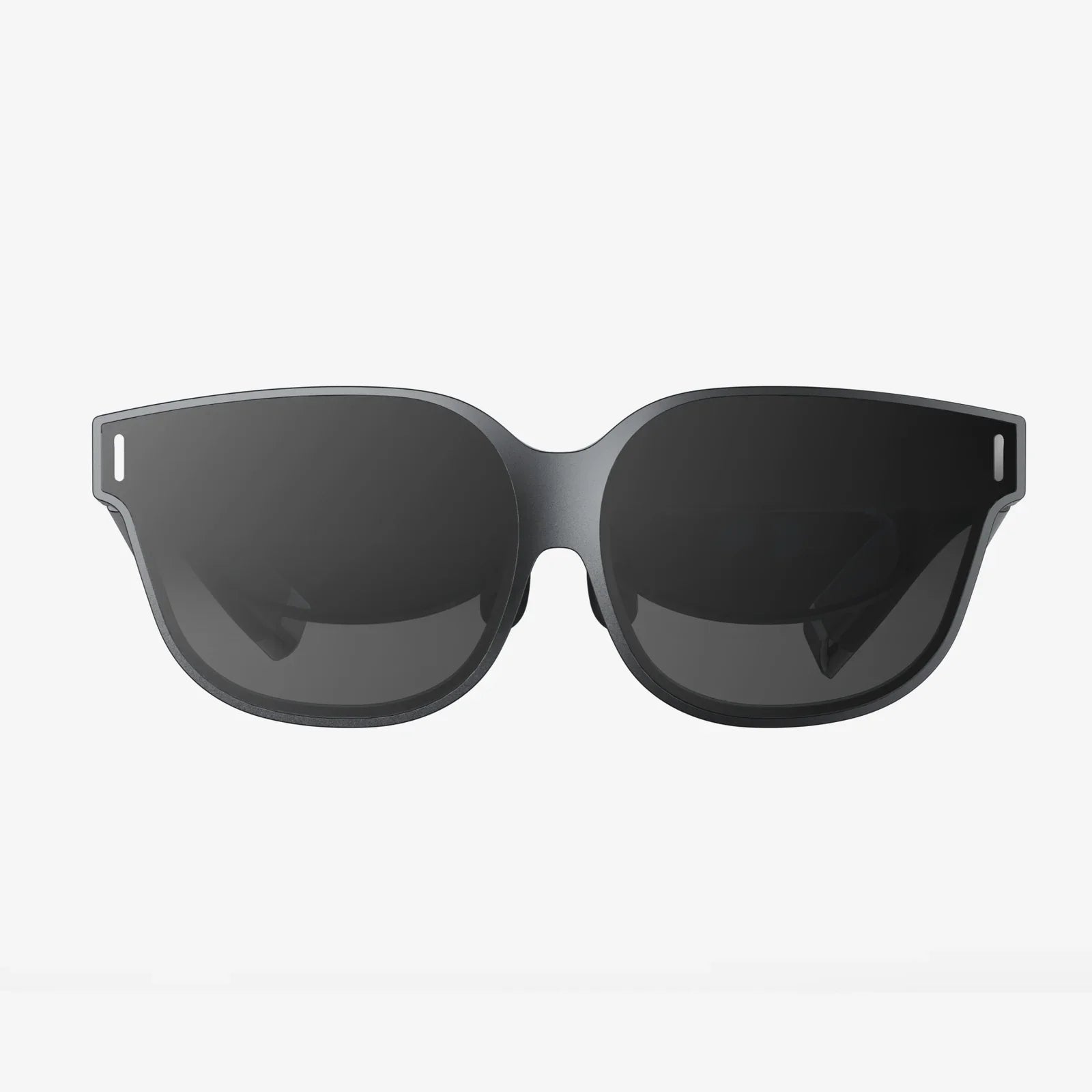
Imagine stepping into a virtual meeting room from your living room, manipulating a 3D model of a human heart for a biology class using just your smartphone, or previewing how a new sofa would look in your actual space—all without downloading a single app, installing bulky software, or owning expensive hardware. This isn't a glimpse into a distant sci-fi future; it's the reality being built today, not in walled-garden applications, but on the very foundation of the modern internet: the web browser. This is the promise and the power of Web Extended Reality, a technological revolution quietly unfolding on a screen you already use every day.
Demystifying the Browser-Based Metaverse: What Exactly is WebXR?
To understand Web Extended Reality, it's best to break it down. Extended Reality (XR) is an umbrella term encompassing Virtual Reality (VR), which fully immerses you in a digital environment; Augmented Reality (AR), which layers digital information onto your physical world; and Mixed Reality (MR), which blends the two, allowing digital and physical objects to interact. For years, experiencing XR meant being tethered to powerful computers, buying dedicated headsets, and navigating a maze of proprietary platforms and app stores.
WebXR shatters this paradigm. It is not a specific piece of hardware or a single platform. It is an open, royalty-free web standard, a set of application programming interfaces (APIs) that allows developers to create and deliver immersive VR and AR experiences directly through a web browser. Think of it as the HTML5 for immersive 3D—a foundational protocol that enables browsers to understand and render spatial content, communicate with XR hardware, and track user movement and input.
The core technology works by bridging the gap between the browser and XR devices. When you visit a WebXR-enabled site, the browser can:
- Detect compatible AR/VR hardware, from high-end headsets to standard smartphones.
- Request permission to access cameras and sensors.
- Render stereoscopic 3D visuals optimized for immersive viewing.
- Track head, hand, and controller movements with high precision.
- Manage spatial audio to complete the sense of presence.
This seamless integration means the immense friction of installation is gone. The universal accessibility of the web—click a link and you're in—is now applied to the most immersive digital experiences imaginable.
The Architectural Pillars: How WebXR Works Its Magic
The magic of a fluid WebXR experience rests on several key technological pillars working in concert.
1. The WebXR Device API
This is the heart of the entire system. The WebXR Device API is the direct line of communication between the browser and the XR hardware. It handles the essential functions: querying what devices are available, presenting imagery to the device's display(s), and reporting the user's pose (position and orientation in space) back to the application at a incredibly high frequency to maintain immersion and avoid motion sickness. It abstracts the complexities of different hardware, allowing developers to write code once that can run on a variety of headsets, controllers, and smartphones.
2. WebGL and Modern Rendering Engines
WebXR doesn't render complex 3D graphics by itself. It relies on WebGL (Web Graphics Library), a powerful API for rendering interactive 2D and 3D graphics within any compatible web browser without the use of plug-ins. Most professional WebXR experiences are built using popular JavaScript frameworks and engines like Three.js, Babylon.js, A-Frame, and PlayCanvas. These tools provide developers with a higher-level, more manageable way to create 3D objects, textures, lighting, and animations, which are then rendered via WebGL and displayed through the WebXR API.
3. Session Management
WebXR operates in two primary modes, managed through sessions:
- Immersive VR Sessions: This mode takes over your entire field of view, typically using a head-mounted display (HMD). The browser's usual interface disappears, and you are fully transported into the virtual environment.
- Inline AR Sessions: This mode is used for augmented reality, often on a smartphone or tablet. The camera feed is displayed within a rectangle on the webpage, and digital content is composited on top of it. You never leave the browser tab, maintaining a connection to the 2D web while interacting with 3D content.
4. Input and Interaction
An immersive world is useless if you can't interact with it. WebXR supports a range of input methods, from gaze-based targeting and simple screen taps on a phone to sophisticated motion-tracked controllers for VR. The Input Source API allows developers to design for everything from a single touchscreen to dual-wielded controllers with haptic feedback, ensuring users can intuitively manipulate their digital surroundings.
The Unstoppable Rise: Why WebXR is a Game-Changer
The shift towards browser-based XR is not merely a technical curiosity; it is a fundamental change driven by powerful, practical advantages that solve the critical problems of traditional XR.
Universal Accessibility and Low Friction
This is WebXR's greatest strength. The barrier to entry is dramatically lower. Users don't need to worry about whether an experience is available on their specific headset's store. They simply click a link. This instant access opens up XR to a mass audience for the first time, enabling viral growth and discovery akin to the early web. A user can experience AR on their current smartphone or dive into VR if they have a headset—all from the same link.
Cross-Platform Compatibility
Fragmentation has long plagued the XR industry. WebXR acts as a great equalizer. A single WebXR application can run on Windows, macOS, ChromeOS, Android, and iOS. It can work with a vast array of hardware, from a $10 Google Cardboard viewer to a $1,500 professional VR system. This drastically reduces development costs and complexity, allowing creators to build once and reach everyone.
Seamless Discovery and Distribution
WebXR experiences are discovered through Google search, shared via social media links, embedded in blogs, and sent through messaging apps. They are indexed and crawlable by search engines. This leverages the entire existing infrastructure of the web for distribution, something closed app stores can never match.
Enhanced Privacy and Security
Running in the browser's security sandbox, WebXR experiences are subject to the same rigorous permission models as any other website. They must explicitly request access to sensitive hardware like cameras and motion sensors, and users can revoke this access at any time. There is no silent installation of software, giving users more control and transparency over their data.
Transforming Industries: WebXR in Action Today
The theoretical benefits of WebXR are compelling, but its real-world applications are already demonstrating transformative potential across numerous sectors.
Retail and E-Commerce
This is one of the most immediate and powerful use cases. "Try before you buy" is moving online. Furniture retailers are using WebAR to let customers place true-to-scale 3D models of sofas, tables, and decor into their living rooms through their phone screen. Fashion brands are enabling virtual try-ons for glasses, watches, and even makeup. Automotive companies are offering immersive virtual showrooms where users can explore a car's interior and exterior in detail. This drastically reduces purchase hesitation and product returns, building consumer confidence.
Education and Training
WebXR turns abstract concepts into tangible, interactive experiences. Medical students can dissect a virtual cadaver or walk through a detailed 3D model of a human circulatory system. History classes can take virtual field trips to ancient Rome or Egyptian tombs. Mechanics can train on virtual engines, and corporate employees can practice public speaking or difficult conversations in a simulated environment. This experiential learning leads to dramatically improved knowledge retention and engagement.
Remote Work and Collaboration
The future of work is hybrid and remote. WebXR enables the next evolution of video conferencing: the virtual meeting room. Teams distributed across the globe can meet in a neutral, persistent virtual space to review 3D architectural designs, brainstorm on virtual whiteboards, or analyze data visualizations that surround them. This fosters a stronger sense of presence and shared purpose than a grid of video feeds ever could.
Art, Culture, and Entertainment
Museums are creating virtual exhibitions, allowing global audiences to view priceless artifacts from every angle. Musicians and event organizers are hosting virtual concerts and gatherings in fantastical WebXR environments. Interactive storytelling is being redefined, with users becoming active participants inside narrative worlds. The line between audience and performer, viewer and exhibit, is beautifully blurred.
Navigating the Current Frontier: Challenges and Limitations
Despite its immense promise, WebXR is not without its challenges. As a maturing technology, it still faces hurdles that developers and the standards body, the World Wide Web Consortium (W3C), are actively working to overcome.
- Performance Constraints: Running complex 3D simulations in a browser, which is itself a complex application, is computationally intensive. While WebGL and modern JavaScript engines are highly optimized, achieving photorealistic graphics at high frame rates for VR is more challenging than in a native application with direct hardware access.
- Limited Peripheral Support: While basic input is well-supported, accessing more advanced features of specific hardware (like full finger-tracking on some controllers) can sometimes be less straightforward than in native development kits.
- The Discoverability Gap: While distribution is easier, discovering high-quality WebXR experiences can still be difficult. There is no central "WebXR store" with ratings and reviews, so many incredible experiences remain hidden gems, waiting to be found through search or word-of-mouth.
- The Hardware Spectrum: The beauty of cross-platform compatibility is also a design challenge. Creating an experience that feels intuitive and engaging both on a six-degree-of-freedom VR headset and a smartphone requires thoughtful design and often, different interaction models.
Gazing into the Crystal Ball: The Future of Web Extended Reality
The trajectory of WebXR points towards a future where the immersive web is as ubiquitous as the 2D web is today. Several key developments will accelerate this adoption.
The evolution of 5G and edge computing will offload heavy rendering tasks from the local device to powerful cloud servers, streaming high-fidelity XR experiences to even modest hardware, effectively solving the performance constraint. Advances in AI and machine learning will enable more intelligent AR experiences—imagine your browser not only placing a virtual object in your room but understanding the context of the room itself, allowing for more realistic physical interactions.
We will see the rise of the spatial web, where digital information and experiences are mapped to specific locations in the physical world. Walking through a city, you could point your phone at a restaurant to see its reviews hover beside it, or view historical photographs layered over their original locations, all accessed through your browser. Furthermore, the integration of technologies like blockchain and decentralized protocols could enable users to truly own their digital assets and identities across different WebXR experiences, creating a more open and user-centric metaverse vision, in stark contrast to the walled gardens of tech giants.
The next time you open a browser tab, consider that you're not just opening a window to flat pages of text and images. You are standing at the portal to infinite worlds, interactive learning tools, and new ways to connect and create. The immersive internet isn't coming; it's already loading, and it's waiting for you to take the first step forward. The only question that remains is what you will build—and discover—once you do.
Share:
What Is A MR Headset: Blending Realities For A New Digital Future
Extended Reality Market Trends: Navigating the Next Digital Revolution