


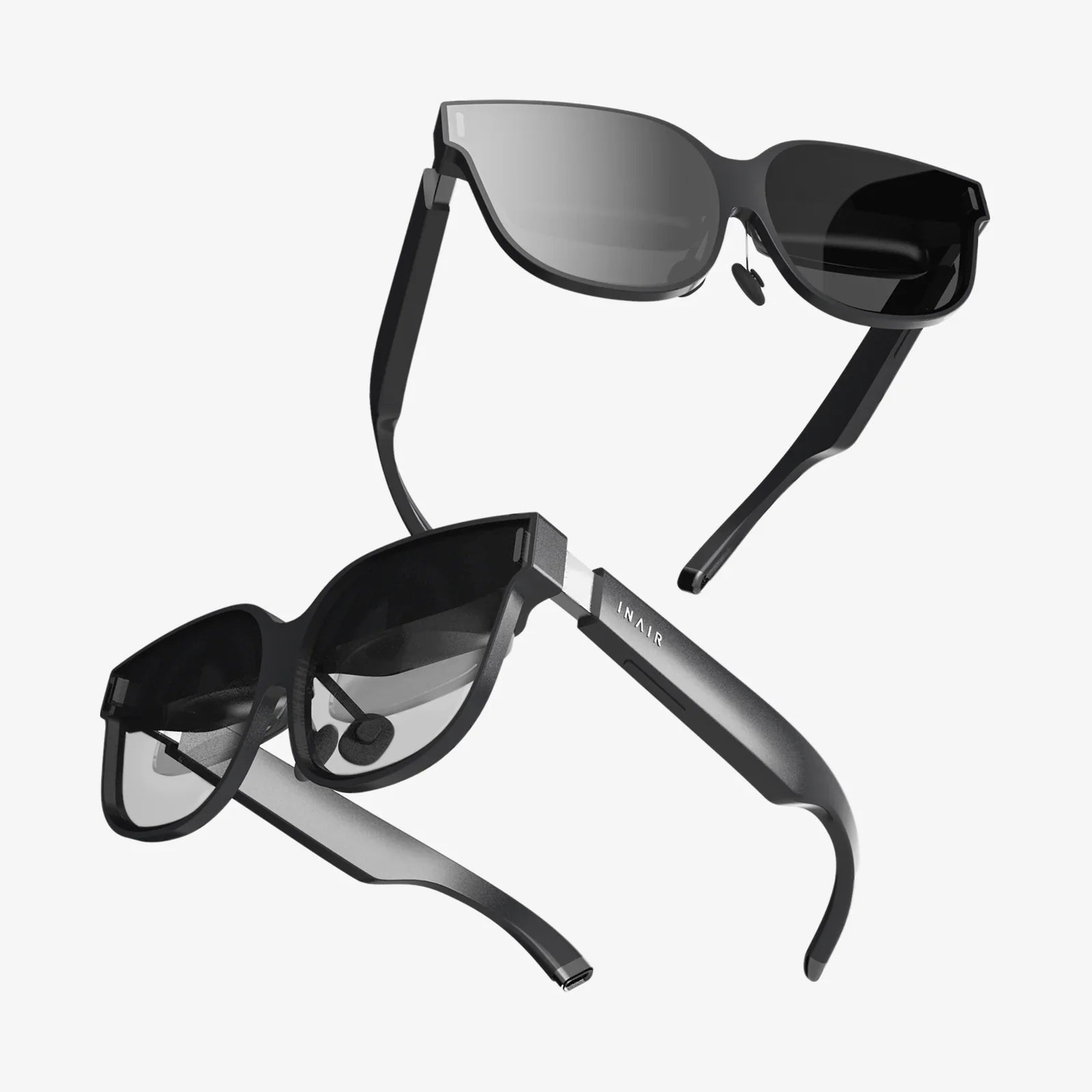
- by wangfred
Near Eye Display OLED: The Invisible Revolution Reshaping Our Digital World
- by wangfred
Imagine a world where information doesn't live on a screen in your hand or on your desk, but floats seamlessly in your field of vision, accessible with a glance and interacting with the reality around you. This is not a distant science fiction fantasy; it is the imminent future being built today, and at its heart lies a revolutionary technology: Near Eye Display OLED. This invisible engine is poised to fundamentally alter our relationship with computing, entertainment, and each other, moving interfaces from external devices directly into our line of sight.
At its simplest, a Near Eye Display (NED) is any display technology configured to project images extremely close to the human eye, typically requiring sophisticated optics to bring the virtual image into focus. When this concept is fused with Organic Light-Emitting Diode (OLED) technology, the result is a visual experience of unparalleled quality.
Traditional displays require a backlight—a uniform light source that shines through a layer of liquid crystals to create an image. OLEDs operate on a completely different principle. Each pixel is a microscopic, self-emissive diode composed of thin films of organic carbon-based compounds. When an electric current is applied, these compounds light up. This fundamental difference unlocks the key advantages that make OLED the undisputed champion for near-eye applications:
Because each pixel generates its own light, it can be turned on and off independently. A pixel that is "off" is truly off—emitting no light whatsoever. This allows for absolute black levels. In a dark scene, the black portions of the image simply disappear into the void of the display housing, while the bright elements pop with stunning vibrancy. This infinite contrast ratio is critical for near-eye use, creating a sense of depth and realism that LCDs can never achieve, making virtual objects feel tangible and integrated into the real world.
The organic materials in an OLED pixel can change their state from on to off, and through the color gamut, orders of magnitude faster than a liquid crystal can twist and untwist. This results in pixel response times measured in microseconds rather than milliseconds. This ultra-fast switching eliminates motion blur and ghosting artifacts entirely. For near-eye displays used in dynamic augmented reality (AR) applications or high-frame-rate virtual reality (VR), this speed is non-negotiable. It ensures that virtual content remains locked in place and crystal clear even during rapid head movements, preventing the latency-induced nausea that plagued earlier generations of hardware.
The absence of a separate backlight unit and color filters allows OLED panels to be incredibly thin and lightweight—often just a few millimeters thick. This is a paramount advantage when every gram and every millimeter of space is at a premium inside the tight confines of a wearable headset or pair of smart glasses. Furthermore, because power is only drawn by pixels that are actively lit, displaying predominantly dark imagery can lead to significant energy savings, extending the precious battery life of mobile devices.
OLEDs can be fabricated on flexible plastic substrates, not just rigid glass. This opens the door to curved and conformal displays that can be engineered to match the natural curvature of the human face or to create more compact optical systems. This flexibility allows designers to create more ergonomic, comfortable, and aesthetically pleasing wearable devices that don't resemble bulky goggles.
The OLED panel itself is only half of the near-eye puzzle. The other half is the intricate optical system that takes the image from the tiny screen and presents it to the eye in a way that is comfortable, in-focus, and expansive. There are several competing approaches, each with its own trade-offs.
A common and relatively simple design uses a "birdbath" combiner. Here, the OLED microdisplay is mounted above the user's line of sight. Its light is projected onto a semi-transparent curved combiner, which then reflects the image down into the user's eye. This allows the user to see the digital image overlaid on the real world. While effective and cost-efficient, this design can often result in bulkier form factors.
Seen as the holy grail for sleek AR glasses, waveguides are flat, transparent pieces of glass or plastic that pipe light from micro-OLED projectors on the temple of the glasses directly to the eye. Using principles of diffraction (diffractive waveguides or surface relief gratings) or reflection (mirrored waveguides), the optics are etched or embedded within the glass itself. This allows for a design that looks almost indistinguishable from regular eyeglasses, but the manufacturing complexity and challenges with field of view and color uniformity remain significant hurdles.
Primarily used in VR and immersive AR, pancake lenses use a folded optics path. Light from the OLED panel bounces between multiple polarized lenses before reaching the eye. This dramatically shortens the distance required between the screen and the eye, allowing for much more compact and lightweight headset designs compared to traditional bulky Fresnel lenses.
The implications of high-quality Near Eye Display OLED systems extend far beyond watching movies on a virtual giant screen. They are set to become the next major computing platform, revolutionizing a multitude of fields.
Surgeons can have patient vitals, ultrasound data, or procedural guides hover in their vision without ever looking away from the operating field. Field engineers and mechanics can have complex repair manuals, schematics, and animated instructions overlaid directly on the machinery they are fixing. Architects and interior designers can walk through full-scale 3D holograms of their creations, making real-time changes with a gesture.
These displays offer powerful tools for individuals with low vision, acting as intelligent augmented sight. They can highlight edges, enhance contrast, zoom in on text, or read out signs in real-time. For those with memory impairments, they could provide contextual reminders and cues about people, places, and tasks, fostering greater independence.
From training pilots and soldiers to preparing for delicate surgical procedures, NED OLEDs provide a level of immersion and visual fidelity that was previously impossible. Trainees can practice in hyper-realistic, interactive virtual environments that respond to their actions, all with perfect blacks to simulate deep space or nighttime operations and lightning-fast pixels to eliminate simulator sickness.
Imagine a video call where the other person appears as a photorealistic hologram sitting across the table from you, making eye contact and sharing expressions with a depth and presence that a flat screen can never convey. This level of telepresence, enabled by high-fidelity passthrough AR and flawless displays, could redefine remote work and connect families across continents in a profoundly more human way.
Despite its immense promise, the path forward for Near Eye Display OLED is not without its obstacles. Achieving mass adoption hinges on overcoming these final, formidable challenges.
The pursuit of higher resolution is relentless. For AR glasses to truly blend digital content with reality, pixel density must be so high that the human eye cannot distinguish individual pixels, eliminating the "screen door effect." This requires pushing manufacturing capabilities to their limits. Furthermore, increasing brightness is essential for outdoor use, where sunlight can easily wash out a dim image, but this must be balanced against power consumption and heat generation in a tiny device.
Perhaps the most significant barrier remains the optical systems. Waveguide technology must become more efficient, cheaper to produce, and capable of delivering a wide field of view to create an immersive experience. The quest is for the perfect blend of small form factor, visual fidelity, and user comfort.
Finally, the entire ecosystem needs to evolve. These devices will require immense processing power, intuitive new input paradigms (voice, gesture, gaze), and all-day battery life to become truly ubiquitous. They will need to be always connected, contextually aware, and capable of understanding and interacting with the world around them.
The shimmering potential of this technology is not just about sharper images or new gadgets; it's about a fundamental rewiring of human-machine interaction. Near Eye Display OLED is the critical linchpin in a future where computing becomes ambient, contextual, and intimately personal—a silent partner enhancing our perception, amplifying our abilities, and seamlessly weaving the digital tapestry into the very fabric of our physical lives. The screen, as we know it, is about to vanish before our eyes, only to reappear in a form more immediate and magical than we ever thought possible.