


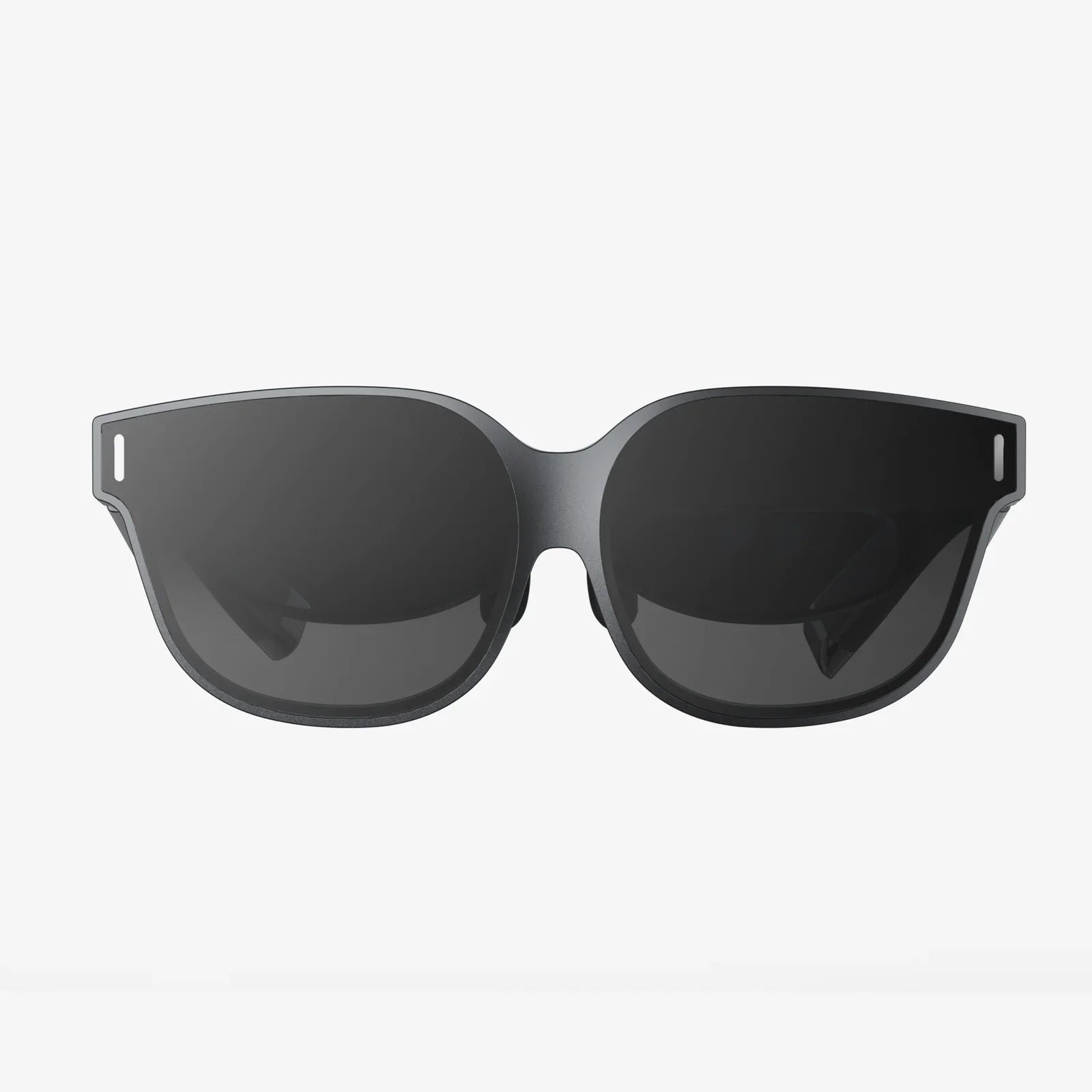
Imagine slipping on a pair of sleek, lightweight glasses and instantly transforming your reality—your living room becomes a sprawling command center, a virtual colleague sits across from you, or a historical event unfolds before your eyes. This is the promise of near eye display (NED) technology, a frontier of computing that feels both tantalizingly close and, for many, frustratingly out of reach. The single greatest barrier between this sci-fi future and widespread consumer adoption isn't a lack of imagination, but a very tangible, very present factor: the near eye display price. The cost of these devices, which range from simple augmented reality (AR) viewers to fully immersive virtual reality (VR) headsets, is a complex equation of cutting-edge components, intensive research, and nascent market dynamics. Unpacking this price tag reveals not just the cost of hardware, but the immense value proposition of an entirely new way to interact with information and each other.
The Core Components: A Bill of Materials Breakdown
To understand why near eye display price points are what they are, one must first look under the hood. These are not simple screens; they are complex optical systems that must project high-resolution imagery mere centimeters from the user's eyes. The bill of materials is a significant driver of the final cost.
Microdisplays: The Heart of the Experience
The most critical component is the microdisplay itself—the tiny, ultra-high-resolution screen that sits in front of each eye. The technology behind these displays is a major differentiator in both performance and near eye display price. The primary technologies are:
- LCD (Liquid Crystal Display): A mature and cost-effective technology, but often limited by lower contrast ratios, slower pixel response times (causing motion blur), and backlighting issues that can detract from immersion.
- OLED (Organic Light-Emitting Diode): Offers superior contrast with true blacks, faster response times, and better power efficiency. However, manufacturing these tiny, incredibly dense panels is difficult and costly, impacting the final near eye display price.
- Micro-OLED (or OLEDoS): This is the current gold standard for high-end devices. Micro-OLEDs are built directly onto a silicon wafer, enabling incredibly high pixel densities (over 3000 PPI) in an extremely small form factor. This eliminates the "screen-door effect" and provides stunning clarity. The fabrication process is highly complex and expensive, reserved for flagship products.
- LCoS (Liquid Crystal on Silicon): A reflective technology known for its high resolution and good color fidelity, often used in professional and enterprise-grade headsets.
The choice between these technologies creates a wide spectrum in the base near eye display price, with Micro-OLED systems commanding a significant premium.
Optical Engines: Bending Light to Reality
Simply having a microdisplay isn't enough. The image must be focused and presented comfortably to the eye. This is the job of the optical stack, a sophisticated assembly of lenses and waveguides.
- Pancake Lenses: These complex multi-element lenses use polarization folding to create a long optical path in a very short physical space. This allows for much slimmer and lighter headset designs. However, they are more expensive to manufacture and can reduce overall brightness, requiring brighter (and more expensive) displays to compensate.
- Fresnel Lenses: Previously common in VR headsets, these are lighter and cheaper to produce but are prone to visual artifacts like god rays and glare, and result in bulkier devices.
- Birdbath Optics: Common in consumer AR glasses, this design uses a combiner to reflect the display image into the user's eye while allowing real-world light to pass through. It offers a good balance of field of view and cost.
- Waveguides: The holy grail for AR, especially for glasses-like form factors. These flat, transparent pieces of glass or plastic use diffraction or holography to pipe light from a projector on the temple into the eye. They are incredibly difficult to design and manufacture at high yield, making them one of the most expensive components and a primary reason why true AR glasses remain costly.
The pursuit of a wider field of view, better clarity, and a smaller form factor directly and exponentially increases the near eye display price through these optical systems.
Sensors, Processors, and Tracking
A modern NED is a powerhouse of sensing technology. To create a convincing and comfortable experience, it must understand its environment and the user's position within it. This requires:
- Inside-Out Tracking Cameras: Multiple high-frame-rate cameras to map the room and track the controllers.
- Eye-Tracking Cameras: Crucial for foveated rendering (which dramatically reduces processing load by rendering only the center of vision in high detail) and for social expression in avatars.
- Depth Sensors (ToF): Time-of-Flight sensors to accurately gauge distances for mixed reality experiences.
- Inertial Measurement Units (IMUs): For precise head motion tracking.
- System-on-a-Chip (SoC): A mobile processor, often custom-designed, that must handle intense graphical rendering, complex computer vision algorithms, and AI processing, all while being thermally constrained on a user's face.
This suite of sensors and the processing power required to make sense of it all adds hundreds of dollars to the near eye display price, differentiating a basic media viewer from a full-featured spatial computer.
Beyond the Hardware: The Hidden Costs of Innovation
The bill of materials is only part of the story. The near eye display price also reflects immense investments that consumers never see directly.
Research and Development (R&D)
The optical designs for waveguides and pancake lenses are feats of physics and engineering. Companies spend billions of dollars and years of research to develop, prototype, and refine these systems. This R&D cost is amortized over the number of units sold. In a market that is still young, this per-unit cost recovery is significant, contributing to a higher initial near eye display price.
Software and Ecosystem
A device is useless without its operating system, developer tools, and application ecosystem. Building a robust software platform, creating intuitive user interfaces for spatial computing, and funding developer partnerships to create compelling content are all massive, ongoing expenses. The near eye display price subsidizes this ecosystem development.
Manufacturing and Yield
Manufacturing components like waveguides and Micro-OLED displays is notoriously difficult. Achieving high yields—the percentage of manufactured units that are free of defects—is a major challenge. Low yields mean the cost of the defective units is passed on to the functional ones, driving up the near eye display price. As manufacturing processes mature and yields improve, costs naturally fall.
The Market Spectrum: From Cardboard to Spatial Computers
The term "near eye display" encompasses a vast range of products, and consequently, a vast range of prices.
The Entry-Level: Mobile VR and Basic AR
At the very bottom of the near eye display price spectrum are products like smartphone-based VR viewers. These are essentially sophisticated holders for a smartphone, using its screen and processing power. They offer a taste of immersion for a low cost but are limited by the phone's capabilities, lack positional tracking, and often suffer from poor comfort. Their low price is a function of their simplicity.
The Mainstream Standalone Segment
This is the most competitive and popular segment, dominated by all-in-one VR headsets. These devices contain all the necessary processing, display, and tracking technology within the headset. The near eye display price here is a careful balance of performance and accessibility. Manufacturers use fast-switch LCDs or mid-tier OLEDs, proven pancake optics, and a robust but not excessive sensor suite to hit a consumer-friendly price point that still delivers a compelling experience. This is the volume market where prices are dropping fastest due to competition and economies of scale.
The High-End and Professional Tier
Here, near eye display price is less of a concern than performance and capability. These headsets are aimed at professionals—engineers, designers, architects, and medical professionals—for whom the device is a productivity tool. They feature the highest-resolution Micro-OLED displays, the most advanced optical stacks, extensive sensor arrays for mixed reality, and often tether to powerful external computers for maximum graphical fidelity. The cost of these devices reflects their position as specialized professional equipment, much like a high-end medical monitor or engineering workstation.
The Future of Near Eye Display Price: A Trajectory Towards Affordability
History provides a clear blueprint for the future of near eye display price. Every major consumer technology—from color televisions and DVD players to smartphones and flat-panel TVs—follows a similar path: high initial costs due to low volume and high R&D, followed by a rapid decline as manufacturing scales, processes improve, and competition intensifies.
Several factors will accelerate this trend for NEDs:
- Manufacturing Scale and Yield Improvements: As demand increases, factories can produce components in higher volumes, reducing the per-unit cost. Simultaneously, years of manufacturing experience will lead to higher yields for complex parts like waveguides.
- Component Standardization: Currently, many companies develop custom solutions for displays, optics, and chips. As the market matures, standardized components will emerge, driving down costs through competition and volume production.
- Technical Innovations: Ironically, new innovations will also lower prices. More efficient software techniques like advanced foveated rendering will reduce the need for prohibitively expensive processors. Breakthroughs in materials science could lead to cheaper, more efficient ways to manufacture advanced optics.
- Market Competition: The entrance of new players and the expansion of existing ones will create fierce competition, forcing companies to find efficiencies and offer more compelling value, ultimately benefiting the consumer with a lower near eye display price.
We can expect the premium features of today—Micro-OLED displays, eye-tracking, and slim form factors—to become standard in the mainstream devices of tomorrow. The near eye display price will inevitably fall, transforming these devices from niche curiosities into universal tools for work, education, and social connection.
The current near eye display price is not a permanent barrier, but a snapshot of a technology in its adolescence. It reflects the immense complexity of bending light and reality to our will, a feat that was unimaginable a generation ago. As the industry continues to innovate and scale, the cost of admission to these digital worlds will plummet, moving from a premium investment to an accessible gateway. The day is approaching where asking about the price will be an afterthought, replaced by the more exciting question of which incredible experience to dive into first.
Share:
AR Compatible: The Essential Guide to Unlocking the Future of Immersive Technology
AI Generated AR: The Invisible Revolution Reshaping Our Reality