


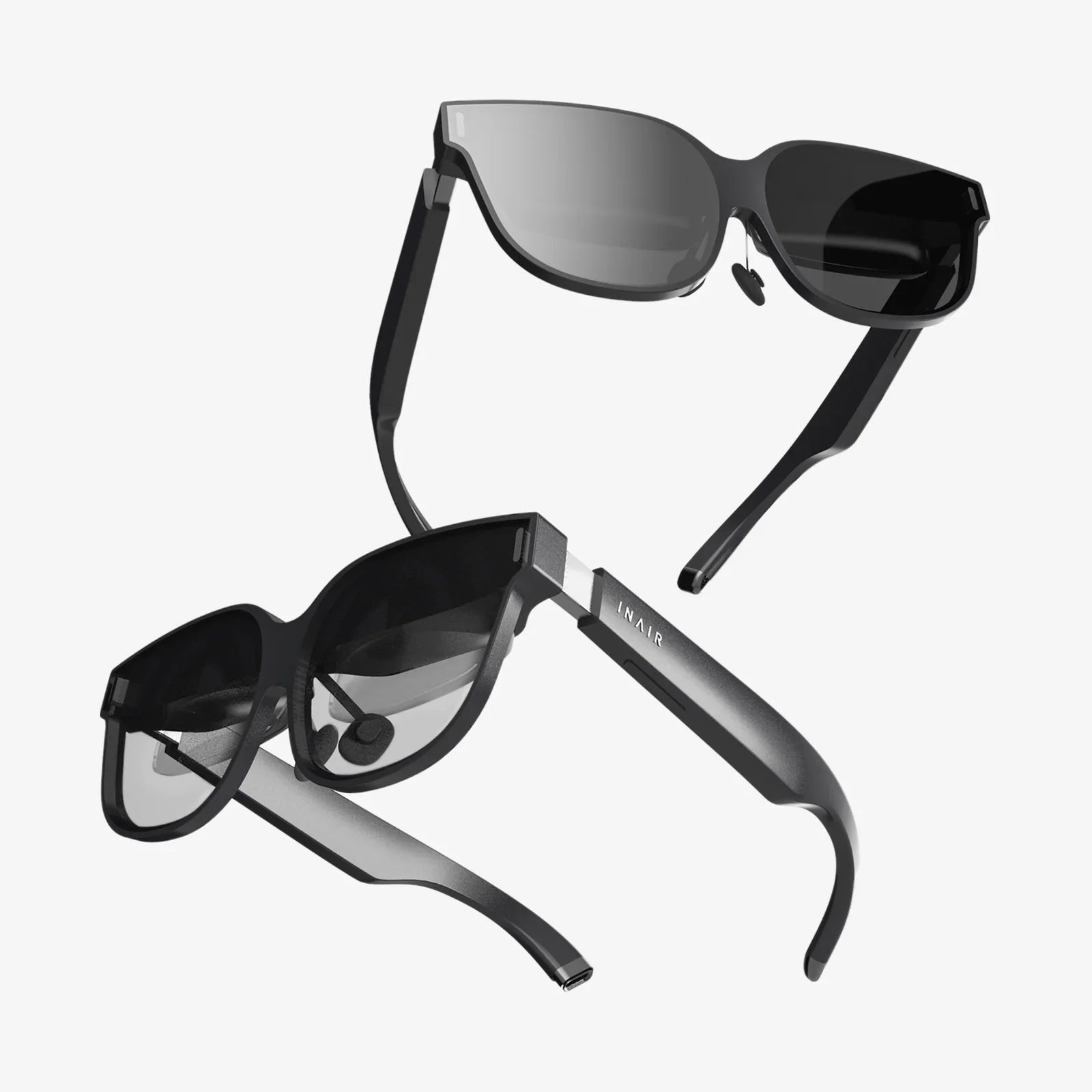
Imagine a world where information doesn’t reside on a slab of glass in your hand but floats seamlessly in your field of vision, where digital creations share your physical space with photorealistic fidelity, and your entire reality becomes a customizable interface. This is the transformative promise held within the tiny, intricate universe of a near eye display screen, a technology poised to fundamentally reshape our relationship with computing, information, and each other. It’s more than just a screen you wear; it’s a portal to a new layer of existence, and it’s closer than you think.
The Core Technology: More Than Meets the Eye
At its simplest, a near eye display (NED) is any display technology positioned extremely close to the viewer’s eye. However, the engineering marvel lies in how it convinces the brain to perceive a vast digital canvas despite its miniature physical size. This feat is achieved through a combination of advanced optics, precise eye-tracking, and cutting-edge micro-displays.
Optical Architectures: The Magic of Waveguides and Combiners
The heart of any NED system is its optical combiner. This component is responsible for merging the digital image generated by a micro-display with the user’s view of the real world. There are several competing approaches, each with its own advantages and trade-offs.
One prevalent method utilizes waveguide technology, often employing a diffraction optical element (DOE). Here, light from the micro-display is coupled into a thin, transparent piece of glass or plastic. This light is then "guided" through total internal reflection until it reaches an output area where another grating diffracts it outward, directly into the eye. The result is a sleek, lightweight form factor that can offer a large field of view without bulky optics.
Another approach uses free-space combiners with partially reflective mirrors. In this design, the micro-display is typically positioned above or to the side of the eye. The light it emits bounces off a curved mirror or a series of lenses before hitting a partially silvered combiner lens in front of the eye. This method can offer exceptional image quality and brightness but often at the cost of a larger, more obtrusive physical design.
Birdbath optics offer a compromise, using a beamsplitter to fold the optical path, allowing for a more compact design than free-space systems while often providing better color and contrast than some early waveguide solutions.
Micro-displays: Painting with Pixels Smaller Than a Grain of Sand
The image source for these systems is just as critical. Micro-displays are incredibly small, high-resolution screens, often measuring less than an inch diagonally. Several technologies dominate this space:
- Micro-OLED (Organic Light-Emitting Diode): These displays offer exceptional contrast ratios, true blacks, high resolution, and fast response times, making them ideal for high-end, immersive applications. They are emissive, meaning each pixel produces its own light.
- Micro-LED (Light-Emitting Diode): Seen as the holy grail for many, Micro-LEDs promise even greater brightness, higher efficiency, longer lifespan, and better contrast than Micro-OLEDs. Their manufacturing complexity currently makes them expensive, but they represent the future of the technology.
- Liquid Crystal on Silicon (LCoS): A reflective technology that uses a liquid crystal layer on top of a silicon backplane. It requires an external light source (an illuminator) but can be very power-efficient and is a mature, cost-effective technology for certain applications.
Resolving the Vergence-Accommodation Conflict
One of the most significant technical hurdles for NEDs is a physiological issue known as the vergence-accommodation conflict (VAC). In the real world, our eyes perform two actions in unison: they converge (point inward) to focus on a nearby object, and their lenses accommodate (change shape) to bring that object into sharp focus. In most current NEDs, the virtual image is projected at a fixed focal plane, typically a few meters away. Your eyes converge to see a virtual object up close, but they must still focus at the fixed distance, causing a sensory mismatch that can lead to eye strain, headaches, and a break in immersion.
Solving VAC is a primary focus of research. Advanced solutions are emerging, such as varifocal displays that dynamically adjust the focal plane using eye-tracking, and light field displays that project a field of light rays replicating how light behaves in the real world, allowing the eye to naturally accommodate. These innovations are crucial for achieving true visual comfort and long-term usability.
A Spectrum of Applications: Beyond Gaming and Novelty
While consumer entertainment is a massive driver, the implications of NED technology extend far beyond playing virtual games or watching immersive movies. It is a foundational tool that will augment human capability across numerous fields.
Enterprise and Industrial Revolution
The enterprise sector is poised to be an early and massive adopter. In complex manufacturing and assembly, technicians can have schematics, torque specifications, and animated instructions overlaid directly onto the machinery they are repairing, hands-free. This reduces errors, slashes training time, and improves safety. In logistics and warehousing, workers can see optimal picking routes and inventory data directly in their sight, dramatically increasing efficiency. Architects and engineers can walk through full-scale 3D models of their designs before a single foundation is poured, identifying issues and making collaborative changes in real-time.
Transforming Healthcare and Medicine
The potential in medicine is staggering. Surgeons can have vital signs, ultrasound data, or pre-operative scans projected into their view during an operation, eliminating the need to look away at a monitor. This can enhance precision and outcomes. Medical students can practice complex procedures on virtual anatomy, and first responders can receive remote, expert guidance from a specialist thousands of miles away, seeing annotations and instructions directly in their field of view.
Reimagining Communication and Social Connection
NEDs could evolve into the ultimate communication device. Imagine a video call where the other person appears as a life-sized, volumetric hologram sitting across from you at your table, making genuine eye contact and sharing your physical space. This sense of "telepresence" could bridge geographical gaps in a way flat screens never could, making remote collaboration and personal connection feel profoundly more human and natural.
The Future of Navigation and Everyday Life
On a more mundane but equally transformative level, imagine walking through a foreign city where translation subtitles appear naturally under street signs, restaurant reviews hover over eateries, and your navigation path is drawn directly onto the sidewalk in front of you. This contextual, ambient information layer will make interacting with the world more intuitive and informed.
The Human and Societal Implications: A Double-Edged Sword
With such a powerful technology comes immense responsibility. The widespread adoption of NEDs will not be without significant challenges and societal growing pains.
The Privacy Paradox
Devices that see what you see and hear what you hear raise monumental privacy concerns. Constant environmental recording, even for benign purposes like context-aware computing, creates a risk of pervasive surveillance, both by corporations and governments. The concept of "attention theft" could become literal, as interfaces compete for your visual real estate. Robust, transparent data policies, on-device processing, and clear user controls over data collection will be non-negotiable for public trust.
The Digital Divide and Accessibility
This technology risks creating a new, profound digital divide. Will access to this augmented layer of information and productivity become a prerequisite for success in certain jobs, exacerbating socioeconomic inequality? Conversely, NEDs also hold incredible promise for accessibility, offering new ways for people with different abilities to interact with the world through audio descriptions, visual enhancements, and translated sign language, but these features must be designed in from the start, not added as an afterthought.
Redefining Human Attention and Reality
Philosophers and psychologists are already pondering the long-term effects. If we can filter our reality—hiding unwanted advertisements, modifying how people appear, or even creating persistent virtual artifacts—what does that do to our shared sense of objective reality? The potential for addiction, social isolation, and a further decline in sustained attention is a real threat that must be addressed through thoughtful design and digital wellbeing features.
Gazing Into the Future: What Comes Next?
The journey of near eye display technology is just beginning. Current research is pushing toward retinal resolution displays where pixels are so small and dense the human eye cannot distinguish them, eliminating the "screen door effect." Advances in neural interfaces aim to move beyond physical screens altogether, potentially projecting information directly into the brain's visual cortex. The ultimate goal is a seamless, comfortable, and socially acceptable device that feels less like a piece of technology and more like a natural extension of our own perception.
The tiny world of the near eye display screen is a microcosm of a much larger technological and cultural shift. It represents the next great leap in the human-computer interface, moving us from looking at a device to looking through a device at an enriched world. The challenges are as vast as the opportunities, demanding careful consideration from engineers, ethicists, policymakers, and users alike. One thing is certain: the way we see our world is about to change forever, and the view through this new lens will be nothing short of revolutionary.
Share:
3D Model Artificial Intelligence: The Creative Revolution Reshaping Digital Realities
VR Bundle: Your Ultimate Guide to Entering the Virtual World