


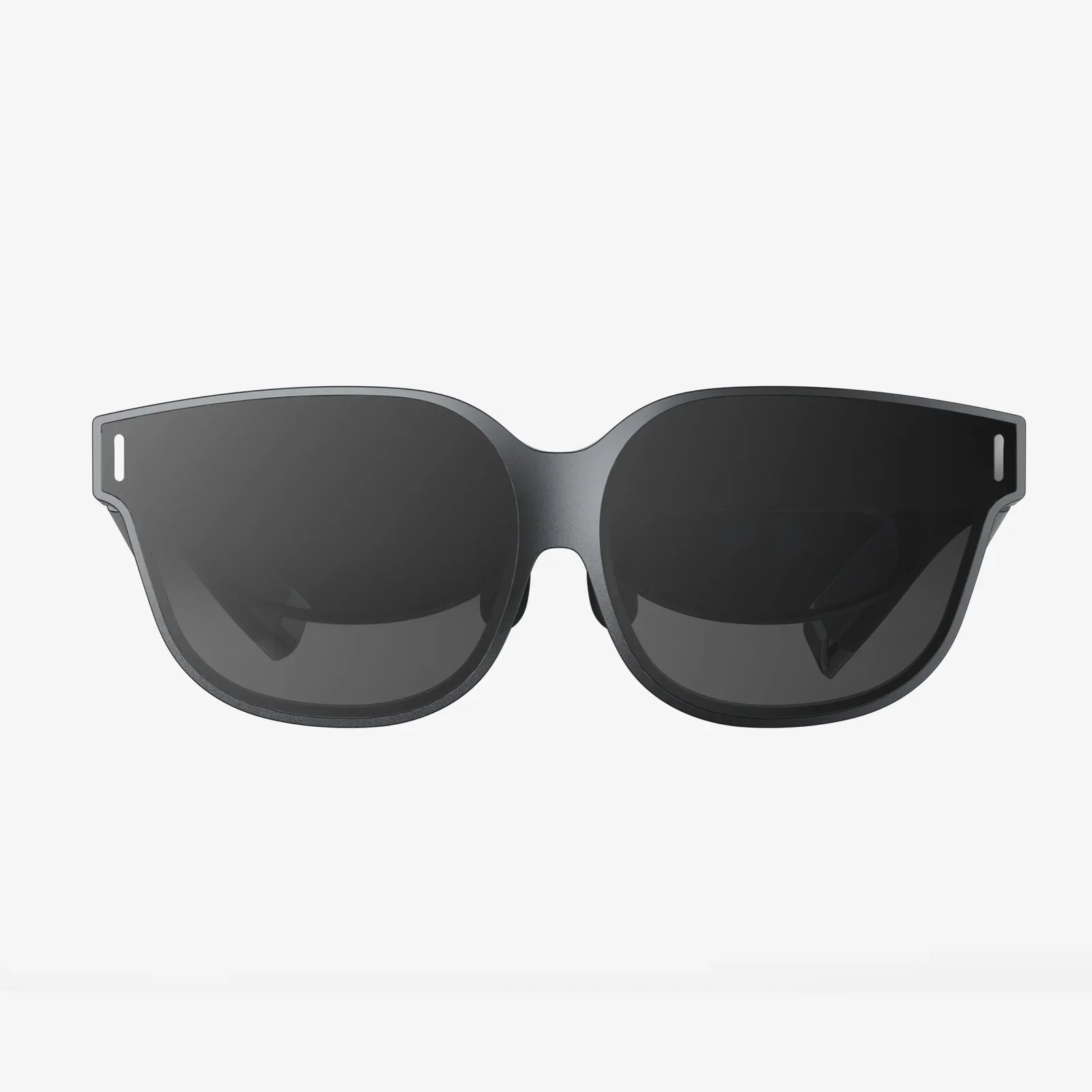
Imagine slipping on a pair of sleek, ordinary-looking glasses and instantly overlaying high-definition maps, real-time translations, and virtual colleagues onto your physical surroundings. Or envision a personal cinema the size of a coin, projecting a massive, immersive screen visible only to you. This isn't distant science fiction; it's the imminent future being built today, and at the heart of this revolution lies a piece of technology so small, so precise, that it often goes unnoticed: the near eye microdisplay. These miniature marvels are the invisible engines powering the next wave of visual computing, and their impact is poised to be nothing short of transformative.
The Core Technology: A World in a Grain of Sand
At its simplest, a near eye microdisplay is an ultra-compact, high-resolution display screen designed to be viewed extremely close to the human eye, typically through a series of optical elements like waveguides or lenses. Unlike holding a phone screen inches from your face, these systems use optics to project a virtual image that appears to be floating at a comfortable viewing distance, often many feet away and much larger than the physical display itself. The engineering challenge is immense: cramming millions of pixels into a space smaller than a postage stamp while managing extreme power efficiency, blinding speed, and minimal heat generation.
The Battle of the Technologies: LCD, OLEDoS, and MicroLED
The quest for the perfect microdisplay has led to several competing technological paths, each with its own strengths and trade-offs.
Liquid Crystal on Silicon (LCoS): A mature and refined technology, LCoS uses a liquid crystal layer applied on top of a reflective silicon wafer. Light from a separate high-intensity LED is shined onto this surface, and the liquid crystals manipulate the light on a per-pixel basis to create an image. The main advantages of LCoS are its exceptionally high resolution and excellent color fidelity. However, it requires that external LED light source, making systems potentially bulkier, and can suffer from "screen door effect" if the gaps between pixels are visible.
Organic Light Emitting Diode on Silicon (OLEDoS): This technology builds on the familiar OLED technology found in high-end smartphones and televaries. Here, microscopic OLED pixels are deposited directly onto a silicon CMOS chip. The key advantage is that each pixel is its own light source, eliminating the need for a separate backlight. This allows for perfect black levels, incredibly high contrast ratios (often cited as 1,000,000:1), and exceptionally fast response times, which is critical for avoiding motion blur. The historical challenges have been achieving the extreme brightness needed for outdoor AR use and mitigating potential burn-in over time, though advancements are rapidly overcoming these hurdles.
MicroLight Emitting Diode (MicroLED): Widely considered the holy grail for many display applications, MicroLED technology involves transferring millions of microscopic, inorganic light-emitting diodes to a substrate. It promises the best of all worlds: the per-pixel emission and perfect blacks of OLED, but with vastly higher potential brightness, superior power efficiency, and no risk of burn-in due to its inorganic nature. The formidable challenge is the mass transfer process—placing millions of these tiny LEDs with perfect yield is an astronomically complex and currently expensive endeavor. Its development is being watched closely as the potential successor for the most demanding applications.
Beyond the Screen: The Critical Role of Optics
A microdisplay is useless without a sophisticated optical system to make it viewable. This is where the magic of creating a virtual image happens. The most common solutions are:
- Birdbath Optics: A compact design that uses a beamsplitter and a spherical mirror to fold the light path, projecting the image from the display into the user's eye. It's relatively cost-effective but can be bulkier than other solutions.
- Waveguides: The technology favored for sleek, glasses-like AR devices. Waveguides are transparent glass or plastic substrates with nanoscale gratings etched into them. Light from the microdisplay is "coupled" into the glass, travels along it via total internal reflection, and is then "decoupled" out towards the eye. This allows the display engine to be tucked away in the temple of the glasses, leaving the lens clear. Diffractive, holographic, and reflective waveguides each represent different approaches to solving this complex light-guiding puzzle.
- Free-Space Combiners: Used in some specialized head-up displays (HUDs) and older designs, these systems use a series of lenses and often a semi-transparent combiner to reflect the image. They offer excellent image quality and a large field of view but often result in a less compact form factor.
A Universe of Applications: From Medicine to the Battlefield
The applications for near eye microdisplays extend far beyond consumer entertainment, penetrating deep into professional, industrial, and medical fields.
Augmented Reality (AR) and Mixed Reality (MR)
This is the flagship application. AR/MR headsets aim to seamlessly blend digital content with the real world. For this to work, the microdisplay must be:
- Bright enough to be visible in broad daylight.
- High-resolution to render sharp text and realistic graphics.
- High-contrast to ensure digital objects are opaque and vibrant against any background.
- Fast to keep the virtual imagery locked in place within a moving real world.
In these systems, users can see schematics overlaid on machinery they are repairing, receive navigation cues painted onto the street, or collaborate with 3D holograms of colleagues.
Virtual Reality (VR)
While VR headsets fully immerse the user in a digital environment, the demand on the display is different but no less intense. The key here is a massive field of view (FoV) and breathtaking resolution to eliminate the "screen door effect" and create a truly believable world. This often requires two microdisplays, one for each eye, pushing the limits of pixel density. Low persistence—the ability to flash a image frame and then go black—is also critical to prevent motion sickness.
Electronic Viewfinders (EVFs)
High-end digital cameras have long used small, high-resolution microdisplays in their electronic viewfinders. They allow photographers to preview exposure, white balance, and depth of field in real-time before taking a shot. The requirement is extreme resolution and color accuracy.
Military and Aerospace
Helmet-mounted displays (HMDs) for pilots and soldiers were among the earliest adopters of this technology. They provide critical flight data, targeting information, and night vision capabilities directly in the user's line of sight, allowing them to maintain situational awareness without looking down at instruments.
Medical Technology
Surgeons are using heads-up displays in operating rooms to view patient vital signs, ultrasound data, or pre-operative scans without turning away from the surgical field. This has the potential to make complex procedures safer and more efficient. Furthermore, these displays are being integrated into surgical microscopes and endoscopes, providing enhanced visualization during minimally invasive surgery.
The Future: Where Do We Go From Here?
The trajectory of near eye microdisplay technology is focused on overcoming the remaining barriers to ubiquitous adoption. The key areas of development are:
- Increased Resolution and Field of View: The race is on to achieve "retinal" resolution—pixel density so high the human eye cannot distinguish individual pixels—across a wide, immersive field of view. This will require pushing into 4K and 8K per eye.
- Brighter and More Efficient: For outdoor AR, displays need to be significantly brighter than they are today while sipping power to ensure all-day battery life. This will involve improvements in LED efficiency, optical systems, and low-power display drivers.
- Smaller and Lighter Form Factors: The end goal is a device indistinguishable from standard eyewear. This demands further miniaturization of the display engine, the batteries, and the computing components that support it.
- Cost Reduction: Widespread consumer adoption hinges on bringing the cost down. Advancements in manufacturing, particularly for MicroLED, are essential to achieve this.
Challenges and Considerations
The path forward is not without its obstacles. Beyond the technical hurdles, there are human factors to consider. Vergence-Accommodation Conflict (VAC) is a phenomenon in VR/AR where the eyes focus on a fixed plane (the display) while converging to perceive depth in a 3D scene. This mismatch can cause eye strain and discomfort for some users. Solving this requires advanced varifocal or light field displays that can dynamically adjust the focal plane. Furthermore, societal questions around privacy, data security, and the long-term effects of persistently overlaying digital information on our perception of reality will need to be addressed as the technology becomes more pervasive.
The tiny world of near eye microdisplays is a perfect example of how the most profound technological revolutions often come in the smallest packages. They are the critical gatekeepers between the vast digital worlds we are creating and our most fundamental human sense: sight. As they continue to evolve, becoming brighter, sharper, and more efficient, they will dissolve the final barriers between the digital and the physical, unlocking possibilities we are only beginning to imagine. The next time you see someone seemingly talking to the air or gesturing at nothing, look closer—they might be peering into a future built on a screen smaller than your fingernail.
Share:
Watches AR: The Future of Horology is on Your Wrist and In Your World
Near to Eye Display: The Invisible Revolution Reshaping Our Digital World