


- by wangfred
Near to Eye Display: The Invisible Revolution Reshaping Our Digital World
- by wangfred
Imagine a world where your entire digital existence—your emails, your entertainment, your virtual workspace—is projected seamlessly onto your field of vision, accessible with a glance and controllable with a thought. This isn't the distant future; it's the burgeoning reality being built today through the rapid advancement of Near to Eye Display (NED) technology, an invisible revolution quietly preparing to eclipse every screen you've ever known.
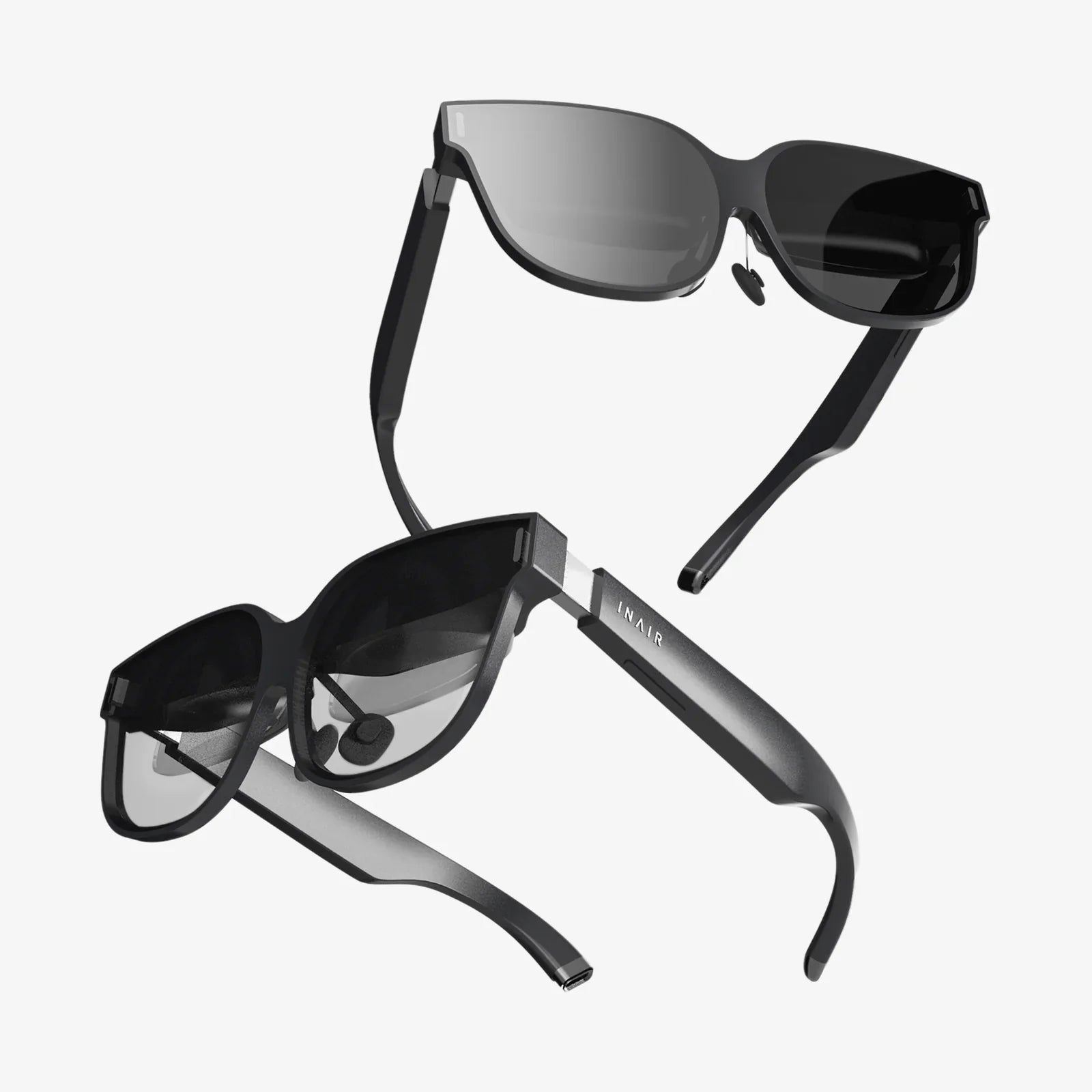
At its most fundamental level, a Near to Eye Display is any technology that projects visual information directly into the user's eye, effectively creating a personal, high-resolution screen that appears to float in space. Unlike traditional screens—be it a smartphone, monitor, or television—which are external objects we look at, NEDs are designed to be looked through, superimposing digital imagery onto the user's view of the real world or creating entirely immersive virtual environments.
The core components of most NED systems include a micro-display, an optical combiner, and a series of sophisticated lenses. The micro-display, often based on technologies like Liquid Crystal on Silicon (LCoS), Organic Light-Emitting Diodes (OLEDoS), or Micro-LED, generates the initial image. This image is then magnified and shaped by the optics. The true genius lies in the optical combiner, which merges the path of the digital light from the micro-display with the path of the natural light from the real world. This is the pivotal element that enables either Augmented Reality (AR), where digital content enhances reality, or Virtual Reality (VR), where reality is completely replaced.
NED technology is not a monolith; it serves two primary, distinct paradigms: Optical See-Through and Video See-Through, which correspond roughly to AR and VR experiences.
OST systems are the hallmark of pure AR. They utilize partially reflective optical elements, like waveguides or beam splitters, which are transparent enough to allow the user to see the physical world directly with their own eyes. Simultaneously, these elements reflect the projected digital imagery into the eye. The result is a direct, real-time view of one's surroundings, annotated and enhanced with stable, persistent digital objects. The latency and alignment challenges are significant here, as any delay or misregistration between the digital and physical can break the illusion and cause user discomfort.
VST systems take a different approach. They use outward-facing cameras to capture a live video feed of the real world. This video is then combined with computer-generated imagery on a traditional, non-see-through micro-display before being presented to the user's eyes. This method offers greater control over the blend between real and virtual, allowing for more radical alterations of reality—a concept often called Mixed Reality (MR) or Mediated Reality. However, it introduces a critical challenge: motion-to-photon latency. The time between the camera capturing the world and the combined image reaching the eye must be incredibly low (typically under 20 milliseconds) to avoid simulator sickness and maintain a sense of presence.
While consumer entertainment is a powerful driver, the transformative potential of NEDs extends far beyond immersive games and virtual social spaces.
In complex professions, NEDs are becoming indispensable tools. Surgeons can overlay patient vitals, 3D anatomical models, or guidance data directly onto their field of view during procedures, keeping their focus on the patient instead of a distant monitor. Field engineers and maintenance technicians can access interactive schematics, receive remote expert guidance visualized directly onto the machinery they are fixing, and follow step-by-step instructions hands-free, drastically improving efficiency and reducing errors on the job site.
The educational implications are profound. Medical students can practice virtual dissections on detailed holograms. History students can walk through ancient Rome reconstructed before their eyes. Mechanics-in-training can learn the intricacies of an engine by taking apart and reassembling a virtual, interactive model. This learning-by-doing in a risk-free, virtual environment enhances retention and understanding in ways textbooks never could.
NED technology promises the ultimate form of personal computing: the spatial computer. Imagine replacing your desktop's multiple monitors with virtual screens of any size, positioned anywhere in your environment. Video calls could evolve into holographic conversations where participants feel present in the same room. Navigation could shift from glancing at a phone to following floating arrows overlaid on the street, fundamentally changing how we interact with both information and each other.
For NEDs to move from niche devices to mainstream adoption, several formidable technical and human factor challenges must be overcome.
The holy grail of NED design is achieving a wide Field of View (FoV) with high resolution in a small, lightweight, and socially acceptable form factor. These three elements exist in a constant state of tension. A wide FoV is crucial for immersion, but stretching pixels across a larger area can reduce effective resolution if the display source isn't incredibly dense. High-resolution micro-displays are power-hungry and generate heat. And cramming all the necessary optics into a package that resembles everyday eyewear remains a monumental engineering challenge, often referred to as the "form factor barrier."
Perhaps the most significant physiological hurdle is the Vergence-Accommodation Conflict (VAC). In the real world, our eyes converge (point inward) and accommodate (focus) in tandem based on an object's distance. Most current NEDs fix the focal plane, meaning the digital image is always at a set distance. Your eyes must converge to perceive the 3D depth of an object but remain accommodated to the fixed focal plane. This sensory mismatch is a primary cause of eye strain, headaches, and visual fatigue, limiting comfortable usage time. Solving VAC through technologies like varifocal or light field displays is critical for long-term adoption.
Rendering complex 3D graphics, tracking head and eye movements with extreme precision, and processing world-understanding data from sensors are computationally intensive tasks. Doing this within the power and thermal constraints of a wearable device is a relentless battle. Breakthroughs in low-power display technologies, efficient rendering techniques like foveated rendering (which leverages eye-tracking to render only the center of vision in high detail), and specialized processing units are essential to creating all-day devices.
The trajectory of NED technology points toward a future of increasingly seamless and intuitive integration with our lives. We are moving toward solutions that are socially acceptable, perhaps even fashionable, moving from bulky headsets to sleek glasses. The user interface will evolve from handheld controllers to gesture control, voice commands, and ultimately, neural interfaces reading subtle intent directly from the brain. The line between the digital and the physical will blur to the point of irrelevance, giving rise to a new paradigm of ambient computing where information is contextually available but never obtrusive.
The ultimate endpoint may be the complete bypassing of traditional displays. Research into direct retinal projection, while in early stages, imagines drawing images directly onto the retina with controlled lasers. Even more futuristic are concepts for synaptic interfaces that could inject visual information directly into the brain's visual cortex, potentially offering new forms of sight for the blind and a truly direct connection to the digital realm. While these frontiers are distant, they underscore the transformative potential of controlling the very light that enters our eyes.
This isn't just about a new gadget; it's about rearchitecting the fundamental bridge between human perception and the vast universe of digital information. The screen, as we know it, is living on borrowed time, and the next epoch of human-computer interaction will be written not on glass, but directly onto our retinas, forever changing how we work, learn, connect, and see the world itself.
Share:
Near Eye Microdisplay The Invisible Engine Powering Our Visual Future
Common Digital Products: The Unseen Architecture of Modern Life