


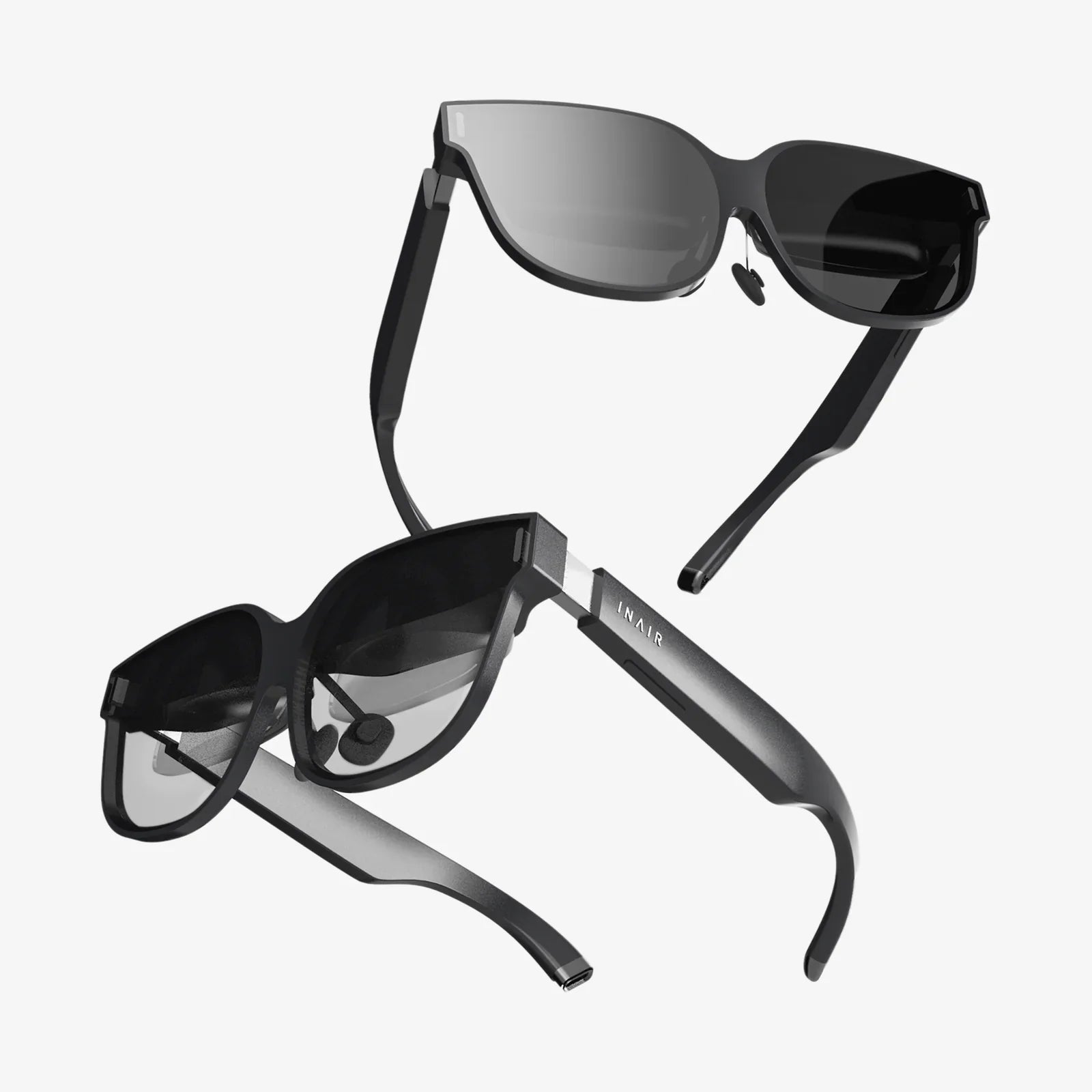
Imagine a world where information flows as effortlessly as light, where the digital realm is no longer confined to a screen in your hand but is seamlessly woven into the very fabric of your perception. This is the promise, the tantalizing future, held within the sleek frames of new AI sunglasses. They are not merely an accessory; they are a portal, a sophisticated wearable computer designed to augment your reality, empower your decisions, and fundamentally transform how you navigate both the digital and physical worlds. This isn't science fiction; it's the next evolutionary step in personal technology, and it's arriving on the faces of early adopters right now.
The Convergence of Form and Function: Beyond Traditional Eyewear
At first glance, these devices might be mistaken for a high-end pair of conventional sunglasses. Their design ethos prioritizes aesthetics, ensuring they are objects of desire rather than clunky, obvious pieces of tech. But hidden within those polished arms and perched on those elegant bridges is a concentration of cutting-edge innovation. Miniaturized speakers direct sound precisely into the wearer's ears without disturbing those nearby. Bone conduction technology offers an alternative, transmitting audio through the skull for private listening. The lenses themselves are a marvel; they can dynamically adjust their tint in milliseconds based on ambient light conditions, transitioning from clear to darkly tinted and back again, eliminating the need to constantly switch between regular glasses and sunwear.
However, the true magic lies in the integrated sensors and chips. Tiny, high-resolution cameras act as the eyes of the AI, continuously capturing the world from the user's perspective. Microphones arrayed around the frame listen for voice commands and filter out background noise. Inertial measurement units (IMUs) track head movement and orientation with incredible precision. All this data streams into a dedicated processing unit, a powerful system-on-a-chip (SoC) that runs complex machine learning models locally, ensuring that responses are instantaneous and that the most sensitive data never needs to leave the device.
The Intelligent Assistant: A Companion in Your Periphery
The core of this technology is the artificial intelligence that powers it. This is a leap far beyond the voice assistants we have on our phones and smart speakers. This is a contextual, ambient, and proactive AI. Instead of requiring a specific wake word, it can be always listening for a low-energy keyword or can be activated by a subtle tap on the frame. Its capabilities are designed to be hands-free and eyes-up, keeping you engaged with your environment.
Imagine walking through a foreign city. You look at a restaurant, and a small, unobtrusive overlay in your vision displays its star rating and popular dishes, translated from the menu posted outside. You glance at a historical monument, and the AI provides a brief, informative summary of its significance. This real-time visual recognition and information overlay is a cornerstone function. It can identify plants, translate street signs instantly, or even provide technical specs for a car you see driving by.
The auditory intelligence is equally profound. It can transcribe conversations in real-time, a boon for interviews or remembering complex instructions. For language learning, it can subtly whisper translations of a conversation you're having, allowing for more natural practice. It can also listen to a lecture or meeting and generate a concise summary or action items afterward, acting as a perfect personal secretary.
Revolutionizing Productivity and Connectivity
The implications for professional and personal productivity are staggering. For field technicians, architects, or engineers, complex schematics and manuals can be projected into their field of view, allowing them to work hands-free while comparing the digital blueprint to the physical reality in front of them. A chef could follow a recipe without ever looking away from their mise en place. The device becomes a silent partner in any task that benefits from augmented information.
Connectivity is redefined. Notifications are no longer interruptions that force you to look down at a phone; they become ambient alerts. An important message might be read aloud quietly in your ear, or a calendar reminder for your next meeting might float subtly in the corner of your vision. You can take calls with crystal clarity, your voice isolated from wind or street noise. The boundary between being connected and being present becomes beautifully blurred, as you can engage with your digital life without disengaging from the people and world around you.
Navigating the Ethical Minefield: Privacy and Data Security
This unprecedented capability to capture the world from a first-person perspective inevitably raises profound questions about privacy and security. The very feature that makes these glasses powerful—their constant, passive observation—is also their greatest point of contention. The potential for ubiquitous surveillance, either by individuals, corporations, or governments, is a legitimate and serious concern.
Manufacturers address this with a multi-faceted approach. Firstly, robust privacy-by-design principles are paramount. This includes clear physical indicators like LED lights that signal when recording is active, ensuring those nearby are aware. Secondly, a strong emphasis on on-device processing is critical. Rather than streaming video footage to the cloud, the AI processes the visual and auditory data locally on the device itself. Only the necessary conclusions—the translated text, the identified object—are used, while the raw video data is immediately discarded. This minimizes the risk of mass data collection and storage.
Furthermore, user control must be absolute. Granular privacy settings allow users to disable cameras and microphones completely, to set geofenced areas where recording is automatically prohibited (e.g., in a home or office), and to easily manage and delete their data. The development and adoption of this technology must be accompanied by a vigorous public discourse and potentially new legal frameworks to protect individual privacy without stifling innovation.
The Future of Social Interaction and the Metaverse
The social impact of always-on, augmented eyewear will be complex. Will it enhance our interactions or further isolate us behind a layer of technology? The answer likely depends on its implementation. On one hand, it could lead to new forms of anti-social behavior, like secretly recording arguments or ignoring people in favor of digital content. On the other hand, it could foster deeper connection. Imagine using them to get real-time feedback on a presentation based on the audience's engagement or having subtitles for a friend who speaks a different language, making communication more inclusive.
These devices are also the missing link for a true, pervasive metaverse. Unlike virtual reality headsets that completely replace your vision, AI sunglasses augment it. They allow for digital artifacts and characters to be placed convincingly in the real world. This enables a hybrid existence where virtual board meetings happen around your physical desk and digital art is displayed on your empty walls. They become the primary interface for the spatial web, transforming our entire environment into an interactive canvas.
Challenges and the Road Ahead
Despite the exciting potential, significant hurdles remain. Battery life is a constant challenge for all wearable technology. Powering multiple cameras, microphones, a display, and a powerful processor demands innovative power management and energy-dense batteries to ensure all-day usability. The user interface itself is another frontier. While voice control is central, new modes of interaction are being explored, from subtle gesture recognition on the frame to predictive AI that anticipates needs without explicit commands.
Perhaps the biggest challenge is social acceptance. For this technology to move from early adopters to the mainstream, it must overcome the "glasshole" stigma associated with earlier, clumsier attempts at camera glasses. This requires not only elegant design but also a demonstrable and respectful value proposition that clearly benefits not just the wearer, but society as a whole, with ironclad privacy protections built in from the start.
The journey of new AI sunglasses is just beginning. We are at the very dawn of this technology. The current generation offers a glimpse of the future, but subsequent iterations will become lighter, more powerful, more energy-efficient, and more socially integrated. They will learn our habits, predict our needs, and become an indispensable extension of our own cognition.
The line between human and machine, between the physical and the digital, is about to get a lot more interesting. These aren't just glasses; they are the lens through which we will redefine reality itself, offering a glimpse into a future where our tools don't distract us from the world, but help us see it, understand it, and engage with it more deeply than ever before. The next time you put on a pair of sunglasses, consider what it might be like if they could not only protect your eyes from the sun but also open your mind to a universe of invisible information.
Share:
VR Headset Options: Your Ultimate Guide to Navigating the Virtual Frontier
VR Headset 2026: The Unseen Revolution Reshaping Our Reality