


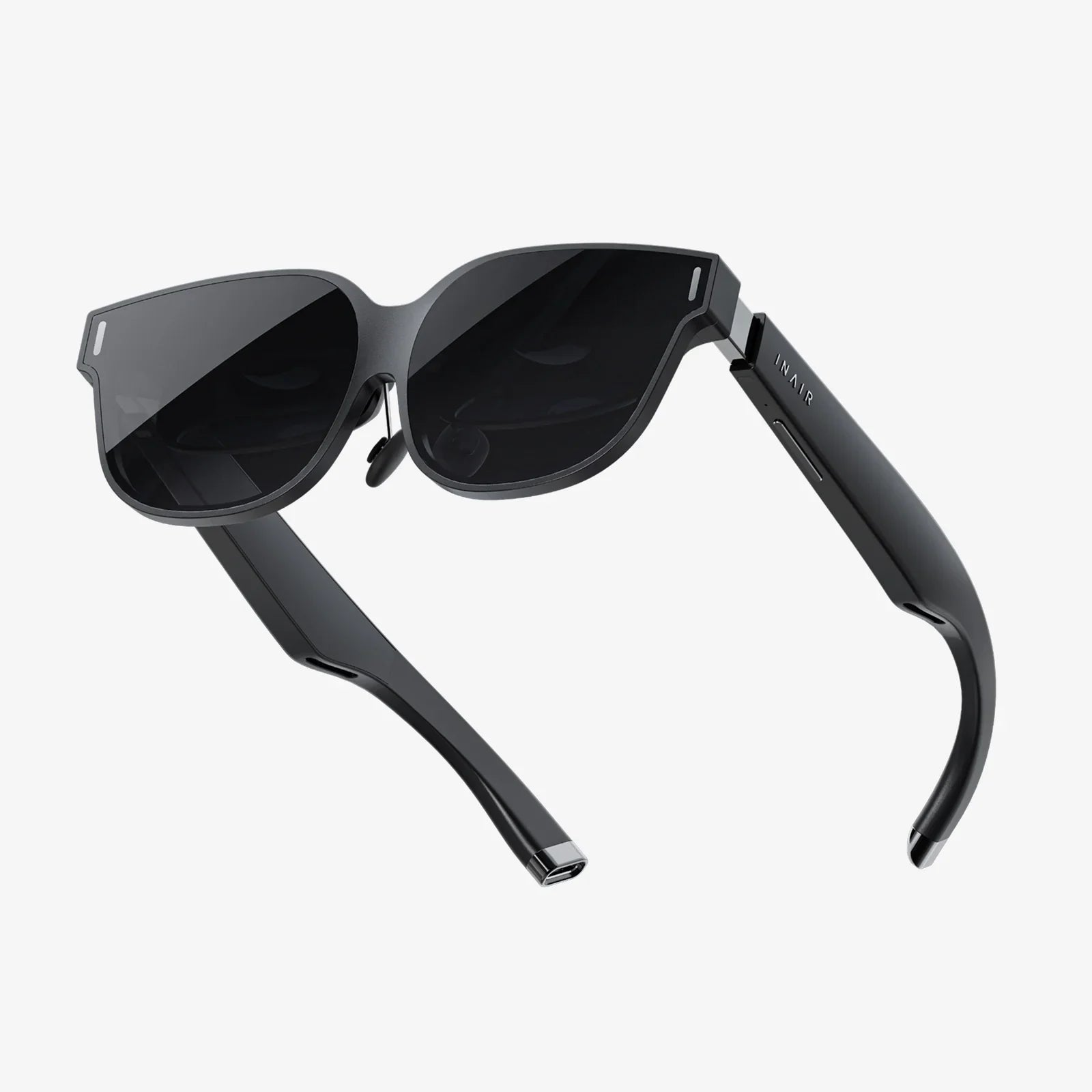
Imagine a device not on your face, but as part of your perception, a seamless gateway to any reality you can conceive. This isn't a distant sci-fi fantasy; it's the palpable future being built today, and its arrival is set for 2026. The very term 'VR headset' is on the verge of becoming a relic, destined to be replaced by 'visual compute units,' 'reality interfaces,' or something we haven't even coined yet. The next two years will culminate in a technological leap that will fundamentally alter how we work, connect, learn, and play. We are standing at the precipice of the next great platform shift, and it will change everything.
The End of the Screen: Photorealistic Resolution and Varifocal Displays
By 2026, the defining complaint of current-generation devices—the dreaded 'screen door effect'—will be a forgotten memory of a primitive past. We are rapidly approaching the era of visual perfection within simulated environments. Headsets will feature micro-OLED and advanced mini-LED displays pushing resolutions exceeding 4K per eye, with pixel densities so high the human eye can no longer distinguish individual pixels. This leap towards photorealistic clarity is not just about more pixels; it's about smarter pixels.
The true breakthrough, however, lies in the widespread adoption of varifocal displays. Current VR forces your eyes to focus on a fixed plane, causing a dissonance with your depth perception that leads to visual fatigue and the infamous 'VR headache.' The 2026 generation will solve this. Using advanced eye-tracking and micro-mechanical systems, these displays will dynamically adjust the focal distance of the virtual imagery in real-time, matching where your eyes are naturally trying to focus. When you look at a virtual object inches from your face, the display focuses for near-sight; when you gaze at a mountain on the horizon, it adjusts to infinity. This mimicry of natural human vision is the final piece of the puzzle for true visual immersion, eliminating discomfort and allowing for prolonged, natural-feeling use.
Beyond Controllers: The Rise of Biometric Integration and Neural Inputs
The clunky motion controllers of today are merely a stepping stone. The 2026 interface paradigm is moving towards a more intimate, seamless, and ultimately more powerful form of interaction: direct biometric integration. Headsets will be equipped with a sophisticated array of sensors capable of reading the user's physiological state.
Imagine a fitness application that not only tracks your movement but monitors your heart rate variability, blood oxygen levels, and core temperature from your face, providing unparalleled feedback on your workout intensity and recovery. Envision a meditation app that guides your breathing by literally measuring your respiratory rate and galvanic skin response, adapting the experience in real-time to your level of stress. This biometric layer transforms the headset from a simple display into a comprehensive health and wellness platform.
Furthermore, we are seeing the first commercial steps into neuromotor input. Prototype systems already exist that can detect faint electrical signals from the user's facial muscles and neurons—intentions to move a finger or smile, captured by sensors resting on the skin. By 2026, this technology will mature into a standard feature. Subtle eyebrow raises, lip twitches, or even the intention to grip a virtual object could be executed without a physical controller. This allows for incredibly nuanced social interactions in virtual spaces, where your digital avatar can perfectly mirror your subtle expressions, and for silent, thought-initiated commands, making complex tasks in productivity software as simple as a flicker of intention.
The Feel of the Virtual: Hyper-Realistic Haptic Feedback and Wearables
Visual and auditory immersion is only part of the story. For the virtual world to feel truly tangible, we must be able to touch it. The year 2026 will see haptic technology evolve from simple controller rumble to a full-body, nuanced sensory experience. This will be achieved through a combination of advanced wearable technology and groundbreaking in-headset systems.
Haptic gloves will become lightweight, comfortable, and consumer-ready. Using a combination of ultrasonic vibrations, force feedback mechanisms, and micro-fluidic systems, these gloves will simulate the texture, weight, resistance, and even the temperature of virtual objects. The sensation of shaking a person's hand, feeling the rough bark of a tree, or the recoil of a virtual tool will be convincingly real.
Simultaneously, the headsets themselves will integrate new forms of audio-haptics. Using advanced bone conduction and directed audio speakers, they will generate precise, localized vibrations directly through the headset's frame. A virtual bee could buzz past your ear, and you would hear and feel it Doppler away. A raindrop in the virtual world could land on your digital head with a corresponding tactile tap on your physical scalp. This multi-sensory layering is critical for selling the brain on the illusion of presence, making the virtual environment not just something you see, but something you feel you are physically inside of.
The Invisible Computer: On-Device AI and The Spatial Computing Operating System
The most significant shift by 2026 might be what you don't see: the computer. The tethers and external processing boxes are disappearing. The entire computational powerhouse is being baked directly into the headset itself, thanks to exponentially more efficient chipsets designed specifically for the parallel processing demands of VR. This independence is the key to true mobility and freedom.
Orchestrating this hardware will be the world's first true Spatial Computing Operating System (OS). Unlike today's VR software layers, which are often bolted onto modified mobile or desktop OSes, the 2026 Spatial OS will be built from the ground up to understand and interact with the user's physical space. It will feature persistent, room-aware digital objects that stay where you leave them. It will understand the geometry of your room, allowing virtual characters to sit on your real couch or hide behind your actual desk.
Powering this OS will be a dedicated, low-power on-device AI co-processor. This AI will handle everything from predictive rendering—anticipating where you will look to save processing power—to real-time world understanding, continuously scanning and updating a 3D map of your environment. It will serve as a personal assistant, contextually aware of your tasks, your surroundings, and your digital assets, making the entire experience intuitive and magical. This shift marks the transition from VR as an application you open to VR as a persistent layer integrated into your reality.
A World of Context: Advanced Passthrough and The Blurring of Realities
The ultimate goal is not to escape reality, but to augment and enhance it. This is why high-fidelity, full-color, low-latency video passthrough will be a standard, always-available feature in 2026 headsets. But it will go far beyond a simple video feed. The onboard AI and sensors will actively analyze the passthrough view, overlaying it with rich contextual information and interactive digital elements.
You'll look at your refrigerator and see a digital grocery list pinned to it, populated by an AI that knows what's inside. A complex piece of equipment you're learning to repair will have animated digital arrows and instructions overlaid directly onto its physical components. During a video call, colleagues from across the globe will appear as life-like holograms sitting in your living room, able to manipulate shared 3D models on your coffee table. This seamless blending of the real and the virtual, known as Mixed Reality (MR), will become the primary mode of use, making the technology valuable and practical for huge swathes of daily life, from industrial design and remote collaboration to interactive education and home navigation.
The New Social Fabric: Persistent Worlds and Embodied Avatars
The social experience will be transformed. Current social platforms are largely experienced through a flat screen. The 2026 vision is for shared, persistent virtual worlds that feel like physical places. These will not be gamified environments, but digital extensions of our cities and communities—virtual concert halls, libraries, meeting spaces, and parks that exist 24/7 and can be accessed from anywhere in the world.
The key to presence in these spaces will be the fidelity of our digital selves. Avatars will move beyond cartoonish representations. Driven by the advanced biometric and neural input systems, they will be photorealistic or stylized in a way that perfectly captures our full range of expression, from a sarcastic smirk to a subtle glance. This embodied communication—the ability to convey meaning through body language and eye contact—is the bedrock of human connection. By capturing and transmitting it perfectly, these headsets will enable a form of remote interaction that feels profoundly more human and authentic than any video call, fostering a sense of togetherness that today's internet simply cannot provide.
Navigating the New Frontier: Ethical and Societal Considerations
With such profound power comes immense responsibility. The development path towards the 2026 headset is fraught with ethical challenges that must be addressed proactively. The biometric and neural data these devices collect is arguably the most personal information imaginable. Robust, transparent, and user-centric data governance frameworks must be established to prevent misuse and ensure this data is used to empower the user, not exploit them.
Furthermore, the potential for addiction and reality-blurring is significant. As these simulated worlds become more compelling than our own, we must foster digital literacy and develop tools that allow users to maintain a healthy balance. Accessibility must also be a core tenet of design, ensuring these powerful new tools for connection and creation are available to people with a wide range of physical abilities, preventing the creation of a new digital divide.
This isn't just about better games or more immersive movies. It's about a fundamental shift in the human-machine interface. The VR headset of 2026 is the key that unlocks the next layer of reality, a tool for creation, connection, and exploration on a scale we are only beginning to imagine. The door is opening. What will you build on the other side?
Share:
New AI Sunglasses: The Dawn of a Seamless Augmented Reality
Extended Reality Use Cases Are Transforming Industries and Redefining Human Experience