


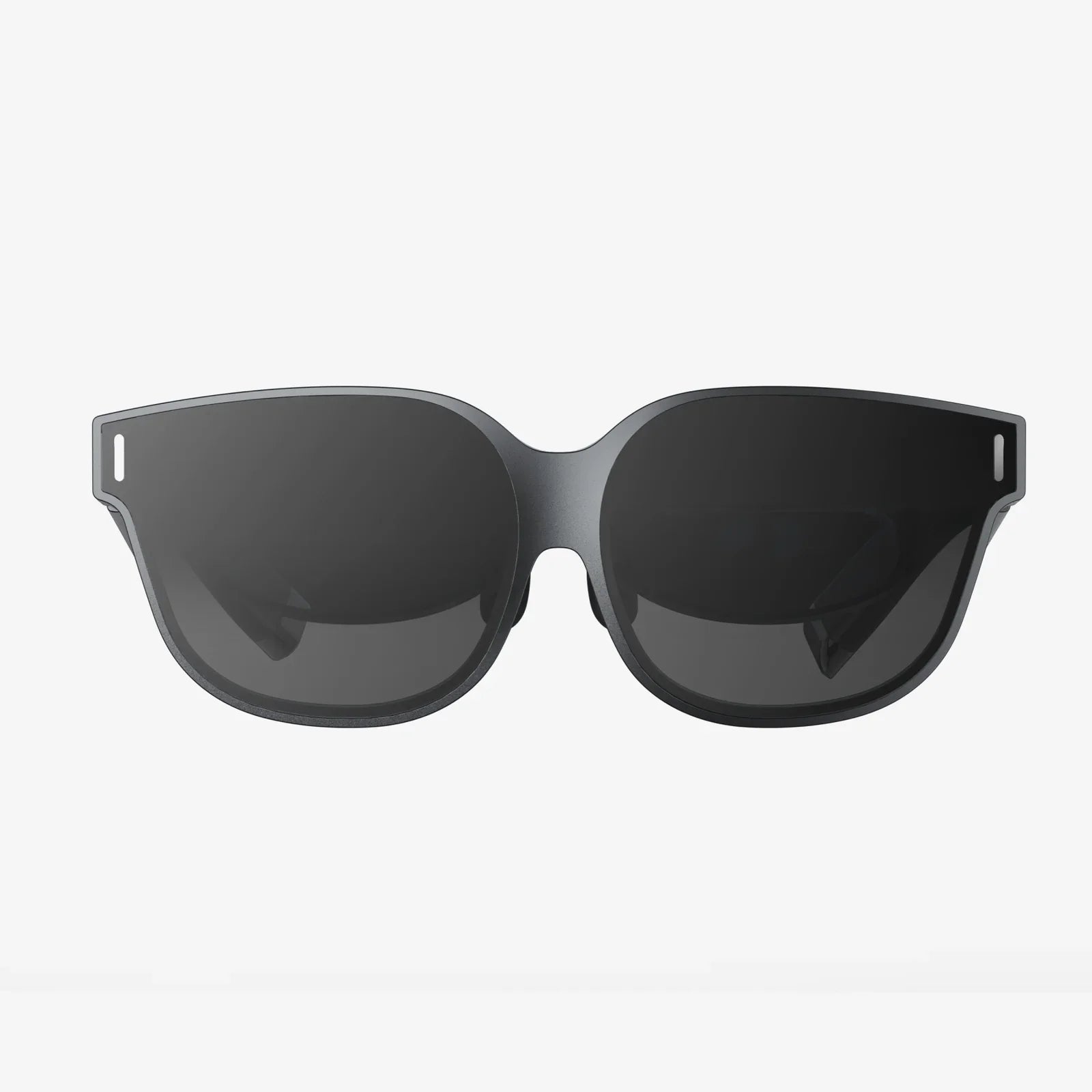
Imagine a world where the digital and the physical are no longer separate realms, but a single, seamless tapestry of experience. This is the promise held within a sleek, unassuming pair of new virtual glasses—a device poised to leap from the pages of science fiction and onto the faces of millions, forever altering the landscape of human-computer interaction. This isn't just another incremental tech update; it's a fundamental shift in how we will work, play, connect, and perceive the world around us. The era of spatial computing is dawning, and it’s being ushered in by these remarkable spectacles.
Beyond the Hype: What Exactly Are New Virtual Glasses?
To understand the revolution, we must first move beyond the jargon. New virtual glasses are not merely a iteration of previous head-mounted displays. They represent a convergence of several groundbreaking technologies into a single, wearable form factor. At their core, they are a sophisticated blend of advanced optics, high-fidelity sensors, powerful on-device processing, and intuitive user interfaces.
The key differentiator lies in their approach to reality. Unlike fully immersive headsets that transport you to a completely digital environment, these glasses primarily augment your existing reality. They overlay digital information—text, images, 3D models, and interfaces—onto the physical world you see through the lenses. This is achieved through a combination of micro-OLED or Laser Beam Scanning displays that project imagery directly onto specially engineered lenses, which then reflect this light into your eyes. The result is photorealistic holograms that appear to coexist with your coffee table, your office wall, or the park across the street.
The Technological Symphony Inside the Frame
The magic of these devices is orchestrated by a symphony of components working in perfect harmony.
Spatial Mapping and Computer Vision
A constellation of outward-facing cameras and LiDAR (Light Detection and Ranging) scanners constantly captures the environment. This data is processed in real-time to create a precise digital map of the room, understanding the geometry of surfaces, the position of objects, and even recognizing people and their gestures. This spatial awareness is the bedrock upon which stable digital overlays are built, ensuring a virtual vase doesn't jitter on a real table.
Eye Tracking and Foveated Rendering
Integrated infrared sensors meticulously track the user's pupils, determining exactly where they are looking. This serves two critical purposes. First, it enables intuitive control; simply looking at an icon can select it. Second, and more importantly, it powers foveated rendering. This technique mimics the human eye by rendering the center of your gaze (the fovea) in ultra-high resolution while subtly reducing the detail in your peripheral vision. This dramatically reduces the computational load and power consumption, making it possible to achieve stunning visuals in a compact, wearable form factor.
Precision Input and Haptic Feedback
Interaction is moving beyond the touchscreen. New virtual glasses understand hand gestures, allowing you to pinch, drag, and resize digital elements mid-air. Voice commands offer a hands-free alternative for complex tasks. Furthermore, advanced haptic controllers can provide tactile feedback, simulating the sensation of pressing a button or the texture of a virtual object, deepening the sense of immersion and control.
Transforming Industries: The Professional Paradigm Shift
The implications for the professional world are nothing short of profound. We are moving from a world of screens on desks to a world of contextual information layered onto our tasks.
Remote Collaboration and Telepresence
Imagine a team of engineers across three different continents gathered around a full-scale, holographic 3D model of a new jet engine. They can walk around it, point to specific components, and annotate the model in real-time, all while seeing each other's digital avatars. This level of telepresence eliminates the barriers of geography, making collaboration more natural and effective than any video call could ever be.
Design, Architecture, and Medicine
An architect can walk through a holographic rendering of a building before a single brick is laid, assessing sightlines and spatial flow. A surgeon can have a patient's vital statistics and a 3D model of their anatomy visually pinned to their field of view during a procedure, providing unprecedented access to critical data without looking away. Mechanics can see repair instructions and part diagrams overlaid directly onto the engine they are fixing.
The Demise of the Traditional Workspace
With new virtual glasses, your ideal workspace is wherever you are. Need multiple monitors? Simply summon them virtually onto any blank wall. Your digital files, applications, and communication tools become persistent elements in your environment, accessible with a glance or a gesture. This promises a new era of mobile productivity, untethered from the physical office.
The Social Fabric: Connection in a New Dimension
Perhaps the most exciting potential lies in human connection. Social media and messaging apps have connected us through text and video, but new virtual glasses promise to connect us through shared experiences in shared spaces.
Watching a movie with a friend who lives miles away could transform into sitting together on a virtual couch in a home theater, reacting to the film as if you were in the same room. Families could share a holiday meal, with distant relatives appearing as life-like avatars around the table. Museums and concerts could become globally accessible events, where you can explore exhibits or enjoy a front-row seat from your living room, all while chatting with other attendees from around the world.
This technology has the potential to combat the loneliness of physical separation by making digital presence feel genuinely present.
Navigating the Ethical and Societal Labyrinth
Such a powerful technology does not arrive without significant questions and challenges. The path forward must be navigated with careful consideration.
Privacy in an Augmented World
Devices with always-on cameras and microphones scanning our homes, offices, and public spaces represent a privacy frontier. How is this captured data stored, processed, and used? Who has access to it? Robust, transparent data governance and on-device processing will be paramount to earning public trust. The potential for unauthorized surveillance and data harvesting is a serious concern that must be addressed at a regulatory level.
The Digital Divide and Accessibility
There is a very real risk that this technology could exacerbate existing social and economic inequalities. If these devices become essential tools for work and education, what happens to those who cannot afford them? Furthermore, designers must prioritize accessibility from the outset, ensuring the experience is inclusive for users with different physical abilities and neurodiversities.
The Blurring of Reality
As digital overlays become more convincing, distinguishing between what is real and what is virtual may become more challenging. This raises philosophical questions about perception and truth. It also introduces new vectors for misinformation; imagine malicious actors overlaying false information or damaging graffiti onto real-world locations.
The Road Ahead: From Novelty to Necessity
The current generation of devices is impressive, but it is merely the first step. The road ahead will see these glasses become lighter, more powerful, more energy-efficient, and ultimately, indistinguishable from a standard pair of eyewear. Battery life will extend, field of view will widen, and the display technology will become so seamless that the digital and physical will be truly indistinguishable.
We are standing at the precipice of the next major computing platform, one that has the potential to be as disruptive as the personal computer and the smartphone. It will create entirely new industries, redefine old ones, and change the fundamental nature of how we interact with information and with each other.
The true success of new virtual glasses won't be measured in units sold, but in how seamlessly they fade into the background of our lives, enhancing our reality without intruding upon it, and expanding human potential in ways we are only beginning to imagine. The future is not something we will watch on a screen; it is something we will step into and shape with our own eyes.
Share:
How to Create Augmented Reality: A Comprehensive Guide to Building Immersive Experiences
AR Glasses vs VR Headset: The Ultimate Guide to Choosing Your Digital Reality