


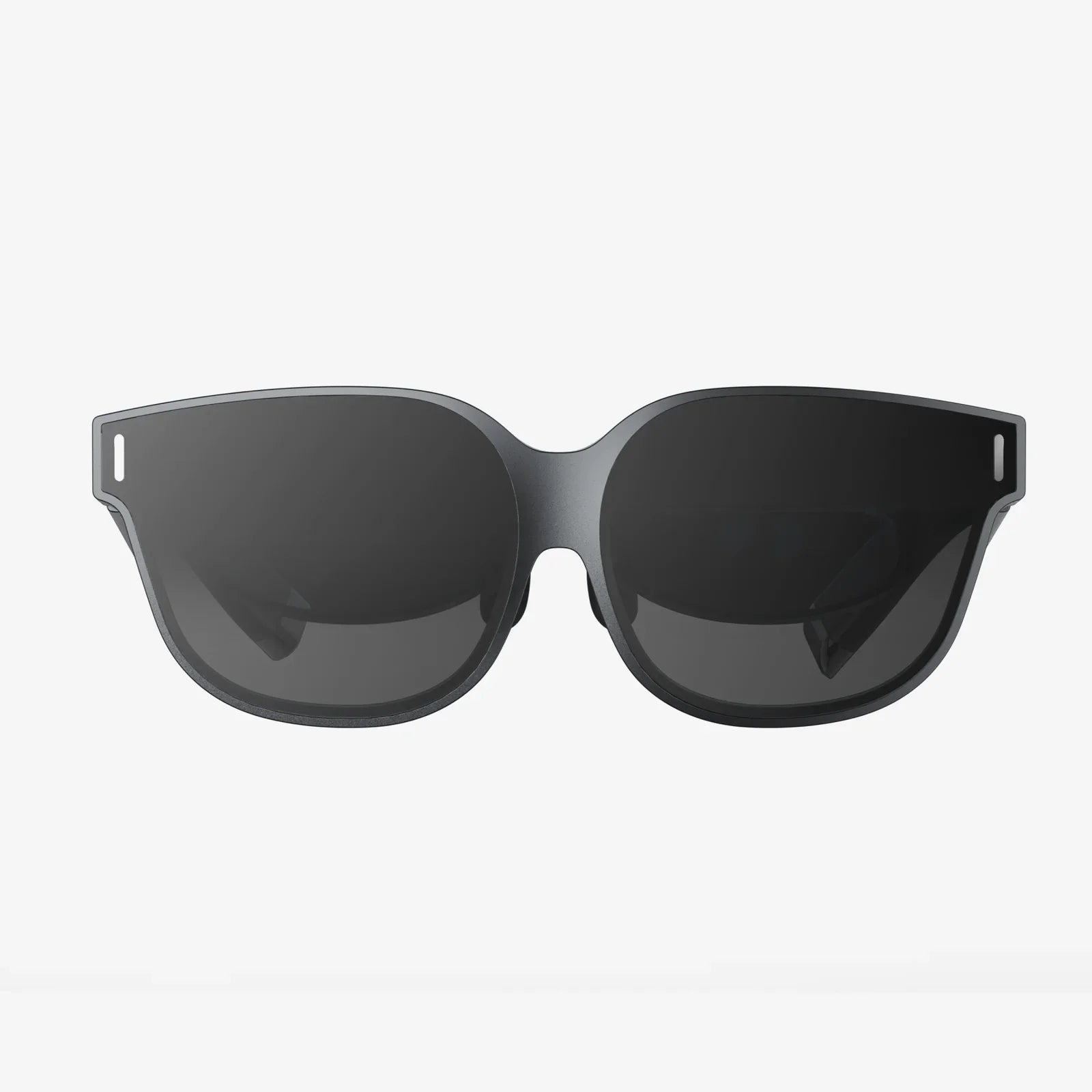
Imagine a world where your deepest fears can be confronted in a safe, controlled chamber, where you can walk on the surface of Mars from your living room, or attend a concert with thousands of others without leaving your home. This is the dazzling promise of virtual reality, a technology that has burst from the pages of science fiction into our daily lives. But beyond the thrilling headlines and futuristic potential lies a more subtle, more profound, and arguably more dangerous effect: VR is not just augmenting our reality; it is actively dismantling our shared understanding of the physical world, creating a billion individual realities and threatening the very fabric of communal experience.
The Allure of the Virtual: A Brief Historical Context
The human desire to escape or enhance reality is not new. From the camera obscura to the invention of cinema and television, we have constantly sought technologies to transport ourselves elsewhere. Each of these innovations altered our perception of time, space, and community. Cinema created a shared narrative experience for masses in a dark room, while television brought that experience into the private sphere of the home, beginning the process of individualizing media consumption. Virtual reality represents the logical, yet radical, endpoint of this trajectory. It is the first medium that doesn't just show you a window into another world; it convinces your entire sensory apparatus that you are, in fact, inside it. This isn't observation; it's immersion. This fundamental shift from shared spectatorship to isolated immersion is the catalyst for its most powerful effect: the erosion of a common, objective reality.
The Psychological Mechanism: Presence and the Suspension of Disbelief
To understand this erosion, one must first understand the concept of "presence." In VR terminology, presence is the holy grail—the user's subjective sensation of "being there" in the virtual environment. It is a powerful cognitive state achieved through a combination of high-fidelity visuals, immersive 3D audio, and precise head and motion tracking. When presence is achieved, the brain's suspension of disbelief is not a conscious act as it is when watching a film; it is a physiological response. The brain, receiving conflicting signals from the eyes (which see the virtual world) and the inner ear (which feels the lack of physical movement), often resolves this conflict by accepting the virtual world as primary. This neurological hijacking is what makes VR so potent and its effects so profound. It doesn't just tell a story; it creates a personal, believable memory of an event that never physically occurred.
The Fracturing of Experience: From Collective to Customized
Historically, major events created a collective memory. A nation would watch a moon landing, a generation would share the experience of a defining movie, communities would gather for public spectacles. These events created a common cultural touchstone, a shared language of experience that fostered social cohesion. Virtual reality, by its very nature, attacks this foundation. Two people can have vastly different "realities" in the same physical space. One could be exploring the depths of the ocean while another is touring ancient Rome, all while sitting on opposite ends of the same couch. There is no shared event, no common narrative to discuss afterwards. The experience is hyper-personalized, hyper-individualized, and ultimately, isolating. The "watercooler moment," where colleagues discuss a universally watched television show, is replaced by a silent room of individuals inhabiting separate universes.
The Reshaping of Human Interaction and Empathy
Proponents of VR often tout its ability to foster empathy. Through carefully crafted simulations, users can "step into the shoes" of a refugee, a person with a disability, or someone from a different background. There is promising research in this area, suggesting that these visceral experiences can reduce implicit bias. However, this same mechanism has a dark twin. When human interaction is mediated through digital avatars, the rich, subtle, and unconscious tapestry of face-to-face communication is lost. We rely on a myriad of micro-expressions, body language, and tonal shifts to build trust and understanding. In VR, these are often simplified or caricatured. The risk is not that we become empathetic towards avatars, but that we become desensitized to the complex, messy, and beautiful reality of actual human beings. We may become accustomed to interactions that can be controlled, muted, or exited with the click of a button, fostering a low tolerance for the unpredictable nature of real-life social engagement.
The Redefinition of Self and Place
Our identity is deeply intertwined with our physical environment and our body. Virtual reality fundamentally challenges this connection. In a virtual space, your body can be anything—a different gender, a different species, a floating pair of hands. This can be liberating for exploring identity, but it can also lead to a phenomenon known as "proteus effect," where users begin to embody the behaviors associated with their avatar. A taller avatar may make a user more confident in subsequent real-world negotiations. This blurring of the lines between virtual and physical self raises profound questions: Where does the self reside? If a powerful virtual experience changes your real-world behavior, which reality is more "real" in shaping who you are? Furthermore, as we spend more time in meticulously designed virtual spaces, our expectations of the physical world may become distorted. We may grow impatient with the imperfections of nature, the inefficiencies of urban design, and the limitations of our physical bodies.
The Societal and Economic Implications
The erosion of a shared reality does not occur in a vacuum; it has tangible societal consequences. Consider the future of work. Remote collaboration in VR could dissolve geographical barriers, but it could also create a new class divide: those who can afford high-fidelity VR systems to work and socialize in luxurious virtual offices and those who are tethered to the diminishing, underfunded physical world. Education could become a series of incredible virtual field trips, but at the potential cost of losing the irreplaceable social learning that happens in a physical classroom. Perhaps most alarmingly, the ability to create perfectly convincing virtual realities opens the door to unprecedented forms of misinformation and manipulation. If "seeing is believing," then a convincingly fabricated VR experience could be the ultimate propaganda tool, making it nearly impossible to establish a common factual ground on which to base democratic discourse.
Navigating the New Reality: A Call for Conscious Design
This is not a call to reject virtual reality. Its benefits in therapy, training, design, and entertainment are too significant to ignore. However, it is a vehement argument for approaching this technology with a profound sense of responsibility and awareness. The design of these systems must be guided by an ethical framework that prioritizes human well-being over mere engagement. This means building tools that encourage collaboration and shared experiences within the virtual space, rather than pure isolation. It means developing clear ethical standards to prevent manipulative or traumatic uses. It means investing in research to understand the long-term psychological effects of prolonged immersion. Most importantly, it means cultivating a societal awareness of this technology's power, encouraging digital literacy that includes critical thinking about virtual experiences, and fiercely protecting and valuing our shared physical spaces and unmediated human connections.
The ultimate effect of virtual reality is not found in the headset itself, but in the quiet emptiness of a room where people are together, yet worlds apart. It's in the gradual rewriting of our expectations for human interaction and our definition of what is real. The technology offers a mirror, reflecting both our greatest aspirations for escape and understanding, and our deepest fears of isolation and obsolescence. The virtual world is being built today, pixel by pixel, and the choice we face is not whether to enter it, but what values we will bring with us to ensure that in crafting countless new realities, we do not lose the one that truly connects us all.
Share:
Improbable Virtual Reality: Engineering the Impossible Digital Frontier
Improbable Virtual Reality: Engineering the Impossible Digital Frontier