


- by wangfred
One XR AR Glasses: The Dawn of a Seamless Digital Reality
- by wangfred
Imagine a world where your digital life isn't confined to a small, glowing rectangle in your hand or on your desk. Instead, it's woven seamlessly into the fabric of your physical reality, accessible with a glance, a gesture, or a spoken word. This is the transformative promise held by the next generation of One XR AR glasses, a device category not merely vying for a place in your pocket but for a fundamental redefinition of your perception. This isn't about escaping reality; it's about augmenting it, enriching it, and making it more intelligible, productive, and magical. The journey towards this future is already underway, and it promises to be the most significant technological shift since the advent of the smartphone.
To understand the ambition of One XR AR glasses, we must first demystify the terminology. The concept is often shrouded in a fog of acronyms—AR, VR, MR—that are used interchangeably but represent distinct points on a continuum known as Extended Reality (XR).
Virtual Reality (VR) is a fully immersive, digital experience. By wearing a headset that blocks out the physical world, users are transported to entirely computer-generated environments. This is ideal for gaming, simulation training, and virtual tours, but it is an isolated experience, cutting the user off from their immediate surroundings.
Augmented Reality (AR), the core technology behind our subject, operates on the opposite principle. It superimposes digital information—images, text, 3D models—onto the user's view of the real world. Early iterations of this technology are already familiar through smartphone apps that can place virtual furniture in your living room or display animated characters on your street. However, this experience is mediated through a screen, creating a barrier to true immersion.
Mixed Reality (MR) is a more advanced form of AR where digital objects don't just overlay the real world but can interact with it intelligently. A virtual ball can bounce off your real table, and a digital character can hide behind your actual sofa. This requires sophisticated sensors to understand and map the geometry and physics of the environment.
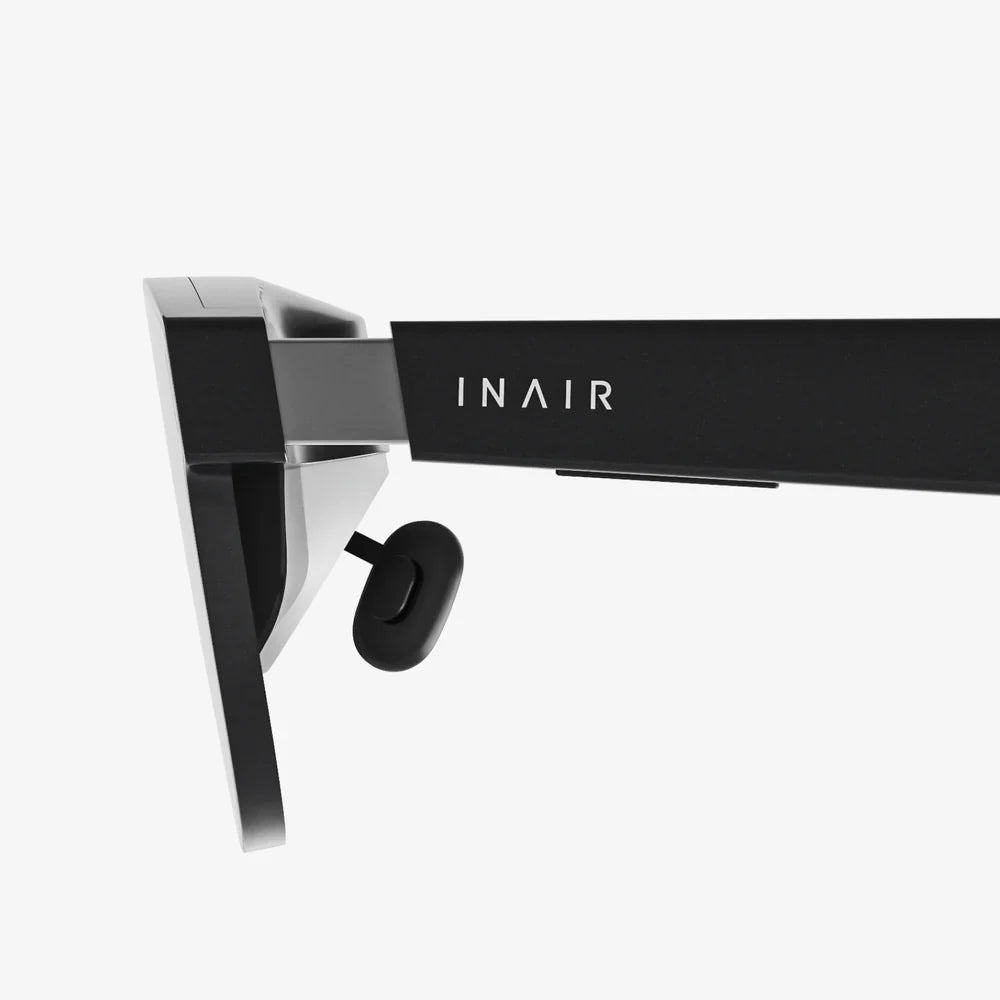
One XR AR glasses represent the pinnacle of this evolution. They are not a VR device but a sleek, wearable pair of glasses designed for all-day use. Their goal is to blend the digital and physical into a cohesive Mixed Reality experience, effectively making the smartphone screen obsolete by projecting its functions directly into your field of vision. This is the true meaning of "XR" in this context: a unified platform that seamlessly spans the entire spectrum from pure AR to immersive MR based on the user's needs.
The ambition of creating a seamless digital layer over reality is a monumental engineering challenge. It requires a symphony of advanced technologies working in perfect harmony, all miniaturized to fit into the form factor of regular eyeglasses.
The most critical component is the display system. How do you project bright, high-resolution, full-color images onto transparent lenses in bright daylight while still allowing the user to see the world clearly? The answer lies in cutting-edge optics like holographic waveguides and diffractive gratings. Imagine these as microscopic etchings on the lens itself. They capture light from a tiny micro-LED projector at the temple of the glasses and "pipe" it through the lens, bending it precisely to project the image directly onto the user's retina. This creates the illusion that digital objects are existing at fixed points in real space, not floating on the lens surface.
For digital content to interact convincingly with the real world, the glasses must possess a deep understanding of their environment. This is achieved through a suite of sensors typically including:
Advanced computer vision algorithms process this torrent of data instantaneously, identifying surfaces (floors, walls, tables), understanding objects (a cup, a keyboard, a person), and tracking the user's position within the space. This allows a virtual monitor to sit stably on your physical desk and a navigation arrow to point directly to a specific storefront on a street.
Tapping on a screen is a relic of the past. One XR AR glasses pioneer new, more natural ways to interact:
The computational demand for these tasks is staggering. Processing sensor data, running complex algorithms, and rendering high-fidelity graphics cannot rely solely on a cloud connection due to latency and privacy concerns. Therefore, these glasses incorporate powerful, miniaturized processors with dedicated neural engines for on-device AI processing. This allows for real-time responsiveness and ensures that sensitive visual data from the user's life is processed locally, not streamed to a remote server.
The true measure of this technology is not its specs but its impact on daily life. The applications are as vast as human activity itself.
Imagine sitting down at a coffee shop with just your glasses and a compact Bluetooth keyboard. With a gesture, you summon multiple large, virtual displays floating in your periphery, your email, a web browser, and a document editor all visible at once. Your physical laptop is replaced by an infinite, portable workspace. In industrial settings, a technician wearing the glasses could see schematics overlaid on the machinery they are repairing, with animated arrows guiding them through complex procedures. Remote collaboration transforms into a shared MR space where colleagues from across the globe can manipulate 3D models together as if they were in the same room.
Social media could evolve from a feed on a screen to a shared experience in space. Instead of sending a text message, you could leave a virtual note for a family member on the kitchen counter, visible only to them through their glasses. Video calls would become holographic, with the person appearing as a life-sized, spatially aware avatar in your living room, able to make eye contact and gesture naturally. This creates a profound sense of presence and connection that flat screens cannot replicate.
Education will be utterly transformed. A student studying anatomy could walk around a life-sized, interactive hologram of the human heart, watching it beat and peeling back layers to see its structure. A history class could "visit" ancient Rome, with historical figures and buildings reconstructed around them. Museum exhibits could spring to life, with dinosaurs roaring and artifacts explaining their own history. This experiential learning creates deep, lasting understanding far beyond textbooks.
Gaming will explode out of the TV and into your home. Imagine a strategy game where the battle unfolds on your coffee table, or a puzzle game where you physically walk around your environment to find clues. Movies could become immersive experiences where you are inside the scene. The very concept of a "screen" for entertainment dissolves, replaced by persistent, interactive worlds layered onto our own.
For all its promise, the path to widespread adoption of One XR AR glasses is fraught with significant hurdles that must be addressed with care and responsibility.
The ultimate goal is a device that is as lightweight, comfortable, and socially acceptable as a pair of premium sunglasses. Current technology often requires trade-offs between performance, size, and battery life. Fitting powerful processors, advanced sensors, and all-day battery into a slim frame is the single greatest engineering bottleneck. Breakthroughs in semiconductor efficiency, battery density, and passive cooling are essential.
A device with always-on cameras and microphones that maps the world around you raises profound privacy concerns. The potential for surveillance, both by corporations and governments, is a serious threat. Manufacturers must adopt a philosophy of "privacy by design." This means processing as much data as possible on the device itself, providing users with clear, granular controls over what data is collected and how it is used, and implementing robust physical indicators like recording lights that cannot be disabled. A transparent and ethical approach is not optional; it is a prerequisite for public trust.
There is a risk that such transformative technology could exacerbate social and economic inequalities. Ensuring it is accessible and beneficial to all, not just a wealthy elite, is a societal challenge. Furthermore, the social etiquette of wearing AR glasses in public is yet to be written. Will it be considered rude to wear them during a conversation? Will restaurants ban them? Navigating these new social norms will take time and collective adjustment.
The most successful technology doesn't feel like technology at all; it feels like a natural extension of human capability. It fades into the background, empowering us without demanding our constant attention. The smartphone, for all its utility, remains an intermediary—a device we must look down to and pick up. One XR AR glasses represent the next logical step: moving computing from our hands into our environment, and ultimately, into our periphery. They promise a future where information is contextually and effortlessly available, where our digital tools understand our world as we do, and where the line between human intuition and machine intelligence gracefully blurs. This isn't just an upgrade to a device; it's the beginning of a new chapter in human-computer symbiosis, waiting for you to put it on and see the world in a whole new light.
Share:
Do I Need to Wear My Glasses with VR? The Ultimate Guide to Seeing Clearly in Virtual Worlds
Fantasy vs Augmented Reality: The Battle for Our Perceptual Future