


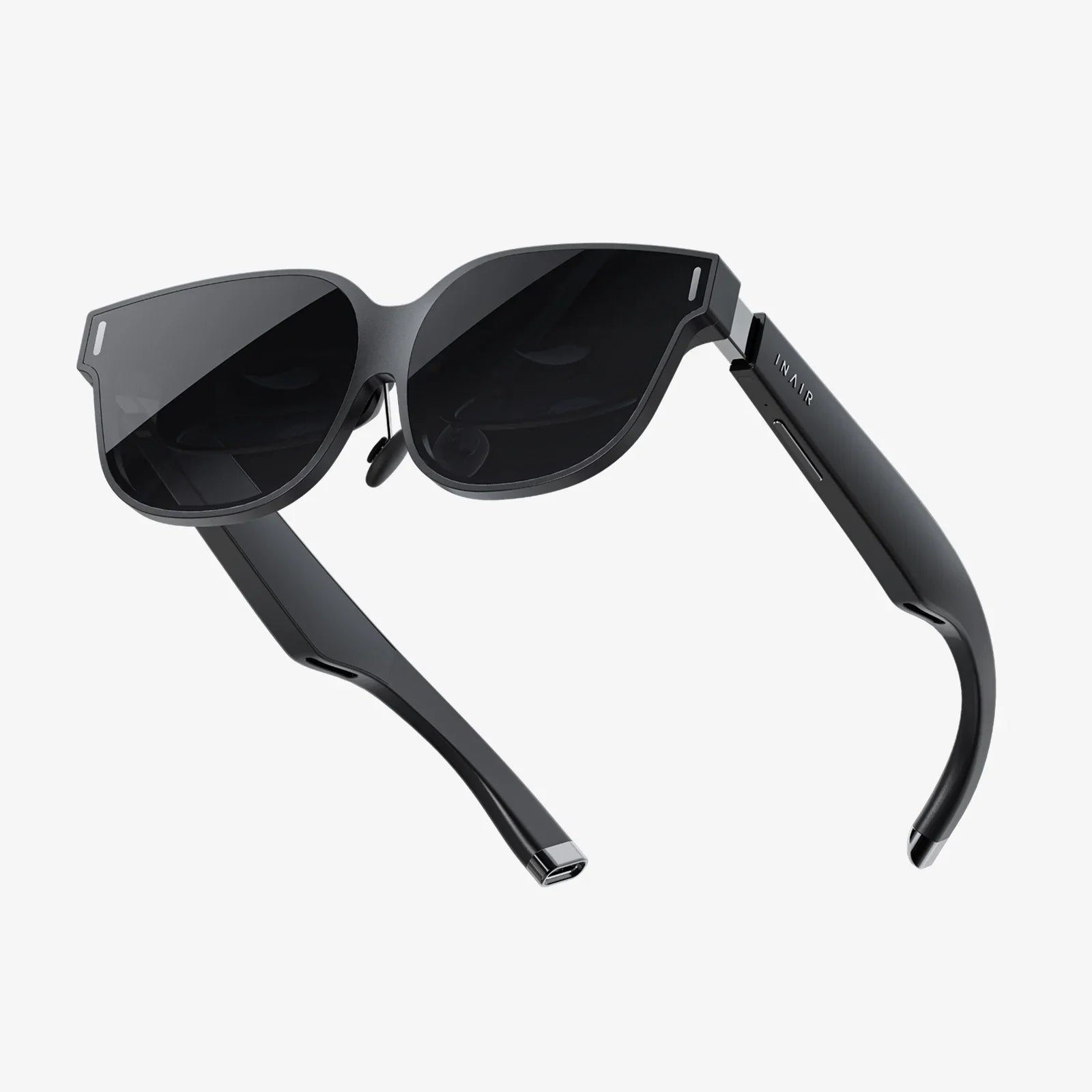
Imagine slipping on a headset and, in an instant, being transported. You're no longer in your living room but standing on the surface of Mars, your footsteps crunching on red dust as you gaze at a faint, distant sun. Or perhaps you're in a virtual boardroom, shaking hands with colleagues from across the globe who appear as lifelike avatars, discussing a project as if you were all in the same room. This is the promise, the profound allure, of online VR—a technology not just for entertainment, but a gateway to entirely new dimensions of human experience, connection, and understanding. It’s a portal waiting to be stepped through, and its potential is only beginning to be unlocked.
The Foundation: What Exactly Is Online VR?
At its core, online Virtual Reality (VR) is the convergence of two powerful technological forces: immersive simulation and global connectivity. It's not merely about wearing a headset that tracks your head movements and displays a 3D environment. The true magic, the transformative element, is the "online" component. This is what elevates a solitary experience into a shared, persistent, and dynamic one.
Traditional, offline VR can be a powerful tool for single-player games, pre-rendered tours, or local simulations. But online VR connects that individual to a vast digital ecosystem. It means:
- Shared Presence: Inhabiting the same digital space with other people in real-time, seeing their avatars, hearing their spatialized voices, and interacting with them and the environment simultaneously.
- Persistent Worlds: Virtual environments that continue to exist and evolve even after you log off. Economies thrive, buildings are constructed, and events unfold around the clock, independent of any single user.
- Live Data Streams: The integration of real-world information into the virtual space. This could be live sports data visualized in 3D, real-time financial charts floating in a virtual office, or a live concert being broadcast globally into a virtual amphitheater.
- Cloud Processing: Offloading the immense computational power required for high-fidelity graphics and complex physics simulations to remote servers, making sophisticated experiences accessible on more affordable hardware.
This synergy creates a sense of "being there" with others—a phenomenon known as telepresence—that is qualitatively different from a video call or a traditional online game. It’s the difference between watching a documentary about the ocean and actually scuba diving with a friend.
The Pillars of the Metaverse: Core Technologies Powering the Experience
The seamless illusion of online VR is built upon a complex stack of technologies, each advancing rapidly to eliminate barriers and enhance immersion.
Headsets and Hardware: The Gateway
The primary interface between the user and the virtual world is the head-mounted display (HMD). These devices have evolved from clunky, low-resolution prototypes to increasingly sophisticated systems. They fall into two main categories: those powered by a external processing unit (like a gaming computer) for the highest fidelity, and standalone units that have all the necessary computing power built-in, offering unparalleled freedom and accessibility. Key advancements include inside-out tracking (using onboard cameras to map the environment instead of external sensors), higher-resolution displays to combat the "screen-door effect," and wider fields of view for greater immersion.
Haptics and Controllers: The Sense of Touch
Visual and auditory immersion is only part of the story. The next frontier is touch. Advanced controllers do more than just point and click; they can simulate the sensation of holding an object, pulling a trigger, or feeling the vibration of a virtual engine. Beyond controllers, haptic feedback suits and gloves are in development, promising to let users feel the texture of a virtual wall, the impact of a virtual punch, or the handshake of a colleague.
Network Infrastructure: The Unseen Backbone
This is the unsung hero of online VR. Low latency is not a luxury; it is an absolute necessity. Latency is the delay between a user's action and the system's response. Even a delay of a few milliseconds between turning your head and the image updating can cause disorientation and motion sickness. The rollout of high-speed 5G and future 6G networks is critical for wireless, high-fidelity VR, enabling the massive data transfer required with minimal lag. Furthermore, edge computing—processing data closer to the user—will be essential for creating responsive, large-scale shared experiences.
Artificial Intelligence: The Invisible Architect
AI plays a multifaceted role in shaping online VR. It powers the natural language processing that enables voice commands and realistic conversations with AI-driven characters. Machine learning algorithms are used for foveated rendering, a technique that maximizes processing efficiency by rendering only the area of the screen the user is directly looking at in high detail. AI is also crucial for creating dynamic, responsive environments and for translating real-world movements into accurate avatar expressions through motion capture.
A World of Applications: Beyond Gaming
While gaming is the most visible and commercially successful application of online VR, its potential extends far beyond. It is poised to revolutionize numerous sectors.
Revolutionizing Social Connection
Online VR is fundamentally a social technology. Platforms exist that are less like games and more like new forms of social media. Users create avatars to represent themselves and gather in virtual spaces to hang out, watch movies, attend concerts, or visit art galleries. For people separated by geography—whether families living in different countries or friends unable to meet in person—these shared experiences can foster a deeper sense of connection and presence than any other medium. It combats the isolation of physical distance with digital togetherness.
Transforming Education and Training
The educational potential is staggering. Instead of reading about ancient Rome, history students can take a guided tour through a meticulously reconstructed Forum. Medical students can practice complex surgical procedures on virtual patients, making mistakes without consequences. Trainee mechanics can disassemble and reassemble a virtual jet engine. This experiential learning, or "learning by doing," significantly improves knowledge retention and engagement. Corporations are already using VR for immersive safety training, soft skills development, and onboarding, placing employees in realistic scenarios they might encounter on the job.
Redefining Remote Work and Collaboration
The future of work is hybrid and remote, and online VR offers a compelling alternative to the grid of faces on a video call. Virtual offices and meeting rooms allow distributed teams to collaborate on 3D models, brainstorm on infinite virtual whiteboards, and interact with a naturalness that flat screens cannot replicate. The spontaneous "water cooler" conversations that are vital for company culture can happen again in virtual hallways. Architects and engineers can walk clients through unbuilt designs at full scale, and designers can manipulate 3D prototypes together in real-time.
Unlocking New Frontiers in Healthcare and Therapy
Therapeutic applications are proving incredibly effective. VR exposure therapy is used to treat PTSD, phobias, and anxiety disorders by carefully and safely exposing patients to their triggers in a controlled environment. It is also used for physical rehabilitation, turning repetitive exercises into engaging games that improve patient motivation and outcomes. Surgeons use VR to plan complex operations by practicing on a patient's exact anatomy derived from scans. Furthermore, VR provides escapism and relief for bedridden patients, offering them travel and experiences otherwise impossible.
Navigating the Virtual Frontier: Challenges and Considerations
For all its promise, the path to a mature online VR ecosystem is not without significant obstacles and ethical questions that society must address.
The Accessibility Hurdle: Cost and Comfort
The cost of high-end hardware remains a barrier to mass adoption. While standalone headsets have lowered the entry point, the most powerful and immersive experiences still require a significant investment in both the headset and a capable computer. Furthermore, issues of physical comfort and ergonomics persist. Headsets can be heavy, and experiences can still induce cybersickness in a portion of the population. Making devices smaller, lighter, more affordable, and more comfortable is a primary focus for the industry.
The Privacy Paradox in a Data-Rich Environment
VR headsets are data collection powerhouses. They don't just track what you click; they can track your eye gaze, your pupil dilation, your body movements, your precise location in a room, and even your biometric responses. This data is incredibly valuable for improving experiences and for analytics, but it also represents a profound privacy risk. The question of who owns this biometric and behavioral data, how it is stored, and how it might be used (e.g., for targeted advertising or emotional manipulation) is a pressing ethical dilemma that requires clear regulation and transparent user consent.
Ensuring Safety and Civility in Digital Societies
If online VR is to become a new layer of society, it must grapple with the same issues that plague the current internet: harassment, hate speech, and toxic behavior. The immersive nature of VR makes these experiences far more intense and psychologically damaging than receiving a nasty text message. A virtual assault can feel real. Creating robust tools for user moderation, establishing clear codes of conduct, and designing systems that empower users to protect their personal space (e.g., personal bubbles) are essential for fostering safe and inclusive communities.
The Human Factor: Psychological and Social Impact
As we spend more time in vividly realistic virtual worlds, questions arise about the long-term psychological effects. Could a preference for a curated virtual life lead to further social isolation and alienation from the physical world? How do we prevent the emergence of a stark digital divide between those who can afford access to these new realities and those who cannot? Navigating these societal impacts will require careful thought and a human-centric approach to design, ensuring that the technology serves to enhance our humanity rather than diminish it.
The Horizon: What the Future Holds
The current state of online VR is merely the flickering campfire at the beginning of a vast unexplored continent. The trajectory points toward several key developments. We are moving toward full-body avatars with realistic expressions driven by eye and face tracking, making digital interactions nearly indistinguishable from real life. The concept of the "metaverse"—a persistent, interconnected network of shared virtual spaces—will move from science fiction to a tangible goal, though its final form is still being shaped. Crucially, the evolution of open standards and interoperability will be key, allowing users to move their digital identities and assets seamlessly between different virtual platforms, much like we move between websites today.
This is not a distant future. The seeds are being planted now. The technology is accelerating, the applications are multiplying, and the cultural conversation is expanding. We are standing at the precipice of a shift as significant as the advent of the personal computer or the smartphone. Online VR is not just another piece of technology; it is a new medium for human experience, a blank canvas for our collective imagination, and the next great step in the internet's evolution from a web of information to a world of experience. The door is open, and an entire universe of possibility awaits on the other side.
Share:
Do I Need Glasses for a VR Headset? The Complete Guide to Vision in Virtual Reality
Do I Need Glasses for a VR Headset? The Complete Guide to Vision in Virtual Reality