


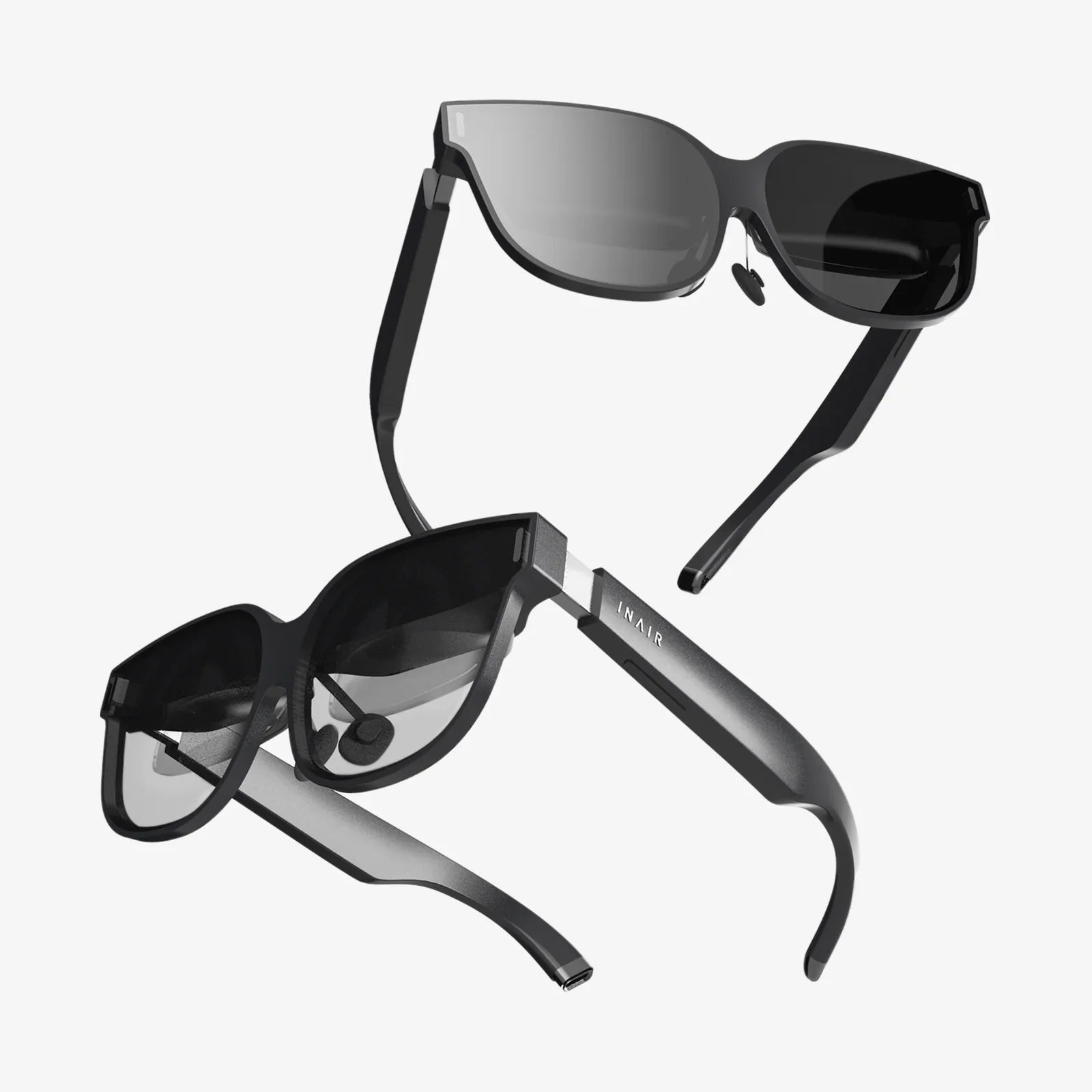
Imagine a world where the line between the digital and the physical doesn't just blur—it disappears. This isn't a distant sci-fi fantasy; it's the burgeoning reality being built today, hidden behind a suite of terms far more expansive than the one we most commonly use. While 'augmented reality' has become the popular banner for this revolution, the true depth and potential of this technology are unlocked only when we explore the rich tapestry of alternative nomenclature, each term offering a unique lens through which to understand how we will soon perceive, interact with, and ultimately redefine our reality.
Beyond the Buzzword: Why Terminology Matters
Language is not merely a tool for description; it is a framework for understanding. The term 'augmented reality' itself, while functional, carries certain connotations. To 'augment' means to make greater by adding to it. This implies a hierarchy—a base physical reality that is then supplemented or improved by digital information. This perspective is useful but also limiting. It suggests a passive overlay rather than a dynamic, interactive fusion. By expanding our vocabulary, we expand our conceptual horizon. We move from thinking about simple digital annotations to considering profound, bidirectional interactions between atoms and bits. The quest for other words for augmented reality is, therefore, a quest for a more precise, more expansive, and more accurate understanding of a technology poised to reshape human experience.
The Foundational Term: Understanding Augmented Reality
Before we diverge, we must first solidify the core concept. In its essence, augmented reality (AR) refers to a technology that superimposes a computer-generated overlay—be it images, sound, video, or data—onto a user's view of the real world. This is typically achieved through a device like a smartphone, a tablet, or, more immersively, a pair of smart glasses. The key differentiator from its cousin, virtual reality (VR), is that AR does not seek to replace the real world but to enhance it. The digital elements are contextually aware, anchored to specific locations, objects, or triggers within the physical environment. This creates a composite view where the user remains present in their surroundings, but those surroundings are now imbued with a layer of interactive digital intelligence.
A Spectrum of Experience: The Reality-Virtuality Continuum
To truly appreciate the alternatives to 'augmented reality,' one must view it not as a standalone concept but as a point on a broader spectrum. This is best visualized through the Reality-Virtuality (RV) Continuum, a framework pioneered by researchers in the 1990s. On one end of this spectrum lies the completely real environment—the physical world as we naturally perceive it. On the opposite end lies a completely virtual environment—a fully digital, synthetic world. The vast space between these two poles is where our terminology flourishes.
- The Real Environment: The unadulterated physical world.
- Augmented Reality (AR): A primarily real-world view, enhanced with digital overlays. The digital content is supplemental.
- Mixed Reality (MR): Often used interchangeably with AR, but purists reserve MR for environments where real and virtual objects co-exist and interact in real-time. A virtual ball can bounce off a real table; a digital character can hide behind a physical sofa.
- Augmented Virtuality (AV): A primarily virtual world that is augmented with elements from the real world, such as avatars of real people or real-world physics applied to virtual objects.
- The Virtual Environment: A completely computer-generated reality.
This continuum reveals that 'mixed reality' is not merely a synonym but a more encompassing term for the entire spectrum between the purely real and the purely virtual. It is one of the most technically accurate and conceptually rich other words for augmented reality.
The Lexicon of Overlays: A Taxonomy of Terms
The vocabulary of digital overlay technologies is diverse, with each term emphasizing a different aspect of the experience, the underlying technology, or the philosophical implication.
1. Mixed Reality (MR)
As established, MR is a powerful umbrella term. It signifies a hybrid environment where physical and digital objects are not just displayed together but are computationally intertwined. They can occlude one other, respond to each other, and exist within the same spatial context. This term is favored in academic and high-end industrial contexts because it captures the bidirectional nature of the interaction, moving beyond the one-way 'augmentation' of AR.
2. Spatial Computing
This is perhaps the most significant and forward-thinking term in the lexicon. 'Spatial computing' shifts the focus from the user's perception ('reality') to the underlying mechanism. It refers to the set of technologies that allows a computer to enter and operate within the user's three-dimensional space. This includes not just the overlay of graphics but also the understanding of the environment through sensors, computer vision, and depth tracking. It is the engine that makes AR and MR possible. Using this term reframes the technology from a consumer-facing feature to a fundamental new layer of computing, as significant as the transition from command-line interfaces to graphical user interfaces (GUIs).
3. Computer-Mediated Reality
Coined by researcher Steve Mann, this term is both broader and more philosophical. It describes any view of reality that has been modified, amplified, or diminished by a computer. This includes AR (adding information) but also includes technologies that might subtract or filter out reality, such as dimming bright lights or blocking advertisements from your field of view. It positions the computer not as an enhancer but as a mediator—a lens that actively curates our perception of the world, for better or worse.
4. Assisted Reality
This term has gained traction in enterprise and industrial settings. It describes a simplified, hands-free form of AR that provides contextual information within a user's line of sight without attempting complex 3D registration or interaction. Think of a warehouse worker seeing shipping data on a monocular display or a surgeon viewing a patient's vitals on a nearby screen. The digital content is 'assistive' but not spatially mapped onto the world. It prioritizes utility and simplicity over immersive integration.
5. Hyper-Reality
Moving into more conceptual territory, 'hyper-reality' describes a condition where the distinction between the real and the simulated becomes impossible to discern. In a hyper-real AR experience, a digital artifact might feel as tangible and persistent as a physical object. This term, borrowed from postmodern philosophy, speaks to the potential end-state of these technologies—a world where the fusion is so complete that asking what is 'real' becomes a meaningless question.
6. The Metaverse
While often depicted as a purely virtual world, a compelling vision of the metaverse is one that is deeply integrated with the physical world—a pervasive, embodied internet experienced not on a screen but in the space around us. In this context, AR is the primary interface to the metaverse. It is the lens through which persistent digital objects, identities, and events are grafted onto our cities, homes, and workplaces. The metaverse is the platform; AR is the window.
Technical Jargon and Academic Terminology
Beyond these broader categories, a host of more specific terms exist within research papers and technical documentation.
- Tangible AR: A specific interface technique where users interact with virtual objects through a physical proxy, like a fiducial marker or a special controller, blending haptic feedback with digital manipulation.
- Mirrorworlds: A term popularized by David Gelernter and revived by Kevin Kelly, describing a 1:1 scale, real-time digital mirror of the physical world. This high-fidelity digital twin serves as the foundation upon which AR experiences are built and is a key enabler of spatial computing.
- Situated Digital Content: A descriptive term that emphasizes the context-aware nature of AR data. The information is not generic; it is 'situated' in a specific place and time, relevant only to that particular location or object.
- Peripheral AR: Experiences where digital content is not the central focus but resides in the periphery of a user's attention, providing ambient information without being distracting.
The Impact of Precision: From Marketing to Implementation
Why does this lexical precision matter? The choice of term has profound implications.
For developers and engineers, using 'spatial computing' accurately describes their work on SLAM (Simultaneous Localization and Mapping) algorithms, depth-sensing cameras, and spatial mapping. 'Mixed reality' sets a higher bar for user experience, demanding real-time interaction between real and virtual objects, not just simple overlays.
For businesses and investors, these terms help define markets and investment theses. Investing in 'assisted reality' for logistics and fieldwork is a different proposition than investing in 'hyper-real' entertainment experiences. The terminology helps allocate resources to the right technological challenges.
For users and society, the language we use shapes our expectations and our critique. Understanding that we are moving towards 'computer-mediated reality' raises immediate and crucial questions about privacy, data ownership, and algorithmic bias. It forces us to ask not just 'what can this technology do?' but 'how will it mediate our perception, and who controls the mediator?'
The Future of the Lexicon: An Evolving Language
The language of digital overlay is not static. As the technology evolves, so too will the words we use to describe it. Terms that feel cutting-edge today may become obsolete or shift in meaning tomorrow. The convergence of AI with AR, for instance, might birth new terms that emphasize intelligent contextual awareness over simple spatial awareness. The goal is not to settle on a single perfect term but to cultivate a nuanced and accurate vocabulary that allows us to think, build, and communicate about this transformative technology with clarity and vision.
We stand at the precipice of a new era of human-computer interaction, one where the digital ceases to be a destination we visit and becomes an inseparable layer of our lived experience. This future is built on a foundation of pixels and photons, sensors and semantics. But before it can be built in code and hardware, it must be conceived in thought and language. The journey beyond the familiar term 'augmented reality' is more than an exercise in semantics—it is the first and most crucial step in mapping the uncharted territory of a world where our reality is whatever we choose to make it.
Share:
VR Headset Price - A Comprehensive Guide to Navigating the Cost of Immersive Technology
Difference Between XR and MR: Navigating the Blended Realities of Our Digital Future