


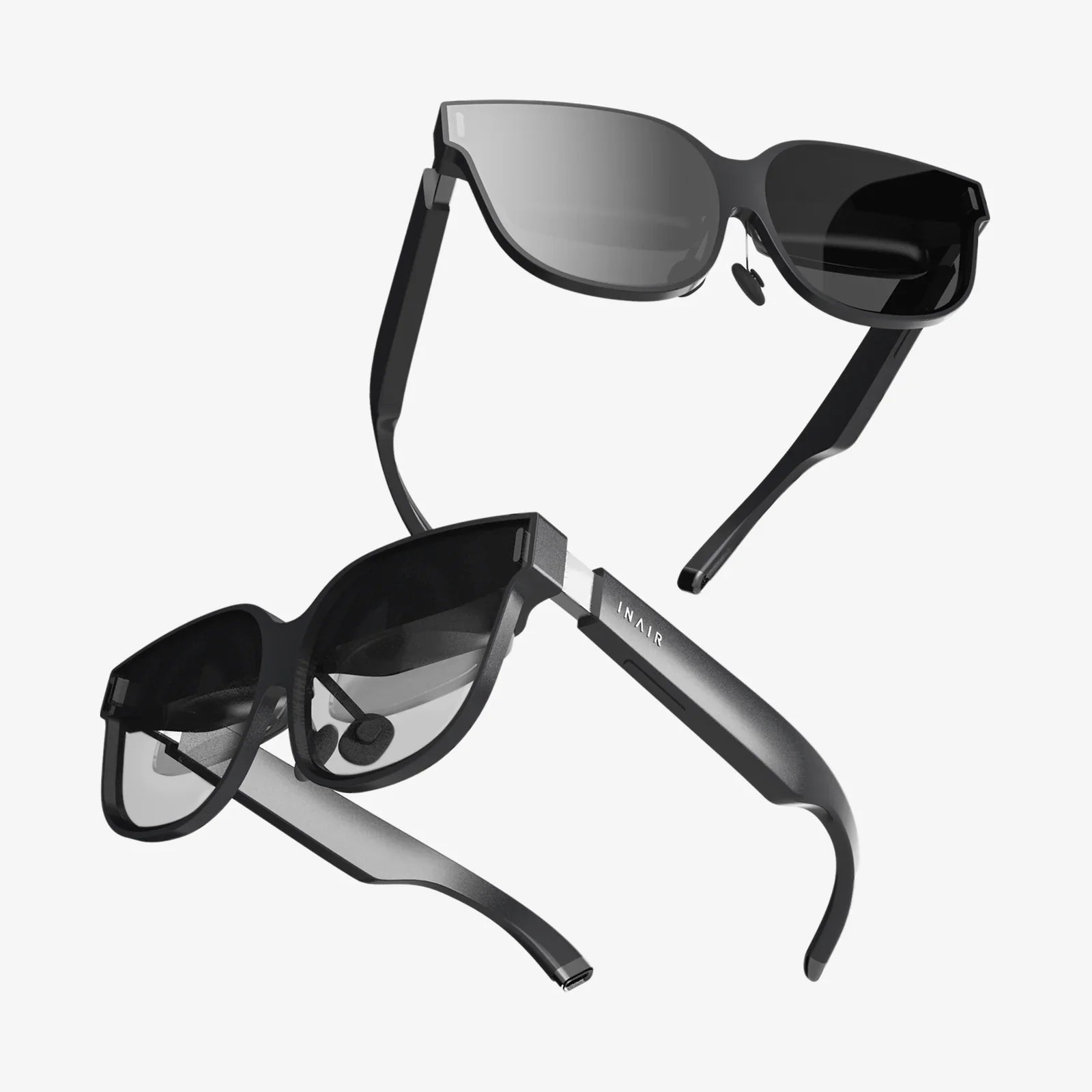
You’ve heard the terms, seen the futuristic demos, and perhaps even experienced a glimpse of a digital layer over your world—but do you truly understand the tectonic shift happening right before your eyes? The worlds of Extended, Virtual, and Mixed Reality are no longer the stuff of science fiction; they are rapidly converging into the fabric of our daily lives, promising to revolutionize everything from how we work and learn to how we connect and play. Yet, amidst the hype, a critical question remains shrouded in confusion for many: what is the actual, tangible difference between the all-encompassing XR and the specific, transformative potential of MR? This is not just academic semantics; it's the key to unlocking the next chapter of human-computer interaction.
Setting the Stage: The Reality-Virtuality Continuum
To understand the difference between XR and MR, we must first abandon the idea that these realities are separate, distinct islands. Instead, envision a spectrum, famously conceptualized as the "Reality-Virtuality Continuum." On the far left, we have the reality we all inhabit—the physical world, unaltered and pure. On the far right exists a completely synthetic, digital environment—a virtual world. The entire span between these two poles is the domain of Extended Reality. It is the umbrella term, the master category that encompasses all possible combinations of real and virtual environments.
Deconstructing the Umbrella: What is Extended Reality (XR)?
Extended Reality (XR) is not a specific technology but a collective term. Think of it as the word "vehicle." A vehicle can be a car, a boat, a plane, or a bicycle. Similarly, XR is the catch-all category for all immersive technologies that blend the physical and digital worlds. Its primary purpose is to create a sense of presence—the convincing feeling of being in another place or interacting with digital objects as if they were real.
The three primary pillars under the XR umbrella are:
- Virtual Reality (VR): This is the far right of the continuum. VR fully immerses the user in a completely computer-generated environment. By wearing a headset that blocks out the physical world, users are transported to a digital realm. Their physical movements are tracked and translated into the virtual space, allowing for interaction. The key characteristic of VR is immersion; it replaces reality.
- Augmented Reality (AR): Positioned closer to the reality end of the spectrum, AR overlays digital information onto the physical world. Using devices like smartphones, tablets, or transparent glasses, users see their real environment, but it is enhanced with digital layers—text, images, 3D models, or animations. The key characteristic of AR is annotation; it adds to reality without fundamentally interacting with it. A digital character dancing on your table is AR; it doesn't know the table is there.
- Mixed Reality (MR): This is the crucial middle ground, the nexus where the physical and digital not only coexist but interact in real-time. MR is a more advanced form of AR. It doesn't just overlay digital content; it anchors it to the physical world, understanding and responding to it. A virtual ball in MR can bounce off your real table, roll under your real chair, and be occluded by it. The environment and the digital objects are aware of each other.
Therefore, the simplest answer to "the difference between XR and MR" is that XR is the entire category, and MR is a specific, advanced type within that category. All MR is XR, but not all XR is MR.
The Crown Jewel of Immersion: Defining Mixed Reality (MR)
Mixed Reality is where the magic of seamless blending truly happens. It is the pinnacle of immersive technology's goal to weave the digital and physical into a cohesive, believable experience. For an experience to be truly MR, it must possess several key technological capabilities that distinguish it from simpler AR.
The Core Technologies Powering MR
MR doesn't happen by magic; it's powered by a sophisticated array of sensors and algorithms that act as the eyes and brain for the digital world.
- Spatial Mapping: This is the foundational technology. Using cameras and sensors like depth scanners (e.g., LiDAR), an MR device scans the physical environment to create a precise, real-time 3D map of the space. It identifies surfaces (floors, walls, tables), understands geometry, and records spatial data. This map allows digital objects to be placed and persist in specific locations.
- Environmental Understanding: Beyond just mapping surfaces, advanced MR systems understand the context of the environment. They can recognize objects (e.g., a chair, a screen, a door) and their properties. This enables complex interactions, like a virtual character sitting on a real couch.
- Precise Tracking: MR requires incredibly accurate tracking of both the user's movement (head and hands) and the position of the device itself in the world. This is achieved through a combination of inside-out tracking (cameras on the device itself) and inertial measurement units (IMUs). This ensures that digital objects remain locked in place and don't "drift."
- Occlusion: This is the visual cue that sells the illusion. Occlusion is the ability for real-world objects to visually block digital objects that are behind them. If you move your real hand in front of a virtual robot, the robot should be hidden behind your hand. This requires the system to know the precise depth and position of everything in the scene.
Key Differentiators: MR vs. AR
While AR and MR are often grouped together, their capabilities are worlds apart.
| Feature | Augmented Reality (AR) | Mixed Reality (MR) |
|---|---|---|
| Interaction | Digital content is overlaid on the real world but does not interact with it. The relationship is one-way. | Digital content interacts with and responds to the real world in real-time. The relationship is bi-directional. |
| Environmental Awareness | Limited or none. Content floats in space or on pre-defined markers. | High-fidelity understanding. Content understands and anchors to surfaces, geometry, and objects. |
| Persistence | Content is usually session-based and disappears when the app is closed. | Content can be persistent. A virtual screen placed on your wall can remain there across multiple sessions. |
| Device Examples | Smartphones, Tablets, Basic Smart Glasses | Advanced Smart Glasses, Immersive Headsets with Passthrough |
The Real-World Impact: Applications of MR
The potential of MR extends far beyond gaming and entertainment. Its ability to blend instructions with reality makes it a powerful tool for enterprise, education, and healthcare.
Revolutionizing Industry and Workforce
In industrial settings, MR is a game-changer. Technicians wearing MR glasses can see holographic schematics overlaid directly onto the complex machinery they are repairing. Step-by-step instructions can be anchored to specific components, reducing errors and training time. Architects and engineers can walk clients through full-scale 3D models of buildings before a single brick is laid, making changes to the virtual structure in real-time. Remote experts can see what a field worker sees and annotate their field of view with arrows and notes to guide them through a procedure, collapsing geographical barriers.
Transforming Education and Training
Medical students can practice complex surgical procedures on holographic patients that react to their actions, providing risk-free training. History students can walk through a photorealistic recreation of ancient Rome, observing life as it was. Mechanics-in-training can learn the intricacies of an engine by placing a virtual, interactive model on their desk, taking it apart and reassembling it countless times without cost. MR moves learning from abstract to experiential.
Redefining Collaboration and Design
Design teams scattered across the globe can meet in a shared virtual space around a 3D model of a new product. They can manipulate the design, test its properties, and make decisions as if they were all in the same physical room. This shared presence, interacting with a persistent digital object, unlocks a new level of collaborative potential that video calls cannot match.
The Future is Blended: Where Do We Go From Here?
The line between AR and MR will continue to blur as technology advances. The ultimate goal for many in the industry is the concept of the "mirrorworld" or the "spatial web"—a persistent, 1:1 digital twin of our entire physical reality that we can interact with through lightweight, socially acceptable glasses. In this future, information will not be on pages but placed in space, and the digital and physical will be inextricably linked. Understanding the distinction between XR and MR today is about more than defining acronyms; it's about building a foundational literacy for the next era of computing. It’s the difference between seeing a flat image of a storm on a screen and feeling the wind shift around you—one informs you, the other immerses you in the experience itself.
So, the next time you see a demo of a digital dinosaur stomping through a living room, ask yourself: is it simply overlaid, or is it kicking up virtual dust that settles on the real coffee table? The answer will tell you everything you need to know about the reality of our blended future, a future that is being built not in a vacuum, but layer by layer, right on top of our own.
Share:
Other Words for Augmented Reality: A Lexicon of Digital Overlays and Enhanced Perception
Very VR Headset: The Ultimate Immersive Experience and What It Means for Our Future