


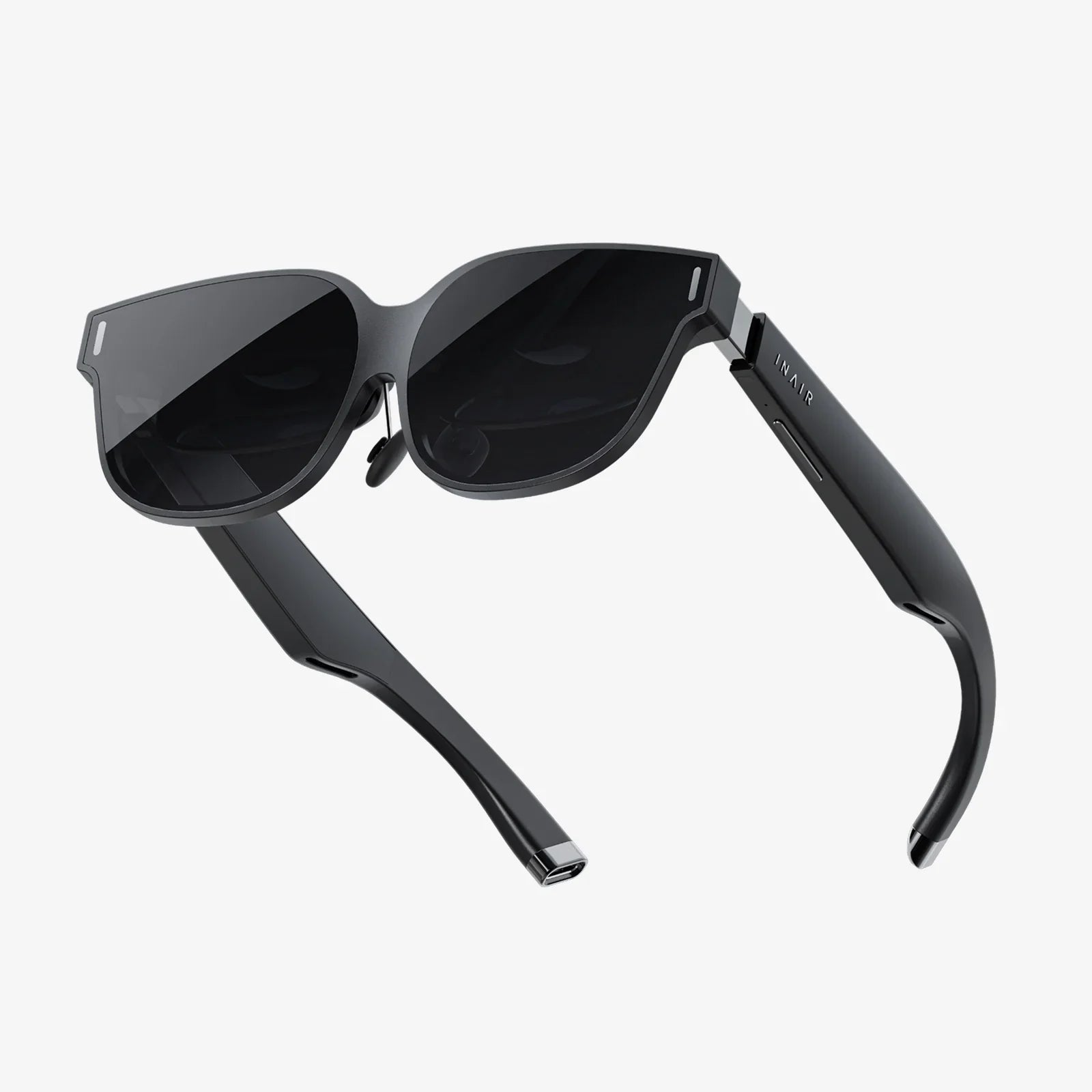
Imagine a world where your most trusted digital companion doesn’t live in your pocket but sits comfortably on your face, seeing what you see, understanding your context, and responding to your unspoken needs. This isn’t a distant sci-fi fantasy; it’s the imminent reality being forged in the labs and design studios of today. The true power of this wearable revolution won't be unlocked by a one-size-fits-all device but through the profound and intricate process of personalizing AI glasses. This journey transforms a generic piece of advanced hardware into a seamless extension of your own cognition, personality, and perception, creating a uniquely tailored window to both the digital and physical worlds.
The Foundation: Hardware That Fits You and Your Life
Before a single line of code can be personalized, the physical vessel must conform to the user. This is the first and most tactile layer of customization.
Ergonomic Tailoring: The bridge of a nose, the shape of ears, the width of a face—these are not universal constants. Truly personalized AI glasses will offer a range of frame styles, sizes, and materials. Imagine being able to select a lightweight athletic frame for a morning run, a robust safety-certified model for industrial work, and a sleek, designer-inspired pair for an evening out. Interchangeable magnetic temples, adjustable nose pads, and even custom-molded ear pieces will ensure the device feels less like worn technology and more like a natural part of the user’s anatomy, forgotten until needed.
Visual Acuity and Display Customization: For augmented reality to be truly immersive and useful, it must be visually perfect for the individual. This means integrating prescription lenses directly into the frame, so those who need corrective vision don’t have to choose between seeing the real world clearly and interacting with the digital one. Furthermore, the properties of the display itself—its brightness, contrast, and the perceived size of the virtual screen—must be adjustable. A user in a brightly lit outdoor environment will require different settings than someone in a dimly lit office, and the system should adapt seamlessly. The ability to calibrate the display for color accuracy is paramount for professionals like graphic designers or surgeons, for whom precise visual information is critical.
The Digital Soul: Crafting Your Unique User Experience
If the hardware is the body, the software and user interface are the mind and soul. This is where personalization moves from the physical to the profoundly digital.
The Intelligent Interface: How You Interact
The way we command our devices is deeply personal. Personalized AI glasses will offer a multimodal smorgasbord of interaction methods, learning which one the user prefers in any given context.
- Voice Control: Beyond simple commands, the AI will learn the user’s speech patterns, frequently used phrases, and even tone of voice. It will distinguish between a muttered command to oneself and a directed question, responding appropriately.
- Gesture Recognition: Subtle, discreet finger movements or hand gestures can become a powerful and private control scheme. The system will be trainable, allowing users to define custom gestures for their most frequent actions—a flick of the wrist to dismiss a notification, a pinching motion to save an object, or a tap on the temple to activate a specific app.
- Touch and Tap: Touch-sensitive frames will provide haptic feedback, creating a tangible connection with the digital world.
- Neural Input (The Future Frontier): Emerging technologies like non-invasive neural interfaces aim to detect intended actions directly from brain signals. While early-stage, this represents the ultimate hands-free, silent interaction paradigm, perfect for controlling a cursor or selecting a menu item with nothing but a thought.
Contextual Awareness: The AI That Knows You
This is the core of personalization. The AI isn’t just a tool; it’s an agent that understands your life.
Personalized Data Layer: The glasses will overlay a digital filter on the world that is unique to the user. For one person, walking through a foreign city might trigger real-time translations of street signs and historical tidbits about buildings. For another, it might highlight the best angles for photography. A mechanic might see torque specifications and wiring diagrams overlaid on an engine, while a student in a museum might see interactive 3D models spring to life from ancient artifacts. This digital layer is built entirely from the user’s interests, profession, and real-time goals.
Proactive Assistance: The system will evolve from reactive to proactive. By analyzing your calendar, location, and past behavior, it can anticipate your needs. It might whisper the name of a colleague you’re about to meet at a conference, remind you to pick up milk as you pass the grocery store, or automatically pull up the recipe you’re following when you step into the kitchen. This requires a deep, trust-based relationship where the user teaches the AI what is helpful versus what is intrusive.
Navigating the Minefield: Privacy, Ethics, and the Social Contract
With this incredible power of personalization comes immense responsibility. A device that sees and hears everything you do is a potential privacy nightmare if not designed with ethics at its core.
Data Sovereignty and Transparency: Users must have absolute control over their data. This means clear, intuitive settings to determine what data is collected, how it is processed (on-device vs. in the cloud), and who it is shared with. Opaque data policies will be a non-starter. The system must be transparent about when it is recording, when it is analyzing, and when it is transmitting data. Visual indicators like a small LED are a basic but essential requirement to signal recording to both the user and those around them.
The Social Dilemma: The presence of always-on cameras and microphones in social settings creates a new frontier of etiquette. How do we navigate conversations when one party could be secretly recording or accessing information about the other? Societal norms will need to evolve. Features like a "social mode" that automatically disables recording and notifies the user of incoming information only through discrete audio cues could be a necessary compromise for polite society.
Algorithmic Bias: The AI that personalizes your experience is trained on vast datasets. If these datasets contain societal biases, the AI’s recommendations and interpretations of the world will too. A relentless focus on diverse, representative data and ongoing audits is crucial to ensure the AI augments reality fairly for everyone.
The Future is Bespoke: A World Reshaped
As personalizing AI glasses becomes the norm, its impact will ripple far beyond the individual, reshaping entire industries and social structures.
Accessibility Revolution: This technology has the potential to be the great equalizer. For individuals with visual impairments, real-time audio descriptions of environments and optical character recognition can narrate the world. For those who are hard of hearing, speech-to-text transcription can be displayed in their glasses, turning conversations into captioned dialogues. The ability to personalize the interface means technology can finally adapt to fit a wide spectrum of physical abilities.
Hyper-Personalized Commerce and Media: Imagine trying on clothes virtually with a perfect digital fit model based on your exact measurements, or seeing how a new sofa would look in your living room at full scale before you buy. The world becomes a showroom. Storytelling, too, will become interactive and personalized; a historical tour of a city could branch into different narratives based on your expressed interests.
The Demise of the Universal Screen: Why look down at a small, static rectangle when information can be arranged around you in 3D space, pinned to real-world objects, and tailored to your exact field of view? The smartphone’s hegemony will wane as spatial computing, personalized through AI glasses, offers a more intuitive, integrated, and expansive way to interact with digital information.
The journey of personalizing AI glasses is about much more than choosing a frame color or setting up a voice profile. It is a collaborative dance between human and machine, a process of building trust and crafting an intelligence that understands not just what you ask for, but who you are and what you need before you even ask. It’s about creating a lens that doesn’t distort your reality, but enhances it, clarifies it, and connects it to the vast digital universe in a way that is uniquely, perfectly, and powerfully your own. The ultimate interface won't be on a device; it will be your world, intimately understood and seamlessly augmented just for you.
Share:
Augmented Reality Numbers Are Reshaping Our Perception of Data and Reality
XR Smart Glasses News: The Next Computing Paradigm is Finally Here