


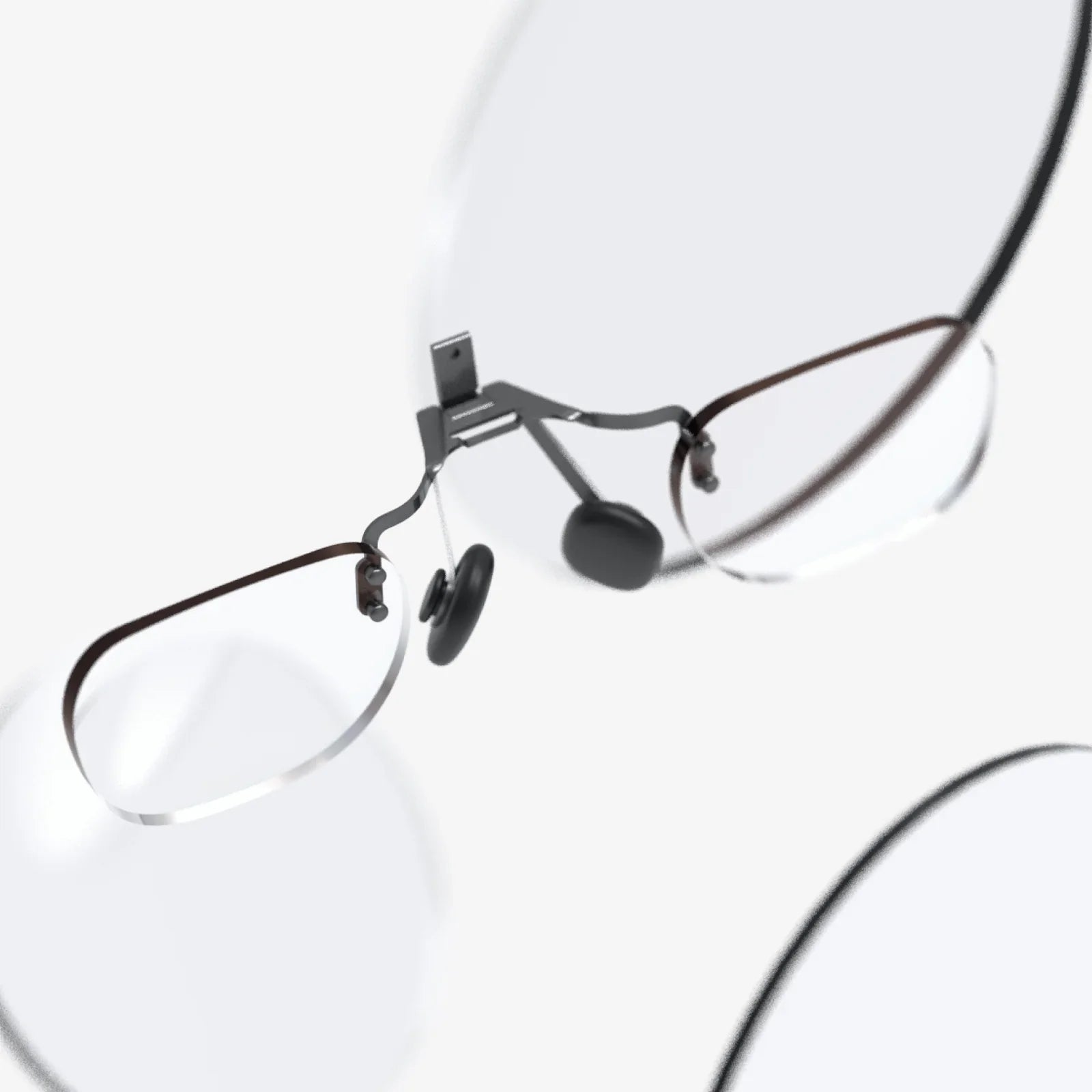
The digital horizon is shimmering with a new form of reality. For decades, the concept of smart glasses that seamlessly blend the physical and digital worlds has been a staple of science fiction, a futuristic promise perpetually on the cusp of arrival. Today, that promise is being fulfilled. A wave of XR smart glasses news signals not just incremental improvement, but a fundamental shift in how we will interact with information, each other, and the world around us. We are standing at the precipice of the next major computing platform, moving beyond the confines of screens and into the immersive realm of spatial computing.
Beyond the Hype: Defining the XR Smart Glasses Landscape
Before diving into the latest developments, it's crucial to understand what we're discussing. The term 'XR' or 'Extended Reality' serves as an umbrella for a spectrum of technologies that merge real and virtual environments. This includes Virtual Reality (VR), which is fully immersive and blocks out the physical world; Augmented Reality (AR), which overlays digital information onto the real world; and Mixed Reality (MR), which allows for complex interaction between digital and physical objects. Modern XR smart glasses primarily focus on AR and MR functionalities.
The ultimate goal is to create a device that is socially acceptable, comfortable to wear for extended periods, and powerful enough to deliver genuinely useful and compelling experiences. This holy grail has been elusive, but recent XR smart glasses news suggests the industry is cracking the code on the key technological challenges that have long been impediments to mass adoption.
The Technological Leap: Solving the Core Challenges
The flurry of recent announcements and product reveals isn't happening in a vacuum. It's the culmination of years of research and development finally bearing fruit across several critical domains.
1. The Display Revolution: From Bulky to Barely There
The most significant barrier has always been the display technology. Early waveguides and combiners often resulted in dim images, small fields of view, and a notorious "ski goggle" aesthetic. The latest generation of displays, however, is a game-changer. MicroLED technology, known for its incredible brightness and efficiency, is now being miniaturized to fit into the temples of glasses. This allows for vibrant digital content that remains visible even in bright sunlight. Furthermore, advancements in pancake optics and holographic waveguides are creating thinner, lighter form factors with dramatically expanded fields of view, making the digital overlays feel more natural and immersive.
2. The AI Engine: The Invisible Brain Powering Vision
Hardware is only half the story. The real magic of modern XR smart glasses lies in the sophisticated artificial intelligence that underpins them. On-device AI processors are now capable of real-time scene understanding, object recognition, and spatial mapping without needing a constant, lag-inducing connection to the cloud. This means your glasses can instantly identify a product on a shelf, translate a street sign in a foreign language, or provide contextual instructions for repairing a machine, all processed locally for speed and privacy. This shift from a passive display to an active, intelligent visual assistant is arguably the most important development in recent XR smart glasses news.
3. The Form Factor: From Prototype to Product
The days of clunky, tethered headsets are receding. The driving trend in design is normalization. Companies are fiercely competing to create devices that look as close to standard eyewear as possible. This involves intricate engineering to distribute battery life, compute power, and sensors in a balanced, lightweight package. We're seeing designs that feature a slightly thicker temple but are otherwise indistinguishable from premium sunglasses or prescription frames. This focus on wearability is critical for all-day use and broader social acceptance, moving the technology out of the lab and onto the street.
Market Dynamics: A Sector Poised for Explosive Growth
The technological progress is being met with immense market anticipation and strategic maneuvering. The XR smart glasses sector is no longer a niche playground for developers and enthusiasts; it's a key battleground for the future of computing.
Major technology giants are making colossal bets on this space, with recent XR smart glasses news highlighting significant investments in R&D, acquisitions of specialized startups, and the development of entire software ecosystems. The strategy is clear: whoever dominates the eyewear platform could inherit the mantle from the smartphone. Alongside these titans, a vibrant ecosystem of agile startups is emerging, focusing on specific use cases, from enterprise solutions to dedicated gaming and social interaction glasses. This competition is fueling rapid innovation and driving prices down as manufacturing scales.
Enterprise adoption is currently the primary driver of revenue. Industries like manufacturing, logistics, field service, and healthcare are deploying XR smart glasses to provide workers with hands-free access to manuals, schematics, remote expert guidance, and data visualization. The return on investment, through increased efficiency, reduced errors, and enhanced training, is proving to be substantial and is validating the technology in a demanding environment before it trickles down to consumers.
Transforming Industries: The Practical Applications Today
While the future consumer applications are thrilling, the current impact of XR smart glasses is already being felt across numerous professional fields.
- Healthcare: Surgeons can visualize patient vitals and 3D anatomical models in their line of sight during procedures. Medical students can learn through immersive simulations, and remote doctors can guide on-site personnel through complex triage situations.
- Manufacturing & Logistics: Warehouse workers can see optimal picking routes and instantly verify order accuracy. Assembly line technicians can see digital arrows and instructions overlaid on machinery, streamlining complex tasks and reducing training time.
- Design & Architecture: Architects and engineers can project full-scale 3D models of their designs onto empty physical spaces, allowing them to walk through buildings before a single foundation is poured and make real-time adjustments.
- Remote Collaboration: The concept of the "metaverse" finds a practical purpose here. A specialist in another country can see what a local engineer sees and annotate the real world with digital arrows, notes, and diagrams to solve a problem collaboratively, saving immense time and travel costs.
The Road Ahead: Challenges and the Future Vision
Despite the exciting progress, challenges remain. Battery life, while improving, still limits all-day untethered use for power-intensive applications. Developing a robust and intuitive user interface that doesn't rely on hand controllers or a smartphone is an ongoing pursuit, with gesture control, voice commands, and even eye-tracking being refined. Furthermore, the societal questions around data privacy, digital etiquette, and the potential for new forms of distraction are only beginning to be addressed.
Looking forward, the trajectory is clear. We are moving towards a future where XR smart glasses will be as ubiquitous as smartphones are today. They will become our primary portal to a persistent digital layer that enhances our reality. Imagine walking through a city and seeing historical facts pop up about buildings, having navigation arrows painted onto the sidewalk, or watching a live sports game with stats floating around the players. The convergence of 5G/6G connectivity, edge computing, and increasingly powerful AI will make these experiences seamless and instantaneous.
The constant stream of XR smart glasses news is more than just industry buzz; it is the sound of a new world being built. The pieces of the puzzle—power, display, AI, and design—are finally falling into place. We are transitioning from asking "if" this technology will become mainstream to "when." The devices moving from research labs to production lines today are the precursors to a future where the line between our digital and physical lives will not just be blurred, but will be erased entirely, creating a unified and enhanced human experience.
Share:
Personalizing AI Glasses: The Ultimate Guide to Your Custom Digital Lens
Augmented Reality Support for Field Service: The Ultimate Guide to Transforming Repairs and Maintenance